
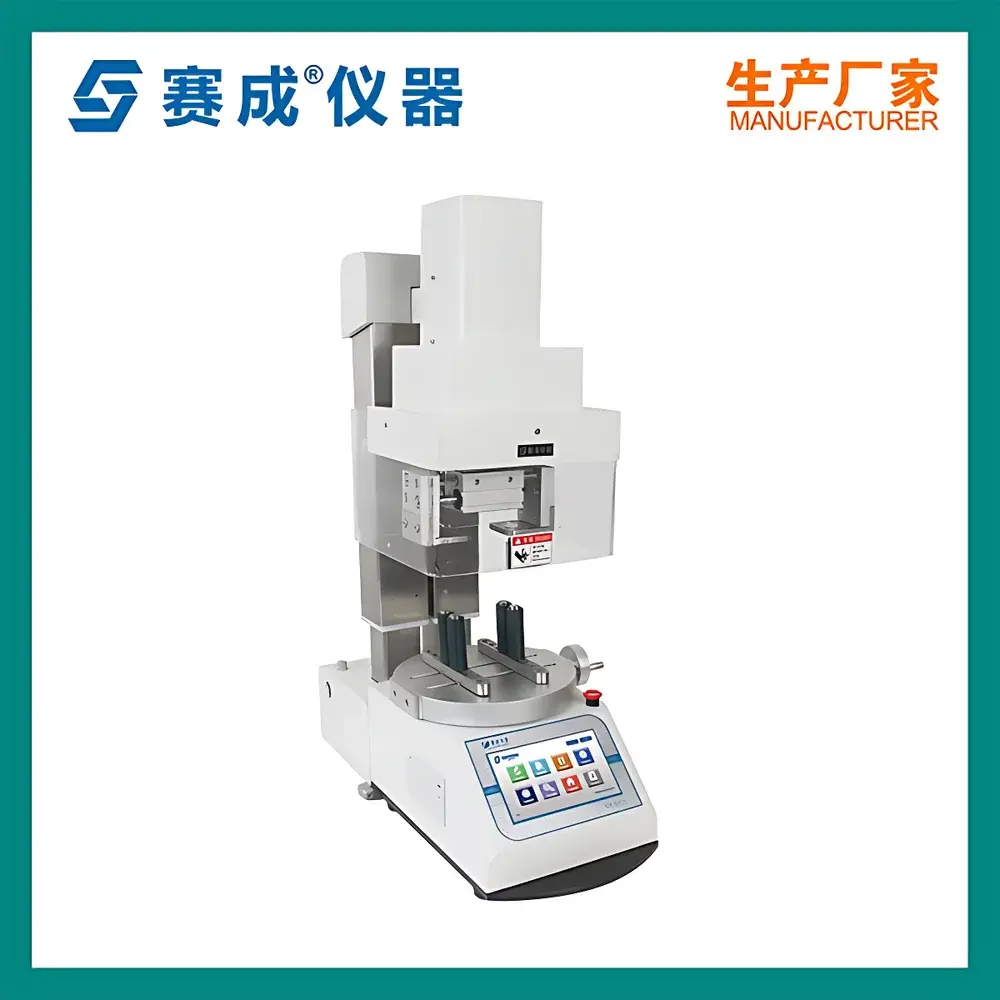
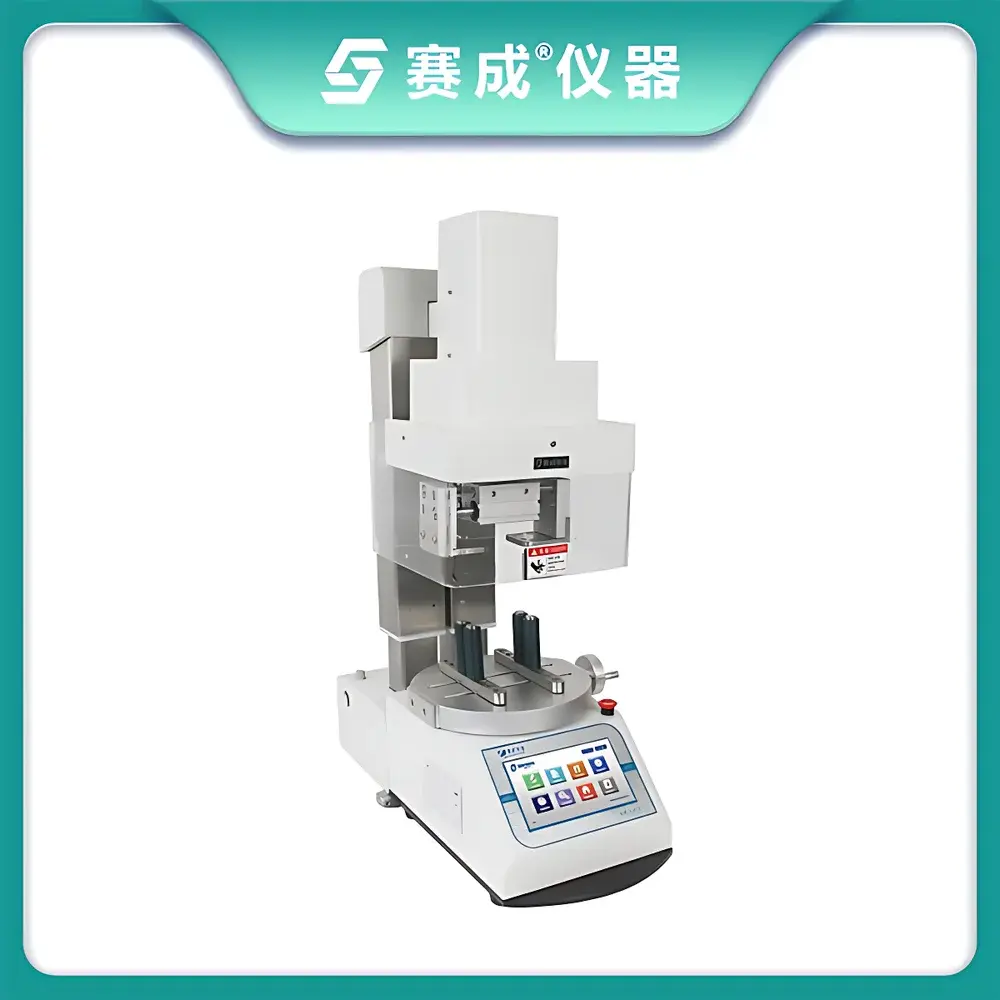
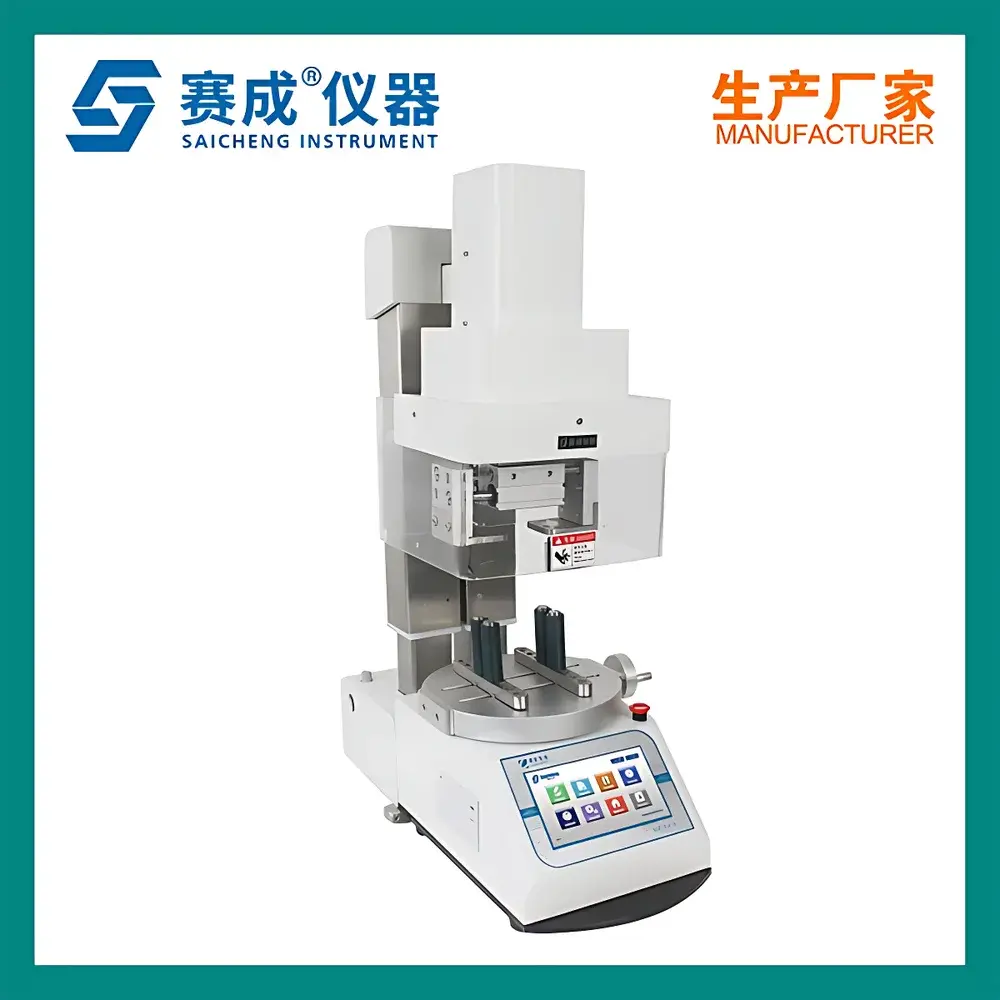
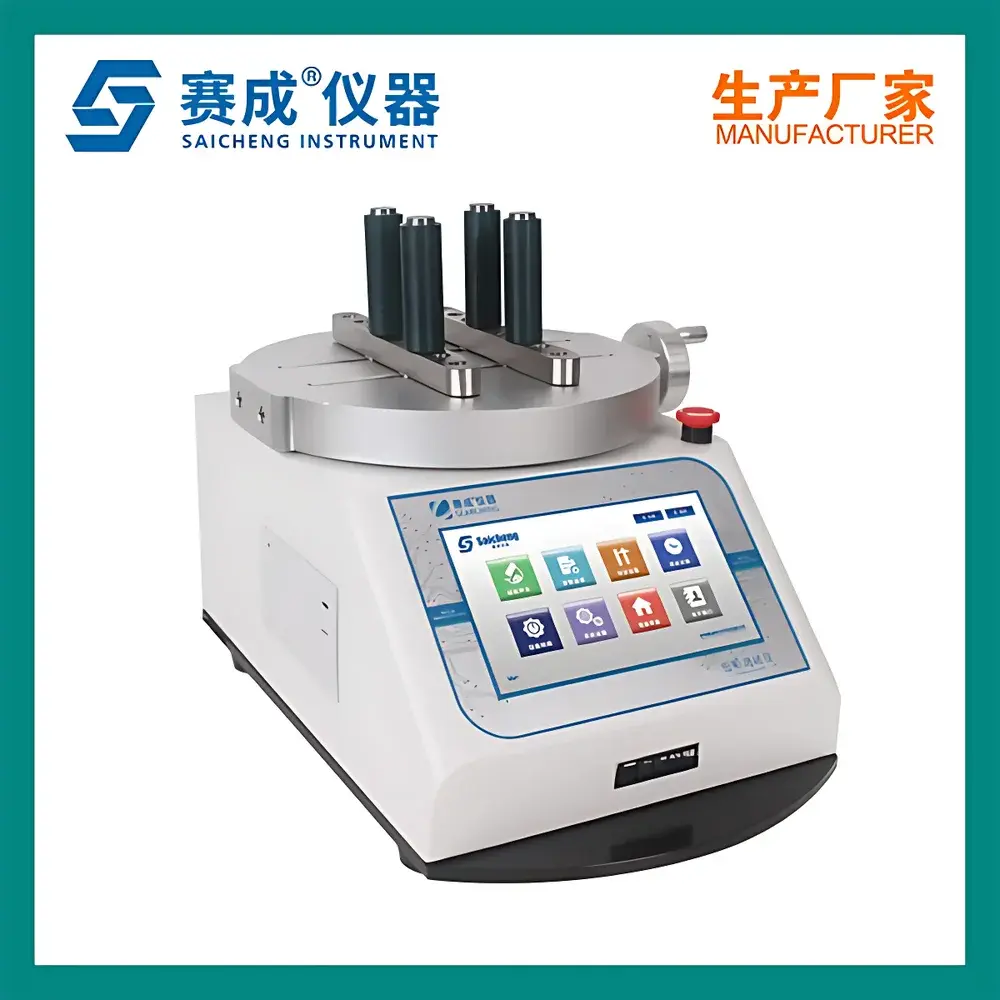
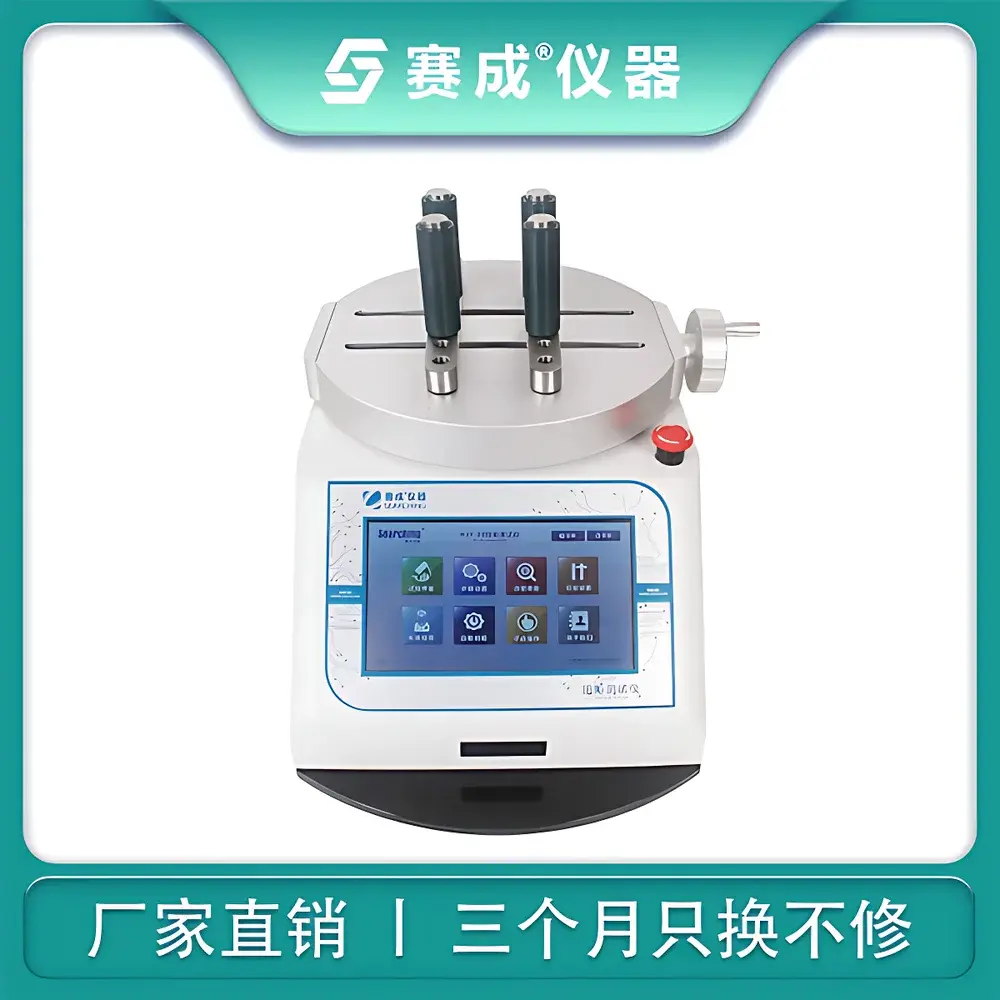
Saicheng NJY-20 Cap Torque Tester for Bottles and Closures
| Brand | Saicheng |
|---|---|
| Origin | Shandong, China |
| Manufacturer Type | Direct Manufacturer |
| Product Category | Domestic |
| Model | Saicheng NJY-20 |
| Max Torque | 50 N·m |
| Cap Diameter Range | Ø5 mm to Ø170 mm |
| Torque Resolution | 0.001 N·m |
| Power Supply | AC 220 V, 50 Hz |
| Compliance | GB/T 17876, ASTM D2063, ASTM D3198, ASTM D3474, BB/T 0025, BB/T 0034, GB/T 14803 |
Overview
The Saicheng NJY-20 Cap Torque Tester is a dedicated torsion testing instrument engineered for precise quantification of opening and closing torque values in threaded closures used across pharmaceutical, food & beverage, cosmetic, and consumer packaging industries. It operates on the principle of controlled rotational force application—measuring the static and dynamic torque required to initiate or complete rotation of a cap relative to its container neck. The system employs a high-accuracy S-type load cell (imported from HBM, Germany) mounted on a rigid, vibration-damped base frame, ensuring minimal mechanical hysteresis and long-term calibration stability. Designed for routine QC/QA environments, the NJY-20 delivers repeatable measurements under ambient laboratory conditions without requiring environmental enclosures or active temperature control—making it suitable for inline process verification as well as final product release testing.
Key Features
- Microprocessor-based control with backlit LCD display and tactile PVC membrane keypad for intuitive operation in production or lab settings.
- Dual-mode measurement: simultaneous capture of both breakaway (opening) torque and tightening (closing) torque, with automatic peak hold functionality for transient force events.
- High-resolution torque sensing (0.001 N·m) across a wide dynamic range (0–50 N·m), enabling accurate evaluation of child-resistant closures, tamper-evident bands, and low-torque dispensing caps.
- Adjustable clamping mechanism accommodates cylindrical containers from Ø5 mm to Ø170 mm in diameter—including vials, PET bottles, aluminum screw-top jars, and laminated tubes with integrated caps.
- Integrated safety logic: overload protection, real-time fault diagnostics, auto-zero compensation before each test cycle, and power-loss memory retention for test parameters and last-calibration data.
- Standard USB 2.0 interface compliant with CDC class drivers, enabling seamless integration with Windows-based LIMS or MES systems via Saicheng’s proprietary PC software (v3.2+), supporting raw data export in CSV and XML formats.
Sample Compatibility & Compliance
The NJY-20 is validated for use with all standard screw-threaded closure systems conforming to ISO 8317 (child-resistant packaging), ISO 13127 (safety-closure performance), and USP <1207> (container closure integrity). It supports testing per regulatory-referenced standards including GB/T 17876 (plastic caps for beverages), ASTM D2063 (torque testing of plastic closures), ASTM D3198 (performance requirements for closures), ASTM D3474 (torque/turn evaluation), BB/T 0025 (aluminum closures), and BB/T 0034 (pharmaceutical plastic caps). All measurement units are traceable to national metrological standards (CNAS-accredited calibration certificate available upon request). The device meets electromagnetic compatibility (EMC) and low-voltage directive requirements as verified by CE marking; full technical documentation aligns with ISO/IEC 17025:2017 clause 5.5.2 for test equipment validation.
Software & Data Management
The bundled Saicheng TorqueMaster™ software (v3.2) provides audit-trail-enabled data acquisition compliant with FDA 21 CFR Part 11 requirements—including electronic signatures, user role-based access control, and immutable record history. Each test session logs timestamp, operator ID, sample ID, torque curve (100 Hz sampling rate), peak value, average torque over defined angular intervals, and pass/fail status against preset limits. Reports are exportable in PDF format with embedded digital signature and calibration metadata. Software supports statistical process control (SPC) functions: X̄-R charts, Cp/Cpk calculation, and outlier detection based on Grubbs’ test. Data archives are stored locally with optional cloud backup via encrypted HTTPS API endpoints.
Applications
- Pharmaceutical manufacturing: verification of closure integrity for oral solid dosage forms (e.g., HDPE bottles, glass vials with aluminum seals), lyophilized product containers, and nasal spray actuator assemblies.
- F&B quality assurance: routine monitoring of PET bottle cap torque during filling line validation, shelf-life stability studies, and supplier qualification for contract packaging.
- Cosmetic R&D: comparative analysis of torque profiles across different liner materials (foam, pulp, induction-sealed foil), thread geometries (single-start vs. multi-start), and surface finishes (matte vs. glossy).
- Packaging engineering labs: correlation of torque data with seal strength, leak rate (ASTM F2338), and package drop-test survivability.
- Regulatory submission support: generation of GLP-compliant test reports for dossier submissions to NMPA, EMA, or PMDA.
FAQ
What is the recommended calibration interval for the NJY-20?
Annual calibration is advised per ISO/IEC 17025; however, internal verification using certified reference torque standards (NIST-traceable) should be performed at start-up, after maintenance, and prior to critical batch releases.
Can the NJY-20 test non-cylindrical containers?
No—the fixture design assumes axial symmetry and uniform radial contact. Irregular shapes require custom adapter plates, which must be validated separately for torque transmission fidelity.
Is the device compatible with automated conveyor-fed testing?
Not natively; however, third-party robotic end-effectors can be integrated via TTL-level I/O signals (optional module) for semi-automated high-throughput screening.
Does the software support multi-language UI?
Yes—English, Simplified Chinese, Spanish, and German language packs are included; additional languages may be added via configuration file updates.
How is measurement uncertainty determined for this instrument?
Combined standard uncertainty is calculated per GUM (JCGM 100:2008) incorporating contributions from sensor linearity (±0.2% FS), resolution (±0.0005 N·m), repeatability (±0.002 N·m at 10 N·m), and environmental drift (±0.001 N·m/°C within 15–25°C operating range).



