
- All
- Favorite
- Popular
- Most rated
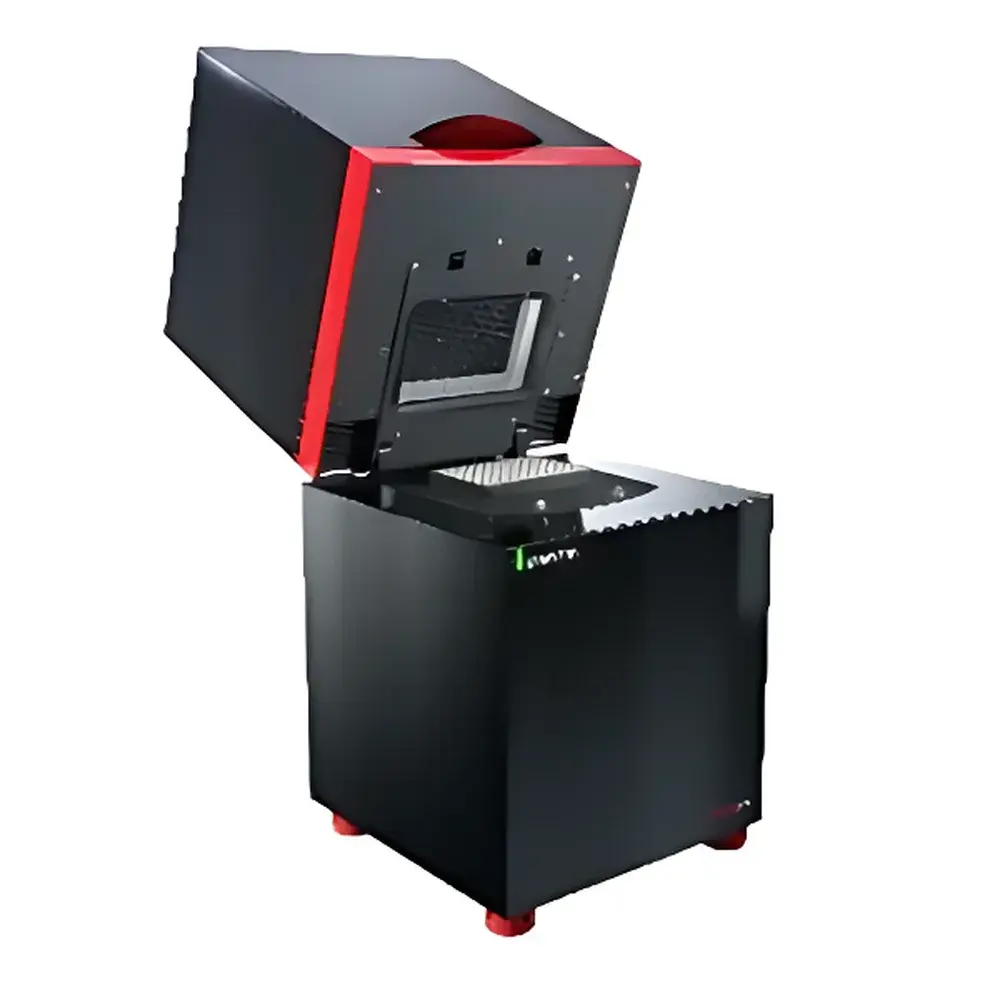
| Brand | analytikjena |
|---|---|
| Origin | Germany |
| Model | qTOWER3 84G |
| Instrument Type | Real-Time Fluorescence Quantitative PCR System |
| Sample Capacity | 384-well format |
| Maximum Heating Rate | 4 °C/s |
| Temperature Accuracy | ±0.1 °C |
| Well-to-Well Temperature Uniformity | ±0.15 °C |
| Optical Configuration | 6-channel excitation/emission system (configurable 1–6 channels) |
| Light Source | RGBW high-intensity long-life LEDs (blue, green, red, white) |
| Detector | High-sensitivity channel-type photomultiplier tube (PMT) |
| Detection Method | 16-channel fiber-optic scanning |
| Sensitivity | Single-copy DNA detection |
| Dynamic Range | 10 orders of magnitude |
| Recommended Reaction Volume | 2–30 µL |
| Linear Temperature Gradient | 24-column gradient |
| Thermal Module | Peltier-based with corrosion-resistant surface |
| Hot Lid Temperature | Up to 110 °C with auto-adjusting pressure (up to 30 kg/plate) |
| Noise Level | ≤45 dB(A) |
| Software | MIQE-compliant analysis suite with unlimited installation and lifetime free updates |
| Compliance | Designed for GLP/GMP-aligned workflows |
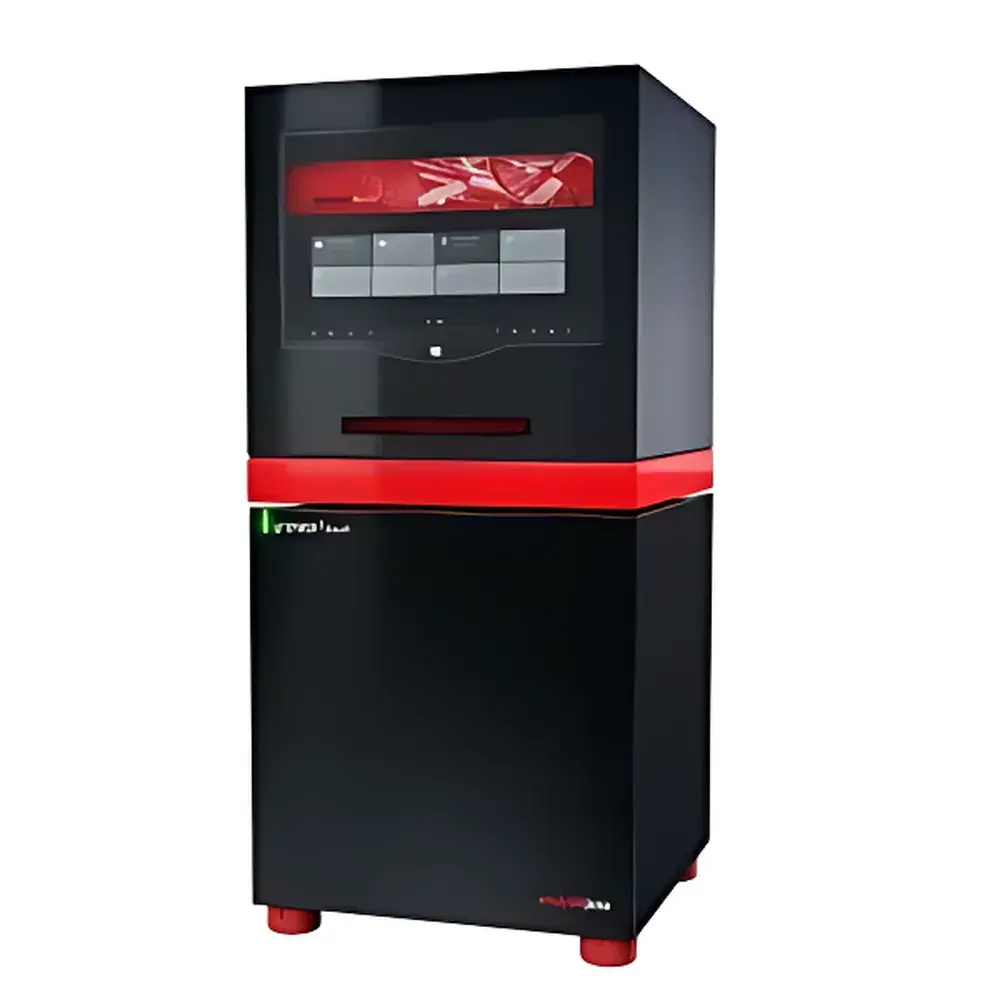
| Brand | Analytik Jena |
|---|---|
| Origin | Germany |
| Model | qTOWER3 G touch |
| Instrument Type | Real-Time Fluorescence Quantitative PCR System |
| Sample Capacity | 96-well format |
| Maximum Heating Rate | 8 °C/s |
| Temperature Accuracy | ±0.1 °C |
| Well-to-Well Temperature Uniformity | ±0.10 °C |
| Excitation Source | Four solid-state RGBW LEDs (blue, green, red, white) |
| Detection System | 8-channel fiber-optic scanning with channel-type photomultiplier tube (PMT) |
| Detection Channels | Configurable 1–6 channels |
| Thermal Gradient | 12-column linear gradient (spanning up to 40 °C) |
| Sample Block Material | Gold-plated pure silver block |
| Lid System | Motorized, pressure-regulated heated lid with auto-height adjustment |
| Software | qPCRsoft v5.x compliant with MIQE guidelines, supporting absolute quantification, relative quantification (ΔΔCt & dual standard curve), melting curve analysis, SNP/allelic discrimination, endpoint analysis, amplification efficiency calculation, and audit-trail-enabled reporting per FDA 21 CFR Part 11 requirements |
Show next