
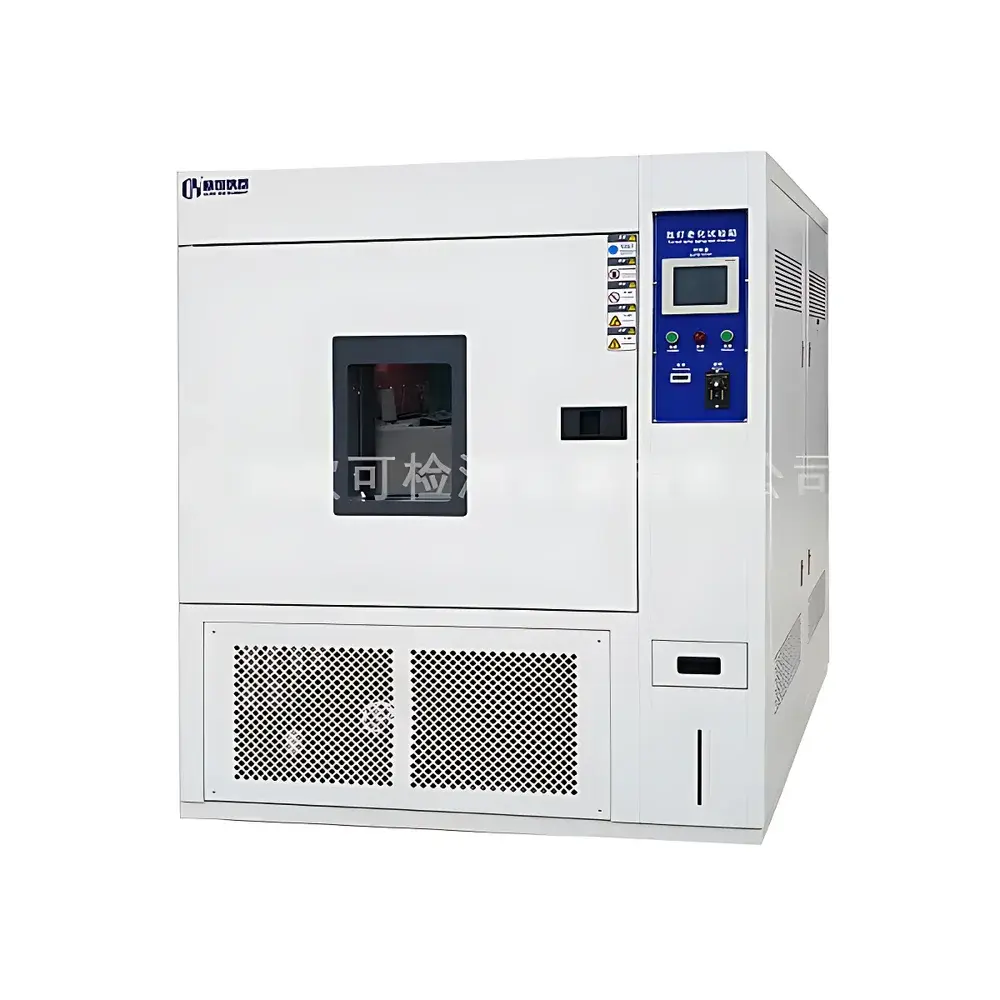
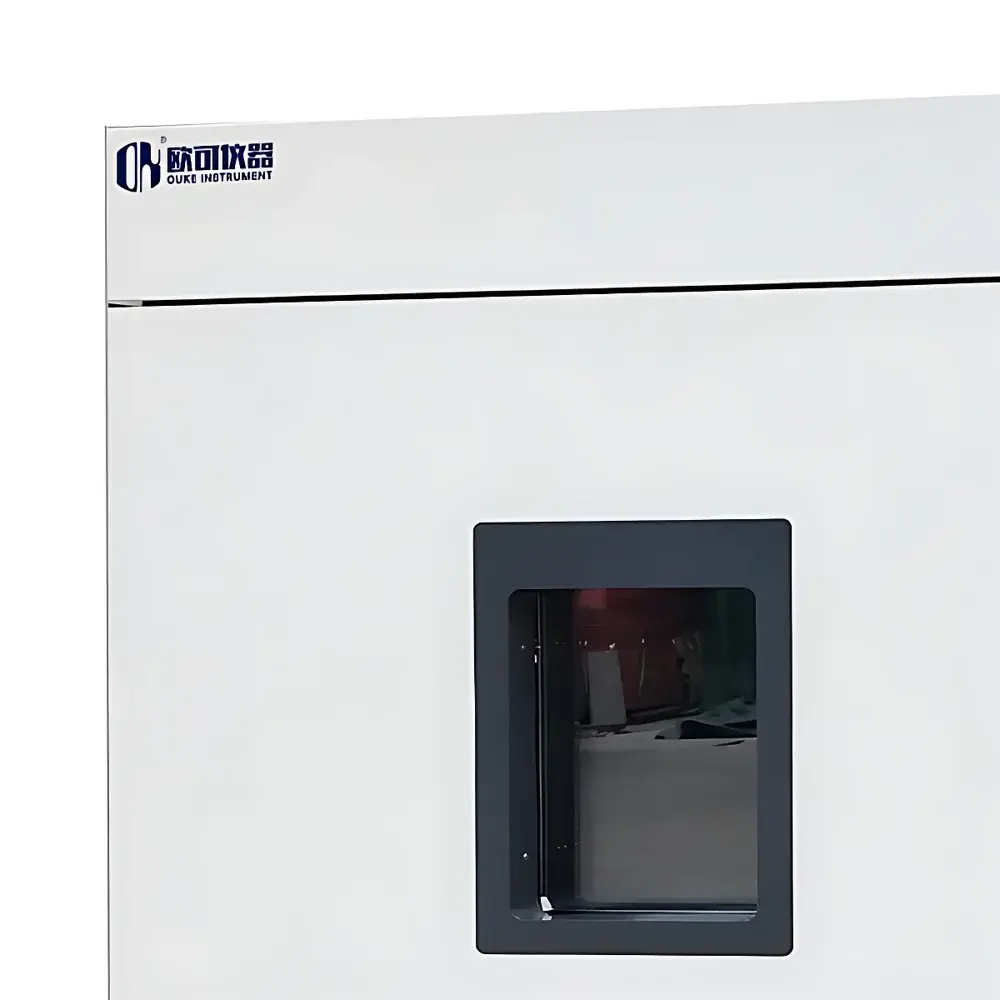
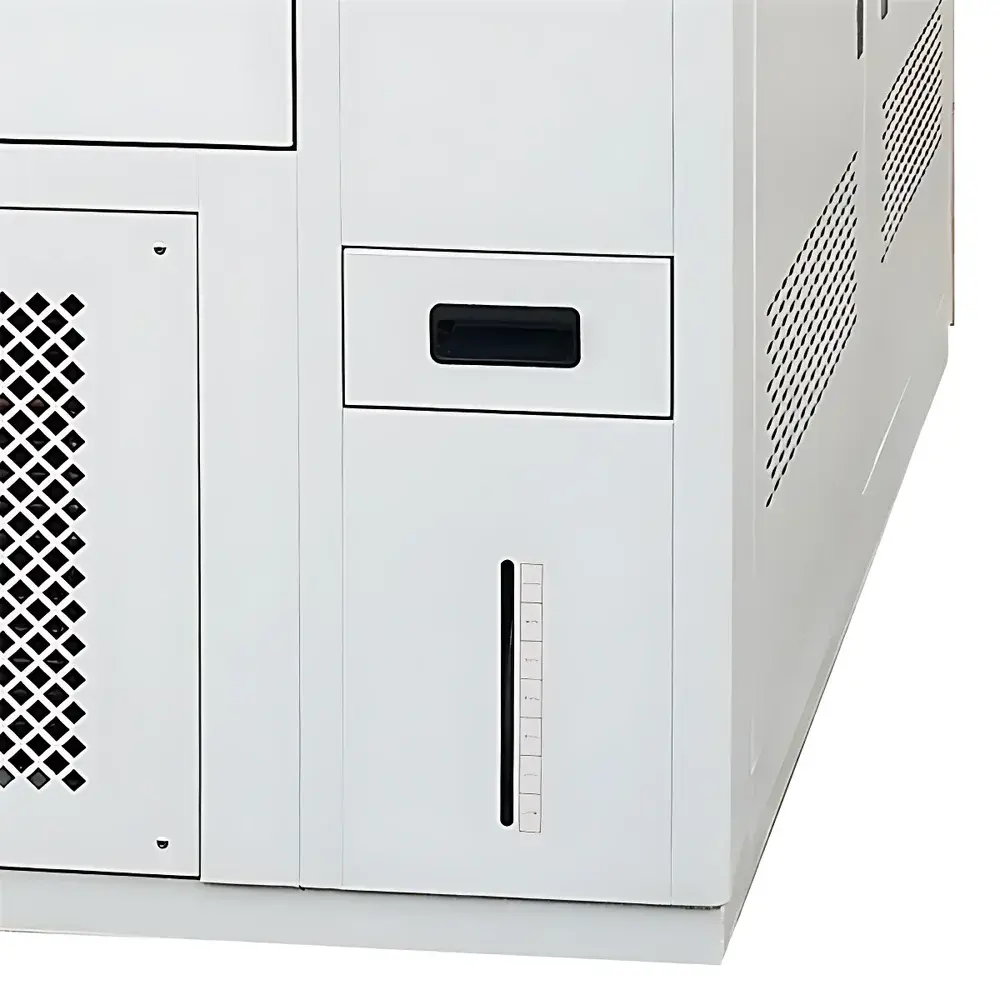
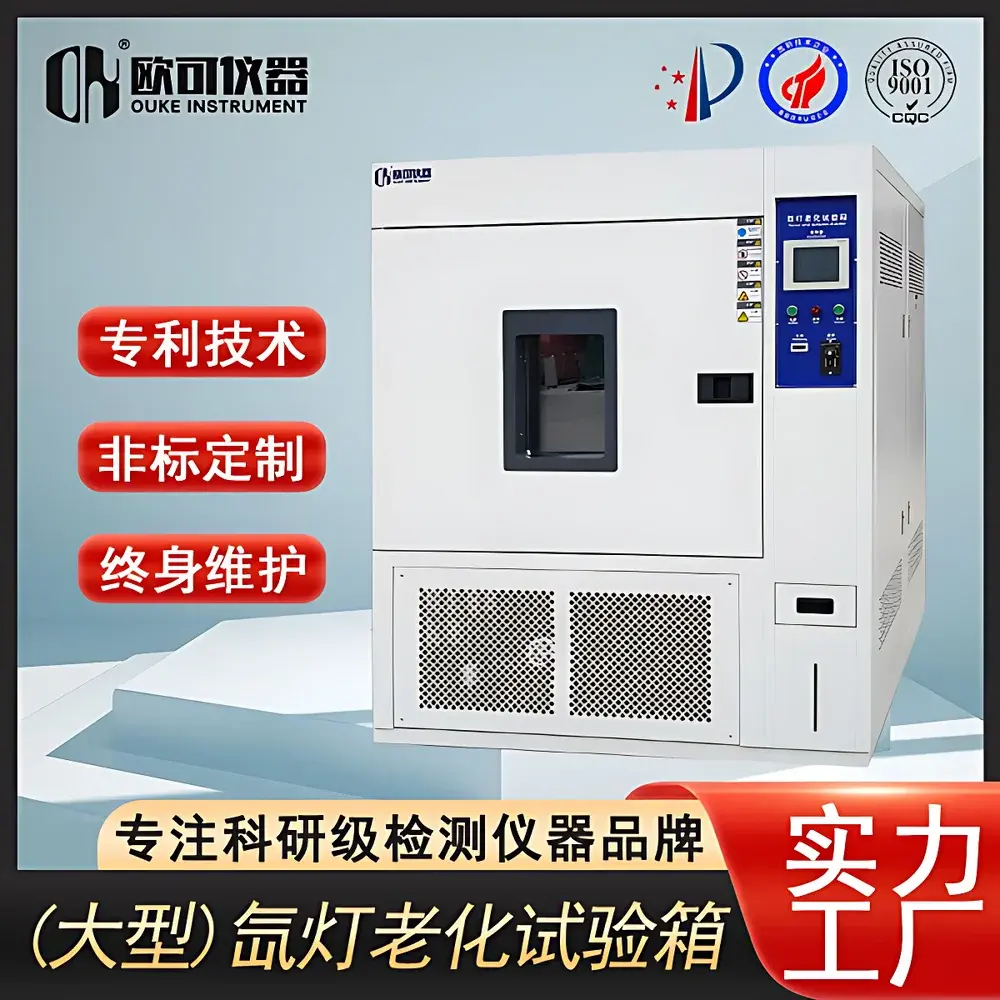
OK 0K-XD-1000 Xenon Arc Weathering Test Chamber for Plastic Enclosures
| Brand | OK Instruments |
|---|---|
| Origin | Guangdong, China |
| Manufacturer Type | Direct Manufacturer |
| Model | 0K-XD-1000 |
| Price | USD 6,750 (FOB Guangdong) |
| Xenon Lamp Power | 6 kW |
| Irradiance Range | ≤1200 W/m² (300–800 nm) |
| Light Cycle Duration | 1–999 hours/minutes/seconds (programmable) |
| Humidity Range (Light Cycle) | 20–75 %RH |
| Cooling Method | Air-Cooled |
| Filter Options | Daylight & Window Glass Filters (ISO 4892-2 compliant) |
| Temperature Range | Ambient +10°C to 100°C |
| Spray Function | Front-mounted oscillating nozzles for rain simulation |
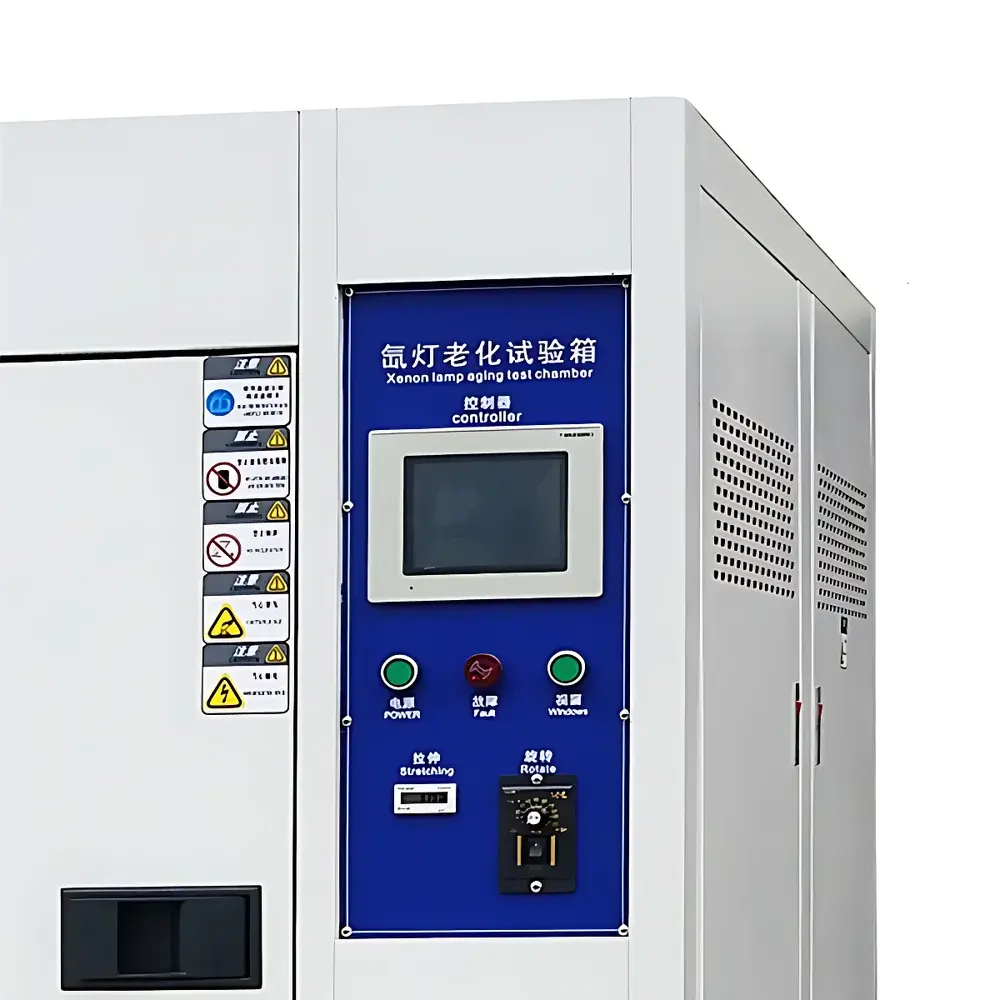
| Control System | 7-inch color touchscreen PLC with multi-segment cycle programming |
| Compliance | ISO 4892-2, ASTM G155, GB/T 16422.2 |
Overview
The OK 0K-XD-1000 Xenon Arc Weathering Test Chamber is an engineered environmental simulation system designed specifically for accelerated weathering evaluation of polymeric enclosures—particularly injection-molded plastic housings used in automotive, consumer electronics, outdoor lighting, and industrial equipment applications. It operates on the principle of controlled xenon arc irradiation, replicating the full solar spectrum (290–2500 nm) with high fidelity to natural sunlight, especially in the critical UV-A (315–400 nm) and visible regions. Unlike fluorescent UV or metal halide sources, xenon arc lamps deliver spectrally accurate radiant energy, enabling physicochemical degradation mechanisms—such as photooxidation, chain scission, pigment bleaching, and hydrolytic surface erosion—to proceed at rates and pathways closely aligned with real-world field exposure. Coupled with precise regulation of temperature, relative humidity, and cyclic water spray, the chamber subjects test specimens to synergistic stressors that collectively drive material aging: photothermal degradation under irradiance, moisture-induced swelling/hydrolysis during dark cycles, and thermal cycling-induced microcracking. This enables predictive lifetime assessment, comparative formulation screening, and root-cause analysis of premature failure modes—including color shift (ΔE*), gloss loss (>10 GU reduction), embrittlement (impact strength drop >30%), surface chalking, and dimensional warpage.
Key Features
- Xenon lamp system: 6 kW air-cooled long-arc xenon lamp with integrated quartz envelope and forced-air thermal management—optimized for stable output over ≥1,500 h lamp life.
- Spectral accuracy: Dual-filter capability: Daylight filter (CIE No. 1) for direct outdoor exposure simulation; Window glass filter (CIE No. 3) for interior applications (e.g., dashboard components).
- Irradiance control: Calibrated broadband radiometer (300–800 nm) with closed-loop feedback ensures ±5% irradiance stability across test duration; manual or auto-compensation mode selectable.
- Environmental control: Independent PID-regulated heating (up to 100°C), steam-based humidification (20–75 %RH during light phase), and refrigerated dehumidification (down to 20 %RH in dark phase).
- Rain simulation: Programmable spray cycle (duration, frequency, pressure) using stainless-steel oscillating nozzles; conforms to ISO 4892-2 wetting requirements for realistic moisture ingress modeling.
- Sample handling: Rotating drum sample holder (360° continuous rotation) ensures uniform irradiance distribution across curved or asymmetric plastic enclosures; maximum load capacity: 20 kg.
- Control architecture: Industrial-grade PLC with 7-inch capacitive touchscreen interface; supports up to 99 programmable test segments, data logging at 1-min intervals, and USB export of raw sensor traces.
Sample Compatibility & Compliance
The 0K-XD-1000 accommodates rigid and semi-rigid thermoplastic and thermoset enclosures—including ABS, PC, PP, PA6/66, PBT, and TPE blends—with dimensions up to 600 mm × 450 mm × 300 mm (W×D×H). Its chamber geometry and rotational sample rack eliminate shadowing artifacts common in flat-panel testers, making it suitable for full-shell validation (e.g., smartphone cases, EV battery housings, HVAC grilles). All operational parameters adhere strictly to internationally recognized weathering standards: ISO 4892-2 (Plastics — Methods of exposure to laboratory light sources — Part 2: Xenon-arc methods), ASTM G155 (Standard Practice for Operating Xenon Arc Equipment for Exposure of Non-Metallic Materials), and GB/T 16422.2 (Chinese national standard equivalent to ISO 4892-2). Optional audit-ready configuration includes electronic signature support, user access levels, and 21 CFR Part 11-compliant data integrity features for regulated industries (e.g., medical device housing qualification).
Software & Data Management
Embedded firmware provides real-time monitoring of irradiance (W/m²), black panel temperature (BPT), chamber air temperature, RH%, and spray status. Logged data are timestamped and stored internally (≥30 days at 1-min resolution); export is supported via USB 2.0 in CSV format for post-processing in MATLAB, JMP, or Minitab. The system does not require external PC software for basic operation but offers optional Ethernet connectivity for integration into centralized lab networks. All calibration records—including radiometer traceability to NIM (National Institute of Metrology, China) and temperature/humidity sensor NIST-traceable certificates—are supplied with each unit. Audit trails capture operator ID, parameter changes, alarm events, and cycle start/stop timestamps—fully compliant with GLP and internal quality system requirements.
Applications
- Accelerated lifetime prediction of exterior plastic trim under SAE J2527 or ISO 20671 conditions.
- Colorfastness validation per AATCC TM16 or ISO 105-B02 for pigmented housings exposed to tropical climates.
- Gloss retention benchmarking for matte-finish consumer electronics enclosures (e.g., TV bezels, router casings).
- Correlation studies between lab weathering cycles and field return data from automotive Tier-1 suppliers.
- Formulation optimization trials comparing UV stabilizer packages (HALS, benzotriazoles) in PP-based battery covers.
- Failure analysis of cracked polycarbonate lenses following 2,000-h xenon exposure with alternating UV/dark/wet cycles.
FAQ
What spectral range does the xenon lamp cover, and how is it filtered?
The lamp emits broadband radiation from 290 nm to 2500 nm. Standard daylight and window glass filters narrow the effective output to match terrestrial solar irradiance profiles per ISO 4892-2 Annex A.
Is irradiance calibrated automatically during testing?
Yes—the built-in radiometer continuously monitors irradiance and adjusts lamp power in real time to maintain setpoint stability within ±5%.
Can the chamber simulate dew formation?
While not a dedicated condensation cycle, the programmed humidity ramp-down during dark phases combined with BPT cooling induces surface condensation consistent with ISO 4892-2 “dark with humidity” conditions.
Does the system support custom test protocols beyond ISO/ASTM standards?
Absolutely—the PLC interface allows full customization of irradiance setpoints, temperature ramps, humidity profiles, and spray timing across up to 99 sequential segments.
What maintenance is required for long-term reliability?
Recommended quarterly tasks include quartz filter cleaning, lamp alignment verification, nozzle descaling, and radiometer recalibration using factory-supplied reference sensors.
Related Products



