
OK-100 Benchtop Reciprocating Vibration Shaker for Packaging Integrity Testing
| Brand | OEM |
|---|---|
| Origin | Imported |
| Manufacturer Type | Authorized Distributor |
| Model | OK-100 |
| Price | USD 5,280 (FOB) |
| Load Capacity | 100 kg |
| Table Dimensions (L×W) | 120 × 100 cm |
| Vibration Mode | Reciprocating (Linear Horizontal) |
| Speed Range | 60–300 rpm |
| Peak-to-Peak Amplitude | 25.4 mm |
| Frequency Range | 1.0–5.0 Hz |
| Timer Range | 0.1 s – 999.99 h |
| Drive System | AC Variable-Frequency Motor |
| Power Supply | 220 V, 50/60 Hz |
| Compliance | ISTA 1A, ISTA 2A, ASTM D999, EN 71-1, ISO 8766 |
Overview
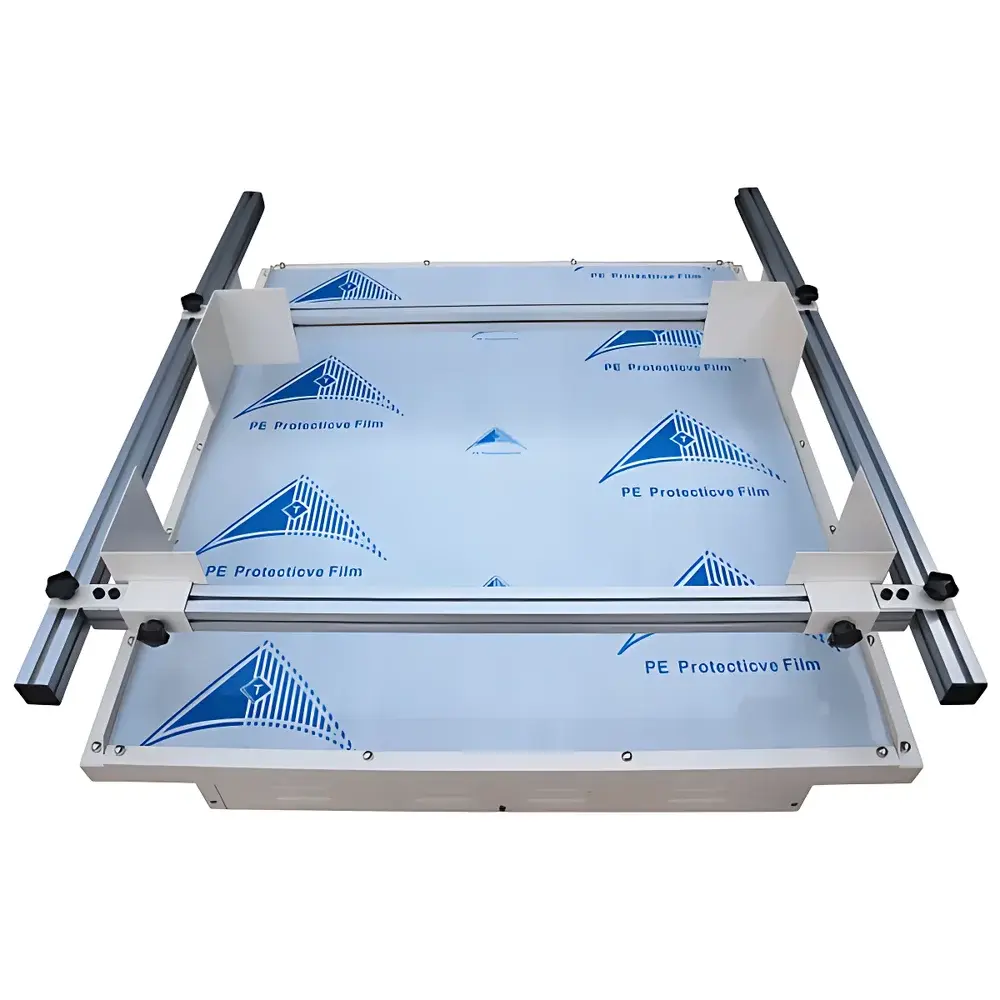
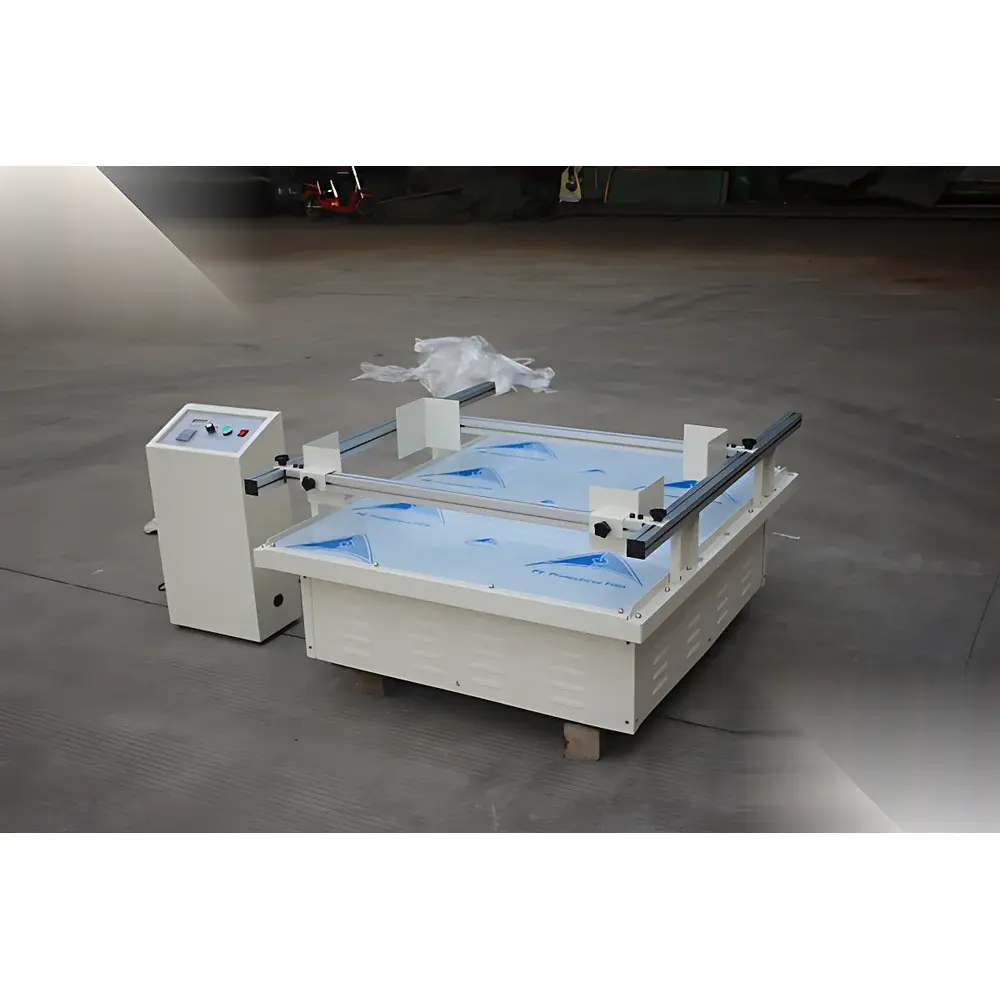
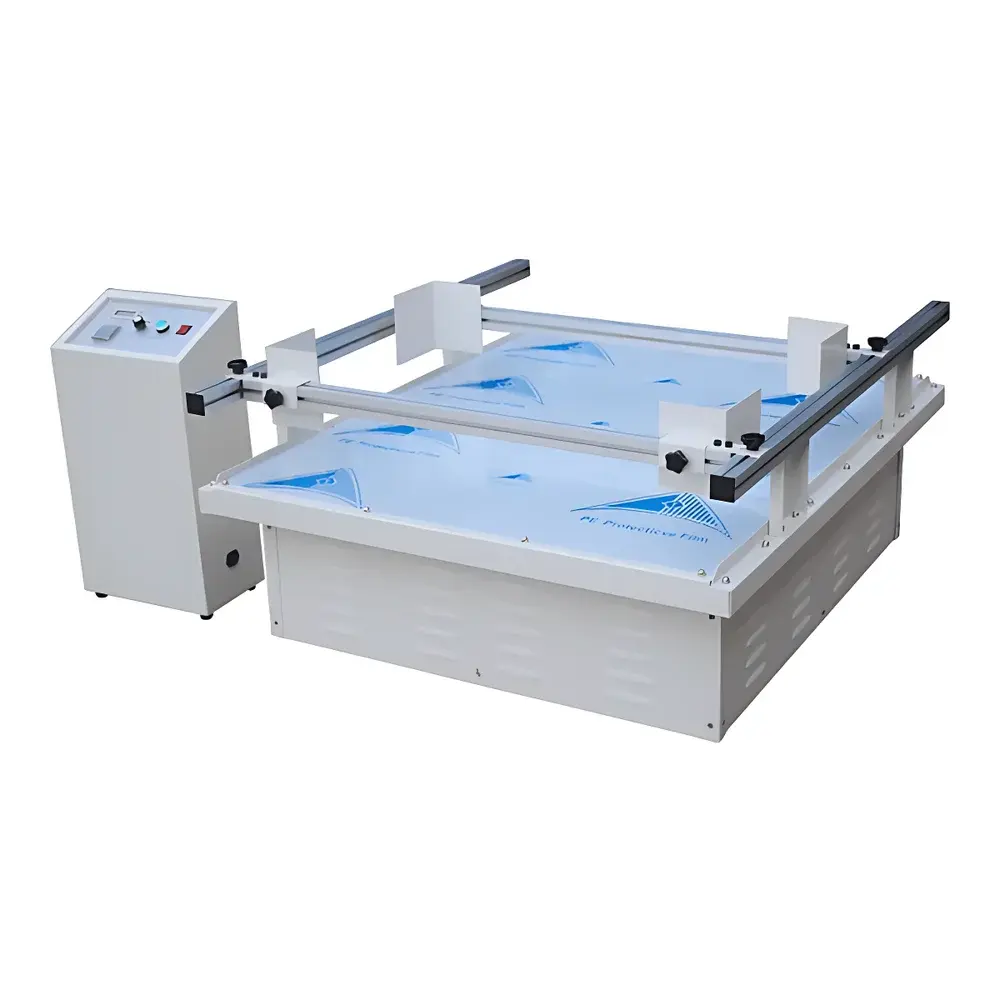
The OK-100 Benchtop Reciprocating Vibration Shaker is an engineered solution for simulating real-world transportation-induced mechanical stress on packaged goods. It operates on the principle of controlled horizontal reciprocating motion—generating sinusoidal displacement at fixed amplitude (25.4 mm p-p) and adjustable frequency (1.0–5.0 Hz)—to replicate the low-frequency, high-displacement excitations typical of road, rail, and sea freight environments. Unlike electrodynamic shakers optimized for high-frequency acceleration profiling, this unit is purpose-built for compliance-driven packaging validation per international transport simulation standards. Its mechanical architecture employs a robust crank-slider mechanism coupled with precision linear guide rails, ensuring repeatable stroke linearity and minimal harmonic distortion across the operational speed range. Designed for integration into QC laboratories, R&D facilities, and contract testing labs, the OK-100 delivers metrologically traceable vibration profiles without requiring dedicated isolation foundations or auxiliary cooling systems.
Key Features
- Reciprocating horizontal motion with mechanically constrained 25.4 mm peak-to-peak amplitude—fully compliant with ISTA 1A/2A and ASTM D999 amplitude requirements;
- AC variable-frequency drive system enabling precise, stepless speed control from 60 to 300 rpm (1.0–5.0 Hz), with <±0.2 rpm stability under full 100 kg load;
- Heavy-duty linear slide rail assembly with preloaded ball-bearing carriages, minimizing lateral play and ensuring consistent sample positioning repeatability (±0.1 mm axial runout);
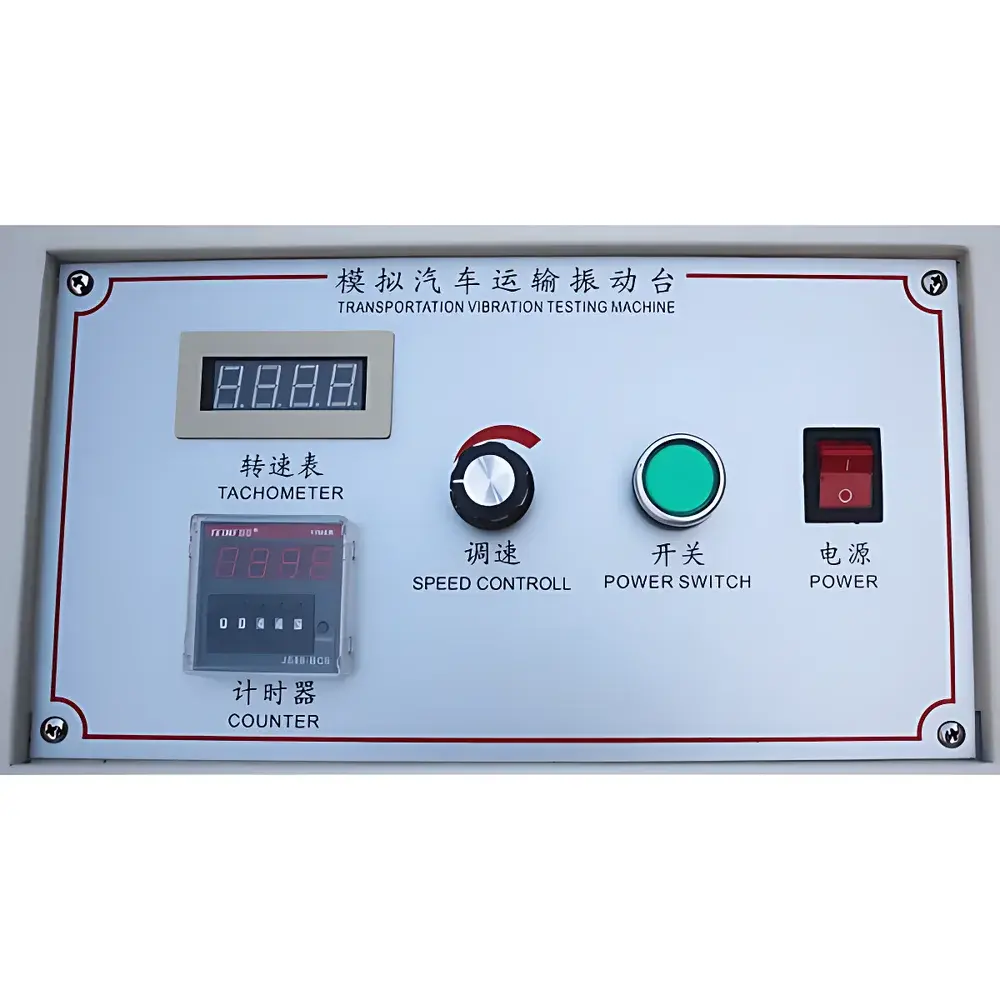
- Digital LED timer interface with resolution down to 0.1 seconds and extended range up to 999.99 hours—supporting both time-based and cycle-count-based test protocols;
- Low-noise operation (<62 dB(A) at 1 m distance), achieved via balanced crankshaft design, rubber-isolated motor mount, and vibration-damped base frame—enabling installation in shared office-lab environments;
- Modular table platform (120 × 100 cm stainless steel surface with M6 threaded inserts) compatible with standard fixture plates, clamping bars, and custom mounting brackets.
Sample Compatibility & Compliance
The OK-100 accommodates packaged units up to 100 kg and 120 × 100 cm footprint, supporting cartons, palletized loads (with optional slip-sheet adapters), and assembled consumer products including electronics, toys, furniture components, ceramics, and giftware. Its motion profile satisfies the fundamental kinematic boundary conditions defined in ISTA Procedure 1A (non-simulation) and 2A (partial simulation), as well as ASTM D999 Section 6.2 for horizontal vibration testing. The device is also referenced in EN 71-1 Annex G for toy packaging durability assessment and aligns with ISO 8766:2021 for general-purpose transport vibration simulation methodology. While not certified to IEC 61000-4-2 or MIL-STD-810H shock profiles, it meets GLP documentation requirements when paired with external data loggers for audit-trail generation.
Software & Data Management
The OK-100 operates as a standalone hardware platform with embedded microcontroller-based timing and speed regulation—no proprietary software installation required. All operational parameters (set speed, elapsed time, remaining time) are displayed on a dual-line LED interface with tactile push-button controls. For laboratories requiring electronic record retention, analog 0–10 V output signals (speed and timer status) are provided for integration with third-party SCADA systems or validated LIMS platforms. When used in FDA-regulated environments (e.g., medical device packaging validation), the unit supports 21 CFR Part 11 compliance through externally connected timestamped data acquisition modules that capture start/stop events, runtime deviations, and operator ID inputs.
Applications
- Validation of corrugated box compression strength and seam integrity under simulated transit vibration;
- Evaluation of internal product shifting, cushioning performance, and secondary packaging adhesion failure modes;
- Pre-shipment qualification testing for e-commerce fulfillment centers seeking ISTA-certified shipping claims;
- Root-cause analysis of field return failures linked to vibration-induced loosening, abrasion, or component fatigue;
- Comparative benchmarking of alternative packaging materials (foam, molded pulp, air pillows) under identical excitation profiles;
- Supporting ISO 9001:2015 clause 8.5.1 (control of production and service provision) through documented, repeatable environmental stress screening.
FAQ
Does the OK-100 meet ISTA certification requirements for laboratory accreditation?
Yes—the OK-100’s fixed 25.4 mm amplitude and 60–300 rpm speed range directly satisfy the mechanical specification thresholds in ISTA 1A, 2A, and 3A. However, full ISTA certification requires lab-specific procedural documentation, equipment calibration records, and personnel training verification—not hardware alone.
Can the vibration direction be changed from horizontal to vertical?
No. The OK-100 is mechanically configured for horizontal reciprocation only. Vertical or multi-axis vibration requires separate electrodynamic shaker systems (e.g., OK-VS series).
What maintenance is required to ensure long-term amplitude accuracy?
Biannual inspection of crankshaft coupling bolts, rail lubrication (ISO VG 68 grease), and belt tension verification is recommended. Amplitude calibration should be performed annually using a certified laser vibrometer per ISO 16063-11.
Is the unit supplied with calibration documentation?
Each unit ships with a Factory Calibration Certificate (traceable to NIST standards) covering speed accuracy (±0.5% of setpoint) and timer deviation (±0.1% over 24 h), valid for 12 months from shipment date.



