
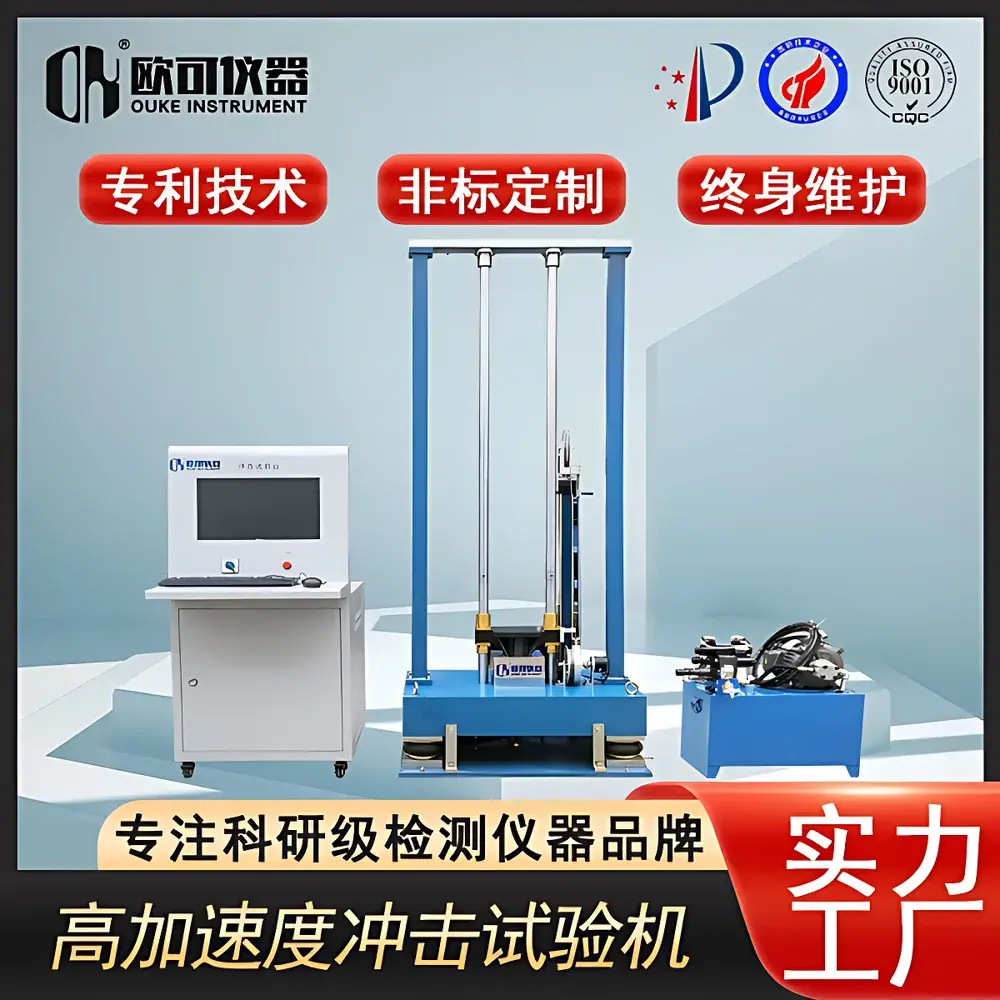
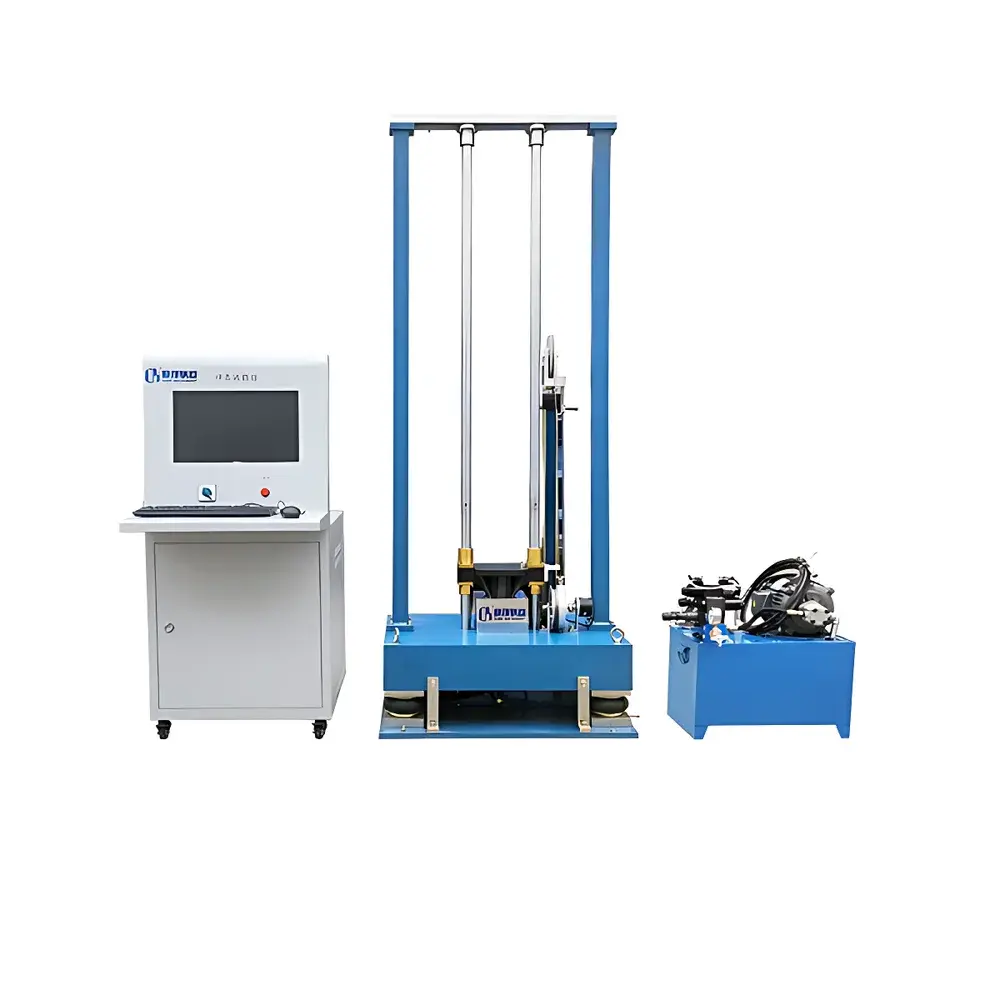
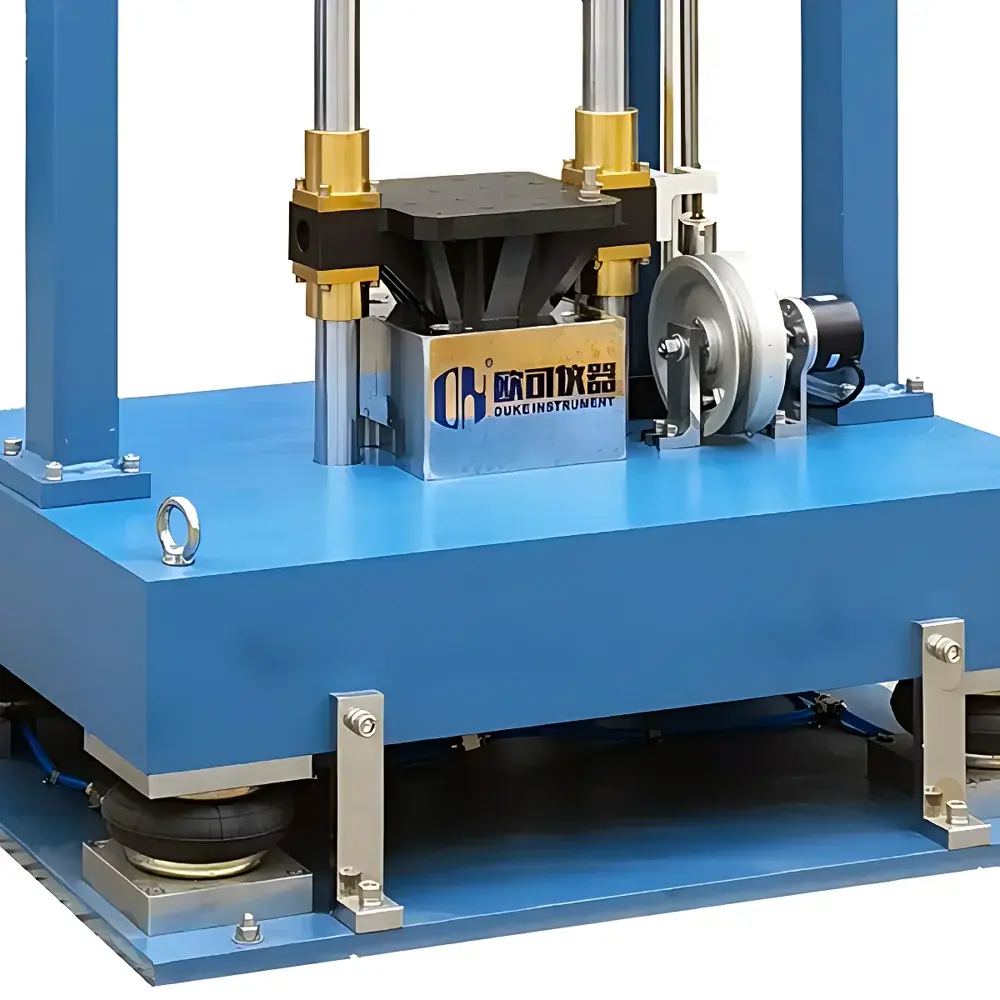
OK-S-13 High-Acceleration Shock Testing Machine
| Brand | OK Instruments |
|---|---|
| Origin | Guangdong, China |
| Manufacturer Type | OEM/ODM Manufacturer |
| Country of Origin | China |
| Model | OK-S-13 |
| Instrument Category | Other Impact Testing Machines |
| Shock Acceleration | 1000 G |
| Impact Velocity | 4.5 m/s |
| Pendulum Moment (Impact Constant) | 500 N·m |
| Load Cell Range | 550 N |
| Maximum Lifting Height | 380 mm |
Overview
The OK-S-13 High-Acceleration Shock Testing Machine is a precision-engineered electro-mechanical system designed to replicate transient, high-intensity mechanical shock environments encountered during transportation, handling, operational use, or accidental drop events. It operates on the principle of controlled deceleration: a test specimen—rigidly mounted on a rigid impact table—is accelerated to a defined velocity and then subjected to rapid, programmable deceleration upon contact with a waveform-shaping interface (e.g., elastomeric pads, lead anvil, or composite pulse generators). This process generates calibrated shock pulses characterized by peak acceleration (G), pulse duration (ms), and waveform shape—parameters critical for evaluating structural integrity, packaging efficacy, solder joint reliability, and functional survivability under mechanical stress. The system conforms to the physical basis of classical shock dynamics, where acceleration magnitude (a = Δv/Δt) is governed by the change in velocity (Δv) over the effective rise/fall time (Δt) of the pulse. Unlike quasi-static or cyclic loading devices, this machine delivers energy in discrete, non-repetitive transients—making it indispensable for qualification testing in electronics, aerospace, automotive, and defense sectors.
Key Features
- High-fidelity shock generation with programmable peak acceleration up to 1000 G and impact velocity of 4.5 m/s—suitable for mid-range mechanical shock qualification per IEC 60068-2-27, MIL-STD-202G Method 213, and JESD22-B104.
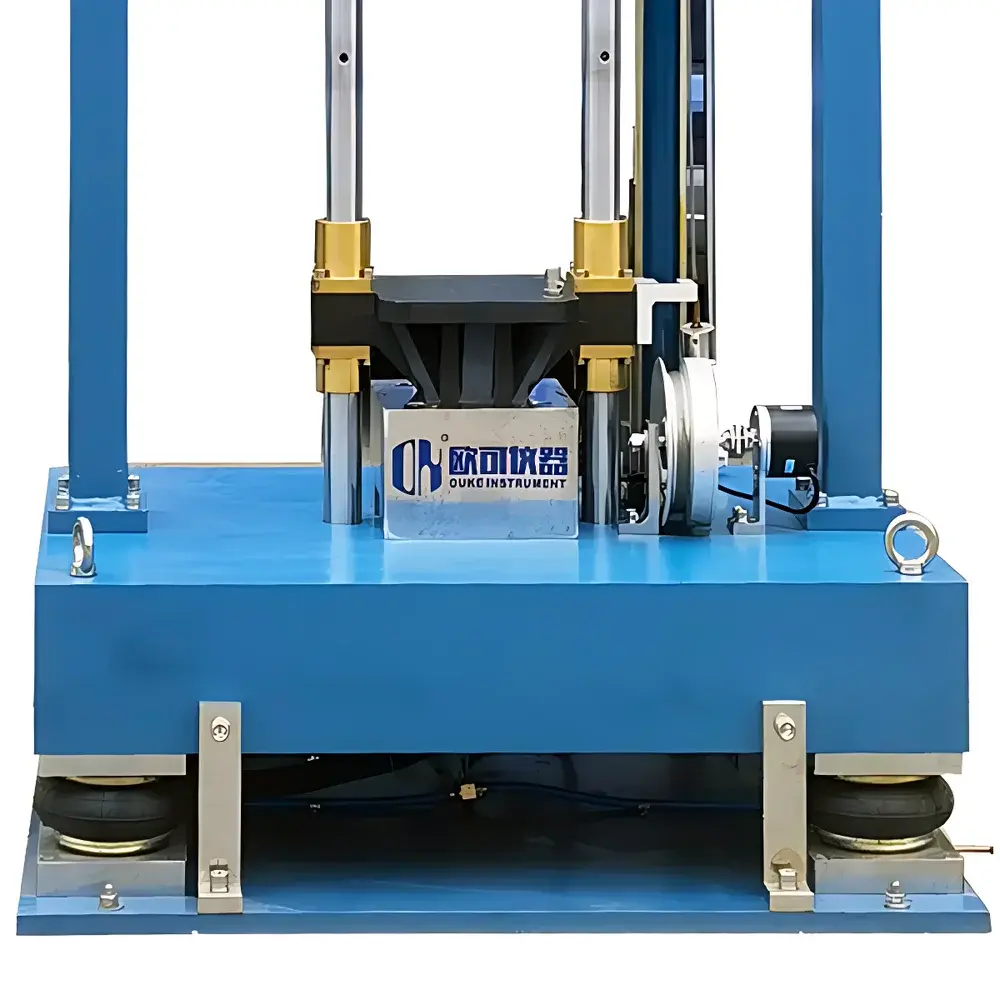
- Rigid, high-stiffness aluminum alloy table structure optimized for minimal modal interference and consistent force transmission across the 380 mm maximum lift height range.
- Integrated pendulum-based impact mechanism with calibrated moment arm (500 N·m) enabling repeatable semi-sinusoidal, terminal-peak sawtooth, and trapezoidal pulse generation via interchangeable waveform programmers (rubber, silicone, felt, lead).
- Dual-channel high-frequency piezoelectric accelerometer input (550 N load cell range) synchronized with 1 MS/s data acquisition for real-time pulse validation and post-test waveform analysis.
- Industrial-grade PLC-based control unit supporting user-defined test profiles—including pulse amplitude, duration, polarity, repetition count, and inter-pulse dwell time—with password-protected parameter locking for GLP-compliant operation.
Sample Compatibility & Compliance
The OK-S-13 accommodates specimens up to 15 kg (standard configuration) with mounting footprints compatible with ISO 20282-1 and ASTM D6344 test fixtures. Its shock pulse fidelity meets the waveform tolerance bands specified in IEC 60068-2-27 (Shock, Method Ea) for half-sine (±10% peak, ±20% duration), terminal-peak sawtooth (±15% peak, ±25% duration), and trapezoidal waveforms. The system supports traceable calibration against NIST-traceable reference accelerometers and is routinely deployed in laboratories operating under ISO/IEC 17025 quality management systems. While not inherently FDA 21 CFR Part 11 compliant, audit-ready electronic logs—including operator ID, timestamp, test parameters, and raw waveform exports—can be configured to support GMP/GLP documentation requirements when integrated with validated laboratory information management systems (LIMS).
Software & Data Management
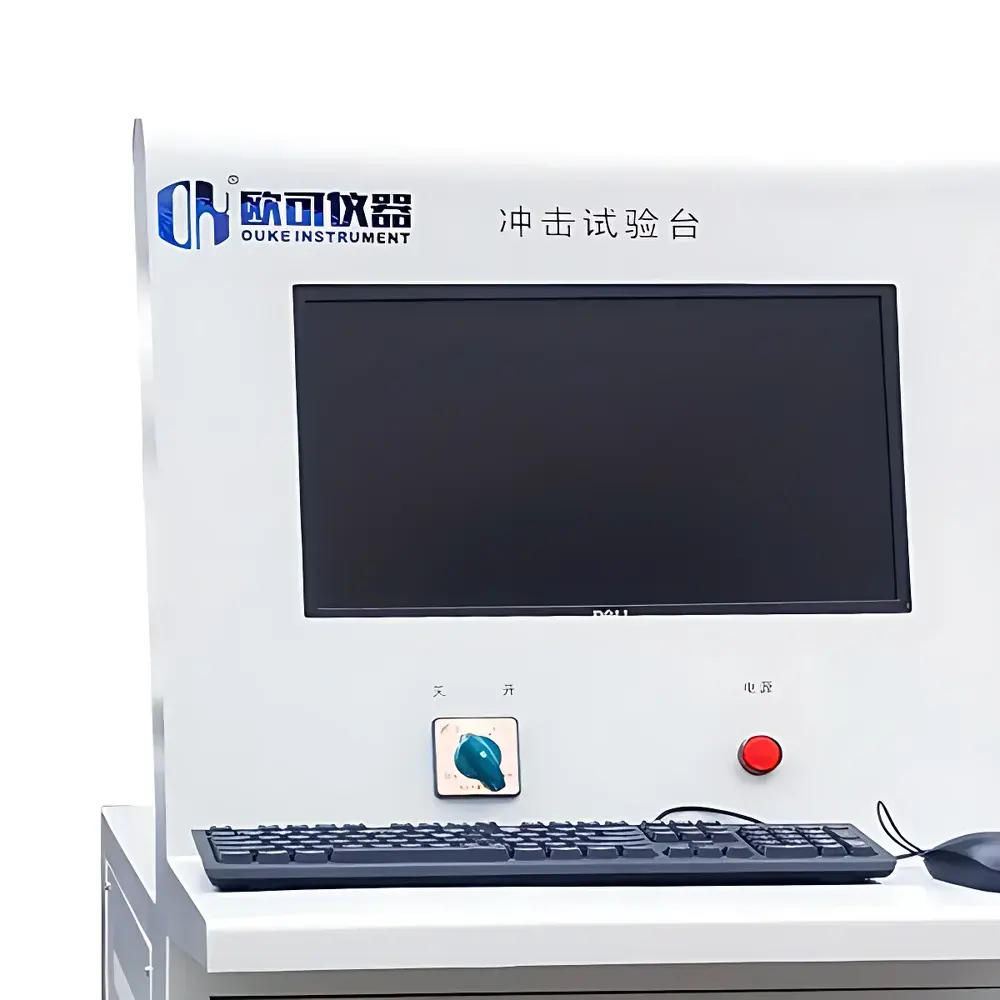
The embedded control firmware provides intuitive touchscreen navigation for test setup, execution, and immediate waveform overlay comparison (target vs. actual). All acquired shock data are stored in IEEE-compliant binary format (.tdms) and exported as CSV or MATLAB-compatible .mat files. Optional PC-based analysis software includes spectral analysis (FFT-based shock response spectrum, SRS), pulse parameter extraction (peak G, duration, velocity change Δv), and statistical reporting (Cp/Cpk for batch repeatability). Data export supports metadata tagging (test standard, specimen ID, environmental conditions) to facilitate automated report generation aligned with internal QA templates or external certification submissions.
Applications
- Electronics: Drop survivability assessment of smartphones, tablets, and wearable devices; evaluation of PCB-level mechanical robustness including BGA solder joints, flex cable terminations, and MEMS sensor housing integrity.
- Automotive: Qualification of ECUs, radar modules, and ADAS sensors against road-induced shock per LV 124 and GMW14872; verification of headlamp mounting rigidity under pothole impact conditions.
- Aerospace & Defense: Screening of avionics boxes, flight control actuators, and satellite payload components per MIL-STD-883 Method 2002 and DO-160 Section 7.
- Packaging Engineering: ISTA 3A/3E-compliant simulation of parcel-handling impacts, including conveyor drops, palletized shipment shocks, and warehouse fork-lift jolts.
- Component Reliability: Life-cycle shock testing of electromechanical relays, push-button switches, and board-to-board connectors to quantify mechanical wear-out thresholds.
FAQ
What shock waveforms can the OK-S-13 generate?
The system natively supports half-sine, terminal-peak sawtooth, and trapezoidal pulses via mechanical waveform programmers. Custom transient waveforms require optional electromagnetic actuator upgrade.
Is the system compliant with IEC 60068-2-27?
Yes—the mechanical design, calibration protocol, and pulse measurement chain meet the instrumentation and waveform fidelity requirements of IEC 60068-2-27 Ed. 4.0 (2020) for Methods Ea (shock) and Ec (bump).
Can test data be exported for regulatory submission?
All raw acceleration time histories, parameter summaries, and operator logs are exportable in auditable formats (CSV, TDMS) with embedded timestamps and digital signatures when used with validated third-party LIMS.
What is the typical calibration interval?
Annual calibration is recommended per ISO/IEC 17025 guidelines, with interim verification using certified reference accelerometers before critical test campaigns.
Does the OK-S-13 support automated test sequencing?
Yes—up to 99 programmable test steps per sequence, including variable G-levels, pulse types, orientations, and pass/fail logic based on real-time SRS or peak-G thresholds.



