
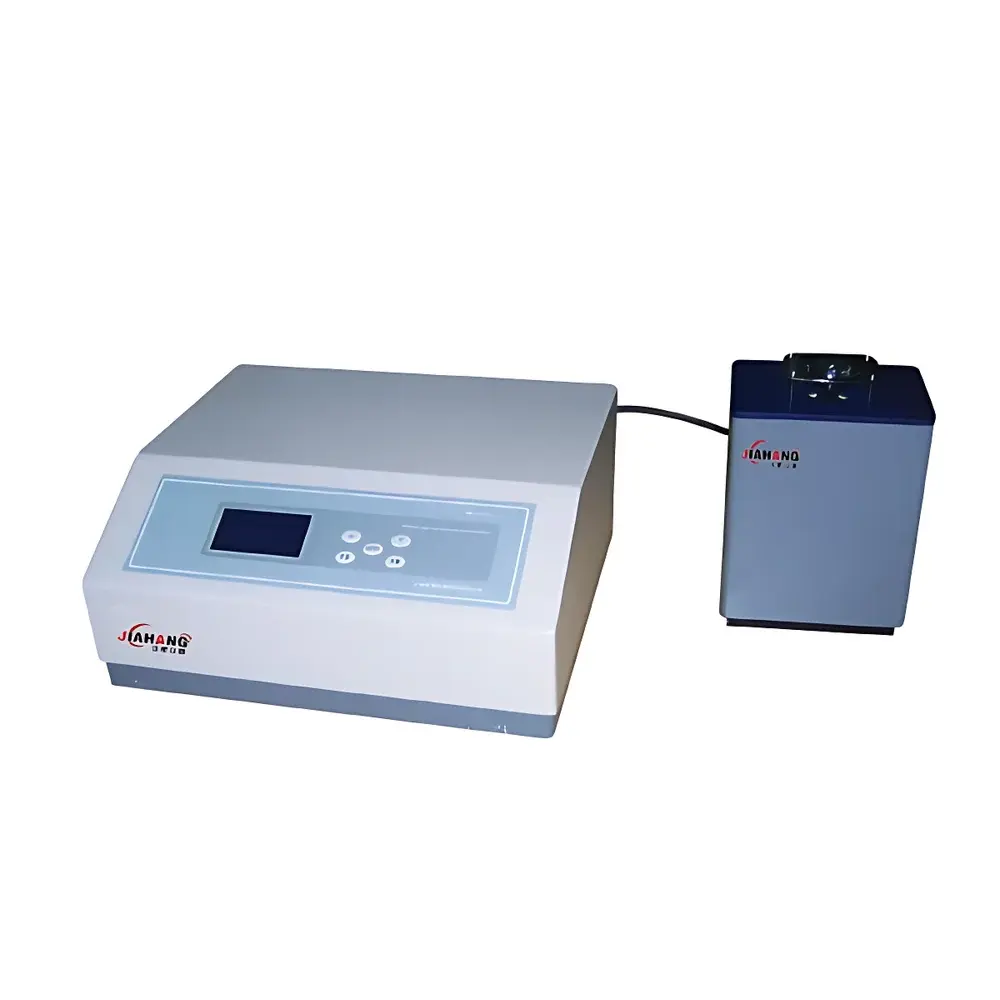
D-1A Cup-and-Ball Dropping Point & Softening Point Tester
| Origin | Shanghai, China |
|---|---|
| Manufacturer Type | Authorized Distributor |
| Country of Origin | China |
| Model | D-1A |
| Price Range | USD 4,200 – 7,000 (FOB) |
| Temperature Range | Ambient to 300°C |
| Heating Rates | 0.2, 0.5, 1.0, 1.5, 2.0, 3.0, 4.0, 5.0 °C/min |
| Temperature Repeatability | ±0.5°C at <200°C |
| Temperature Accuracy | ±0.1°C (calibrated against NIST-traceable reference) |
| Temperature Resolution | 0.1°C |
| Instrument Weight | 11 kg |
| Compliance | GB/T 8728–1988, ASTM E342, ASTM D36, ISO 4625, DIN 51801 |
Overview
The D-1A Cup-and-Ball Dropping Point & Softening Point Tester is a precision thermal analysis instrument engineered for the standardized determination of dropping point and ring-and-ball softening point of non-crystalline organic materials. Based on the classical cup-and-ball principle—where a standardized metal ball rests atop a sample-filled brass cup immersed in a thermally controlled heating medium—the instrument detects the temperature at which the sample deforms sufficiently to allow the ball to descend through the molten material under gravity. This method provides a reproducible, operator-independent metric for characterizing thermal transition behavior in amorphous polymers, bituminous binders, waxes, greases, pharmaceutical ointments, and thermoplastic resins. Unlike differential scanning calorimetry (DSC), which measures heat flow, the D-1A delivers a direct mechanical endpoint aligned with industrial specification standards—including ASTM D36 (ring-and-ball softening point), ASTM E342 (dropping point), ISO 4625, and GB/T 8728–1988—making it indispensable for QC laboratories requiring traceable, routine thermal performance verification.
Key Features
- Microprocessor-controlled linear heating system with eight programmable ramp rates (0.2–5.0°C/min), enabling precise alignment with test method requirements.
- High-stability PID temperature regulation with dual-sensor feedback loop, ensuring thermal uniformity across the oil bath and minimizing axial gradient effects.
- Digital optical detection module: infrared photoelectric sensor array monitors ball displacement with sub-millimeter resolution, eliminating subjective visual interpretation.
- Backlit LCD display showing real-time temperature, setpoint, ramp rate, and elapsed time; all parameters stored in non-volatile memory for post-test review.
- Stainless-steel bath vessel and brass cup-and-ball assembly conforming to dimensional tolerances specified in ASTM D36 and ISO 4625.
- Integrated safety cutoff at 310°C and overheat protection circuitry compliant with IEC 61010-1 for laboratory equipment.
Sample Compatibility & Compliance
The D-1A accommodates standard 12 mm diameter × 8 mm height cylindrical samples of viscous or semi-solid materials including coal tar pitch, petroleum asphalt, rosin, vaseline, lubricating greases, synthetic resins, and topical pharmaceutical formulations. Sample preparation follows prescribed molding and conditioning protocols per ASTM D36 and GB/T 8728–1988. The instrument’s measurement traceability is maintained via factory calibration using NIST-traceable reference standards (e.g., indium, tin, and zinc certified melting points). It supports GLP-compliant operation through documented calibration logs, user-accessible firmware versioning, and audit-ready parameter records—fully compatible with laboratory quality systems aligned with ISO/IEC 17025 and FDA 21 CFR Part 11 when paired with optional data export modules.
Software & Data Management
While the base D-1A operates as a standalone benchtop unit with embedded firmware, an optional RS-232/USB interface enables connection to Windows-based PC software (v3.2+). This application provides automated method storage (up to 20 pre-configured profiles), real-time graphing of temperature vs. time, deviation alerts during ramp execution, and CSV-formatted output for LIMS integration. All generated reports include instrument ID, operator ID, date/time stamp, ambient conditions (if external sensor connected), and pass/fail status against user-defined specification limits—supporting full data integrity per ALCOA+ principles.
Applications
- Quality control of asphalt binders in road construction materials testing per AASHTO T 58 and EN 1427.
- Batch release testing of pharmaceutical ointments and suppositories under USP <741> and Ph. Eur. 2.2.17.
- Thermal stability assessment of polymer-modified bitumen (PMB) used in airport pavement specifications.
- R&D evaluation of wax-based phase-change materials for thermal energy storage systems.
- Regulatory compliance testing for lubricant greases according to NLGI classification standards.
- Raw material verification of rosin esters and hydrogenated terpene resins in adhesive formulation labs.
FAQ
What standards does the D-1A comply with?
The instrument meets the dimensional, procedural, and metrological requirements of ASTM D36, ASTM E342, ISO 4625, DIN 51801, and GB/T 8728–1988.
Is the cup-and-ball geometry interchangeable with ring-and-ball fixtures?
No—the D-1A uses a fixed brass cup-and-ball configuration optimized for dropping point measurement; it is not mechanically compatible with ASTM D36 ring-and-ball assemblies without hardware modification.
Can the D-1A be used for melting point determination of crystalline compounds?
Not recommended. The cup-and-ball method is validated only for amorphous or semi-crystalline materials exhibiting progressive softening; crystalline solids require capillary tube-based melting point apparatuses per USP <741>.
How often does the instrument require recalibration?
Annual calibration is recommended; however, daily verification using certified reference materials (e.g., pure stearic acid at 69.6°C) is required under ISO/IEC 17025-accredited operations.
Does the D-1A support multi-user access control?
The standalone unit does not feature user authentication; however, the optional PC software supports password-protected method editing and electronic signature logging for 21 CFR Part 11 compliance.



