
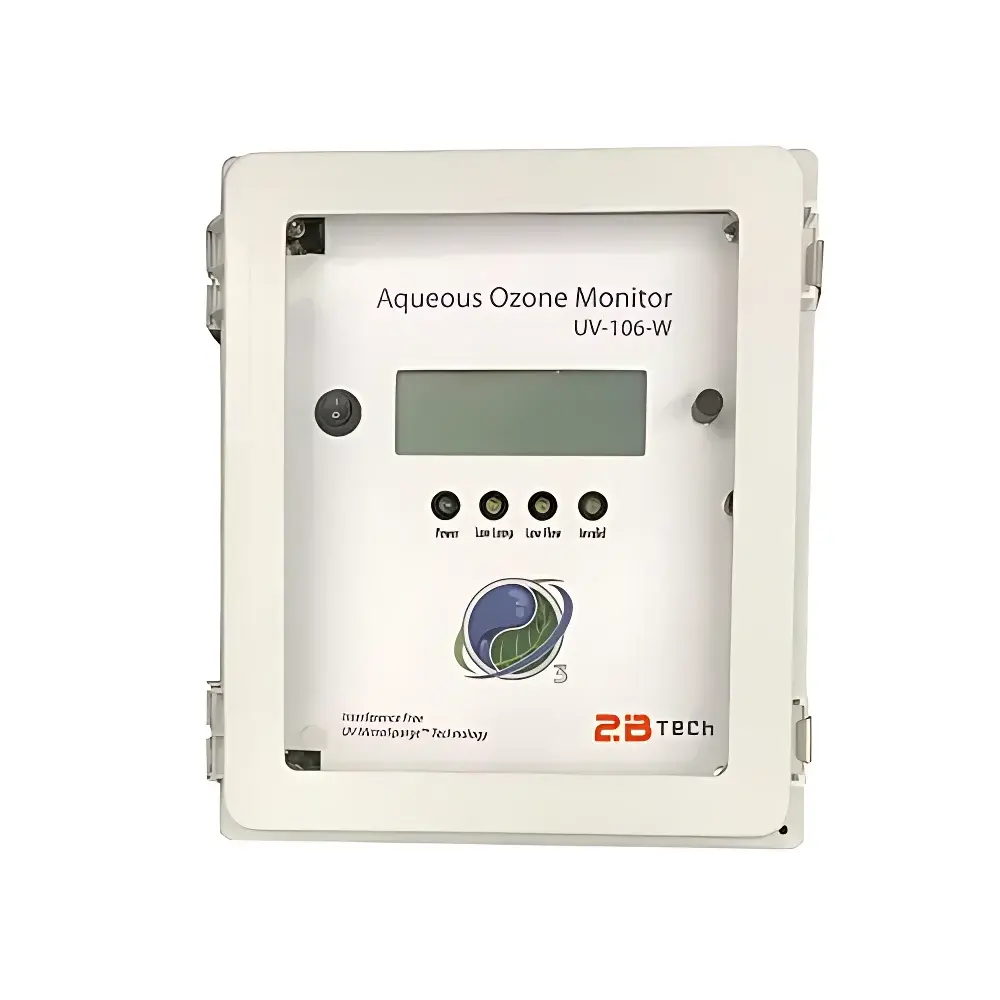
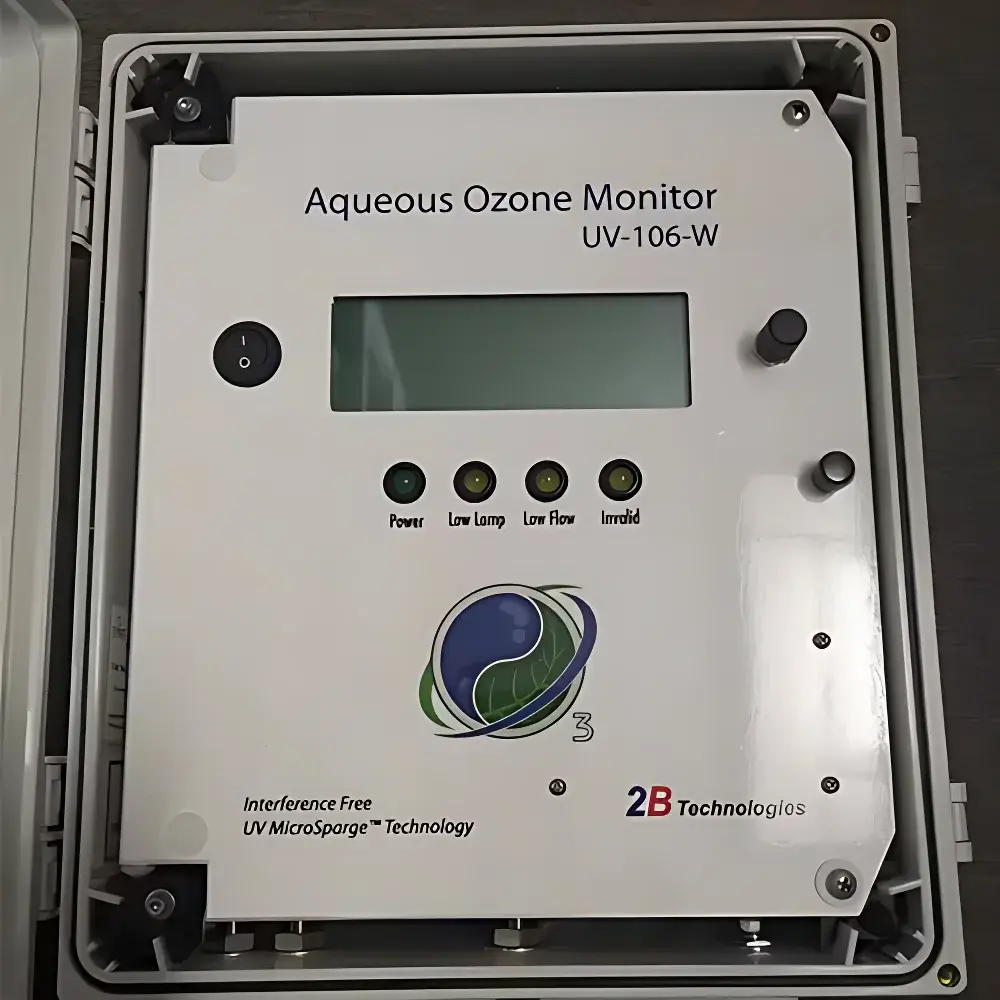
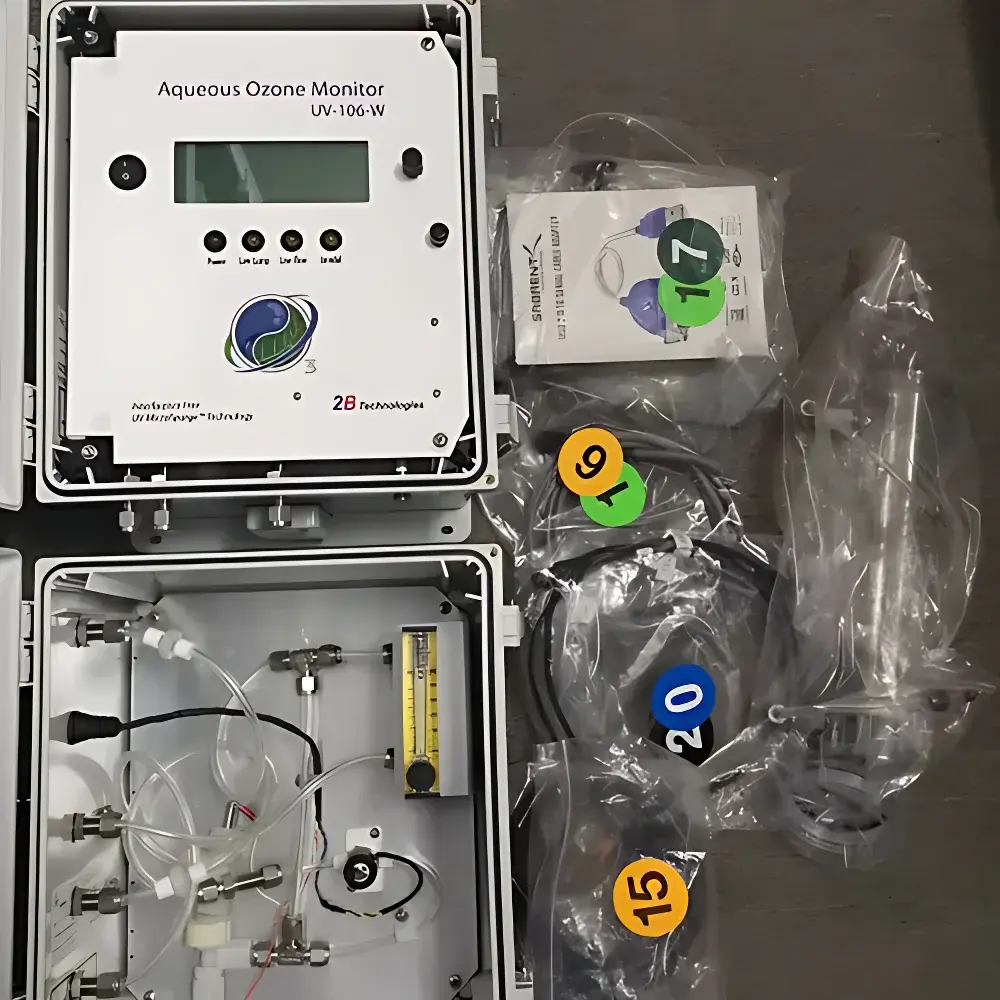
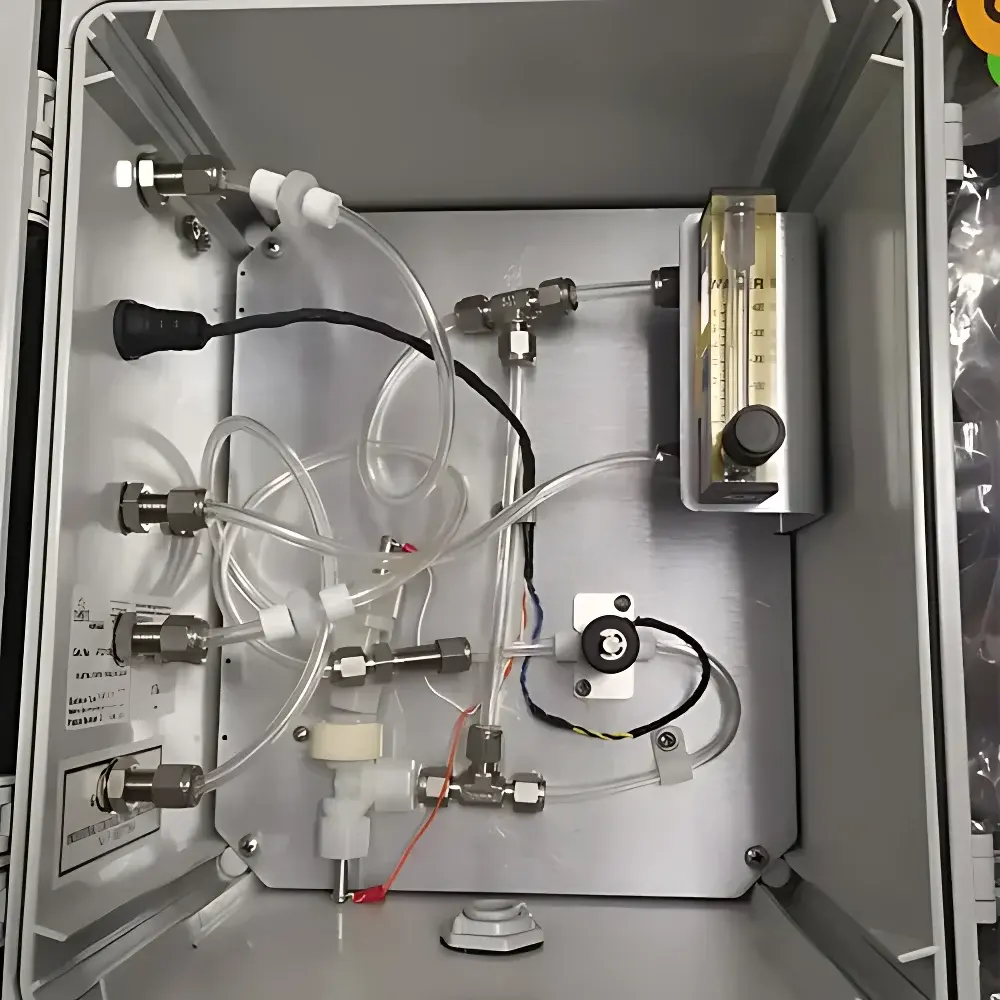
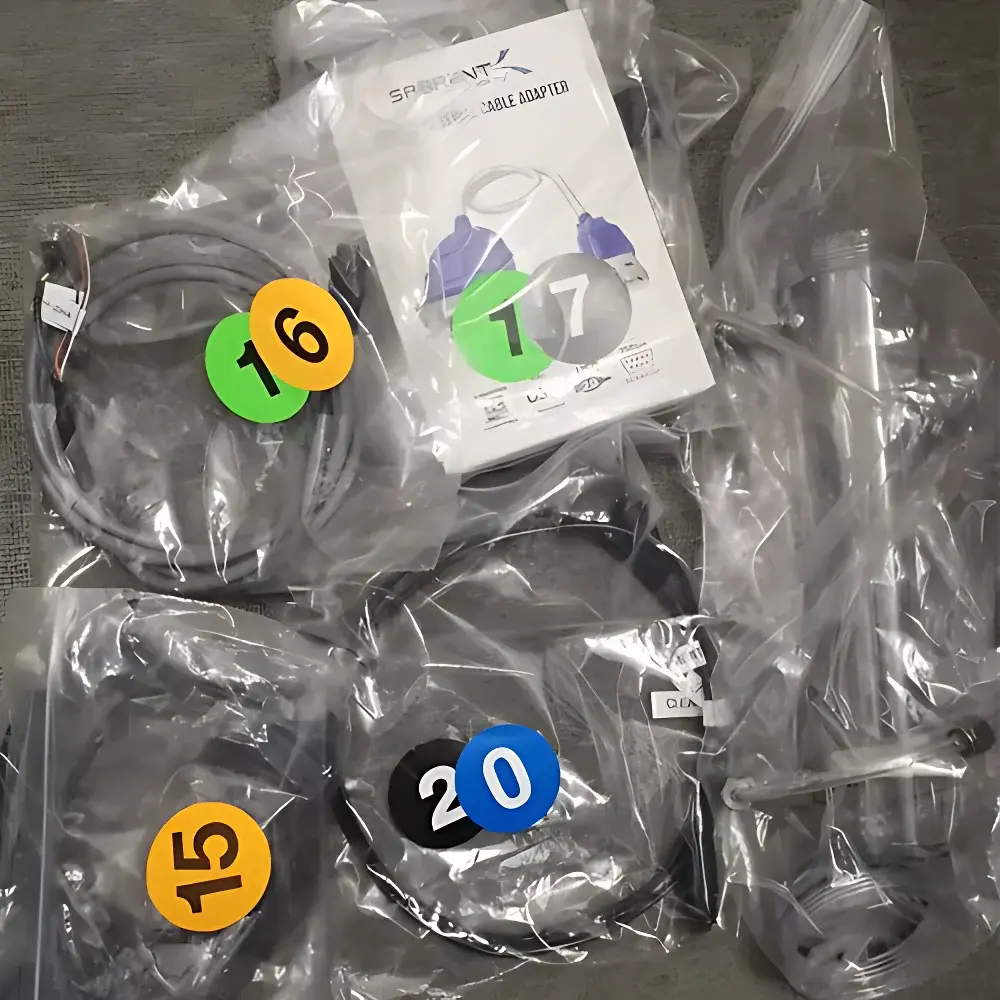
2B Technologies Model UV-106-W Dissolved Ozone Analyzer
| Brand | 2B Technologies |
|---|---|
| Origin | USA |
| Model | UV-106-W |
| Instrument Type | Portable |
| Measurement Range | 0–100 ppm (g/m³, µg/mL, mg/L) |
| Detection Limit | 1 ppb (0.001 ppm) |
| Response Time | 20 s |
| Zero Drift | <0.05 ppm/month |
| Resolution | 0.1 ppm |
| Sampling Flow Rate | 12 mL/min |
| Operating Pressure | 0–50 psi (burst pressure >100 psi) |
| Power | 11–14 VDC, 2.2 A @ 12 V (26.4 W) |
| Data Logging Capacity | 16,368 records |
| Dimensions | 33.8 × 30.5 × 18.5 cm |
| Weight | 6.6 kg |
Overview
The 2B Technologies Model UV-106-W is a portable, field-deployable dissolved ozone (DO₃) analyzer engineered for high-fidelity, interference-free quantification of aqueous ozone across diverse water matrices—from ultrapure process water to turbid, organically rich municipal or industrial effluents. Unlike membrane-based electrochemical or optical sensors—whose performance degrades due to fouling, biofilm formation, or chemical passivation—the UV-106-W employs a patented micro-spray vaporization technique. This method rapidly transfers dissolved ozone from the liquid phase into the gas phase without filtration, membrane contact, or reagent addition. A precisely metered ~2 mL water sample is atomized within an integrated impactor chamber; ozone thermally decomposes from the droplet surface and is swept into a temperature-stabilized, dual-beam UV photometer (254 nm). Absorbance is measured against a reference beam, enabling real-time calculation of aqueous ozone concentration via Henry’s law-derived calibration. The absence of solid-phase interfaces eliminates drift associated with membrane aging or electrode poisoning, ensuring long-term stability and metrological traceability.
Key Features
- Patented micro-spray vaporization technology eliminates membrane fouling and sensor drift
- True interference resistance: immune to suspended solids, colloids, dissolved organics, inorganic ions, and turbidity
- 10-second measurement update interval with user-selectable averaging (10 s, 1 min, 5 min, or 1 hr)
- Integrated data logger storing up to 16,368 timestamped records (e.g., 57 days at 5-min averaging)
- NEMA-rated enclosure (IP65 equivalent) for operation in humid, outdoor, or industrial environments
- Dual analog outputs (0–2.5 V and 4–20 mA), both independently adjustable for custom scaling
- RS232 and USB digital interfaces supporting direct PC connection and remote configuration
- LED status indicators for operational mode, low flow, and invalid measurement conditions
- Two SPDT dry-contact relays (optional external junction box) for alarm or control signaling
Sample Compatibility & Compliance
The UV-106-W is validated for use across ISO/IEC 17025-compliant laboratories and regulated water treatment facilities requiring robust, auditable ozone monitoring. Its vapor-phase detection architecture complies with ASTM D6179–22 (Standard Practice for Determination of Dissolved Ozone in Water by UV Absorption) and aligns with US EPA guidance on ozone residual verification in disinfection validation studies. The instrument operates reliably in waters meeting WHO drinking water guidelines, pharmaceutical-grade purified water (USP ), and secondary-treated wastewater containing particulates up to 100 NTU and DOC concentrations exceeding 10 mg/L. No sample filtration, pH adjustment, or chemical conditioning is required—reducing maintenance burden and eliminating pre-analytical bias. All firmware and data handling routines support GLP/GMP traceability requirements, including time-stamped audit logs and non-volatile memory retention during power loss.
Software & Data Management
Data acquisition and system configuration are managed via 2B Tech’s proprietary UV-106-W Control Software (Windows-compatible), which provides real-time graphing, export to CSV/Excel, and customizable alarm thresholds. The embedded microcontroller implements deterministic timing for all sampling cycles, ensuring temporal fidelity critical for kinetic studies and CT-value calculations. Logged data include raw absorbance, calculated DO₃ concentration, internal temperature, flow rate, and diagnostic flags. Firmware supports over-the-air updates via USB and maintains full backward compatibility. For integration into SCADA or LIMS environments, Modbus RTU (via RS232) and analog output scaling allow seamless interfacing without middleware. All stored records retain millisecond-level timestamps synchronized to the internal RTC, satisfying FDA 21 CFR Part 11 requirements when deployed with appropriate access controls and electronic signature protocols.
Applications
- Real-time monitoring of ozone dose and residual in municipal drinking water disinfection systems
- Process control in bottled water and beverage production lines where ozone is used for sterile filling
- Validation of CT values (concentration × time) per US EPA Guidance Manual for Disinfectants
- Swimming pool and spa water quality management per CDC Model Aquatic Health Code
- Cooling tower water treatment to verify biocide efficacy and prevent Legionella proliferation
- Pharmaceutical water-for-injection (WFI) and pure steam generation systems requiring ozone sanitization
- Research applications involving ozone kinetics, mass transfer coefficients, and advanced oxidation process (AOP) optimization
FAQ
How does the UV-106-W differ from conventional amperometric or Clark-cell dissolved ozone sensors?
It avoids electrochemical membranes entirely—eliminating drift from biofouling, chloride interference, and oxygen cross-sensitivity.
Can it measure in seawater or high-salinity brines?
Yes; salinity up to 35 g/kg does not affect accuracy, as detection occurs in the gas phase after controlled volatilization.
What maintenance is required beyond routine calibration?
Only quarterly zero checks using ozone-free water and annual verification with NIST-traceable ozone gas standards.
Is the instrument suitable for unattended, continuous operation?
Yes; its sealed NEMA enclosure, wide input voltage range, and internal battery backup option support 24/7 deployment in remote locations.
Does it comply with regulatory reporting requirements for drinking water utilities?
Yes; data logging integrity, audit trail functionality, and documented uncertainty budgets meet state primacy agency requirements for compliance monitoring.







