
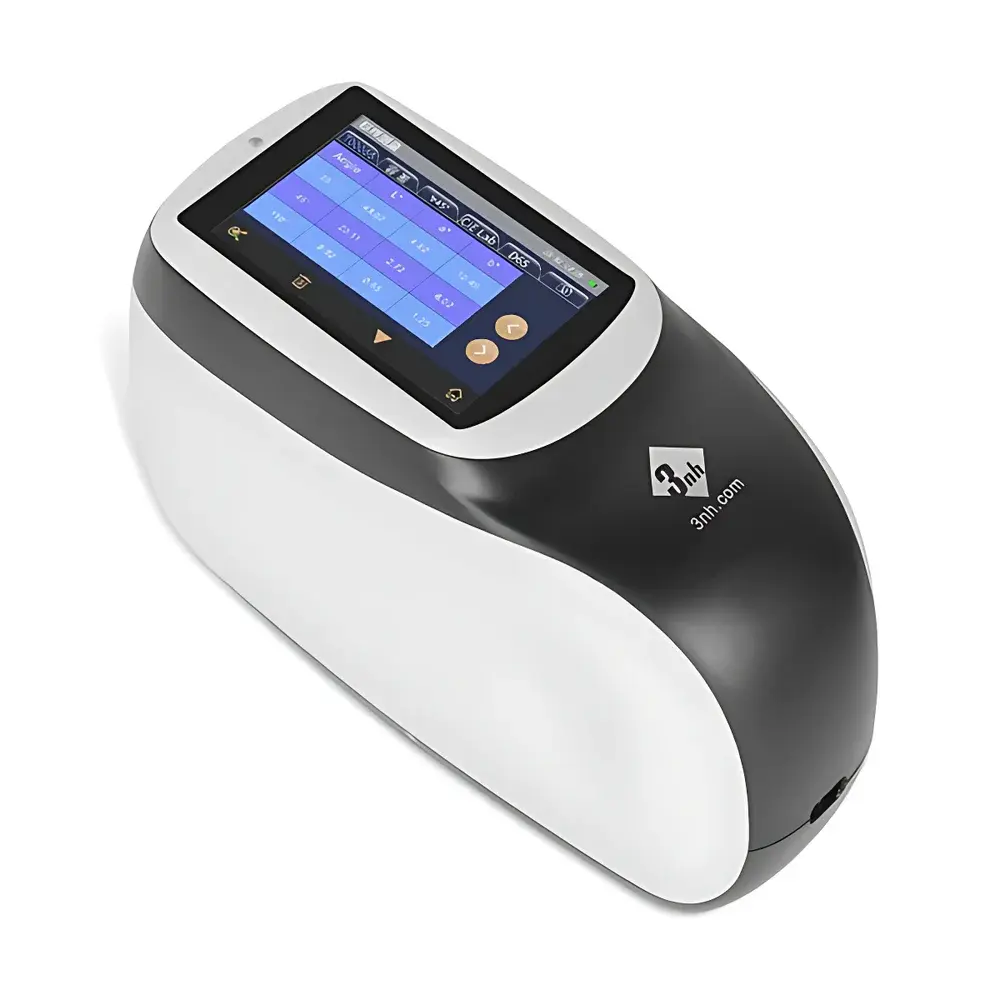
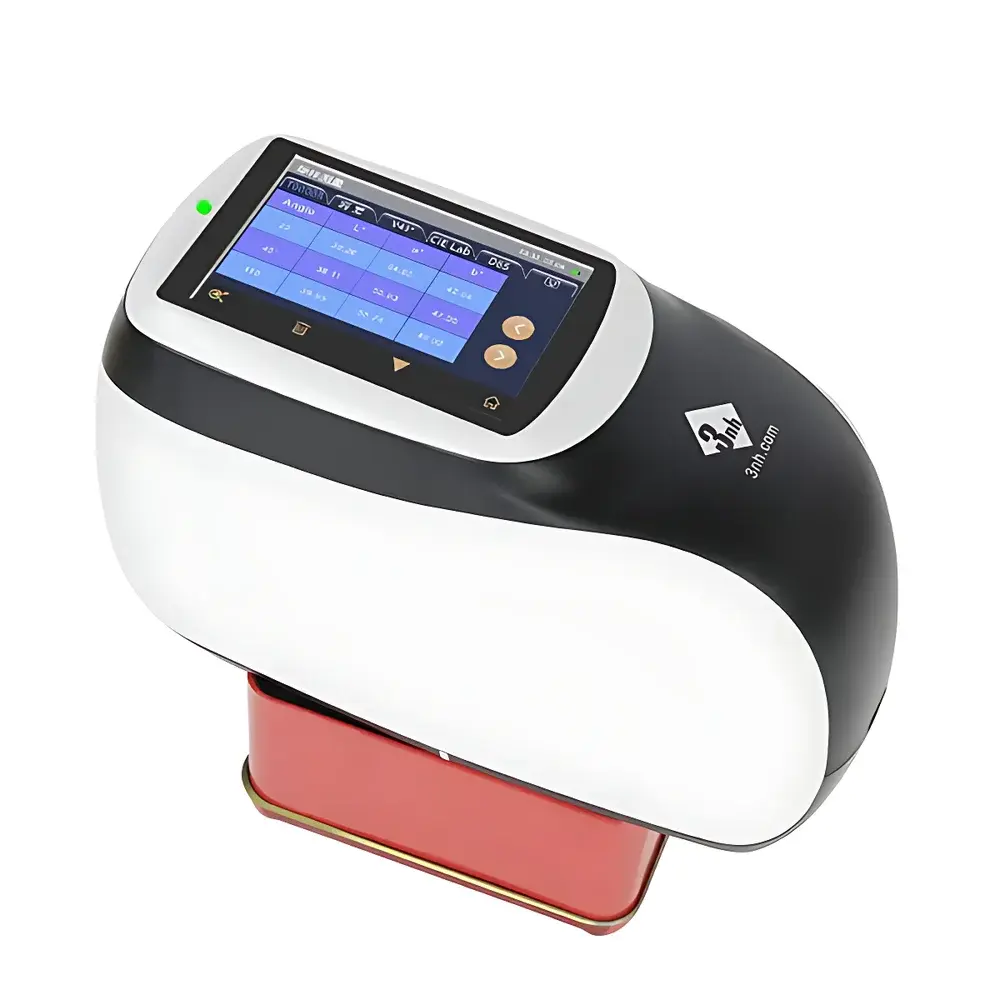
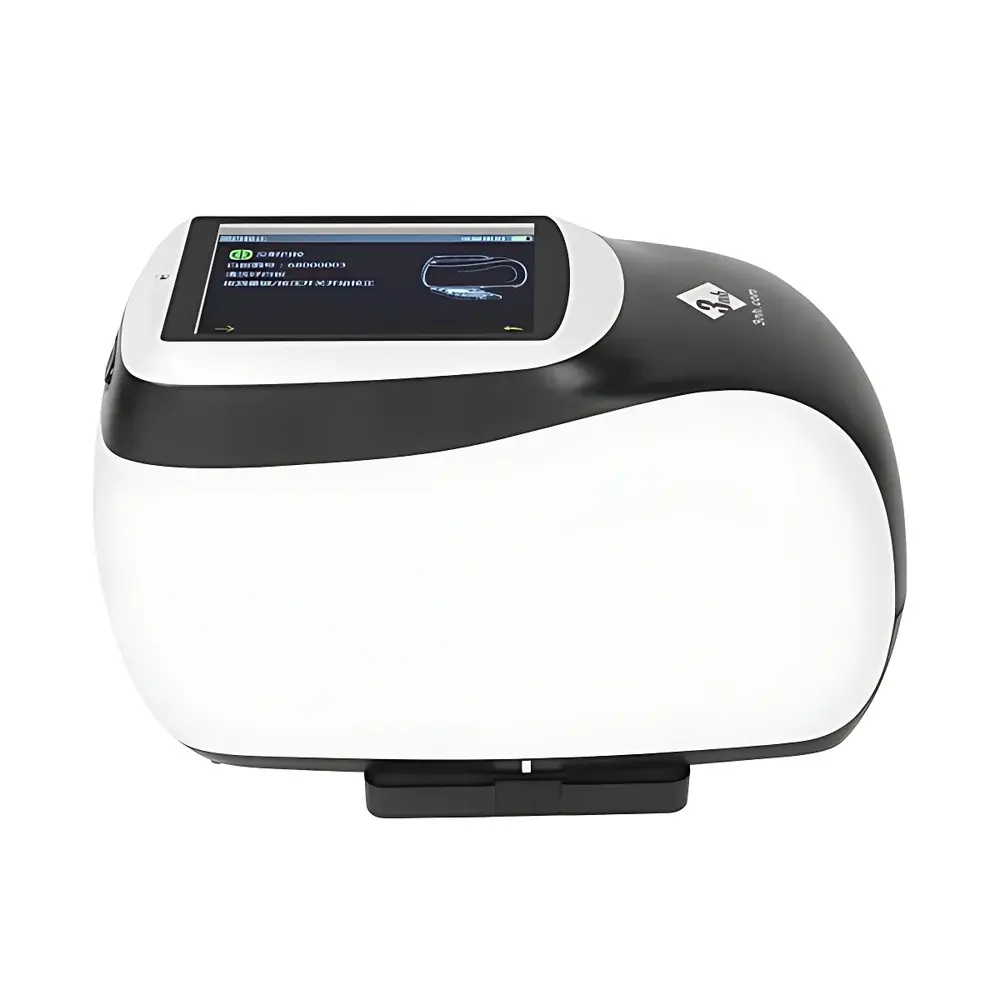
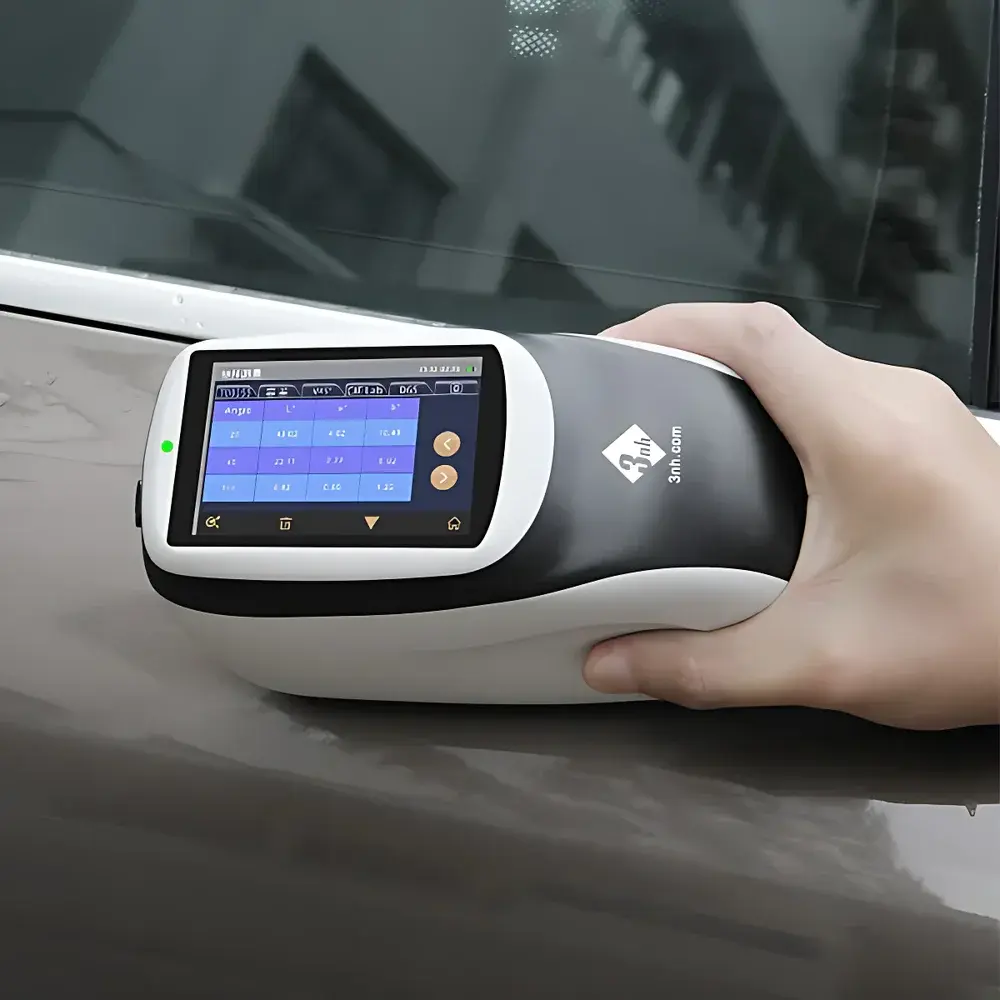
3nh MS3003 Multi-Angle Spectrophotometric Colorimeter for Automotive Paint
| Brand | 3nh |
|---|---|
| Origin | Guangdong, China |
| Manufacturer Type | Manufacturer |
| Product Type | Spectrophotometric Colorimeter |
| Instrument Type | Portable |
| Optical Geometry | 0/45° Integrating Sphere |
| Light Source | Blue-Enhanced Full-Spectrum LED |
| Spectral Range | 400–700 nm |
| Repeatability | Spectral Reflectance SD ≤ 0.08% |
Overview
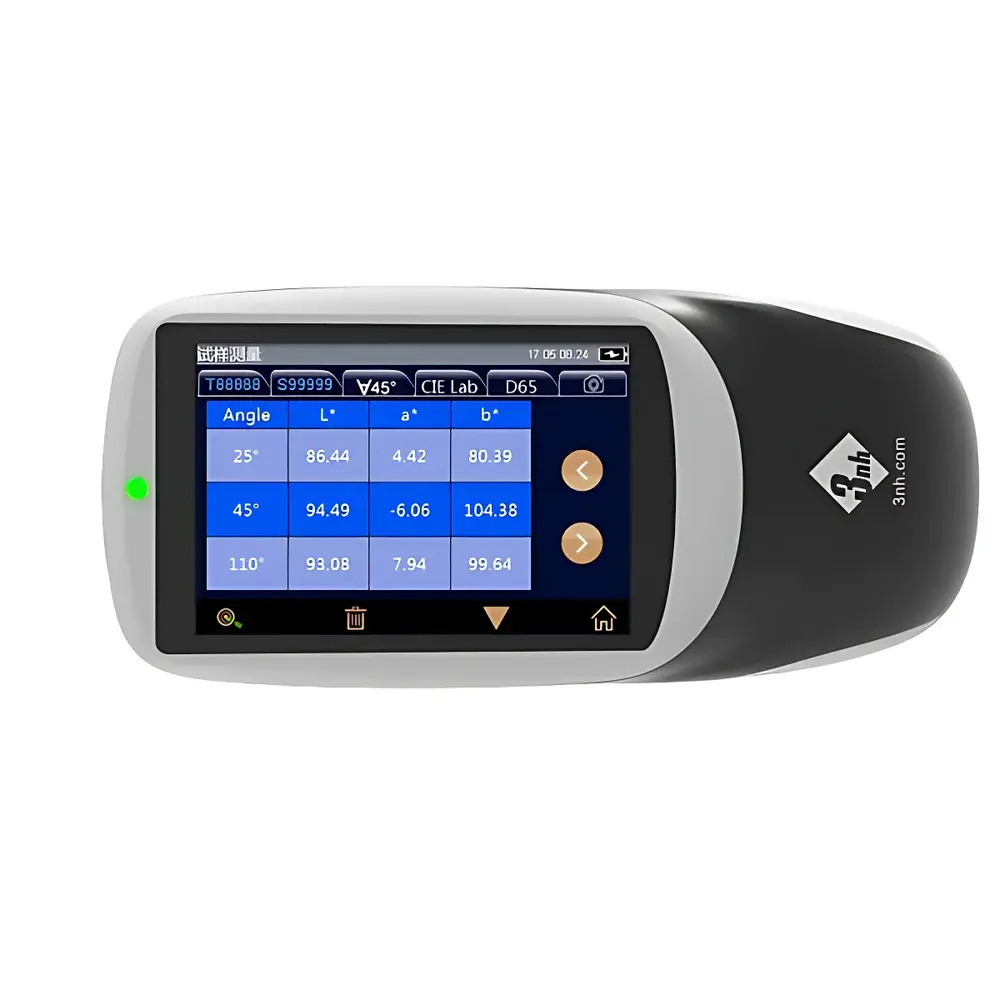
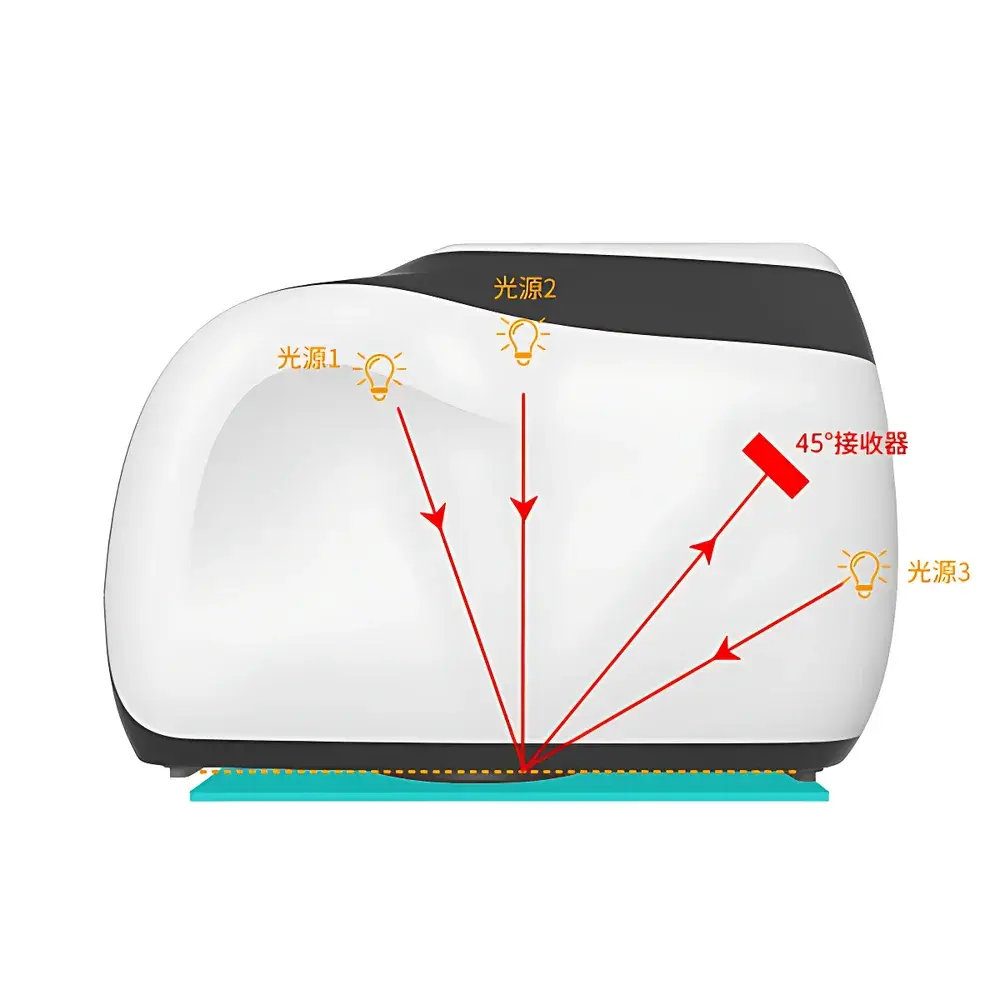
The 3nh MS3003 Multi-Angle Spectrophotometric Colorimeter is an industrial-grade portable instrument engineered for precise, repeatable measurement of effect finishes—particularly metallic, pearlescent, and goniochromatic automotive coatings. It operates on the principle of multi-angle spectrophotometry, utilizing a fixed 45° illumination geometry with three distinct viewing angles (25°, 45°, and 110°) relative to the specular direction (45as25°, 45as45°, 45as110°), conforming to ASTM D2244, ASTM E2194, ISO 7724-2, and SAE J1545 standards. Unlike conventional colorimeters, the MS3003 captures directional reflectance behavior critical for evaluating spatially varying appearance attributes such as flop, sparkle, and graininess—parameters essential in OEM and refinish quality control workflows. Its optical architecture integrates a blue-enhanced full-spectrum LED source, a concave holographic grating, and a 256-pixel dual-array CMOS detector to ensure high photometric fidelity across the visible spectrum (400–700 nm at 10 nm intervals), enabling traceable CIE-compliant colorimetry under multiple standard illuminants and observers.
Key Features
- Triple-angle simultaneous acquisition: Three independent LEDs illuminate the sample at fixed geometries; one high-stability silicon photodiode array detects reflected radiance at each angle—eliminating mechanical repositioning and minimizing inter-angle temporal drift.
- Real-time spectral visualization: 3.5-inch capacitive touchscreen displays full spectral curves, CIELAB values, ΔE*ab/ΔE00/DIN99 differences, pass/fail status, and side-by-side color simulation—all rendered in situ without PC dependency.
- Integrated imaging guidance: Built-in color camera enables precise targeting of measurement zones on curved or textured surfaces, significantly improving spatial registration accuracy during field inspections.
- Robust optical calibration system: Includes factory-traceable white tile (high-hardness ceramic substrate), black trap, and automated self-diagnostic routines; supports scheduled recalibration (4/8/24 hr intervals) and power-on verification per GLP-aligned operational protocols.
- Industrial-grade embedded processing: ARM-based MCU with real-time firmware ensures deterministic measurement timing (~1 s per angle, ~3 s total), stable Bluetooth 5.0 data streaming, and low-latency USB-C connectivity for integration into centralized QA databases.
- Comprehensive metrological compliance: Validated against BCRA Series II tiles (inter-instrument agreement ΔE00 ≤ 0.20); meets ISO 13655:2017 requirements for M0/M1/M2/M3 measurement modes and supports both 2° and 10° CIE standard observer functions.
Sample Compatibility & Compliance
The MS3003 is optimized for non-destructive surface color assessment of coated substrates including sheet metal, plastic bumpers, composite panels, and repaired bodywork. Its 23 mm illumination aperture and 9 × 12 mm sampling area accommodate typical automotive panel contours while maintaining geometric consistency across convex, concave, and transitional surfaces. The instrument complies with ASTM D2244 (standard practice for calculation of color differences), ASTM E308 (conversion of spectral data to tristimulus values), ASTM E1164 (spectrophotometric measurement of color), and DIN 6174/6175-1 for effect color evaluation. It further satisfies regulatory expectations for audit-ready documentation: measurement timestamps, operator ID tagging, calibration history logging, and electronic signature support via optional QC software—aligning with FDA 21 CFR Part 11 and ISO/IEC 17025 traceability frameworks.
Software & Data Management
The MS3003 ships with PC-based Quality Management Software (QMS), downloadable from 3nh’s official portal, supporting GMP/GLP-compliant reporting, statistical process control (SPC) charting, batch deviation analysis, and cross-instrument fleet synchronization. Raw spectral data (ASCII .txt), CIE XYZ/L*a*b*, and effect indices (e.g., Flop Index) are exportable in CSV, XML, and PDF formats. Firmware updates preserve backward compatibility with legacy calibration files and historical datasets. All stored records include immutable metadata: instrument serial number, measurement date/time, ambient temperature/humidity, calibration epoch, and user-defined sample IDs—enabling full chain-of-custody reconstruction during internal audits or supplier qualification reviews.
Applications
- OEM paint shop line monitoring: Real-time verification of basecoat/clearcoat consistency across conveyorized production runs.
- Refinish repair validation: Objective quantification of color match between original equipment finish and touch-up areas—critical for insurance claim adjudication and customer satisfaction metrics.
- Effect pigment R&D: Correlation of angular reflectance profiles with flake orientation, particle size distribution, and binder refractive index in lab-scale formulations.
- Supplier quality assurance: On-site screening of incoming metallic/pearlescent batches against master standards using preloaded tolerance limits (e.g., ΔE00 ≤ 0.50).
- Color formulation support: Exported spectral curves serve as input for commercial color-matching systems (e.g., X-Rite Color iMatch, Datacolor MATCHTEXT) to accelerate recipe prediction and correction.
FAQ
What standards does the MS3003 comply with for multi-angle color measurement?
ASTM D2244, ASTM E2194, ISO 7724-2, ISO 13655, DIN 6174, DIN 6175-1/2, and SAE J1545.
Can the MS3003 measure curved automotive body panels accurately?
Yes—the integrated color camera enables visual targeting, and its compact form factor (195 × 83 × 128 mm) and ergonomic grip allow stable contact measurement on radiused surfaces without slippage.
How is instrument-to-instrument agreement ensured?
Each unit undergoes BCRA Series II tile validation; maximum inter-instrument variation is specified as ΔE00 ≤ 0.20 (12-tile average), verified at time of shipment and documented in the certificate of conformance.
Does the device support regulatory-compliant data integrity practices?
Yes—QMS software provides audit trails, electronic signatures, calibration logs, and immutable timestamping aligned with FDA 21 CFR Part 11 and ISO/IEC 17025 requirements.
What is the expected lifetime of the blue-enhanced LED light source?
Rated for ≥3 million measurements or 5 years of typical use (assuming 1,500 measurements/day), with negligible spectral shift over service life due to thermal stabilization circuitry.






