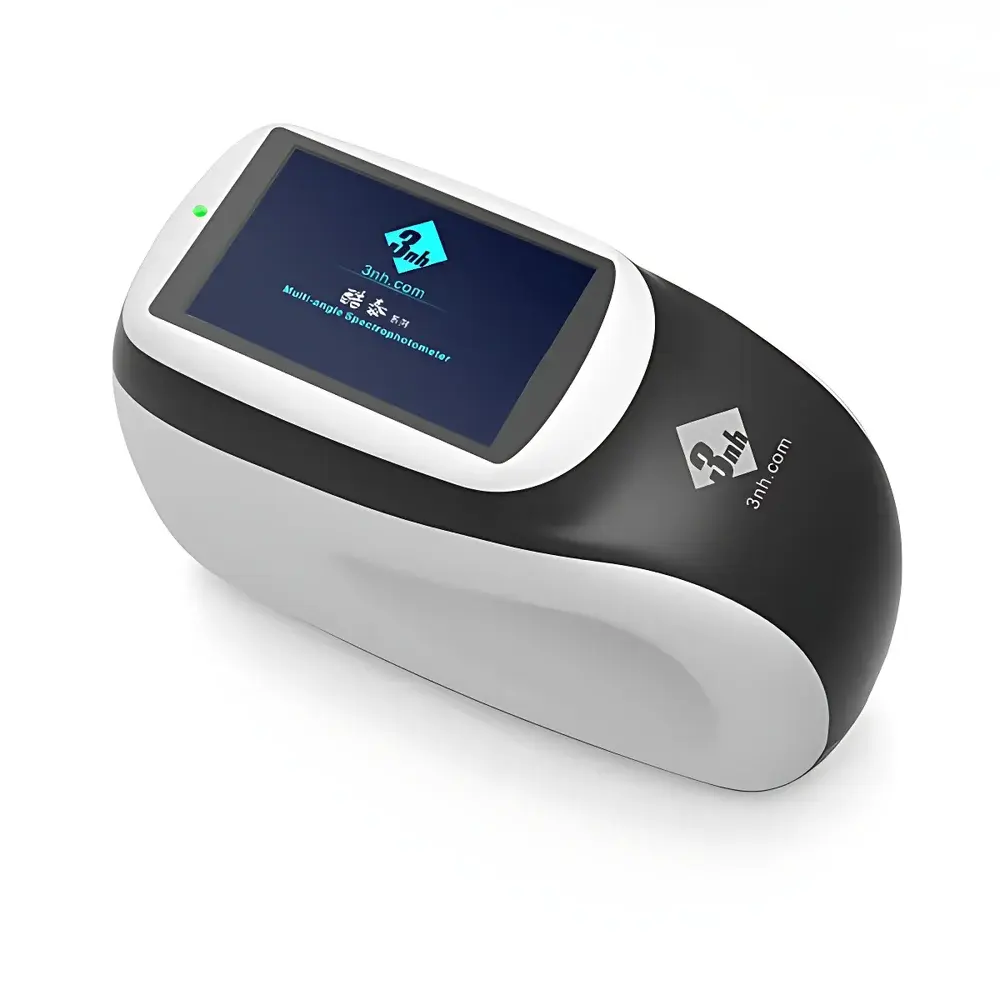
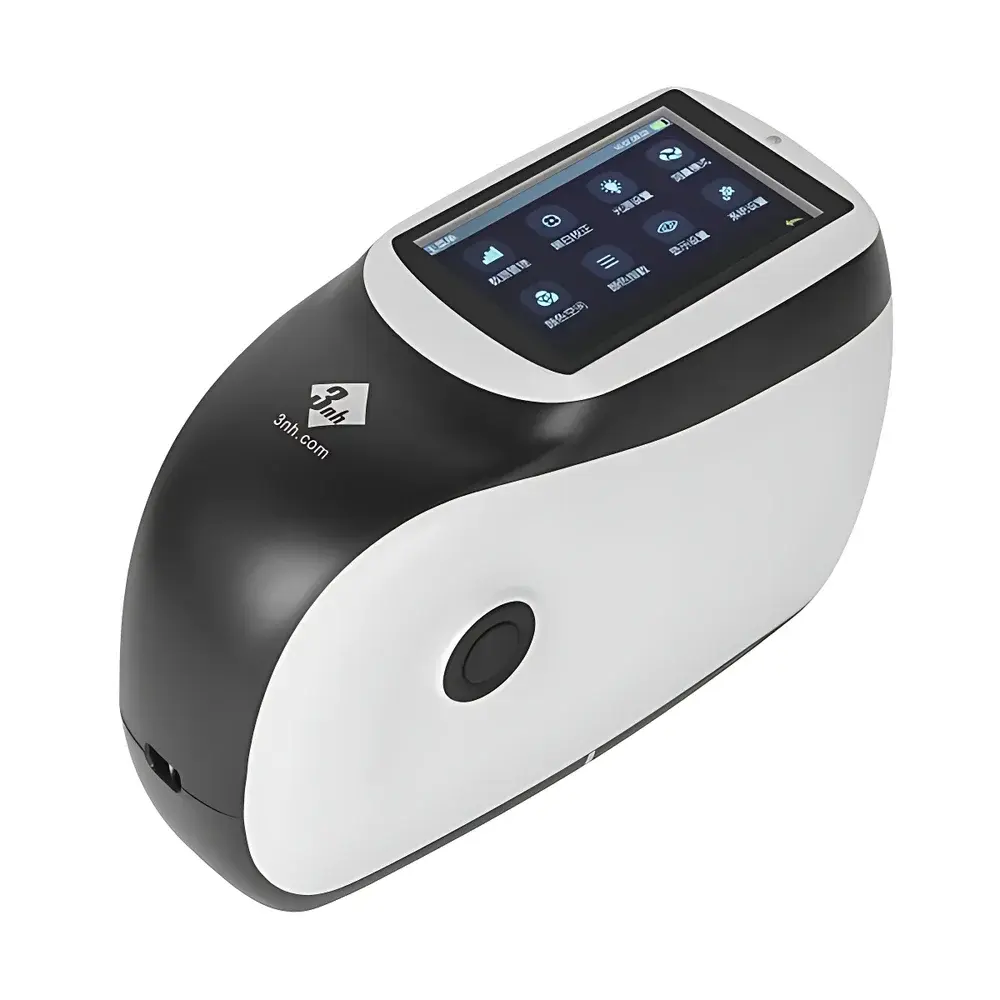
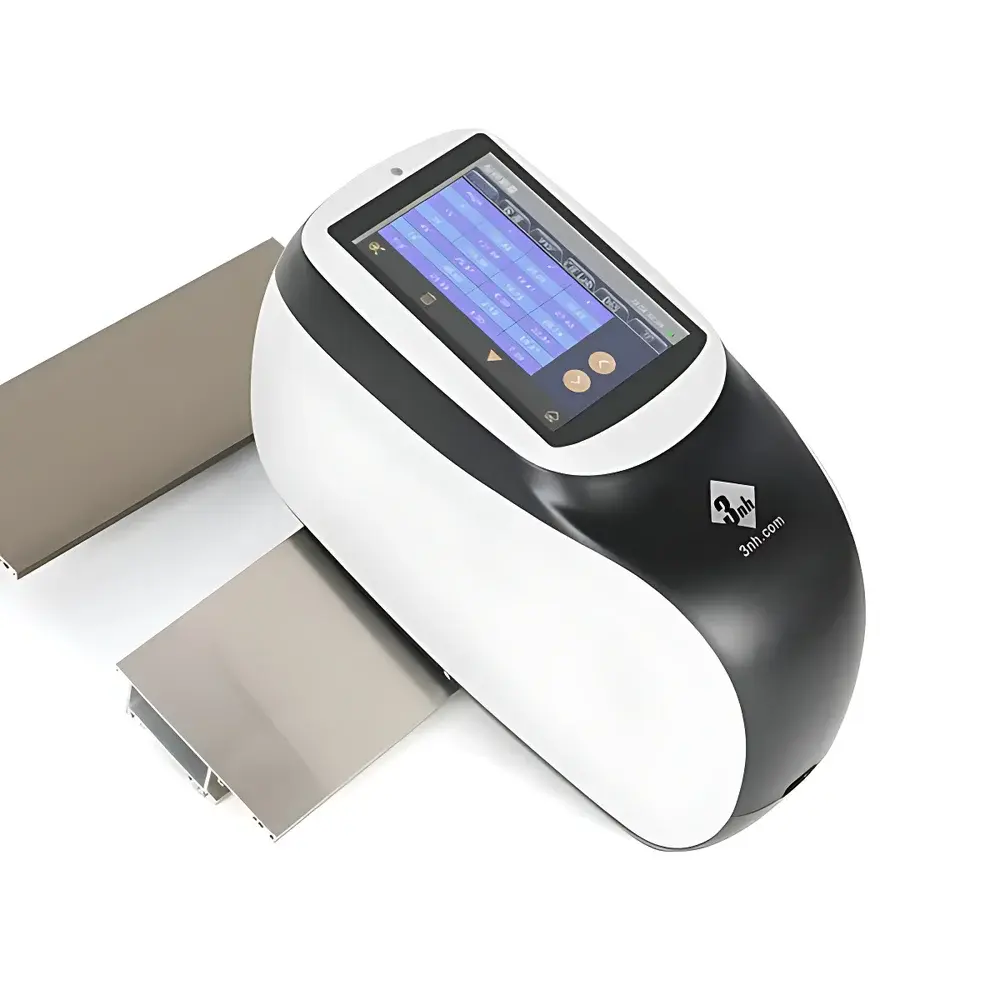
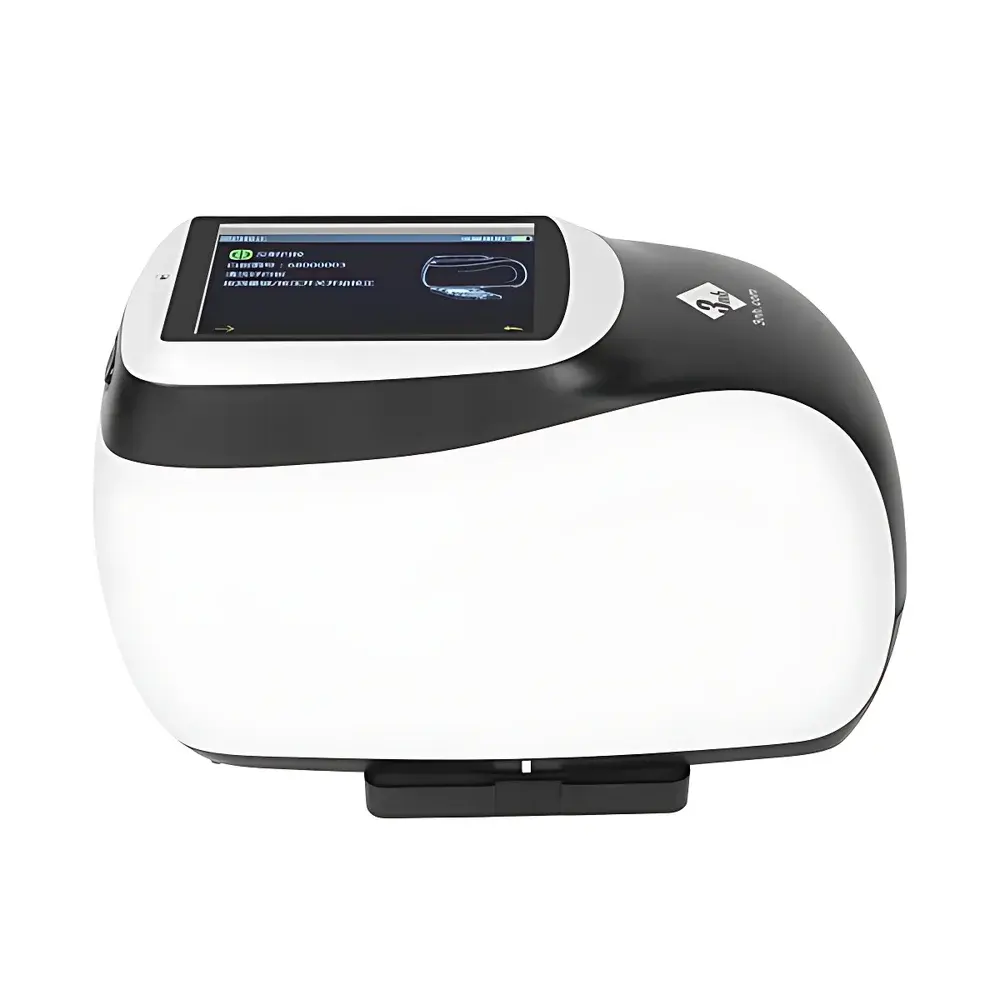
3nh MS3012 Multi-Angle Spectrophotometer
| Brand | 3nh |
|---|---|
| Origin | Guangdong, China |
| Manufacturer Type | Manufacturer |
| Product Category | Spectrophotometer |
| Instrument Type | Portable |
| Optical Geometry | 0/45° Integrating Sphere |
| Light Source | Blue-Enhanced Full-Spectrum LED |
| Spectral Range | 400–700 nm |
| Repeatability | Spectral Reflectance ≤0.08% SD |
Overview
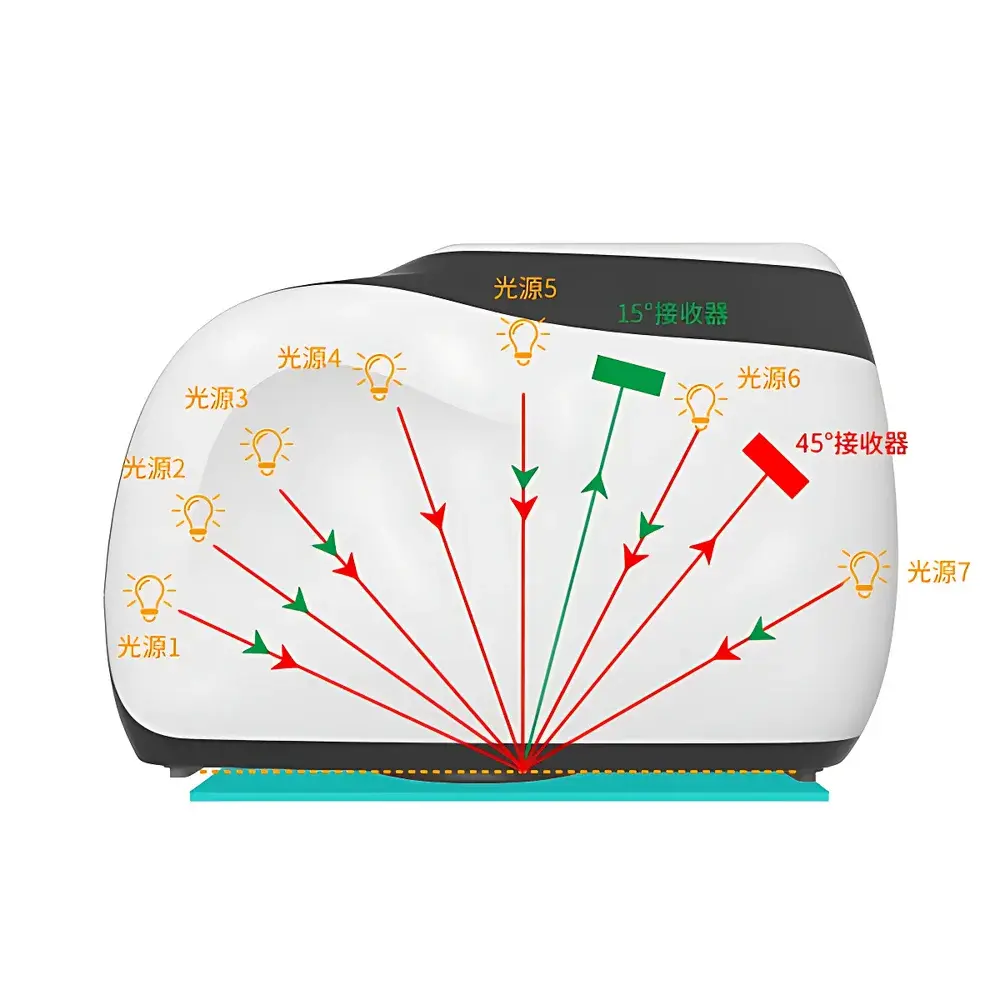
The 3nh MS3012 Multi-Angle Spectrophotometer is an industrial-grade portable spectrophotometric measurement system engineered for high-fidelity characterization of effect finishes—including metallic, pearlescent, gonioapparent, and flake-based coatings—under variable illumination and viewing geometries. It operates on the principle of multi-angle reflectance spectroscopy, utilizing a fixed 0/45° integrating sphere optical architecture enhanced by a dual-receiver (15° and 45°) and seven-source LED array to simultaneously acquire spectral data at twelve discrete angular configurations. This geometry enables quantitative assessment of spatially varying color appearance phenomena such as flop, sparkle, and graininess—parameters critical in automotive OEM, refinish, and high-end decorative coating applications where visual consistency across viewing angles directly impacts perceived quality and brand integrity.
Key Features
- Twelve precisely defined measurement angles: six at 45° receiver (45as−15°, 45as15°, 45as25°, 45as45°, 45as75°, 45as110°) and six at 15° receiver (15as−45°, 15as−15°, 15as15°, 15as−30°, 15as45°, 15as80°), conforming to ASTM E2539 and ISO 18314-2 requirements for multi-angle instrumentation.
- Dual CMOS linear array detector (256 pixels per channel) with concave holographic grating delivers 10 nm spectral resolution across 400–700 nm, ensuring high signal-to-noise ratio and long-term photometric stability.
- Blue-enhanced full-spectrum LED illuminant provides uniform irradiance distribution throughout the visible range, eliminating spectral gaps common in standard white LEDs and supporting accurate calculation of CIE tristimulus values under multiple standard illuminants (D65, A, D50, TL84, etc.).
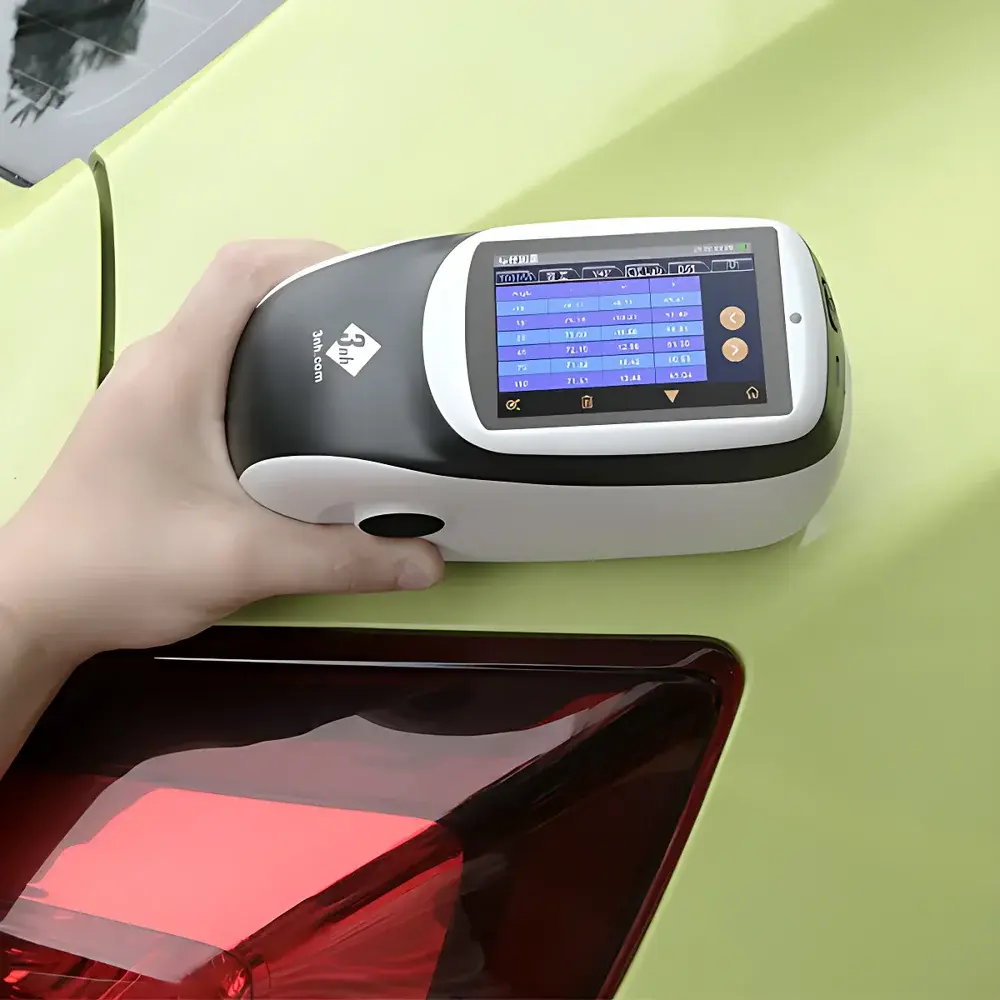
- Integrated 3.5-inch capacitive touchscreen with real-time spectral curve visualization, color difference mapping, pass/fail evaluation, and effect parameter overlays (flop index, sparkle, graininess).
- Onboard color camera enables precise target localization—especially critical for curved, textured, or heterogeneous surfaces—reducing operator-induced positioning error and improving inter-operator reproducibility.
- Industrial MCU with embedded Wi-Fi and Bluetooth 5.0 supports secure wireless data transfer, remote firmware updates, and integration into centralized quality management systems compliant with ISO 9001 and IATF 16949 workflows.
Sample Compatibility & Compliance
The MS3012 accommodates flat, curved, and moderately textured substrates via its 23 mm illumination / 9 × 12 mm sampling aperture (optional 10 mm / 6 × 8 mm). Its optical design maintains measurement accuracy on radii down to 50 mm without mechanical repositioning. The instrument meets or exceeds performance criteria specified in ASTM D2244 (color difference), ASTM E308 (CIE colorimetry), ASTM E1164 (spectral data processing), ASTM E2194 (multi-angle gloss/color correlation), DIN 6174 and DIN 6175-1/-2 (effect finish evaluation), ISO 7724 (colorimetry), ISO 11664-4 (CIE colorimetric observers), and SAE J1545 (automotive paint appearance). Calibration traceability is supported through NIST-traceable ceramic white tile, black trap, and BCRA Series II reference standards.
Software & Data Management
The MS3012 ships with QC software (downloadable from 3nh’s official portal) supporting GLP-compliant audit trails, user-defined pass/fail tolerances, batch reporting, and export to CSV, Excel, or XML formats. Software features include spectral comparison overlays, effect parameter trend analysis over time, instrument-to-instrument agreement validation (ΔE*00 ≤ 0.18 on BCRA II), and support for FDA 21 CFR Part 11–compliant electronic signatures when deployed in regulated environments. Data storage capacity includes 1,000 standard references and 4,000 sample records onboard; cloud synchronization is enabled via optional enterprise API integration.
Applications
- Automotive OEM and Tier-1 suppliers for effect paint qualification, production line color matching, and supplier audit compliance.
- Refinish body shops performing precise color repair verification under standardized lighting conditions.
- Coatings R&D laboratories evaluating new pigment dispersions, flake orientation, and binder effects on goniochromatic behavior.
- Plastics and consumer electronics manufacturers assessing metallized film lamination consistency and vacuum-metallized surface uniformity.
- Printing and packaging vendors validating pearlescent ink performance across substrate types and print processes.
FAQ
What angular configurations does the MS3012 support?
It measures at twelve discrete geometries: six angles using the 45° receiver and six using the 15° receiver, covering both forward- and backward-scatter directions relative to illumination.
Does the instrument support regulatory-compliant calibration documentation?
Yes—calibration certificates for white tile, black trap, and BCRA reference sets can be generated and archived within the QC software, including date/time stamps, operator ID, and environmental metadata.
How is spectral data processed to derive sparkle and graininess metrics?
Sparkle is calculated from high-frequency luminance variance in directional reflectance profiles; graininess is derived from spatial frequency analysis of local reflectance gradients across the sampled area—both algorithms are validated against ASTM E2848 and ISO 18314-3 protocols.
Can the MS3012 interface with LIMS or MES platforms?
Yes—via USB serial emulation or Bluetooth RFCOMM, enabling direct integration with laboratory information management systems and manufacturing execution systems using configurable ASCII or JSON data packets.
What is the typical service life of the blue-enhanced LED source?
Rated for ≥3 million measurements or five years of normal use (assuming 1,000 measurements/day), with minimal spectral drift due to active thermal stabilization circuitry.