
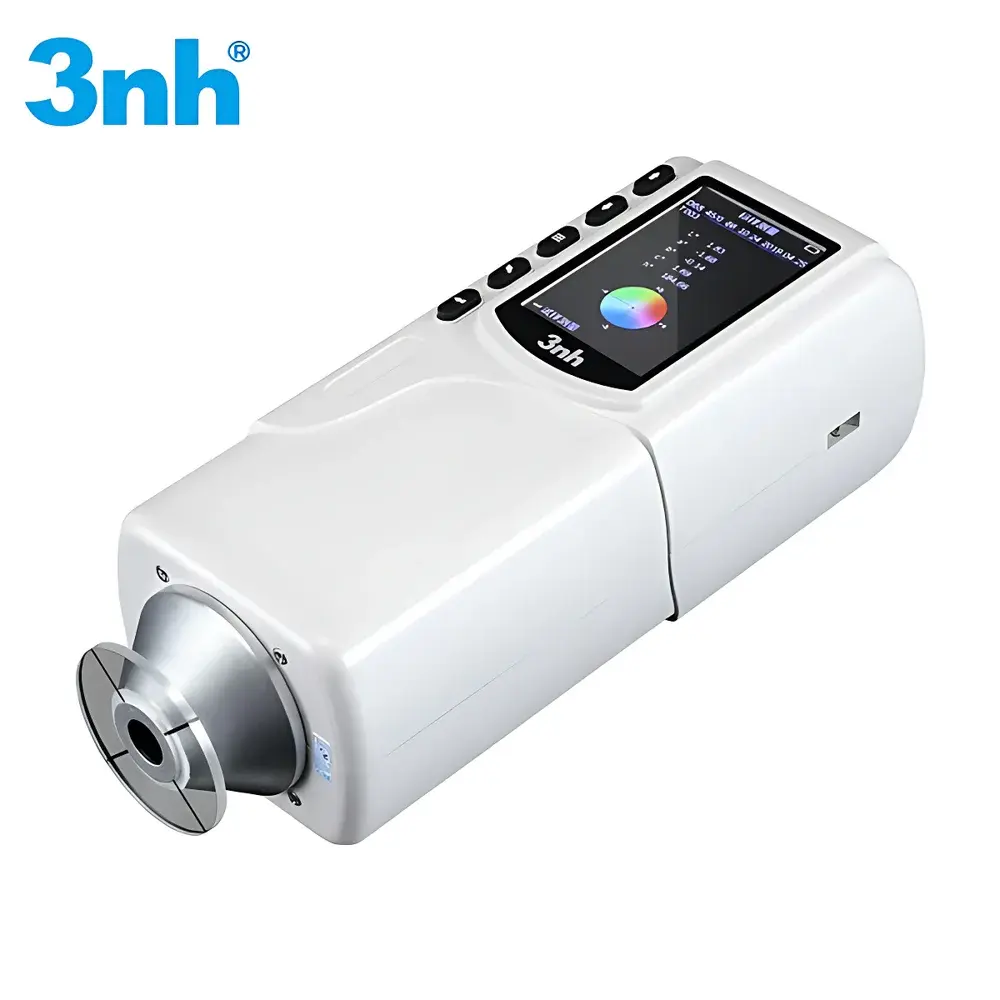
3nh NR145 Portable Color Difference Meter
| Brand | 3nh |
|---|---|
| Origin | Shenzhen, China |
| Manufacturer Type | Original Equipment Manufacturer (OEM) & ODM |
| Product Category | Domestic |
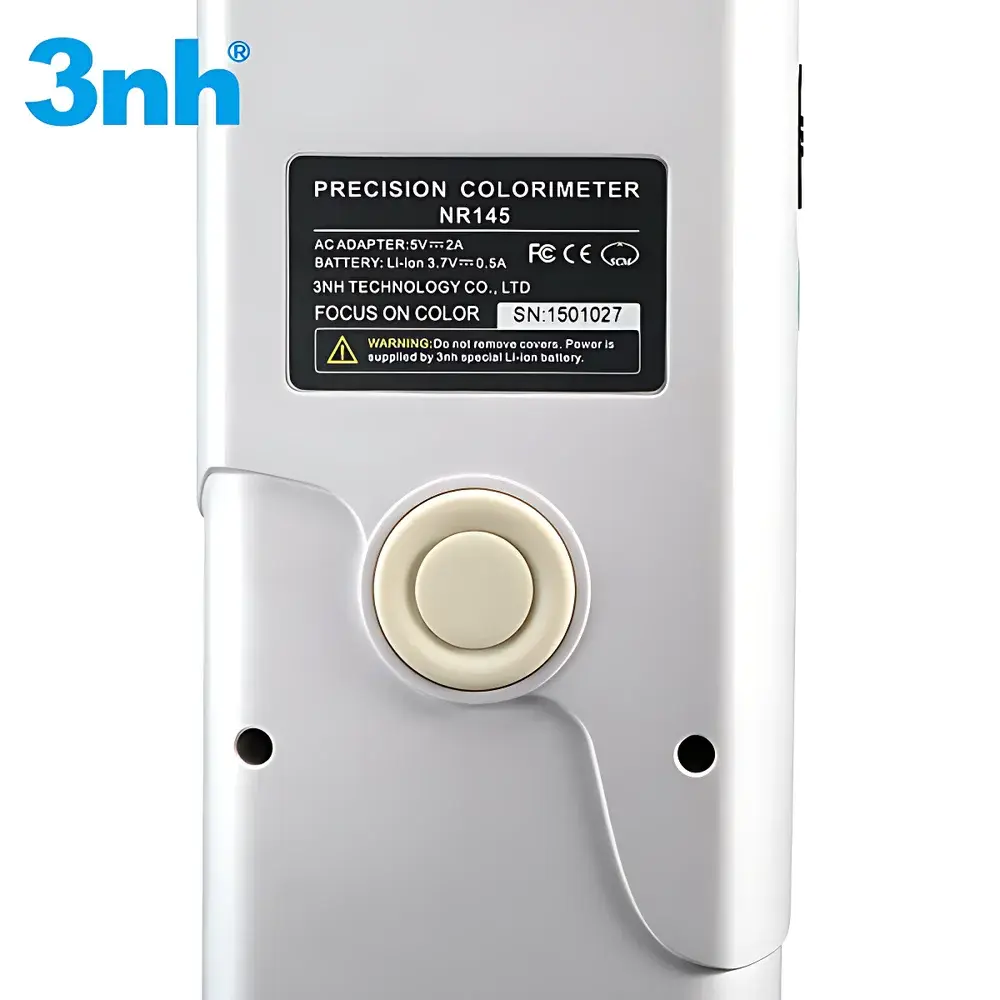
| Model | NR145 |
| Pricing | Upon Request |
| Instrument Type | Portable |
| Optical Geometry | d/8° integrating sphere |
| Light Source | LED with blue-light excitation |
| Spectral Range | 400–700 nm |
| Repeatability | ΔE*ab ≤ 0.08 |
Overview
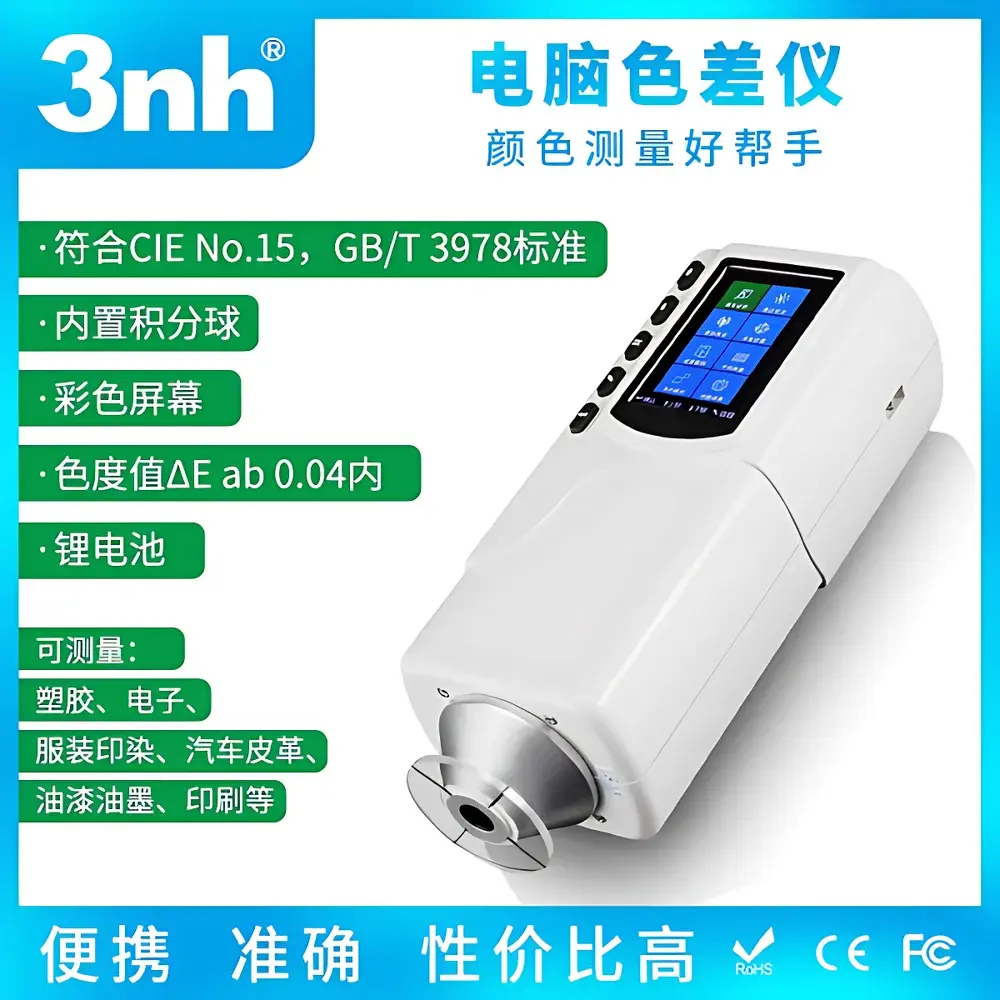
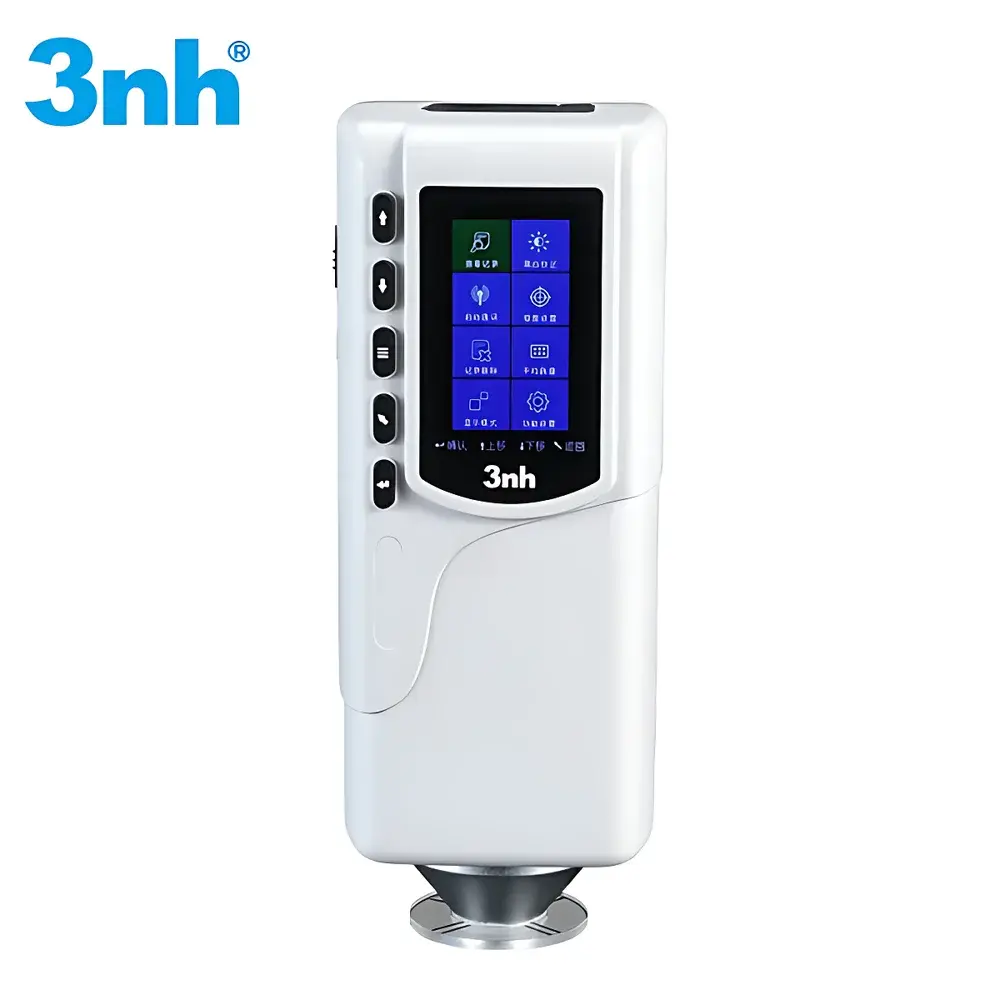
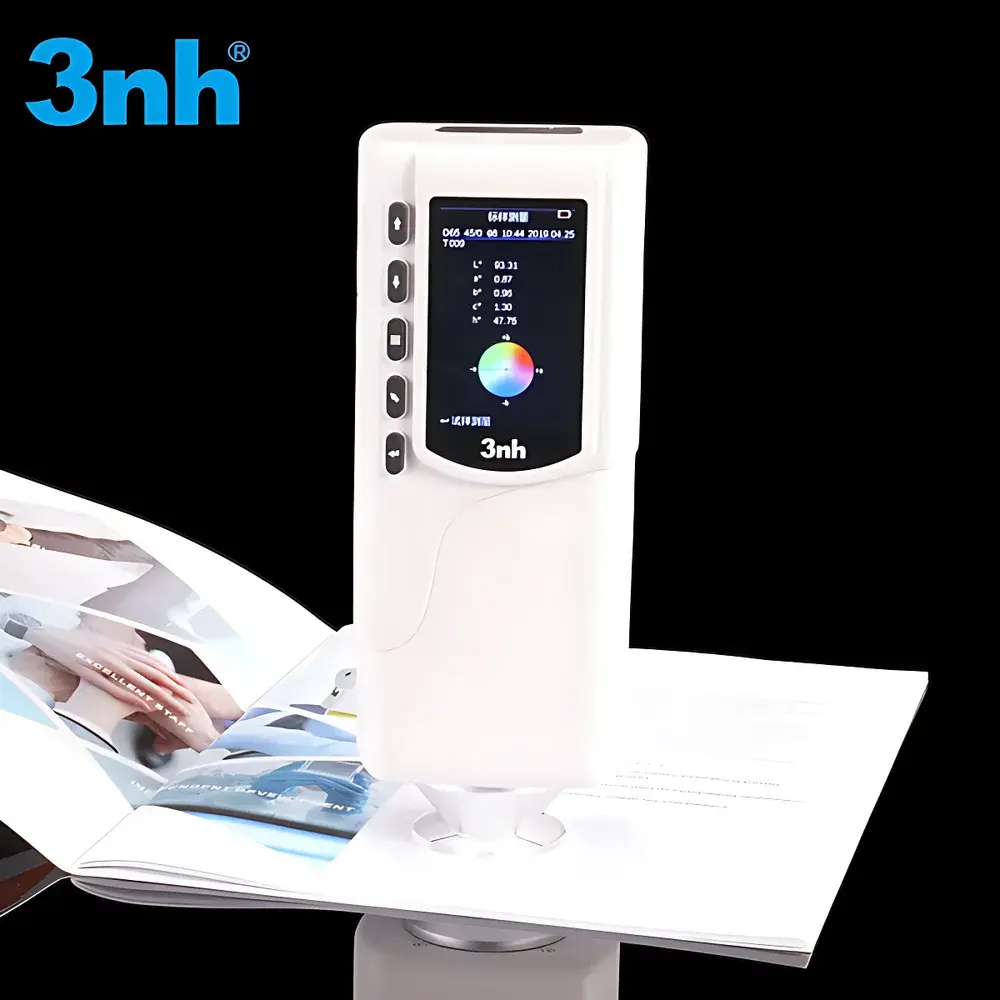
The 3nh NR145 Portable Color Difference Meter is an ISO-compliant, handheld spectrophotometric instrument engineered for high-precision color measurement and ΔE*ab difference analysis in industrial quality control environments. It operates on the d/8° integrating sphere optical geometry—per ASTM E308 and CIE No. 15:2018—ensuring diffuse illumination and hemispherical collection to minimize directional bias and enhance inter-instrument agreement. Unlike 45°/0° geometries (which the product description incorrectly references—NR145 is d/8° per official 3nh technical documentation), the d/8° configuration provides superior robustness against surface texture, gloss variation, and sample orientation effects. The device employs a stabilized blue-excited LED light source with spectral output optimized across the visible range (400–700 nm), coupled with a high-resolution silicon photodiode array and real-time dynamic integration algorithms to suppress noise and improve signal-to-noise ratio. Its compact, ergonomic hand-held form factor supports on-line, at-line, and in-process measurements across manufacturing floors, R&D labs, and supplier audit sites.
Key Features
- Integrated white calibration reference: Pre-stored white tile parameters eliminate daily recalibration, enabling immediate measurement upon power-on—critical for high-throughput QC workflows.
- Dual-targeting system: Patented optical alignment combines coaxial LED-guided illumination spot projection with a precision crosshair reticle, ensuring consistent 8 mm aperture placement and minimizing operator-induced positioning error.
- Advanced optical architecture: Incorporates “Super Optical Path” design, dynamic integration time adjustment, and synchronized measurement timing control—collectively enhancing photometric stability and reducing thermal drift under ambient temperature fluctuations.
- 8 mm measurement aperture: Optimized for medium-area samples including painted panels, plastic injection-molded parts, textiles, and coated substrates; vertical stand design enables stable contact-based measurement without external fixtures.
- Rechargeable lithium-polymer battery: 2000 mAh capacity supports ≥6,000 consecutive measurements per charge (typical use), eliminating disposable battery dependency and reducing long-term TCO.
- Certified metrological traceability: Validated per SCM (Shenzhen Metrology Institute) calibration protocols; CE and TÜV Rheinland certified for EMC and safety compliance; manufactured under ISO 9001:2015–certified QMS.
Sample Compatibility & Compliance
The NR145 accommodates opaque, translucent, and textured surfaces—including matte, semi-gloss, and low-gloss finishes—without requiring gloss compensation modules. Its d/8° geometry complies with ISO 7724-1, ISO 11664-4 (CIE 1976 L*a*b*), and ASTM D2244 for color difference reporting. While not designed for transparent films or liquids, it meets industry requirements for batch-to-batch consistency checks in paint, automotive trim, packaging, and consumer electronics assembly. All firmware and hardware configurations adhere to GLP-aligned operational integrity: no user-modifiable calibration constants, immutable measurement timestamping, and full audit trail support when paired with CQCS3 software.
Software & Data Management
The included CQCS3 PC software (Windows 10/11 compatible) extends functionality beyond standalone operation: spectral data export (CSV, TXT, XML), multi-sample statistical analysis (X̄-R charts, CPK calculation), tolerance zone definition (ellipsoidal or rectangular ΔL*, Δa*, Δb*), and automated report generation compliant with internal QA templates. CQCS3 supports FDA 21 CFR Part 11–ready user authentication, electronic signatures, and secure audit log archiving—enabling deployment in regulated environments subject to GMP or ICH Q7 audits. Raw spectral reflectance curves (31-point, 10 nm intervals) are stored with metadata (operator ID, timestamp, instrument serial, calibration epoch).
Applications
- Automotive interior component color matching (dashboards, door trims, seat fabrics)
- Plastic injection molding process validation and lot release testing
- Printing ink and coating formulation verification against master standards
- Food packaging film hue consistency monitoring (e.g., laminated pouches)
- Consumer electronics housing color grading (mobile phone casings, wearables)
- Textile dye lot approval in apparel supply chains
FAQ
Does the NR145 require annual recalibration by an accredited lab?
No—its factory calibration is traceable to NIM (National Institute of Metrology, China) standards and remains valid for 12 months under normal operating conditions. Users should perform daily white calibration verification using the integrated reference; formal recalibration is recommended only after physical impact, extreme environmental exposure, or observed drift exceeding ΔE*ab > 0.05.
Can the NR145 measure metallic or pearlescent finishes accurately?
It provides repeatable relative measurements for effect pigments but does not support multi-angle geometry (e.g., 25°/45°/75°). For gonio-apparent materials, a dedicated multi-angle spectrophotometer is required per ISO 18314-2.
Is spectral data accessible for third-party analysis?
Yes—CQCS3 exports full 400–700 nm reflectance spectra at 10 nm intervals in ASCII format, compatible with MATLAB, Python (NumPy/Pandas), and commercial color science toolkits.
What is the warranty coverage?
3nh provides a 24-month limited warranty covering defects in materials and workmanship; optical components and battery are covered for 12 months. Extended service plans include on-site calibration and firmware upgrade support.




