
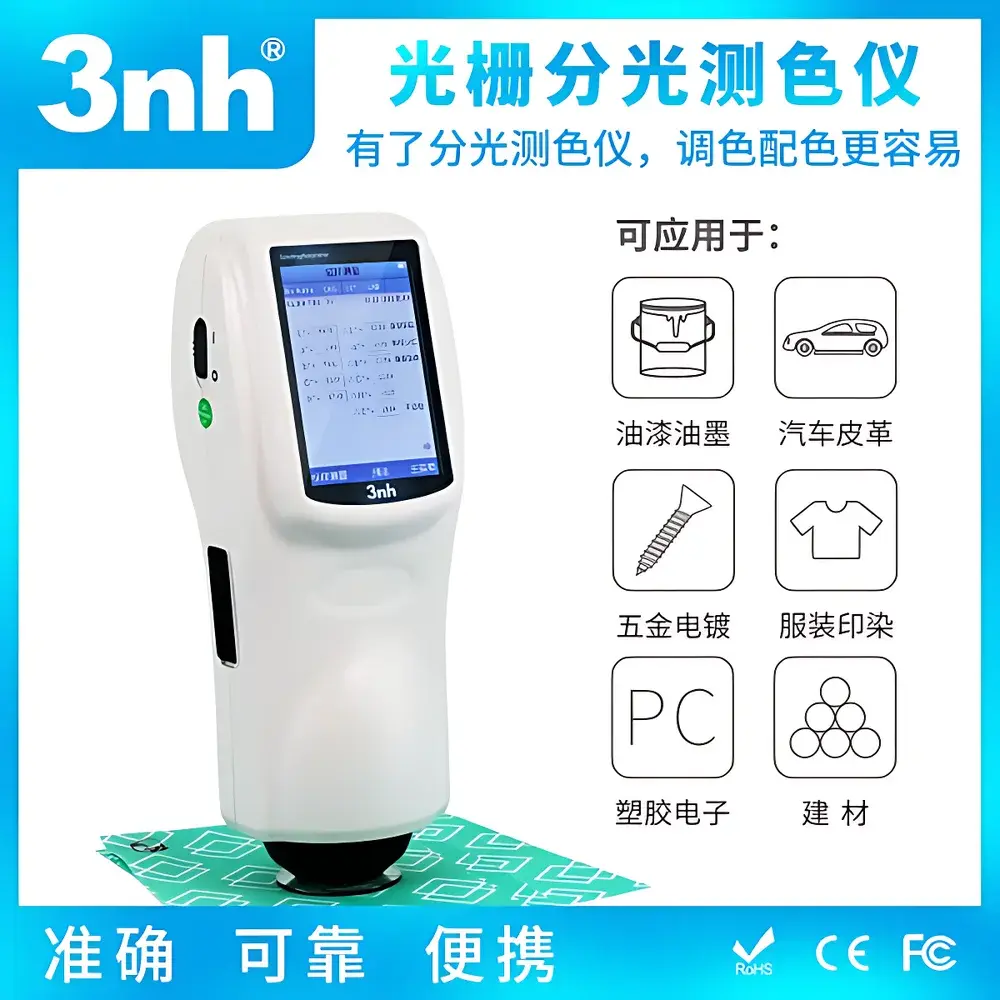
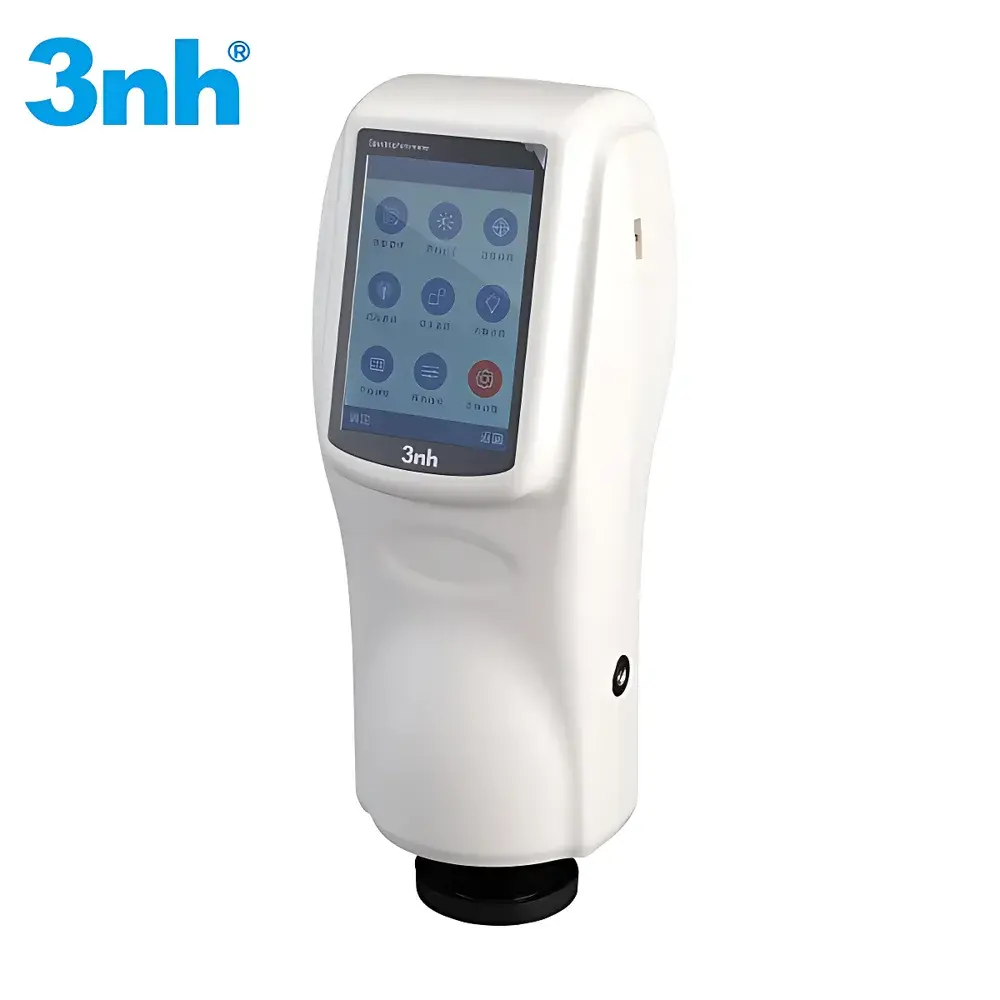
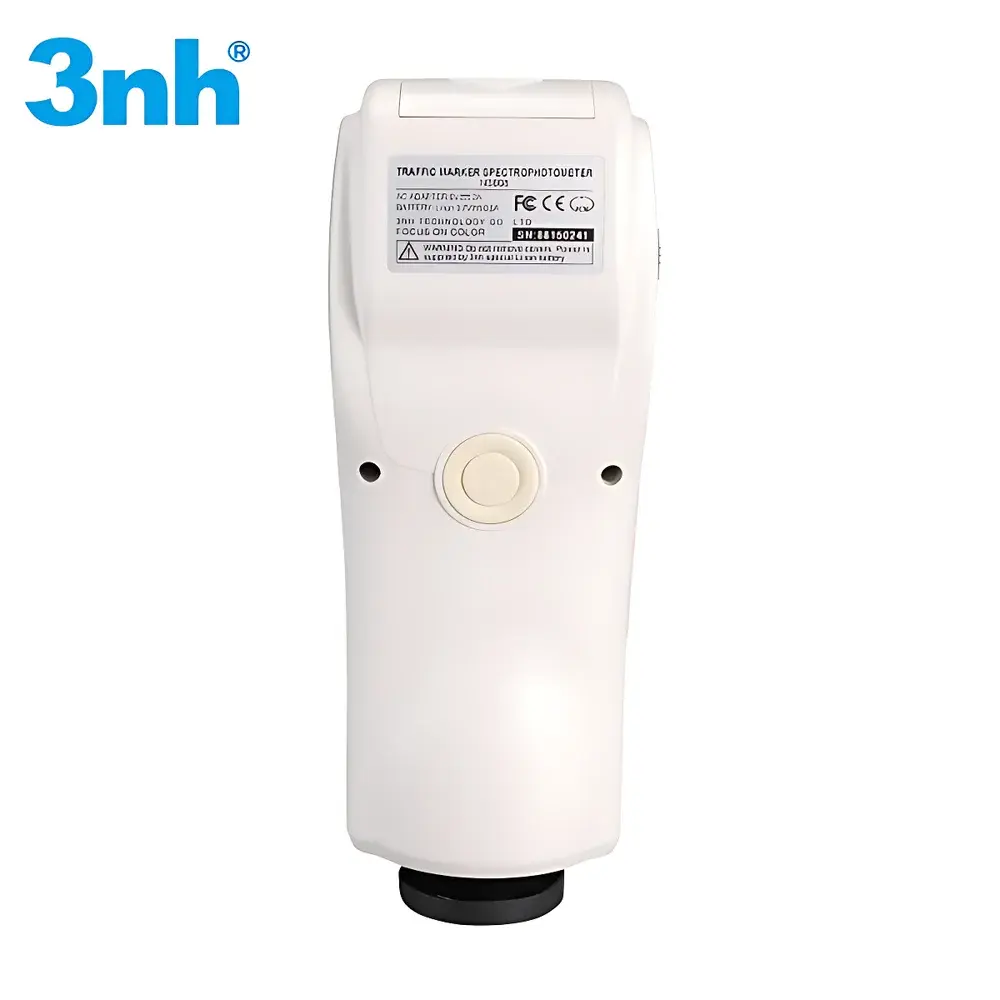
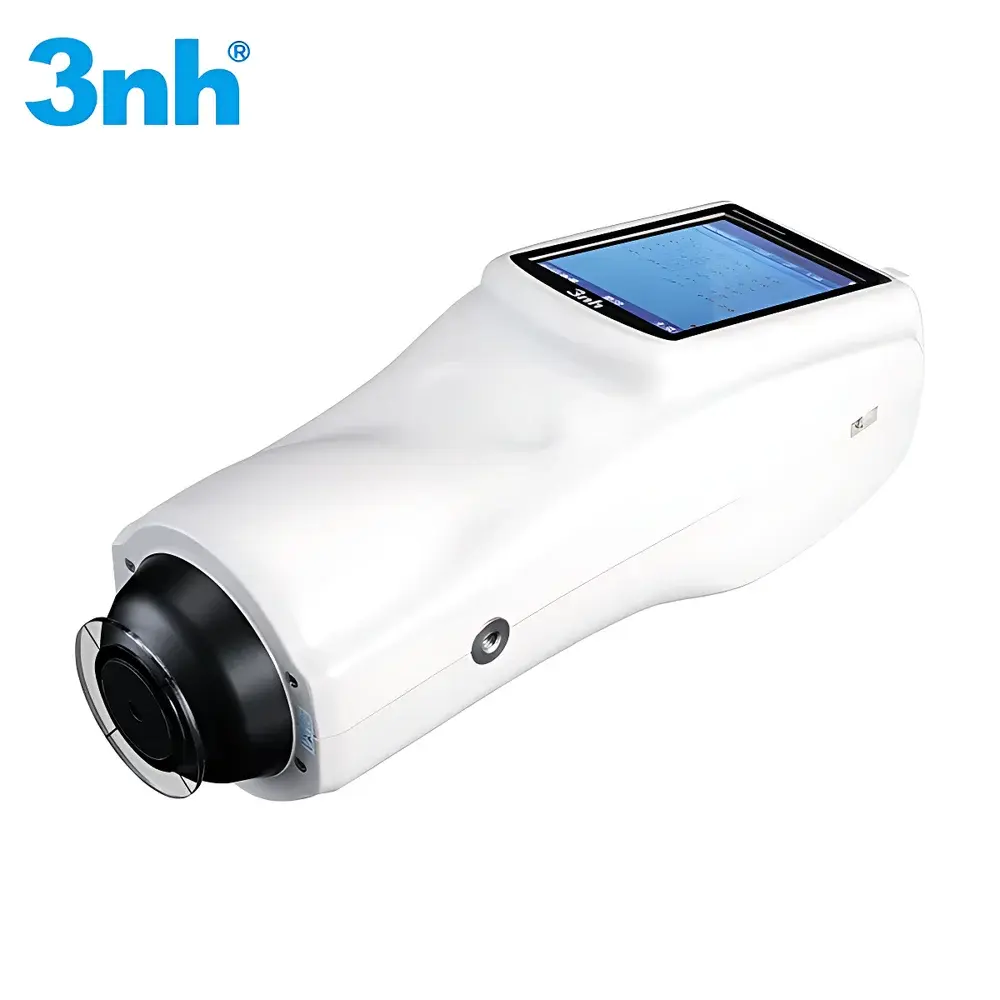
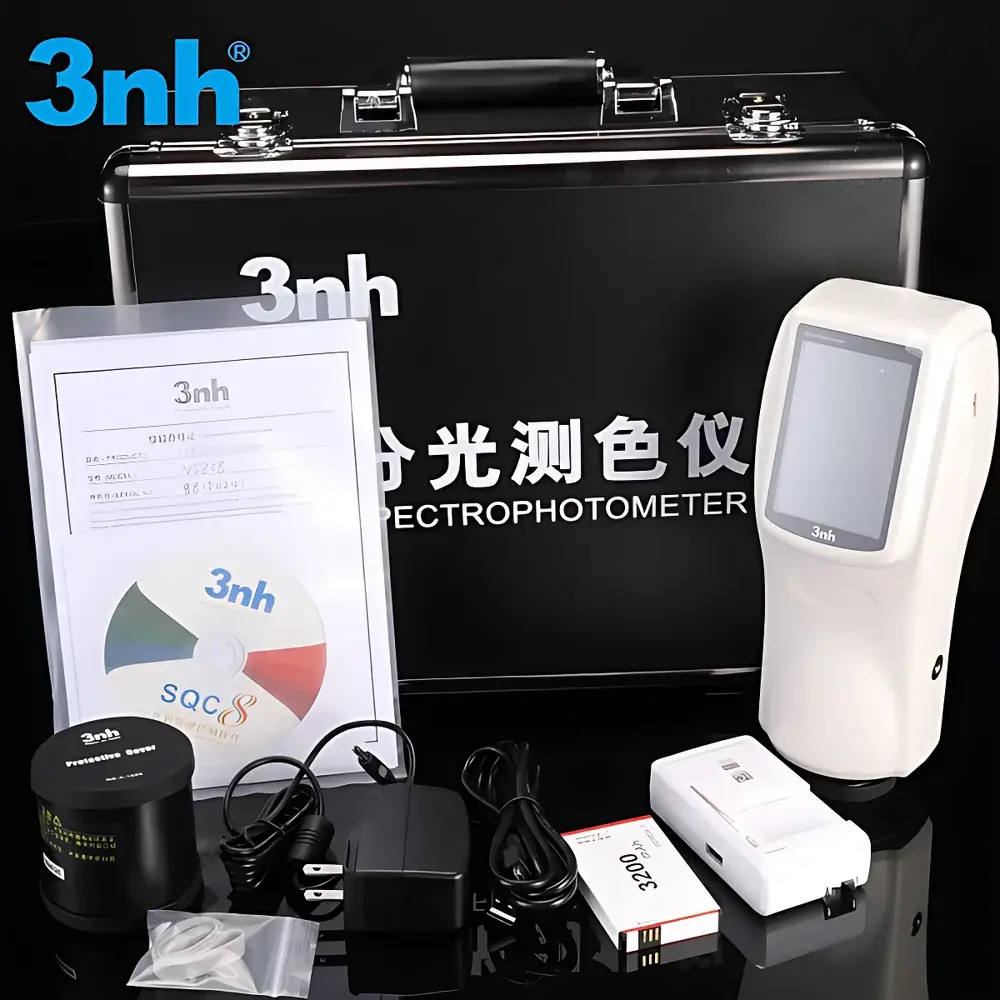
3nh NS808 Traffic Sign Spectrophotometric Colorimeter
| Brand | 3nh |
|---|---|
| Origin | Shenzhen, China |
| Manufacturer Type | Direct Manufacturer |
| Regional Category | Domestic (China) |
| Model | NS808 |
| Product Type | Spectrophotometric Colorimeter |
| Instrument Form Factor | Portable |
| Optical Geometry | d/8° integrating sphere (with specular component excluded) |
| Illuminant Options | D65, A, C, F2, etc. |
| Spectral Range | 400–700 nm |
| Wavelength Interval | 10 nm |
| Repeatability (ΔE*ab) | ≤0.05 |
| Measurement Aperture | 8 mm |
| Display | Full-color TFT LCD |
| Communication Interface | USB, Bluetooth (optional) |
| Compliance | Meets JJG 696–2015 (Chinese National Verification Regulation for Colorimeters), ISO/CIE 15:2004, CIE 116–1995 |
Overview
The 3nh NS808 Traffic Sign Spectrophotometric Colorimeter is a portable, high-precision instrument engineered for objective color assessment of retroreflective road markings and traffic signage under standardized illuminants and geometric conditions. It operates on the principle of diffuse/8° (d/8°) spectrophotometry with specular component excluded (SCE), enabling accurate spectral reflectance measurement across the visible spectrum (400–700 nm). Unlike tristimulus colorimeters, the NS808 captures full spectral data at 10 nm intervals, allowing robust calculation of CIE XYZ, L*a*b*, L*C*h°, and multiple color difference metrics—including ΔE*ab, ΔE*CMC (2:1), and ΔE00—essential for regulatory compliance in transportation infrastructure quality control. Its dedicated optical path design (45° ring illumination / 0° viewing) is optimized for angularly sensitive retroreflective materials, such as glass-bead–embedded or microprismatic sheeting used in ASTM D4956 and EN 12802 compliant sign systems.
Key Features
- Integrated multi-illuminant library (D65, A, C, F2, F7, F11) supporting both daylight and artificial lighting evaluation per CIE 15:2004 and ISO/CIE 11664 series standards.
- Dual-mode optical geometry: factory-configured d/8° SCE mode for general surface color; optional 45°/0° configuration (via software calibration profile) for direct measurement of retroreflective brightness factor (Y) and chromaticity coordinates (x, y) of traffic signs per GB/T 21383–2008 and ASTM E808.
- High-stability LED light source with blue-pump excitation and phosphor conversion, ensuring consistent spectral output without warm-up drift or lamp aging artifacts typical of tungsten-halogen sources.
- Onboard 8 mm measurement aperture with spring-loaded contact probe for repeatable sample positioning and minimized ambient light interference during field deployment.
- Embedded real-time statistical analysis: automatic calculation of mean, standard deviation, and max/min ΔE*ab across up to 20 repeated measurements—critical for GLP-aligned QC documentation.
- Rugged IP54-rated housing with rubberized grip and shock-absorbing lens cover, rated for continuous operation between 5–40°C and 20–80% RH non-condensing.
Sample Compatibility & Compliance
The NS808 is validated for use with Class I–III retroreflective sheeting (e.g., engineer-grade, high-intensity prismatic, diamond-grade), thermoplastic pavement markings, cold plastic coatings, and non-retroreflective substrates including painted metal, extruded plastics, and laminated composites. It supports traceable calibration via NIST-traceable ceramic tiles (provided with instrument) and conforms to national verification requirements under JJG 696–2015. Data acquisition workflows comply with audit-trail requirements for ISO/IEC 17025 accredited laboratories when paired with SQCT software configured for electronic signature and user access control.
Software & Data Management
The instrument interfaces exclusively with 3nh’s SQCT (Spectroscopic Quality Control Tool) desktop software (Windows 10/11, 64-bit). SQCT provides full spectral data export (CSV, TXT), customizable report templates (PDF/XLSX), and batch processing for multi-sample comparative analysis. The Traffic Sign Testing Module implements automated pass/fail evaluation against user-defined tolerance limits for luminance factor (Y ≥ X%), chromaticity deviation (Δuv ≤ 0.005), and color difference (ΔE00 ≤ 1.5)—aligned with MUTCD Chapter 3B and GB 5768.2–2022 specifications. All measurement sessions include timestamped metadata, operator ID, instrument serial number, and calibration history—enabling full 21 CFR Part 11–compliant record retention when deployed in regulated environments.
Applications
- Field verification of retroreflectivity decay in roadside signage during routine maintenance audits.
- Factory acceptance testing (FAT) of new sign sheeting batches prior to installation.
- QC screening of pigment dispersion consistency in traffic paint manufacturing.
- Research into aging effects of UV exposure and abrasion on photometric performance of retroreflective materials.
- Cross-laboratory intercomparison studies supporting harmonization of color measurement protocols across provincial transport authorities.
- Supporting third-party certification bodies performing conformity assessments per EN 12802:2020 and AS/NZS 1906.1:2022.
FAQ
Does the NS808 meet ASTM E1164 requirements for retroreflectometer calibration?
No—the NS808 is a spectrophotometer, not a retroreflectometer. It measures colorimetric properties under defined geometry but does not quantify coefficient of retroreflection (RA or RL) per ASTM E1164. For RA/RL validation, pairing with a dedicated retroreflectometer (e.g., Datacolor 600 or BYK-Gardner RCM) is required.
Can spectral data be exported for third-party analysis in MATLAB or Python?
Yes—SQCT exports full reflectance spectra (400–700 nm at 10 nm steps) in plain-text CSV format, compatible with NumPy, Pandas, and standard spectral analysis toolkits.
Is firmware upgradable in the field?
Yes—firmware updates are delivered via SQCT software and applied over USB connection without requiring return-to-factory service.
What is the recommended recalibration interval?
Annual calibration using certified reference tiles is advised for metrological continuity; daily zero and white calibration is mandatory before each measurement session per JJG 696–2015.
Does the device support Bluetooth Low Energy (BLE) connectivity?
Bluetooth 5.0 LE is available as an optional hardware module (ordered separately); standard configuration uses USB 2.0 for deterministic data transfer and power delivery.






