
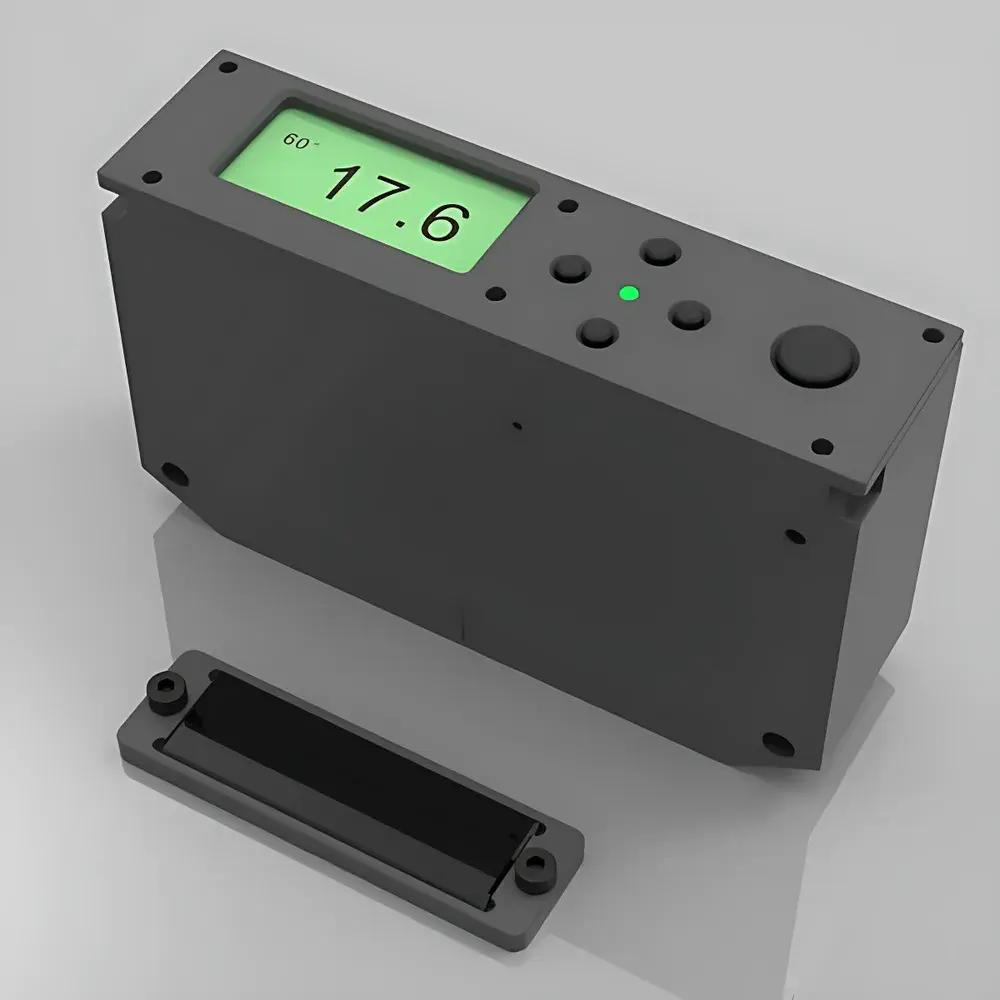
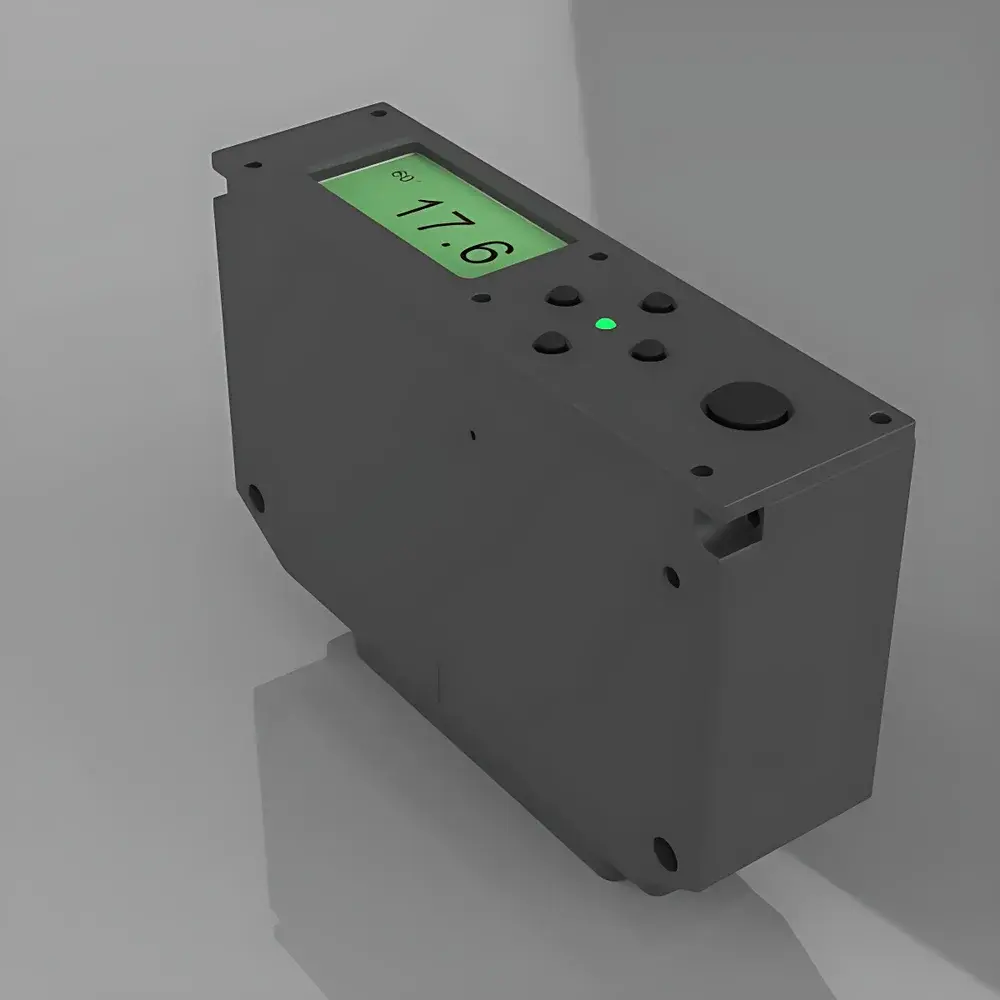
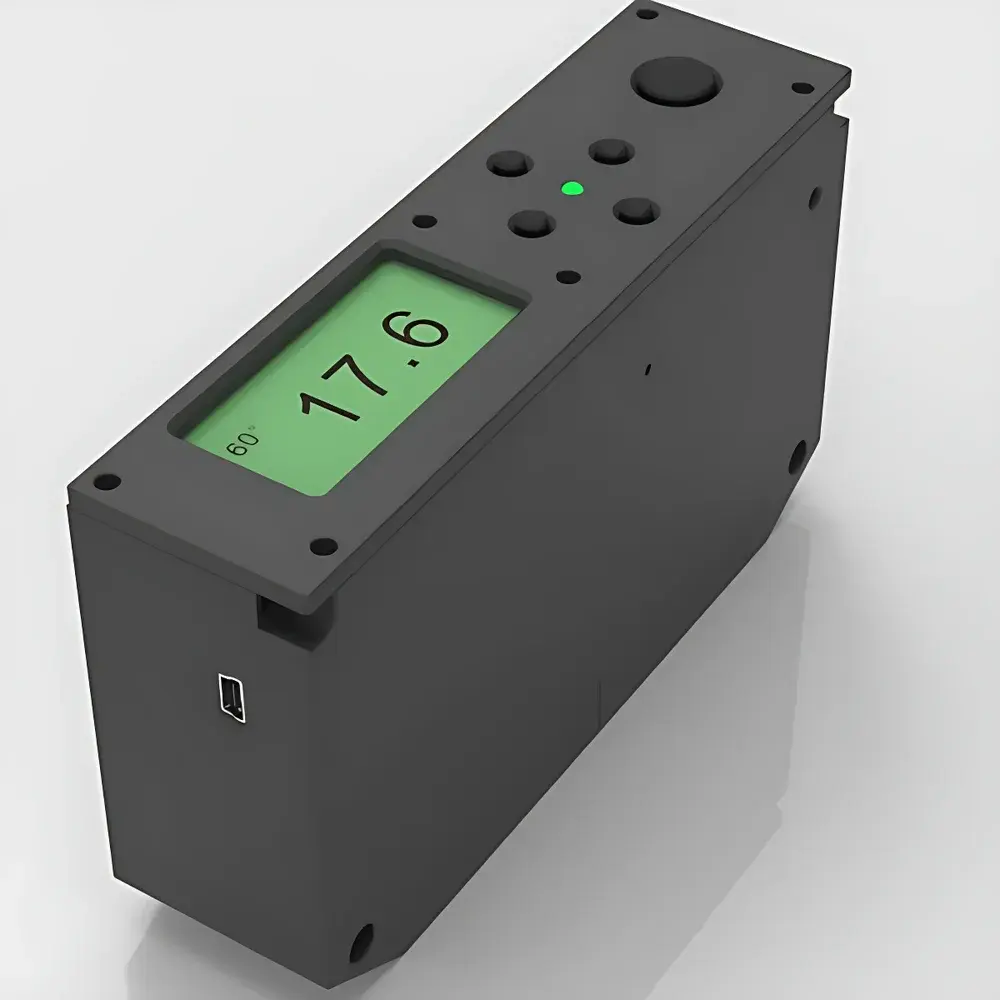
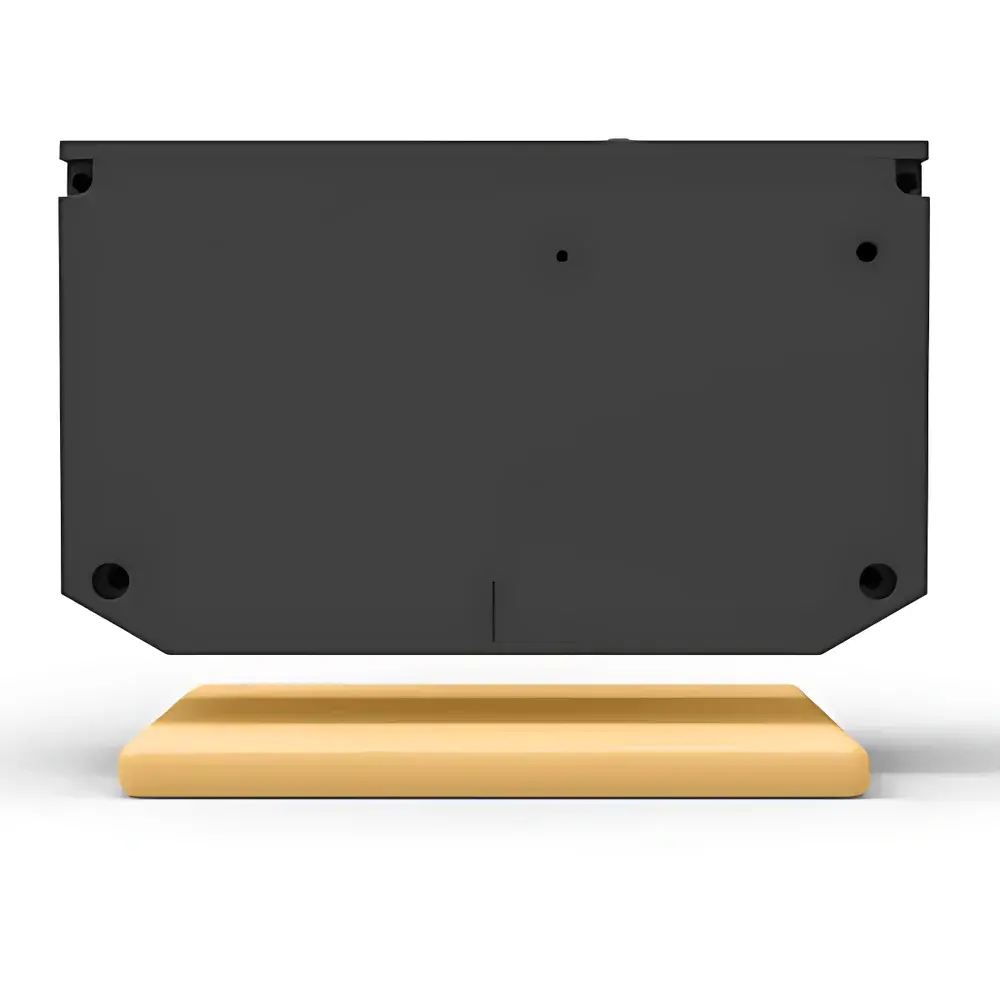
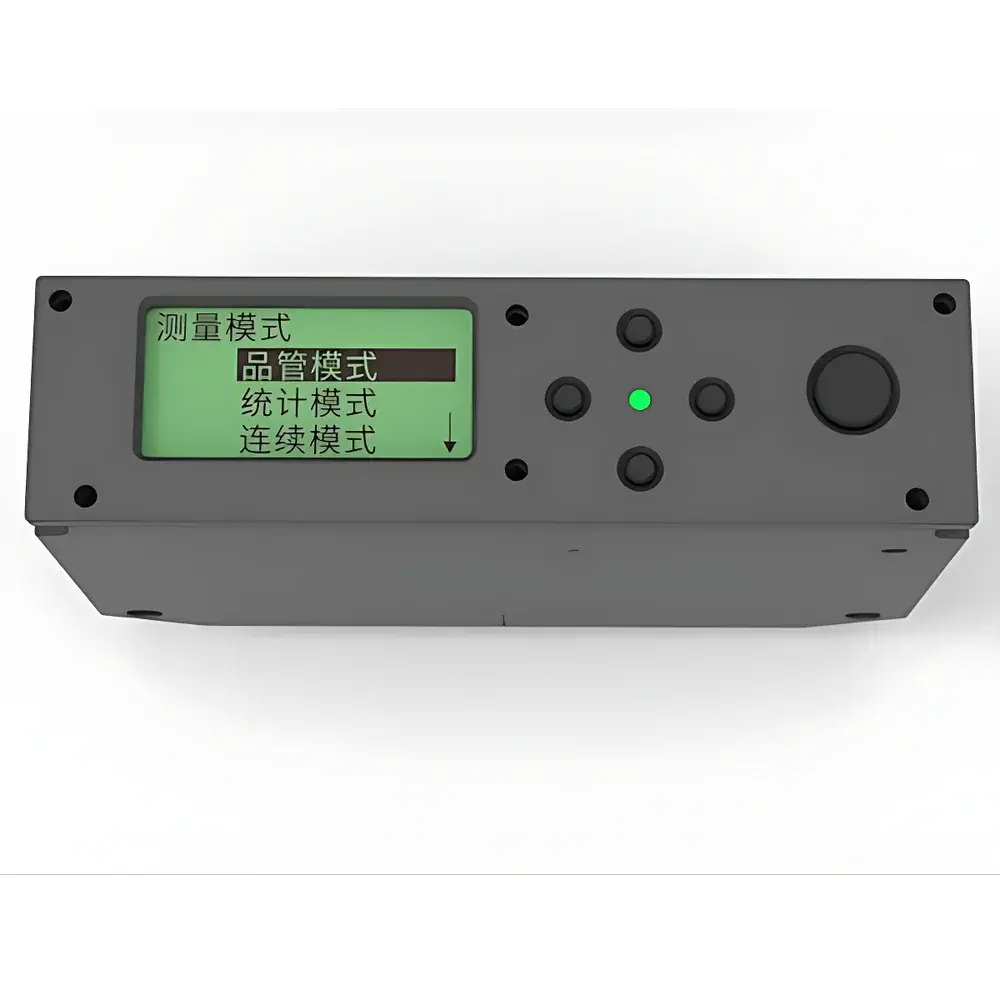
3nh YG60L Online Non-Contact Gloss Meter
| Brand | 3nh |
|---|---|
| Origin | Guangdong, China |
| Manufacturer Type | Manufacturer |
| Product Type | Online Non-Contact Gloss Meter |
| Model | YG60L |
| Measurement Angle | 60° |
| Measuring Spot Size (60°) | 9 mm × 15 mm |
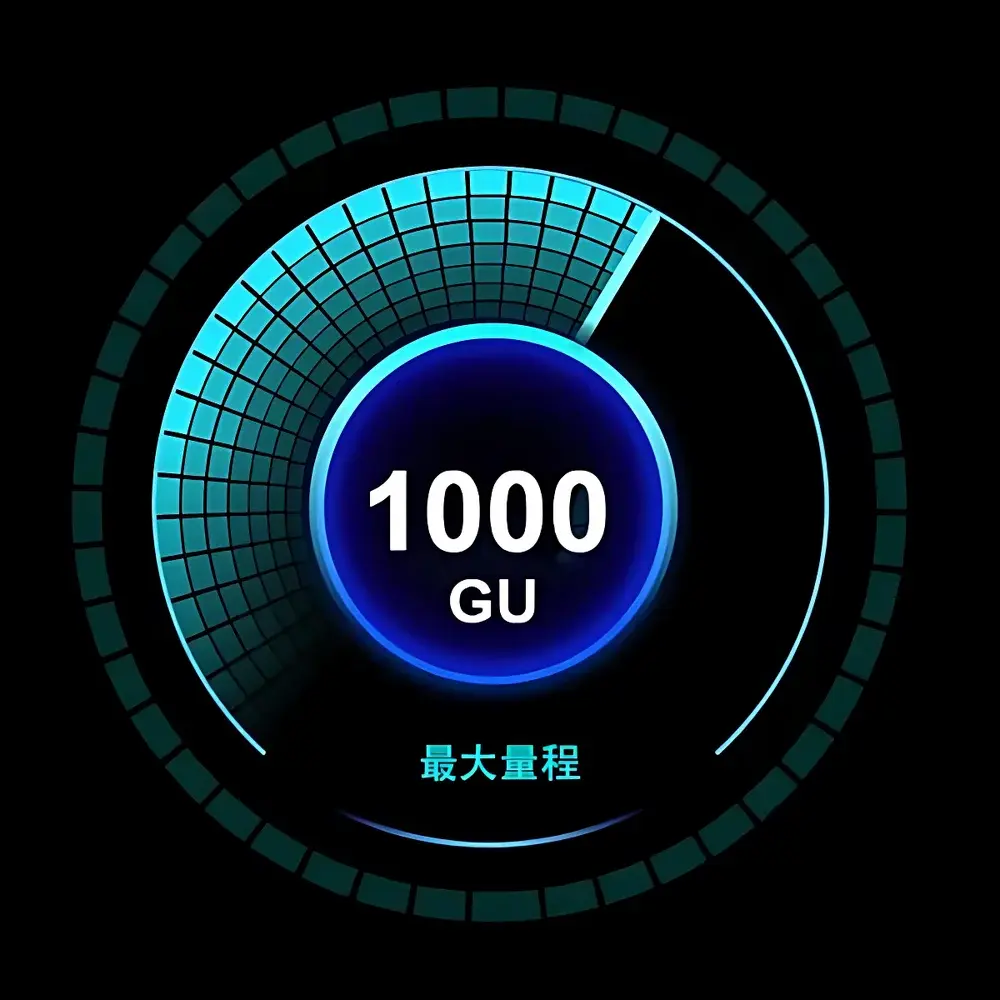
| Gloss Range (60°) | 0–1000 GU |
| Resolution | 0.1 GU |
| Non-Contact Distance | 10.0 mm ± 0.1 mm |
| Sample Parallelism Tolerance | ≤ 0.2° |
| Repeatability | ±0.5 GU (0–100 GU), ±0.5% of reading (100–1000 GU) |
| Measurement Time | 0.2 s (fast mode) or 1 s (standard mode) |
| Display | 2.3-inch monochrome LCD |
| Data Storage Capacity | 35,000 records (15,000 in Basic/Continuous mode |
| Interface | USB 2.0, Bluetooth 5.0 |
| Power Supply | USB-powered (external adapter included) |
| Operating Temperature | 0–40 °C |
| Storage Temperature | −20–50 °C |
| Relative Humidity | <85% RH, non-condensing |
| Compliance | ISO 2813, ASTM D523, GB/T 9754, JJG 696 (Working Gloss Meter Verification Regulation) |
| Software | Windows-compatible PC software with report generation, audit trail, and GLP-compliant data export |
Overview
The 3nh YG60L Online Non-Contact Gloss Meter is an industrial-grade optical measurement instrument engineered for real-time, non-destructive gloss evaluation in automated production environments. It operates on the principle of specular reflectance measurement at a fixed 60° geometry—aligned with internationally recognized standards including ISO 2813, ASTM D523, and GB/T 9754. Unlike traditional contact-based gloss meters, the YG60L employs a precisely calibrated optical path that maintains a consistent 10.0 mm standoff distance between the sensor aperture and the sample surface, eliminating mechanical interference and enabling stable measurements on delicate, viscous, granular, or thermally sensitive materials—including liquid coatings, pastes, powders, thin films, and polished metallic or ceramic substrates. Its compact form factor (140 × 83 × 38 mm) and lightweight design (≈500 g) facilitate seamless integration into conveyor lines, robotic workcells, or inline QC stations without requiring structural modification. The device delivers high reproducibility under dynamic conditions, meeting the metrological requirements of JJG 696 for working gloss meters when used with the supplied calibration jig and standard reference tiles.
Key Features
- True Non-Contact Operation: Maintains a fixed 10.0 mm ± 0.1 mm working distance with angular alignment tolerance ≤ 0.2°, ensuring measurement integrity across uneven, soft, or heat-sensitive surfaces.
- High-Speed Inline Monitoring: Captures gloss values in as little as 0.2 seconds per measurement, supporting high-throughput line speeds and enabling real-time SPC feedback loops.
- Multi-Mode Operational Flexibility: Offers four distinct measurement paradigms—Basic (instant readout), Continuous (time-series logging), Statistical (mean/min/max/SD calculation), and Quality Assurance (user-defined upper/lower limits with pass/fail flagging).
- Dual Communication Protocols: Equipped with both USB 2.0 and Bluetooth 5.0 interfaces for direct connection to PLCs, SCADA systems, or host PCs—enabling OEM-level system integration via documented API and communication protocol examples.
- Robust Metrological Architecture: Features automatic calibration verification, manual recalibration capability, and traceable reference standards compliant with national metrology regulations (JJG 696).
- Extended Data Management: Stores up to 35,000 measurements onboard with mode-specific allocation, and supports timestamped export in CSV or PDF formats via Windows-based PC software.
Sample Compatibility & Compliance
The YG60L is validated for use across diverse material classes where surface finish directly correlates with functional performance or aesthetic acceptance criteria. It is routinely deployed in quality assurance workflows for architectural coatings, automotive clearcoats, printed packaging substrates, injection-molded consumer electronics housings, electroplated hardware, vitrified ceramics, and natural stone finishes. Its non-contact methodology eliminates risk of surface marring during repeated inspection—critical for high-value or post-cured components. Regulatory alignment includes conformance to ISO 2813 (plastics and paint), ASTM D523 (specular gloss of planar surfaces), and GB/T 9754 (Chinese national standard for coating gloss). For regulated industries, the device supports GLP/GMP-aligned documentation practices through its PC software, which provides user-accessible audit trails, electronic signatures, and configurable report templates compatible with internal SOPs.
Software & Data Management
The bundled Windows-native software provides full instrument control, live data streaming, historical trend visualization, and customizable reporting. It supports batch export with metadata tagging (operator ID, lot number, timestamp, location), and generates inspection reports compliant with internal QA protocols. The software architecture includes role-based access control (administrator/operator tiers), session logging, and version-stamped configuration backups. While native FDA 21 CFR Part 11 compliance is not embedded, the software’s deterministic data handling, immutable log files, and export functionality enable validation by end users under GxP frameworks. Optional firmware-level enhancements—including custom field data mapping, OPC UA server integration, or MES interface modules—are available upon technical assessment and contractual agreement.
Applications
- Real-time gloss monitoring of wet paint films on automotive body panels prior to curing
- In-line verification of gloss uniformity across printed flexible packaging webs
- Automated sorting of anodized aluminum extrusions based on specular reflectance thresholds
- QC release testing of marble tile batches against architectural finish specifications
- Process validation of solvent-based ink drying kinetics on gravure-printed substrates
- Non-destructive incoming inspection of coated electronic enclosures prior to assembly
FAQ
What standards does the YG60L comply with?
It conforms to ISO 2813, ASTM D523, GB/T 9754, and meets verification requirements specified in JJG 696 for working gloss meters.
Can the YG60L measure curved or textured surfaces?
It is optimized for planar or gently curved surfaces with minimal topographic variation within the 9 × 15 mm measurement spot; significant texture or radius < 50 mm may affect accuracy and requires empirical validation.
Is the device suitable for cleanroom environments?
Yes—its sealed optical head, absence of moving parts, and lack of consumables make it compatible with ISO Class 5–8 cleanrooms when installed with appropriate mounting fixtures.
Does the PC software support network deployment or database integration?
The standard software operates locally; however, raw data export (CSV/JSON) and DLL-based SDK enable integration with SQL databases, LabVIEW, or enterprise MES platforms via customer-developed middleware.
How often must the instrument be recalibrated?
Annual calibration against certified reference standards is recommended; daily verification using the supplied calibration tile is required before critical measurements per JJG 696 guidelines.





