
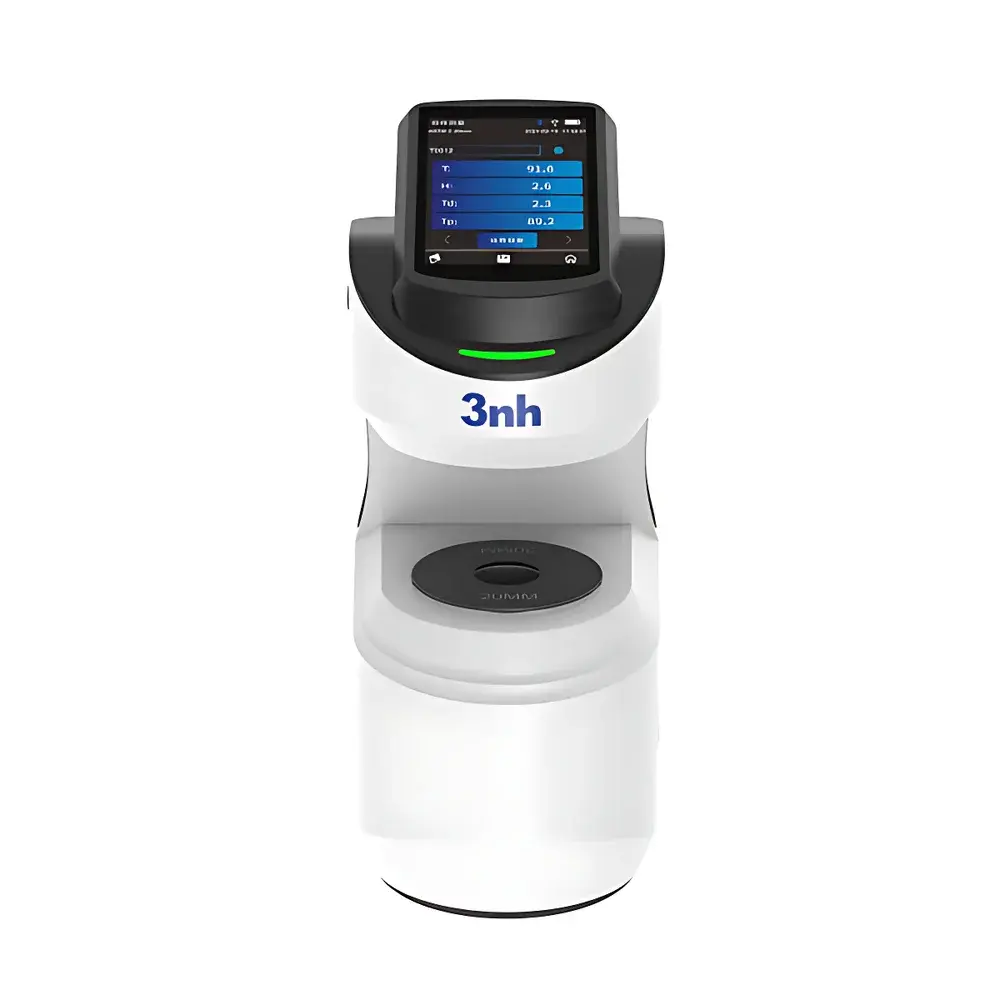
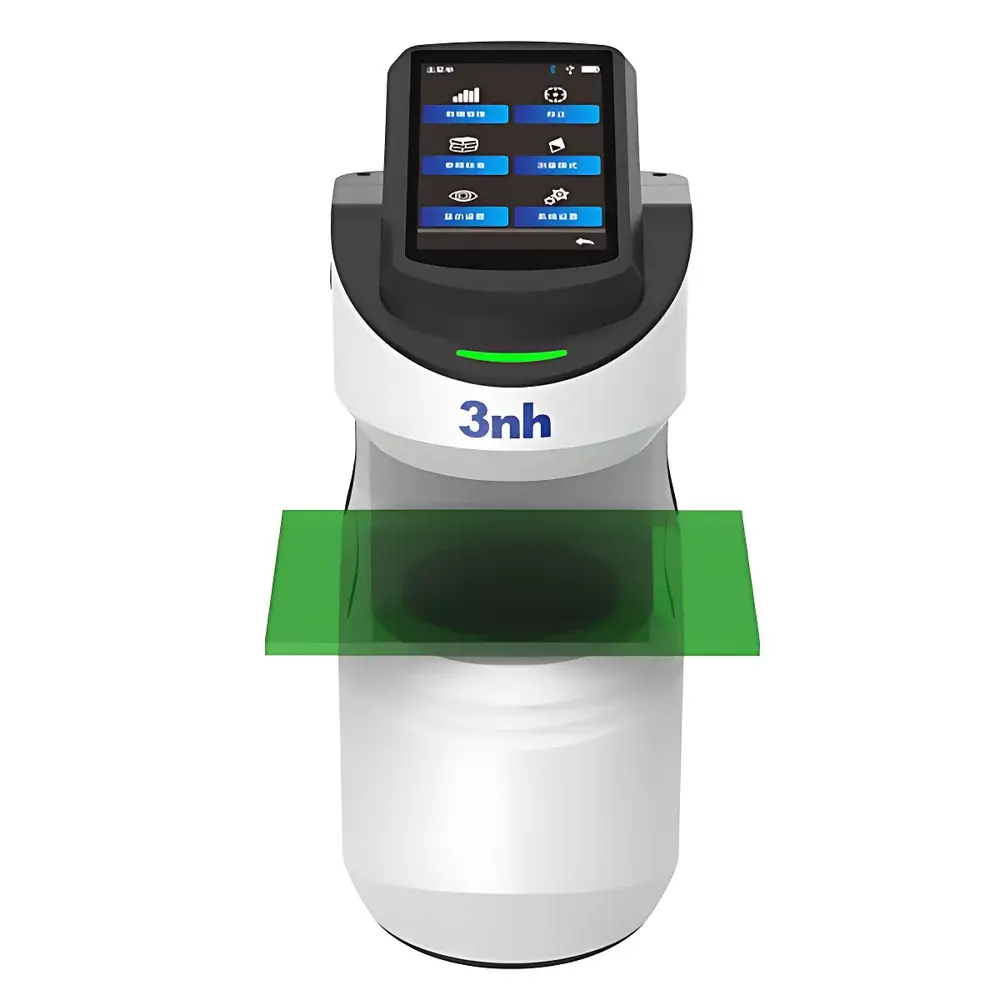
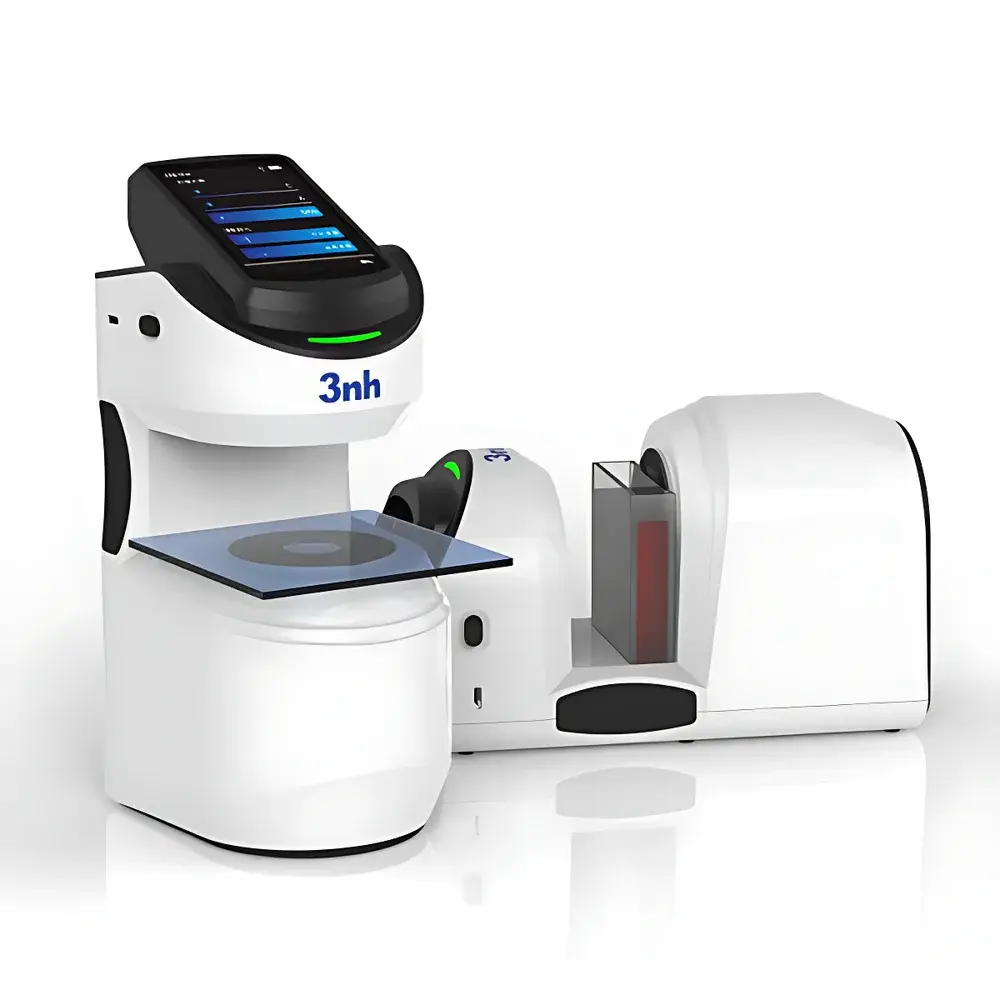
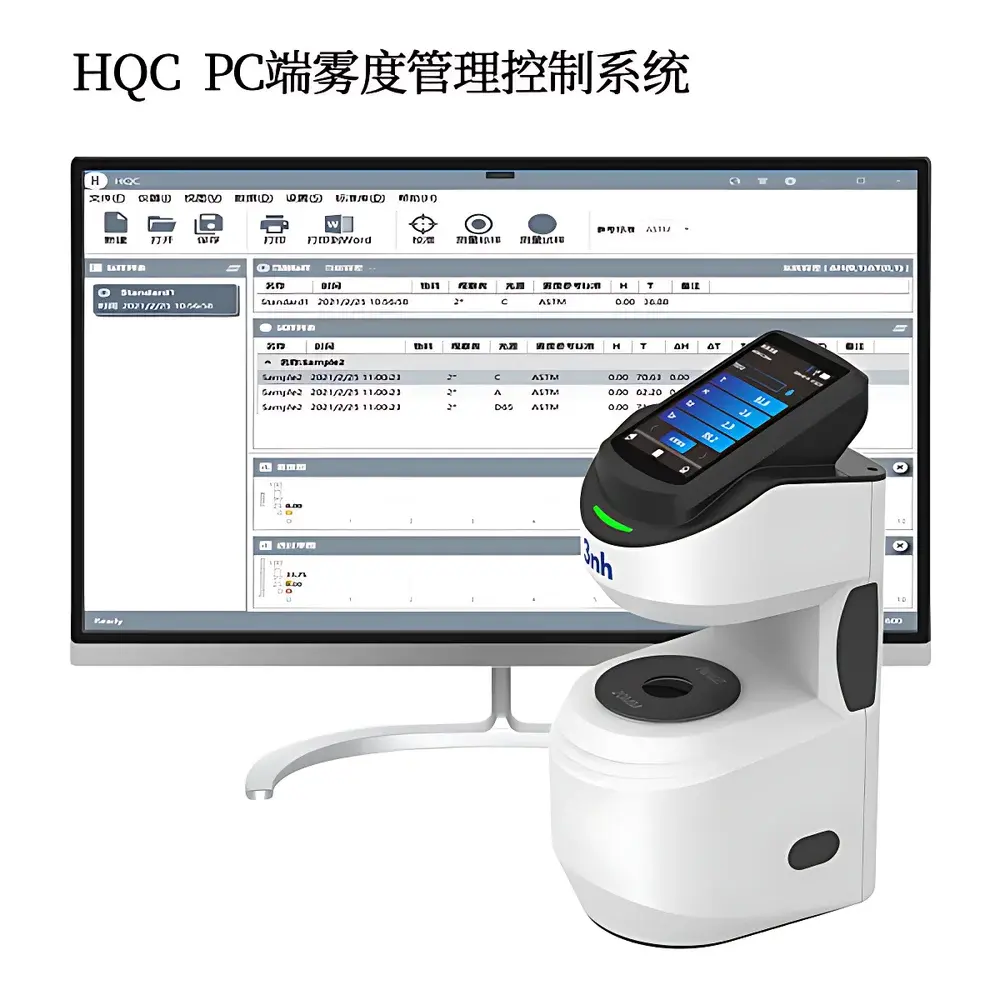
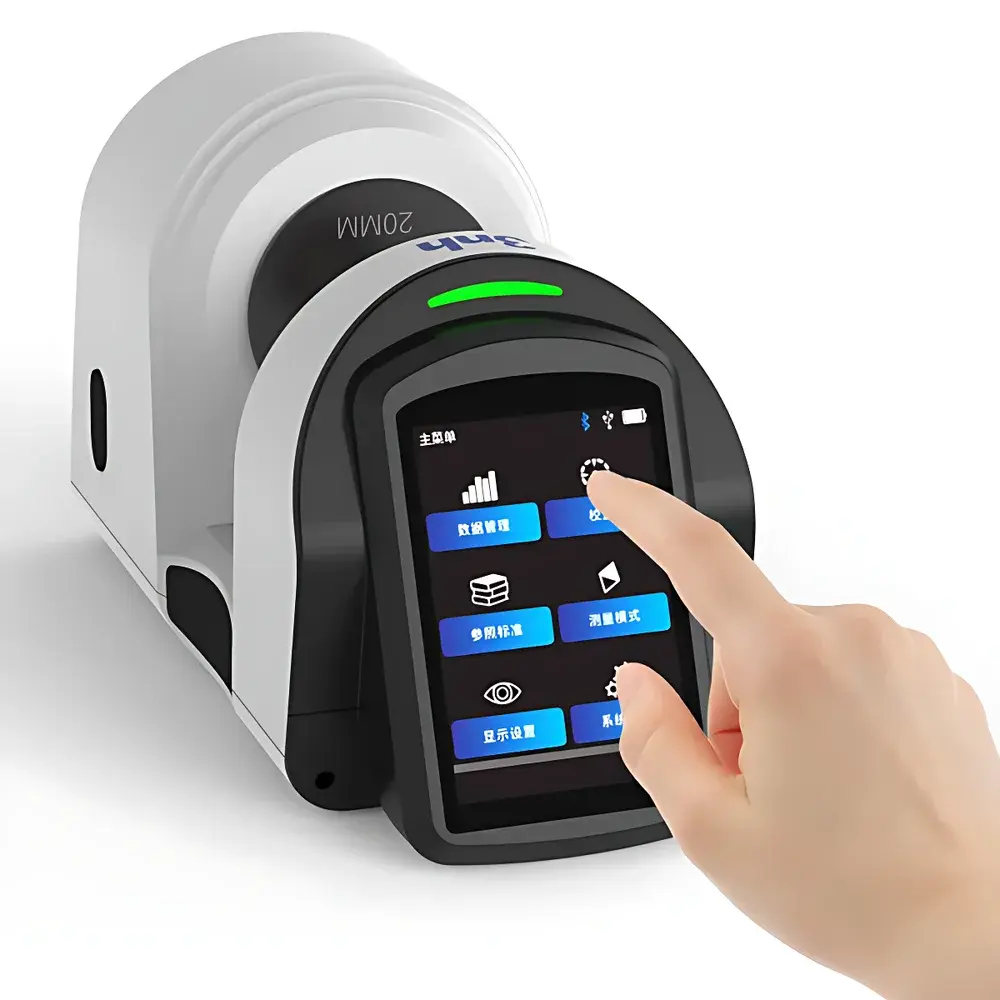
3nh YH10 Portable Haze Meter
| Brand | 3nh |
|---|---|
| Origin | Guangdong, China |
| Manufacturer Type | Manufacturer |
| Product Category | Domestic |
| Model | YH10 |
| Pricing | Upon Request |
| Type | Manual |
| Haze Range | 0–30% |
| Transmittance Range | 0–100% |
| Haze Repeatability | ±0.1 |
| Transmittance Repeatability | ±0.2 |
Overview
The 3nh YH10 Portable Haze Meter is a precision-engineered optical instrument designed for rapid, field-deployable measurement of haze and total transmittance in transparent and translucent materials. Based on the ASTM D1003/1044-compliant 0/D (zero-degree illumination / diffuse reception) geometry, it employs a Φ90 mm integrating sphere with a spectrally uniform 400–700 nm LED light source to deliver photometrically accurate results aligned with CIE standard illuminants D65, A, and C. Its core measurement principle relies on detecting forward-scattered light relative to total transmitted light—enabling quantitative assessment of light diffusion caused by internal microstructures or surface imperfections in substrates such as optical glass, polymer films, display cover lenses, pharmaceutical vials, and flexible packaging. The YH10 is not a laboratory benchtop system but a ruggedized handheld platform engineered for consistent performance across QC checkpoints, production lines, and supplier audits where portability, repeatability, and regulatory traceability are critical.
Key Features
- Optimized 0/D optical configuration compliant with ASTM D1003, ISO 14782, JIS K7105, GB/T 2410, and JJF 1303–2011—ensuring global method harmonization.
- Open-measurement architecture supporting both vertical and horizontal sample orientation, accommodating irregularly shaped, oversized, or mounted specimens up to 40 mm thickness.
- Single-step 100% calibration protocol using integrated reference standard—eliminating multi-point drift correction and reducing operator dependency.
- High-stability photodetector array calibrated to CIE 1931 2° standard observer spectral response (V(λ)), delivering ≤±0.1 haze repeatability (n=30, 5 s interval, Φ20 mm aperture, pre-warmed instrument).
- Ergonomic housing with textured silicone grip and tilt-adjustable 3.5-inch capacitive TFT touchscreen—auto-rotating display adapts to instrument orientation for continuous operation without visual fatigue.
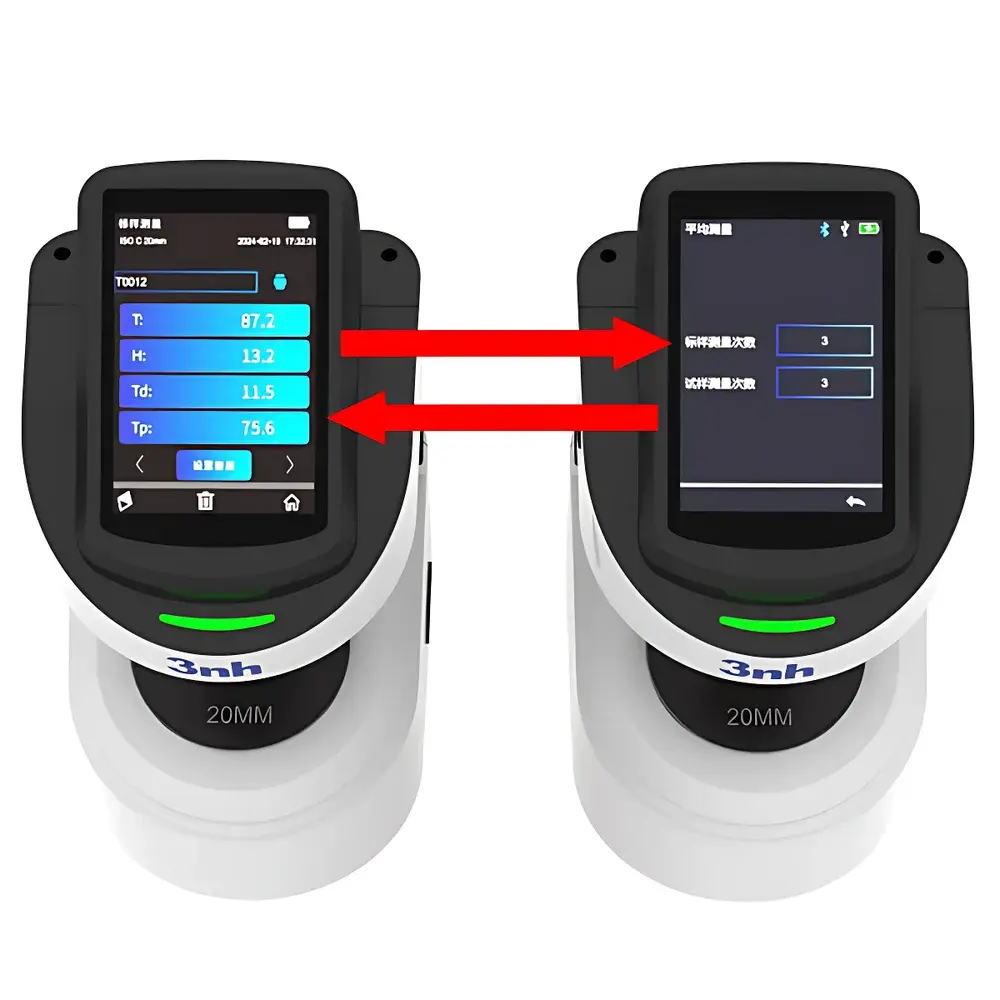
- Dual acquisition modes: single-shot measurement for spot verification and averaging mode (2–9 readings) for statistical confidence in variable samples.
- Integrated 5000 mAh Li-ion battery rated for >3 million measurements over ≥5 years—supporting full-shift operation without external power.
Sample Compatibility & Compliance
The YH10 accepts flat, rigid, or semi-rigid specimens with maximum thickness of 40 mm and minimum usable area defined by its Φ20 mm measurement aperture. It is validated for use with float glass, PET/PVC/PC films, acrylic sheets, OLED encapsulation layers, IV bags, ophthalmic lens blanks, and coated pharmaceutical containers. All firmware and calibration routines adhere to GLP-aligned documentation practices; raw data logs include timestamp, operator ID (if configured), instrument serial number, calibration status, and environmental temperature (0–40 °C operating range). While not FDA 21 CFR Part 11–certified out-of-the-box, audit-ready CSV exports from HQC software support retrospective validation under ISO/IEC 17025 and ICH Q5E frameworks.
Software & Data Management
The included HQC Quality Control Software (Windows-compatible, downloadable from 3nh’s official domain) enables centralized management of up to 1,000 standards and 10,000 sample records. It supports automated pass/fail evaluation against user-defined specification limits, batch-level statistical process control (SPC) charting (X̄–R, Cp/Cpk), and customizable PDF report generation—including instrument metadata, measurement history, and deviation alerts. Raw data files retain full traceability: each entry embeds measurement conditions (illuminant, aperture size, observer angle), environmental sensor readings, and cryptographic checksums to prevent post-acquisition tampering—facilitating internal audits and third-party certification reviews.
Applications
- Flat-panel display manufacturing: quantifying haze in cover glass, anti-reflective coatings, and touch sensor laminates prior to lamination.
- Medical device packaging: verifying clarity compliance of sterile barrier systems per ISO 11607–1 and USP .
- Automotive glazing: monitoring batch consistency of polycarbonate headlamp lenses and sunroof panels.
- Pharmaceutical container qualification: assessing visual clarity of amber glass vials and cyclic olefin copolymer (COC) syringes under controlled lighting.
- Recycled plastic reprocessing: screening post-consumer PET flakes for contamination-induced scattering prior to extrusion.
- Quality assurance in R&D labs: rapid iteration testing of anti-fog additives, nanocomposite fillers, and UV-stabilized film formulations.
FAQ
Does the YH10 comply with ASTM D1003 Section 8 (instrumental method)?
Yes—the 0/D optical path, integrating sphere design, and V(λ)-matched detector array fully satisfy the geometric and photometric requirements specified in ASTM D1003–22 Annex A1.
Can the YH10 measure curved or textured surfaces?
It requires optically flat, parallel-faced samples for valid haze calculation; curved, embossed, or matte-finished surfaces introduce uncontrolled scatter and invalidate ASTM-conforming results.
Is firmware upgrade capability supported?
Yes—field-upgradable via USB connection using HQC software; version history and release notes are published on 3nh’s technical support portal.
What is the recommended recalibration interval?
Annual verification against NIST-traceable haze standards is advised; daily 100% calibration using the supplied reference tile is mandatory before measurement sessions.
Are measurement uncertainties documented per ISO/IEC Guide 98–3 (GUM)?
Uncertainty budgets—including contributions from repeatability, temperature drift, aperture alignment, and detector nonlinearity—are provided in the instrument’s Type Evaluation Report (available upon request for accredited laboratories).






