
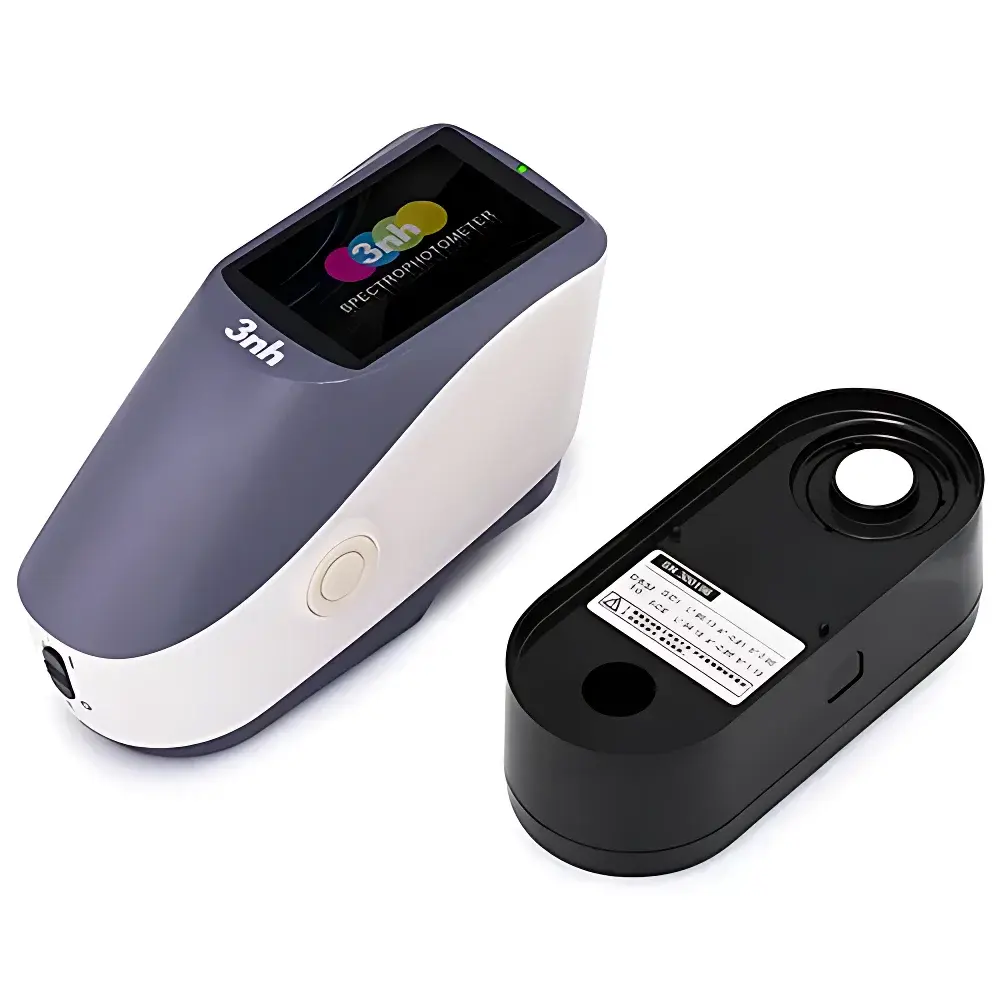
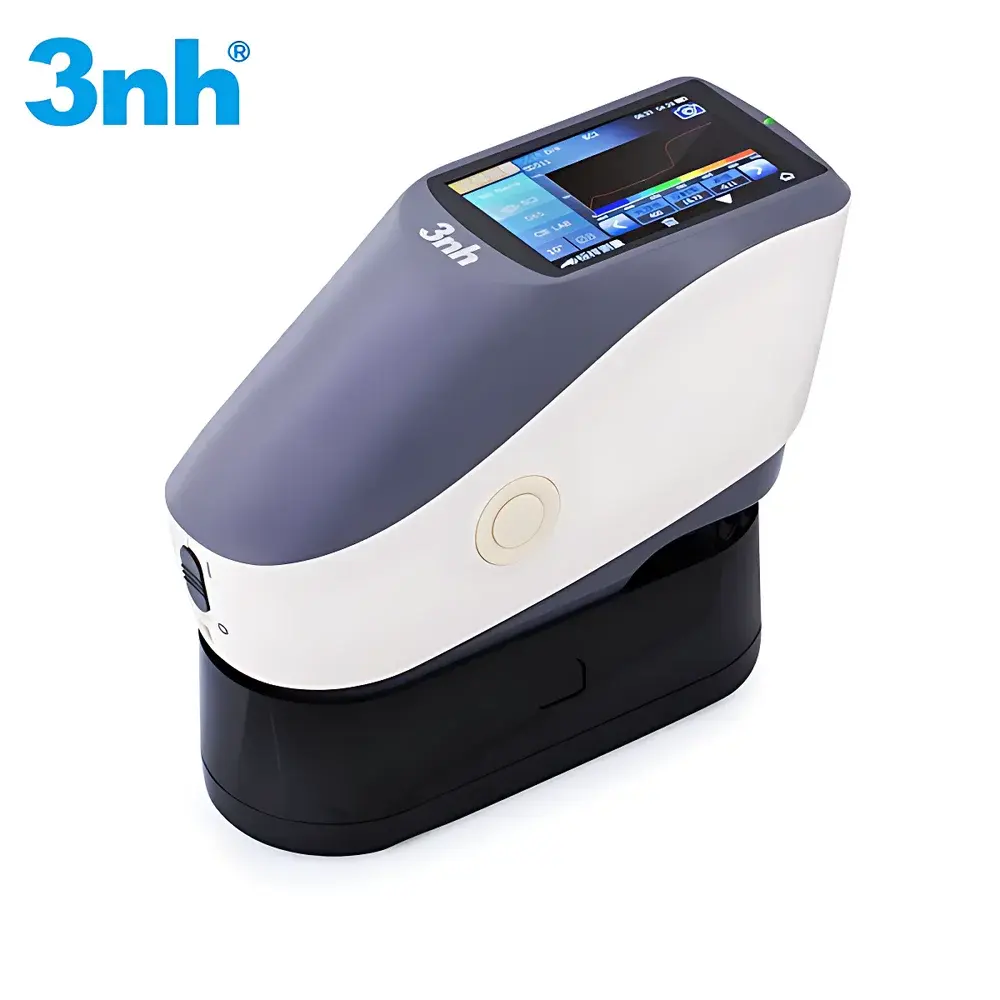
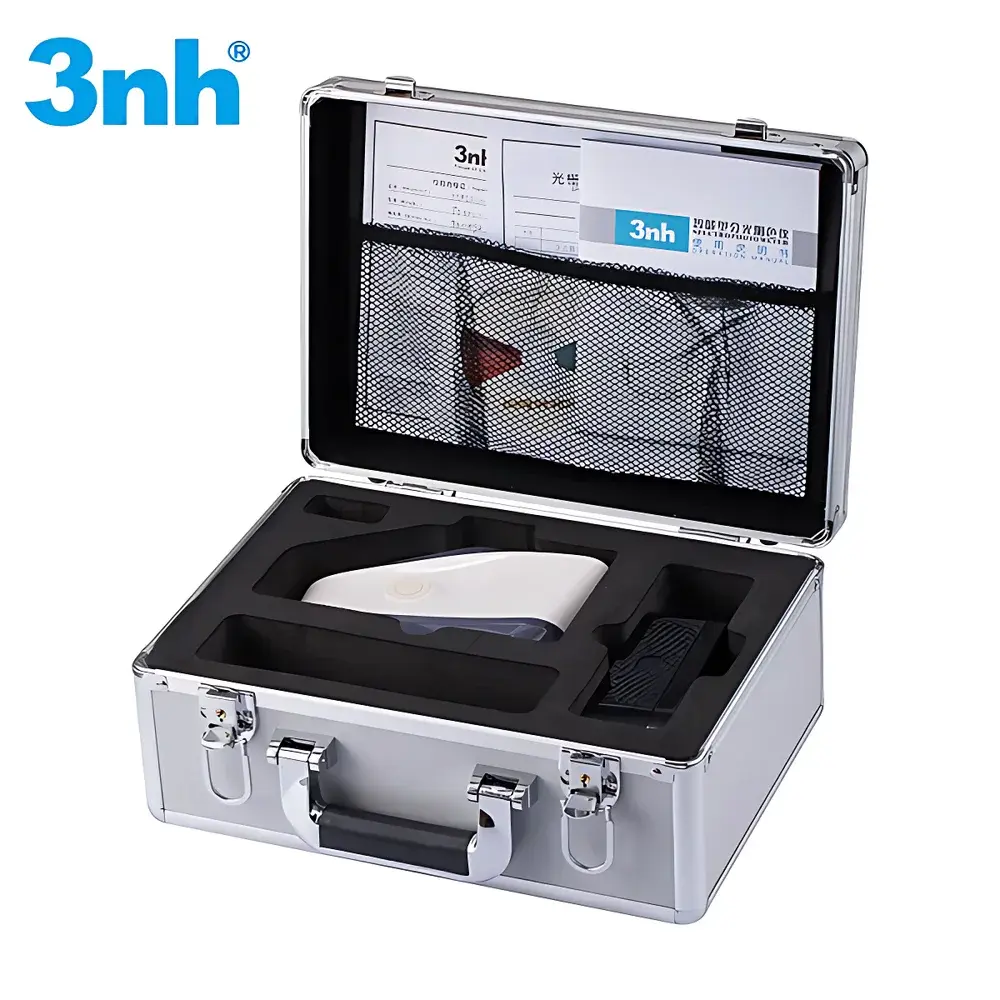
3nh YS3010 High-Precision Portable Spectrophotometric Colorimeter
| Brand | 3nh |
|---|---|
| Origin | Guangdong, China |
| Manufacturer Type | Manufacturer |
| Product Category | Domestic |
| Model | YS3010 |
| Product Type | Spectrophotometric Colorimeter |
| Instrument Type | Portable |
| Optical Geometry | d/8° integrating sphere |
| Illuminants | D65, A, C, D50, D55, D75, F1–F12 (including CWF, TPL5, TL84, TL83/U30) |
| Spectral Range | 400–700 nm |
| Repeatability | Spectral Reflectance (MAV): σ ≤ 0.1% |
| Colorimetric Repeatability (MAV) | ΔE*ab ≤ 0.05 (after instrument warm-up and calibration |
Overview
The 3nh YS3010 is a high-precision portable spectrophotometric colorimeter engineered for traceable, repeatable color measurement in industrial quality control and laboratory environments. It operates on the d/8° integrating sphere geometry—compliant with CIE Publication No. 15, ISO 7724-1, ASTM E1164, DIN 5033-7, and GB/T 3978—ensuring standardized illumination and viewing conditions for diffuse reflectance measurements. The instrument employs a concave holographic grating and a 256-pixel dual-array CMOS detector to acquire full spectral data across the visible range (400–700 nm) with high signal-to-noise ratio and photometric linearity. Its optical design supports both Specular Component Included (SCI) and Specular Component Excluded (SCE) modes, enabling consistent evaluation of textured, glossy, or matte surfaces without physical reconfiguration. The YS3010 is calibrated against a robust, ultra-stable ceramic white standard—engineered for long-term reflectance stability and resistance to contamination—thereby minimizing drift and maintaining metrological integrity across extended operational cycles.
Key Features
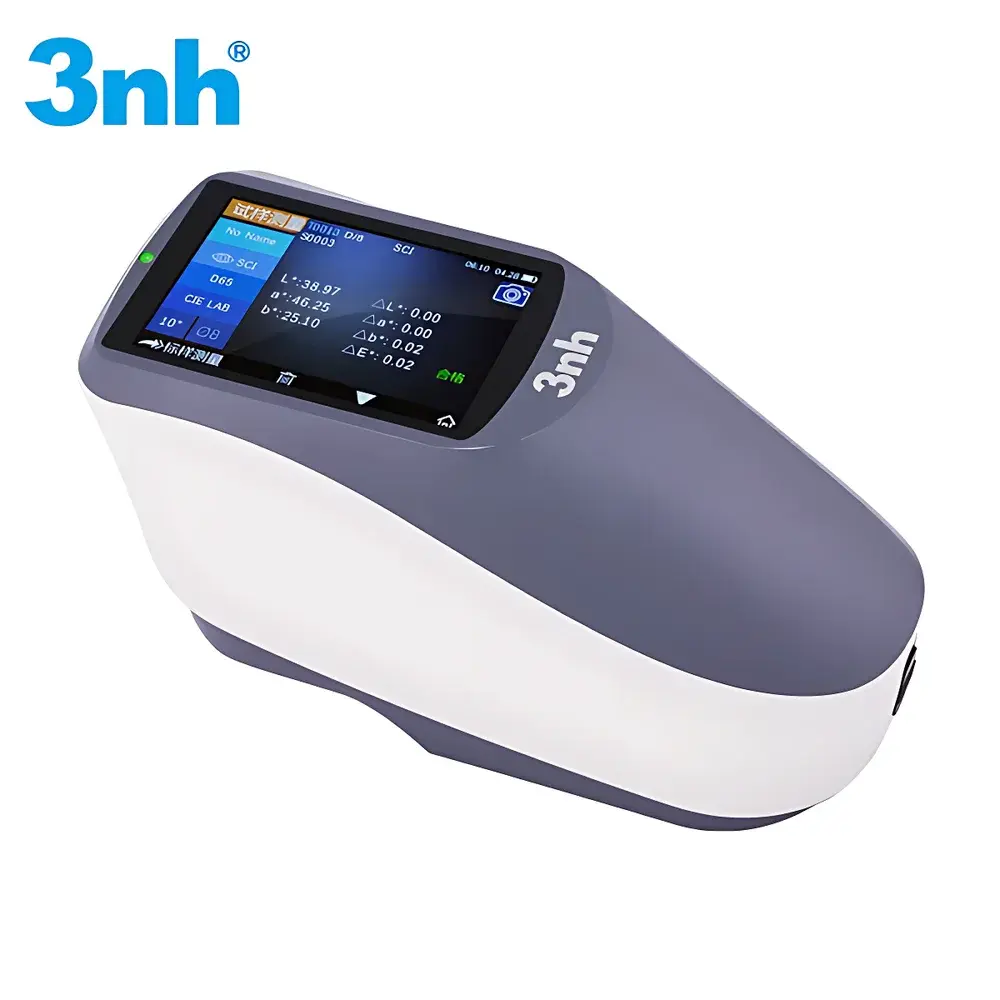
- Portable form factor with ergonomic housing and integrated 3.5-inch capacitive TFT touchscreen for intuitive field operation
- Dual-mode optical measurement: simultaneous SCI/SCE acquisition via software-selectable mode, eliminating manual port swapping
- UV-adjustable LED illumination system supporting both UV-included and UV-excluded measurement—critical for fluorescent and optically brightened materials
- Φ8 mm measurement aperture optimized for broad sample compatibility while maintaining spatial resolution for small-area targets
- Full spectral data capture (10 nm resolution) enables advanced color analysis, spectral difference calculation, and future-proofing for evolving color standards
- Onboard storage capacity exceeding 20,000 measurement records with timestamp, illuminant, observer angle, and geometry metadata
- Integrated CMOS camera for precise targeting and spatial registration—reducing operator-induced positioning error during handheld use
- Compliance-ready firmware architecture supporting audit trails, user access levels, and configuration locking per GLP/GMP-aligned workflows
Sample Compatibility & Compliance
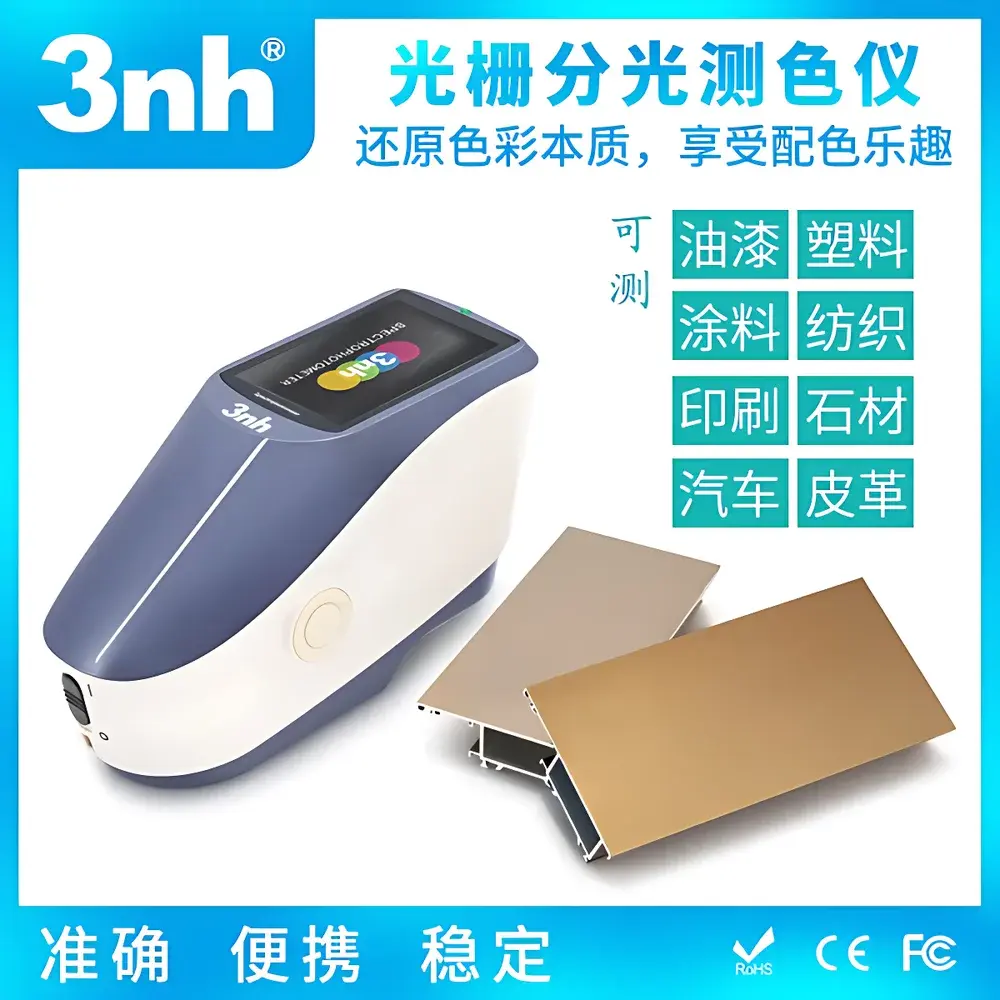
The YS3010 accommodates solid, flat, or moderately curved non-transmissive samples—including plastics, painted panels, textiles, ceramics, printed substrates, and coated metals—within its Φ8 mm aperture. Its d/8° geometry ensures reliable performance on low-gloss, semi-gloss, and high-gloss surfaces when used with appropriate calibration protocols. The instrument conforms to multiple international colorimetric standards: ISO 7724-1 (instrumental color measurement), ASTM E308 (conversion of spectral data to CIE tristimulus values), and GB/T 18833 (retroreflective sheeting). For regulated industries, measurement traceability is supported through NIST-traceable calibration options and documented uncertainty budgets. While not inherently 21 CFR Part 11 compliant out-of-the-box, its PC software platform allows configuration of electronic signatures, change logs, and data export controls to meet FDA-regulated documentation requirements.
Software & Data Management
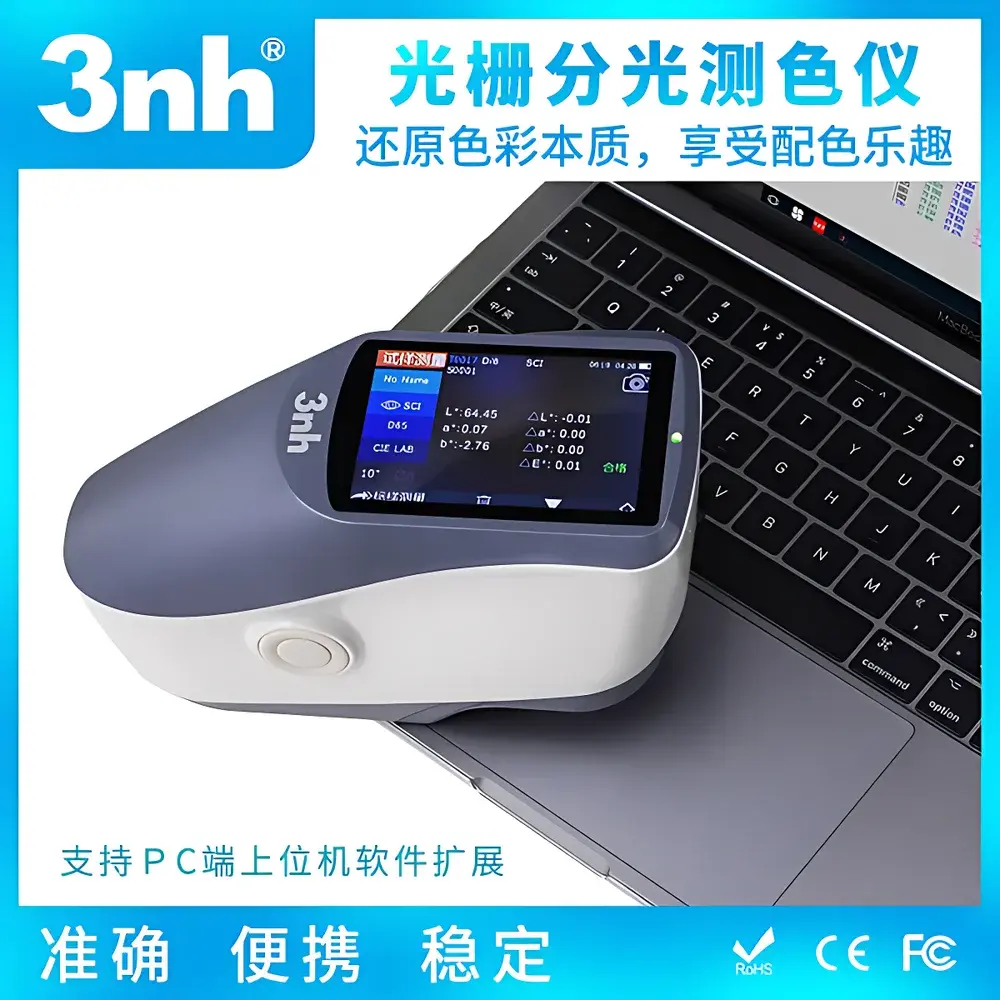
The YS3010 interfaces with PC-based ColorExpert software, providing comprehensive post-acquisition analysis including spectral comparison, tolerance mapping (ΔE*ab, ΔE00, ΔEcmc), batch statistical reporting, and pass/fail flagging against user-defined limits. The software supports multi-illuminant simulation, metamerism index calculation, and spectral derivative analysis for R&D applications. All measurement files are stored in an open XML-based format, enabling integration with LIMS and ERP systems via API or batch import. Audit trail functionality records operator ID, timestamp, instrument settings, calibration history, and any parameter modification—facilitating internal audits and regulatory reviews under ISO 9001 or IATF 16949 frameworks.
Applications
- Quality assurance in automotive trim and interior components, where inter-batch color consistency must meet OEM specifications (e.g., GMW14872, Ford FLTM BI 101-07)
- Color matching and formulation validation in paint, ink, and pigment manufacturing under controlled lighting conditions
- Textile dye lot verification per AATCC Evaluation Procedure 1 and ISO 105-J03
- Ceramic glaze consistency monitoring in sanitaryware and tile production
- Printed packaging inspection per ISO 12647-2, including spot color deviation and substrate influence correction
- Fluorescent material assessment using UV-adjustable illumination for paper, detergents, and security inks
FAQ
What is the recommended calibration frequency for routine QC use?
For continuous daily operation in production environments, white calibration is advised before each shift; full black/white calibration every 8 hours or after ambient temperature shifts exceeding ±5°C.
Can the YS3010 measure transparent or translucent films?
No—the instrument is designed for opaque, reflective samples only. Transmittance measurement requires dedicated transmission geometry not present in this model.
Does the device support CIEDE2000 (ΔE00) calculation natively?
Yes—both onboard display and ColorExpert software compute ΔE00, ΔE*ab, ΔEcmc, and ΔE94 using CIE 1931 2° or CIE 1964 10° standard observer data.
Is spectral data export available in CSV or ASCII format?
Yes—raw reflectance spectra (31-point or interpolated 10 nm intervals), tristimulus values, and derived color indices can be exported as UTF-8 CSV or plain-text ASCII for third-party analysis.
How is measurement repeatability verified during factory certification?
Each unit undergoes 30 consecutive measurements on a certified white tile under D65/10°; units failing ΔE*ab > 0.05 or spectral SD > 0.1% are rejected prior to shipment.




