
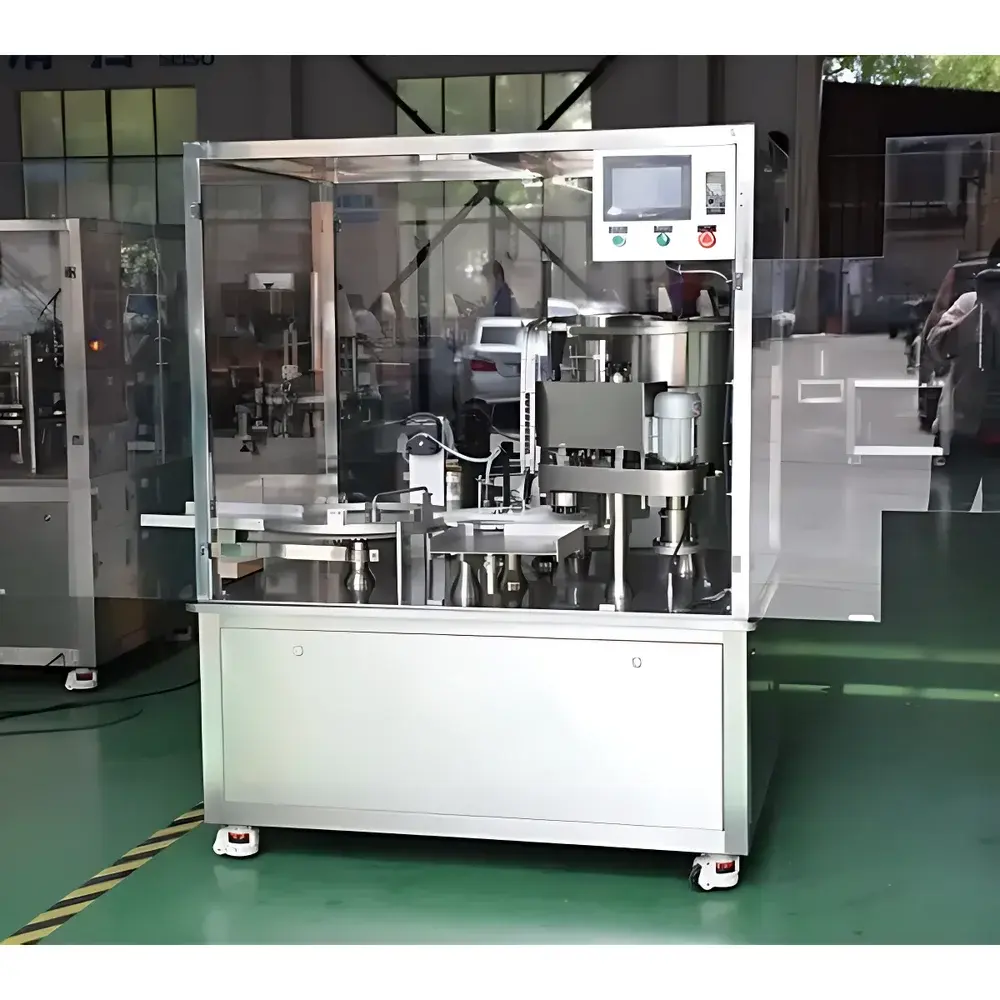
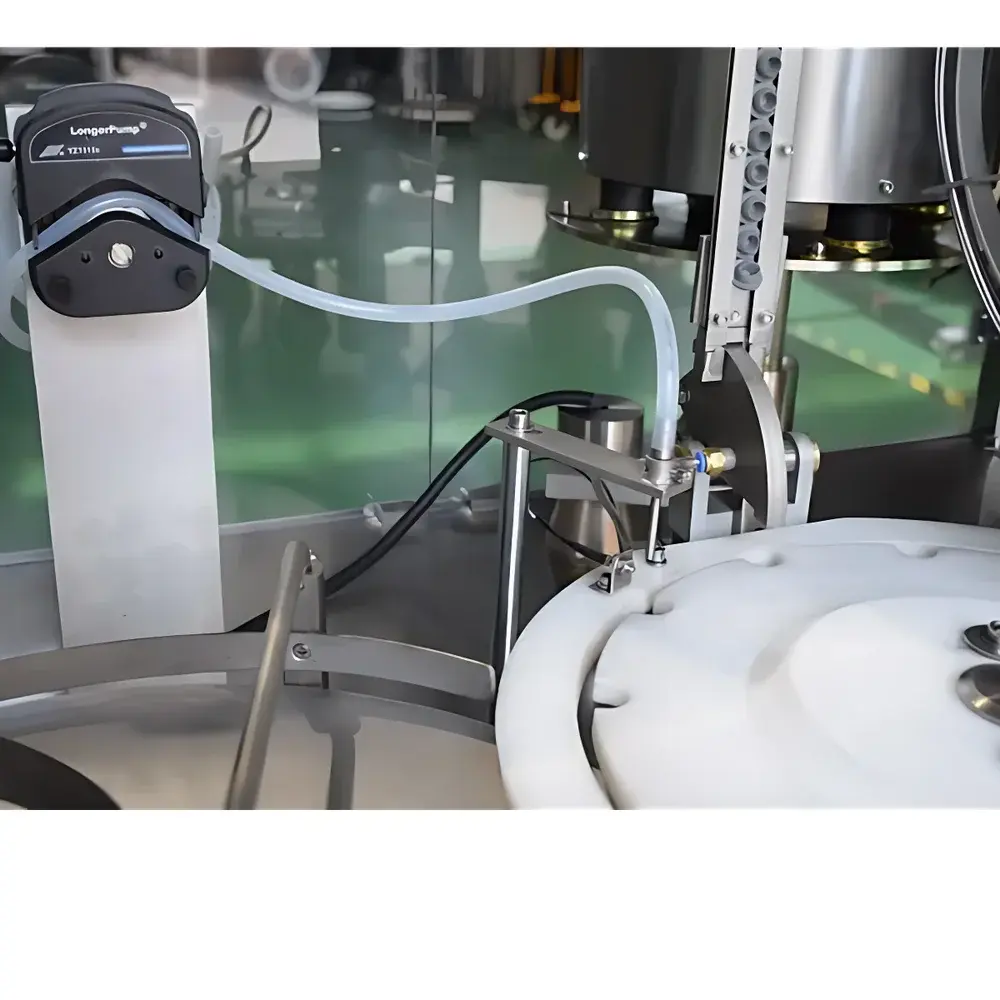
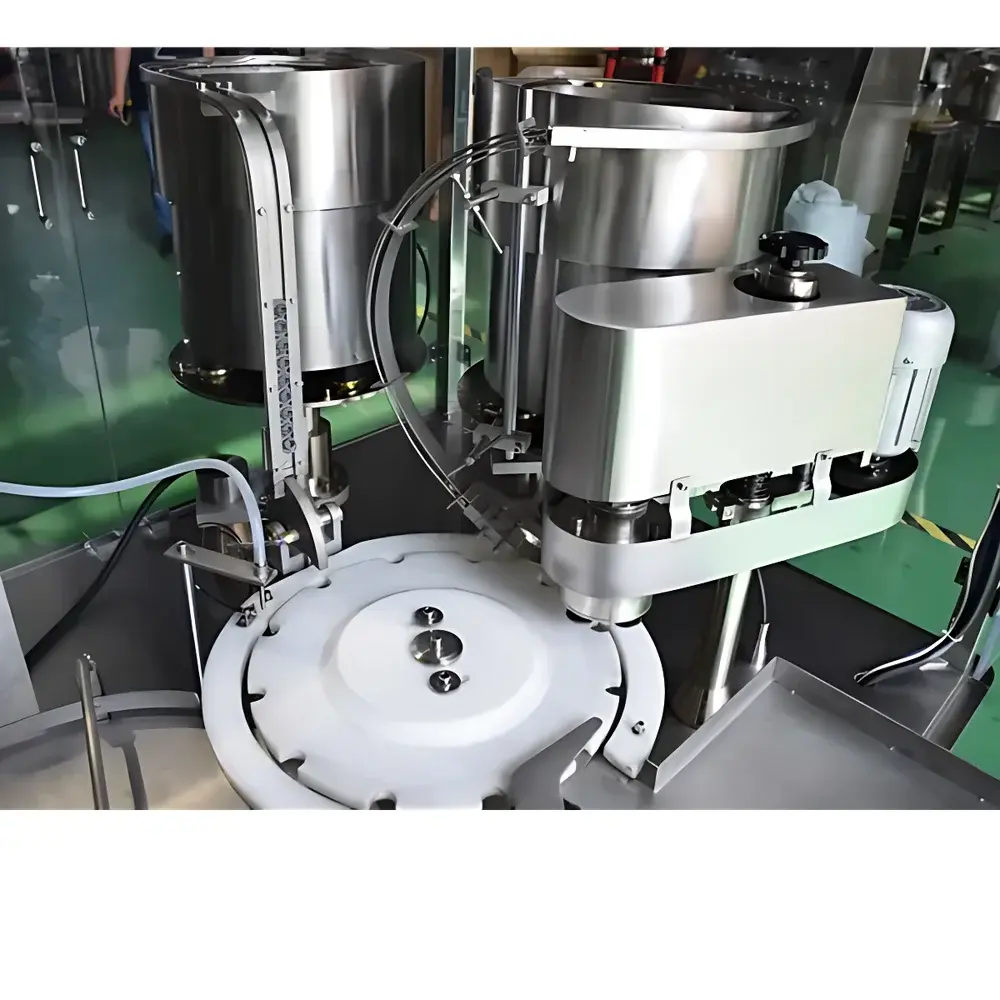
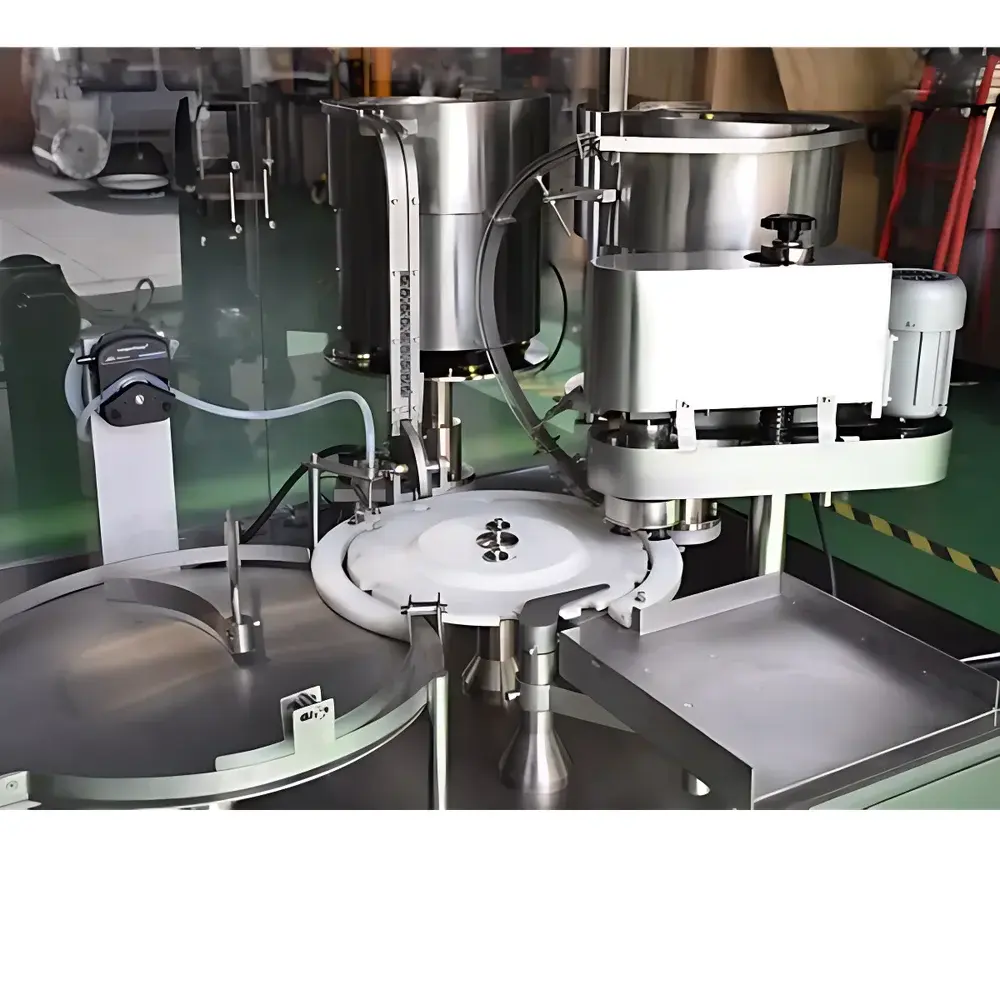
AA OPTO Electronic KPGZ-1 Freeze-Drying Dedicated Peristaltic Pump Liquid Filler-Capper-Sealer
| Brand | AA OPTO Electronic |
|---|---|
| Model | KPGZ-1 |
| Application | Sterile liquid filling, stoppering & crimping for lyophilization vials |
| Throughput | 20–40 vials/min (5–10 mL capacity) |
| Filling Accuracy | ≤ ±1% |
| Power Supply | Single-phase 380 V / 50 Hz |
| Total Power Consumption | 1.5 kW |
| Main Motor Power | 0.75 kW |
| Compressed Air Requirement | 0.3–0.5 MPa |
| Dimensions (L×W×H) | 1650 × 1000 × 1750 mm |
| Weight | ~450 kg |
| Construction | 304 stainless steel contact parts |
| Control System | Siemens PLC + Weintek HMI touchscreen |
| Drive | TAIAN frequency inverter with stepless speed regulation |
| Sensors | Omron photoelectric bottle detection, AUTONICS proximity switches |
| Pneumatics | Airtac solenoid valves |
| Gear Mechanism | JINGCHENG cam indexer |
| Compliance | Designed for GMP-compliant aseptic environments |
Overview
The AA OPTO Electronic KPGZ-1 is an integrated, GMP-oriented peristaltic pump-based liquid filling, rubber stopper insertion, and aluminum cap crimping system engineered specifically for freeze-drying (lyophilization) preparation lines. Unlike gravity or piston fillers, the KPGZ-1 employs precision-controlled peristaltic pumping—ideal for shear-sensitive biopharmaceuticals, vaccines, and sterile APIs where minimal product agitation, zero cross-contamination risk, and consistent volumetric delivery are critical. Its architecture supports inline integration with lyophilizer loading/unloading conveyors and isolator interfaces, enabling seamless transition from bulk liquid formulation to sealed, ready-to-freeze vials. The system operates under Class A (ISO 5) laminar airflow when installed within appropriate cleanroom enclosures, and all wetted surfaces conform to USP and ASTM F838-22 material compatibility standards for pharmaceutical contact.
Key Features
- Fully integrated monoblock operation: simultaneous liquid dosing, silicone stopper orientation and placement, aluminum cap feeding, positioning, and crimping—all in one compact footprint.
- Peristaltic pump filling mechanism ensures non-contact fluid handling, eliminating dead-legs, valve wear, and cleaning validation challenges associated with piston or diaphragm systems.
- 304 stainless steel construction for all product-contact components—including pump housings, filler nozzles, stopper chutes, and capping heads—ensuring corrosion resistance and compliance with ASME BPE surface finish requirements (Ra ≤ 0.8 µm).
- Intelligent bottle presence detection via dual Omron photoelectric sensors at inlet and exit stations triggers conditional actuation: no vial = no fill, no stopper, no cap—reducing material waste and preventing mechanical jamming.
- Taiwanese TAIAN frequency inverter enables precise, repeatable speed control across the full 20–40 vial/min range, accommodating viscosity shifts during batch transitions without recalibration.
- IP65-rated Weintek touchscreen HMI with Siemens S7-1200 PLC provides intuitive recipe management, real-time cycle monitoring, and password-protected parameter access aligned with FDA 21 CFR Part 11 audit trail readiness (when configured with electronic signature module).
- Modular cam-indexer-driven motion system (JINGCHENG) delivers high positional repeatability (< ±0.05°) for synchronized stopper drop timing and cap alignment—critical for achieving leak-tight seals per ISO 8536-1.
Sample Compatibility & Compliance
The KPGZ-1 accommodates standard 5–10 mL glass or polymer vials (e.g., SCHOTT Type I borosilicate, West Pharma FluroTec®) with nominal diameters of 12–22 mm. Stopper compatibility includes bromobutyl, chlorobutyl, and fluoropolymer-coated formulations (13 mm–20 mm diameter); cap compatibility covers standard aluminum crimp seals (e.g., West 4430, Datwyler 5000 series). All mechanical adjustments—nozzle height, stopper chute angle, crimp head pressure—are tool-free and documented in the GMP-compliant engineering change log. The system supports qualification protocols (IQ/OQ/PQ) per Annex 15 and aligns with EU GMP Annex 1 requirements for aseptic processing equipment, including particulate shedding testing (ISO 14644-1 Class 5), surface bioburden assessment, and sterilization compatibility verification (VHP or steam-in-place).
Software & Data Management
The embedded Siemens SIMATIC S7-1200 controller logs every operational event—including fill volume deviations, stopper misalignment alerts, cap torque anomalies, and air pressure fluctuations—with timestamped records stored locally on industrial-grade SD card (16 GB, write-protected). Optional Ethernet/IP or OPC UA connectivity enables integration into MES platforms (e.g., Siemens Opcenter, Rockwell FactoryTalk) for batch record synchronization. Audit trails meet ALCOA+ criteria: attributable, legible, contemporaneous, original, accurate, complete, consistent, enduring, and available. Batch reports export in CSV or PDF format with digital signature support for QA sign-off. Firmware updates follow controlled change management per ISO 13485 clause 7.5.6.
Applications
Primary use cases include pre-lyophilization filling of monoclonal antibodies, recombinant proteins, live-virus vaccines, and small-molecule oncology injectables. Secondary applications encompass R&D-scale formulation transfer studies, clinical trial material (CTM) production under cGMP Annex 1 Annex II conditions, and contract manufacturing organization (CMO) line flexibility for multi-product facilities. The KPGZ-1 is validated for use with aqueous buffers, low-viscosity suspensions (< 20 cP), and ethanol-containing formulations—provided peristaltic tubing (e.g., PharMed BPT or C-Flex) is selected per USP cytotoxicity screening.
FAQ
What types of vials and stoppers are supported?
Standard 5–10 mL serum vials (12–22 mm OD) and halobutyl/fluoroelastomer stoppers (13–20 mm diameter); custom tooling available for non-standard geometries.
Is the system compatible with isolator or RABS integration?
Yes—designed with glove-port access points, smooth-welded joints, and demountable panels for rapid decontamination; meets ISO 14644-7 cleanroom interface specifications.
Can filling accuracy be verified in situ?
Yes—integrated gravimetric verification port allows periodic weight checks using calibrated analytical balances per USP ; calibration certificates traceable to NIST standards included.
What documentation is provided for regulatory submission?
Full FAT/SAT protocols, IQ/OQ/PQ templates, material certifications (EN 10204 3.1), and electrical safety reports (IEC 61000-6-2/6-4) are supplied as part of the commissioning package.
Does the machine support changeover between different vial sizes?
Yes—mechanical change parts (nozzles, stopper guides, crimp dies) are serialized and stored in labeled kits; average changeover time is < 45 minutes with trained personnel.



