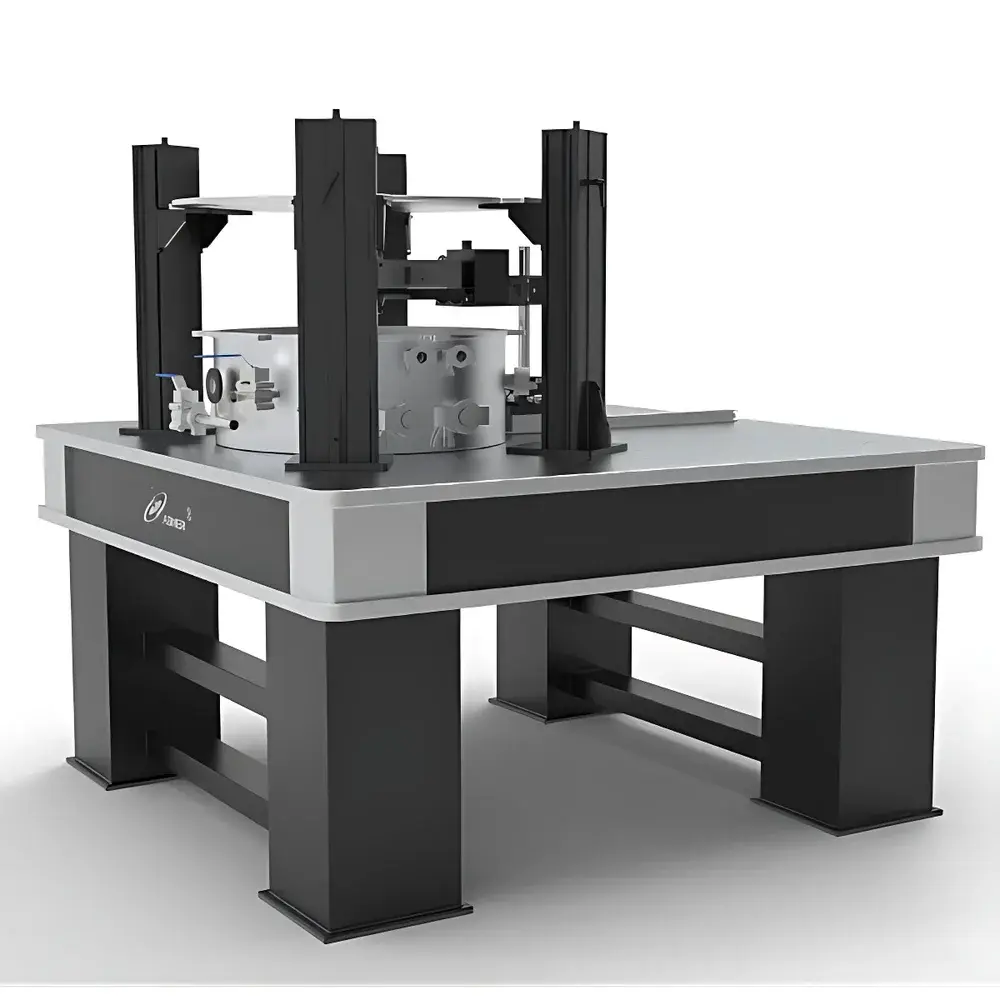
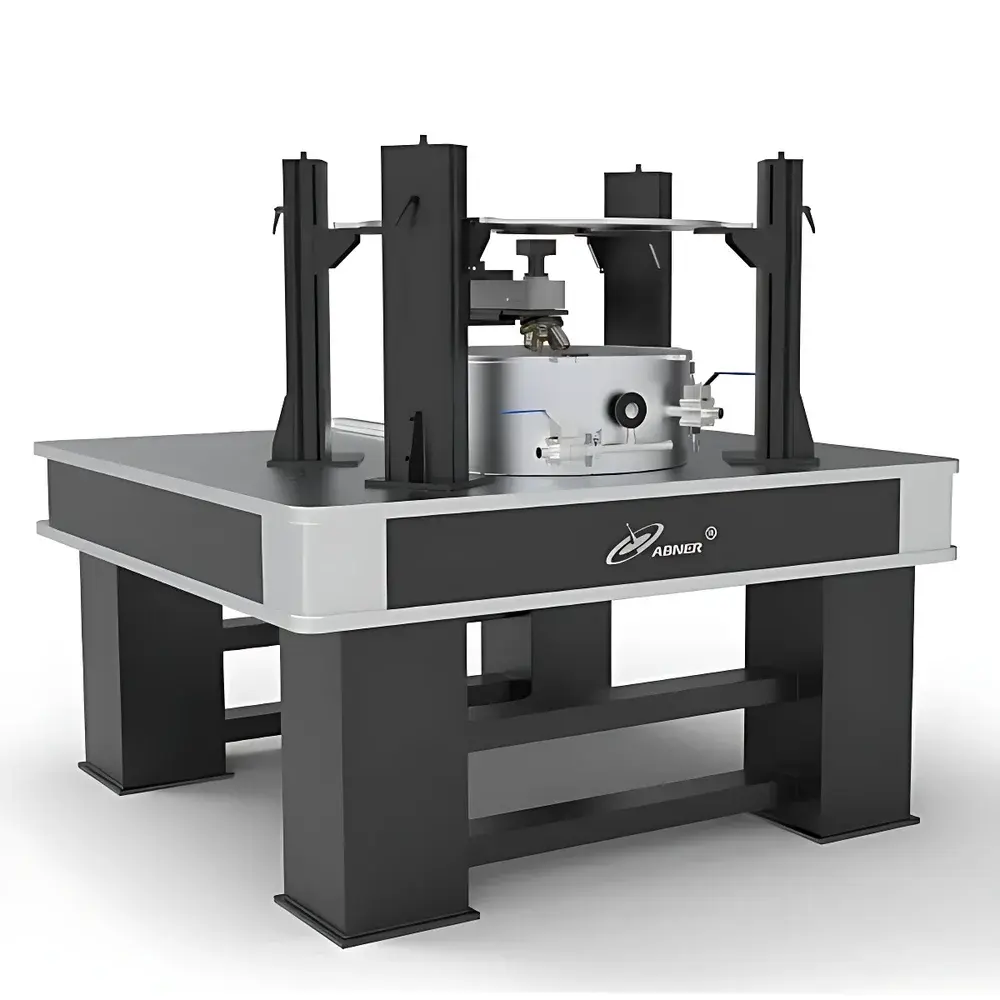
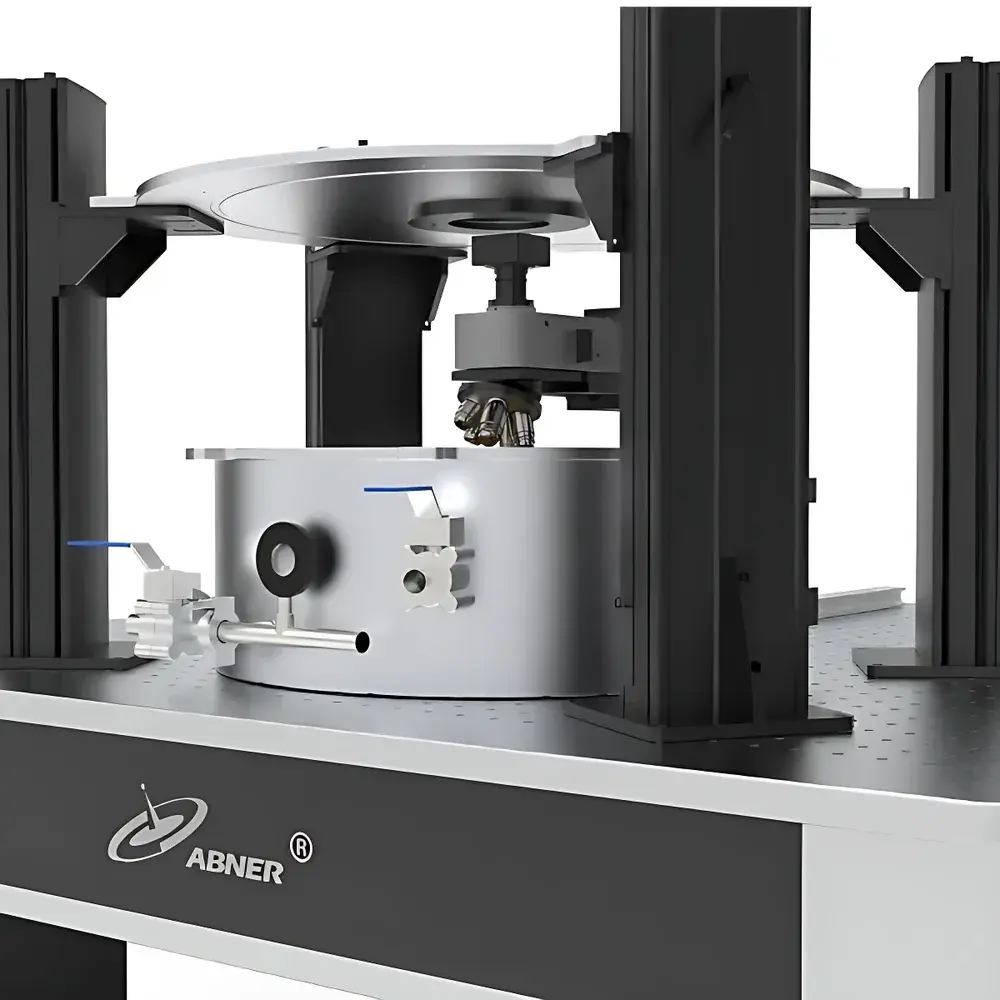
Abner ABN-VPS-001 Advanced Cryogenic-to-High-Temperature Vacuum Probe Station
| Brand | Abner |
|---|---|
| Model | ABN-VPS-001 |
| Temperature Range | −190 °C to +300 °C |
| Environment Options | Ambient, Vacuum, Inert Gas (N₂/Ar) |
| Operation Mode | Fully Automatic |
| Probe Station Type | Vacuum-Compatible Thermal Probe Station |
| Motion System | Precision XYZ Motorized Stage with Thermal Drift Compensation |
| Microscope Compatibility | Stereo and Metallurgical Microscope Mounting Interface |
| Safety Features | Dual-Stage Over-Temperature Protection, Interlocked Vacuum & Cooling System |
| Compliance | Designed for GLP-compliant lab environments |
Overview
The Abner ABN-VPS-001 is a fully automated, vacuum-compatible thermal probe station engineered for high-fidelity electrical and thermal characterization of semiconductor devices, MEMS, photonic components, and low-dimensional materials across an ultra-broad temperature range—from cryogenic liquid nitrogen temperatures (−190 °C) to elevated operational conditions (+300 °C). Its core architecture integrates a closed-cycle cryocooler or liquid nitrogen dewar interface with a high-stability resistive heating stage, enabling continuous, programmable temperature ramping and isothermal hold with ±0.1 °C stability over 24-hour periods. Unlike ambient-only probe systems, the ABN-VPS-001 maintains mechanical integrity and electrical isolation under vacuum (≤1×10⁻⁵ mbar) or inert gas purge—critical for eliminating condensation, oxidation, and parasitic conduction paths during low-temperature transport measurements. The system operates on the principle of thermally anchored device probing: sample thermalization occurs via direct conductive coupling to a copper-based chuck with integrated Pt100/RTD feedback sensors and multi-zone PID control, ensuring minimal thermal lag and uniformity (<±0.3 °C across 100 mm diameter active area).
Key Features
- Fully automated temperature control from −190 °C to +300 °C with ≤0.1 °C long-term stability and <1.5 K/min ramp rate repeatability
- Vacuum-rated XYZ motorized stage with sub-micron resolution (50 nm step size), backlash-free lead screws, and real-time thermal drift compensation algorithms
- Modular probe arm design supporting up to four independently positionable DC/RF/microwave probes (DC to 40 GHz optional), each with adjustable vertical force (0.5–50 g) and tip alignment verification
- Integrated optical path with standardized C-mount and SM1-threaded ports for stereo zoom microscopes (0.7–4.5×) or metallurgical objectives (5×–100×), featuring coaxial LED illumination and focus-lock assist
- Interlocked safety architecture: vacuum chamber door sensor, cryogen level monitor, dual independent over-temperature cutoffs, and emergency venting protocol compliant with IEC 61000-6-2
- Electrical noise floor <3 nV/√Hz at 1 kHz (grounded configuration), optimized for low-current (1 TΩ) measurements
Sample Compatibility & Compliance
The ABN-VPS-001 accommodates wafers up to 200 mm (8″), diced dies, packaged ICs, TO-can devices, and custom substrates (Si, SiC, GaN, sapphire, quartz, flexible polymers). Chuck surface flatness is maintained at ≤1.5 µm PV across full travel, verified per ISO 10791-6. All internal wetted materials—including O-rings, probe tips, and thermal interface compounds—are certified oxygen-safe and halogen-free for use in Class 100 cleanroom environments. The system supports compliance documentation packages for ISO/IEC 17025-accredited labs, including as-delivered temperature uniformity maps, vacuum leak test reports (helium mass spec, ≤1×10⁻⁹ mbar·L/s), and electrical grounding validation per IEEE Std 1100. It is routinely deployed in facilities requiring adherence to JEDEC JESD22-A119 (thermal cycling), MIL-STD-883 Method 1010 (temperature humidity bias), and NASA GSFC-STD-7000A (cryogenic reliability testing).
Software & Data Management
Control is executed via Abner’s ProStation™ v4.2 software suite—a Windows 10/11 native application supporting Python 3.9+ API (pyAbnerSDK), LabVIEW 2022 drivers, and SCPI command set. The interface provides synchronized logging of temperature, vacuum pressure, stage coordinates, probe contact status, and external instrument triggers (e.g., Keysight B1500A, Lake Shore CS-200). All measurement metadata—including operator ID, timestamp, environmental logs, and calibration certificate IDs—is embedded in HDF5-formatted data files, enabling audit-ready traceability. Optional FDA 21 CFR Part 11 compliance package includes electronic signatures, role-based access control, and immutable audit trails with SHA-256 hashing of raw datasets.
Applications
- Temperature-dependent I-V/C-V characterization of power MOSFETs, GaN HEMTs, and SiC diodes under vacuum for leakage current and threshold voltage shift analysis
- Cryogenic RF S-parameter extraction of mmWave phased-array antenna elements using vector network analyzer (VNA) synchronization
- Transport property mapping of graphene, MoS₂, and topological insulators below 4 K (with optional dilution refrigerator integration)
- MEMS resonator Q-factor and frequency drift evaluation across thermal shock profiles (−55 °C ↔ +125 °C, 10-cycle)
- Accelerated life testing of optocouplers and laser diodes under combined thermal stress and bias conditions
- Process development support for advanced packaging (e.g., TSV, fan-out wafer-level packaging) requiring thermal-mechanical co-characterization
FAQ
What vacuum level can the ABN-VPS-001 achieve, and what pumping options are supported?
The base system achieves ≤1×10⁻⁵ mbar with a standard turbomolecular pump (80 L/s) and backing scroll pump. Optional cryo-pumping or ion-getter configurations enable pressures down to 1×10⁻⁸ mbar for ultra-high-vacuum applications.
Is the system compatible with third-party parameter analyzers and source-measure units?
Yes—standard triaxial, SHV, and SMP connectors are provided; GPIB, USB-TMC, and Ethernet (VXI-11/HiSLIP) instrument control protocols are natively supported.
Can the stage maintain positional accuracy during rapid temperature transitions?
Yes—the XYZ stage uses low-CTE ceramic guideways and active thermal compensation firmware that adjusts coordinate offsets in real time based on chuck-mounted thermistor array readings.
Does Abner provide calibration services traceable to NIST or national metrology institutes?
Yes—annual calibration packages include temperature uniformity verification, stage positioning accuracy (laser interferometer validated), and vacuum gauge linearity checks, all documented with ISO/IEC 17025-accredited certificates.
What is the maximum sample weight the chuck can support without compromising thermal response?
The standard 100 mm copper chuck supports up to 500 g with ≤5% degradation in thermal settling time; heavier loads require optional reinforced mounting brackets and extended stabilization protocols.