
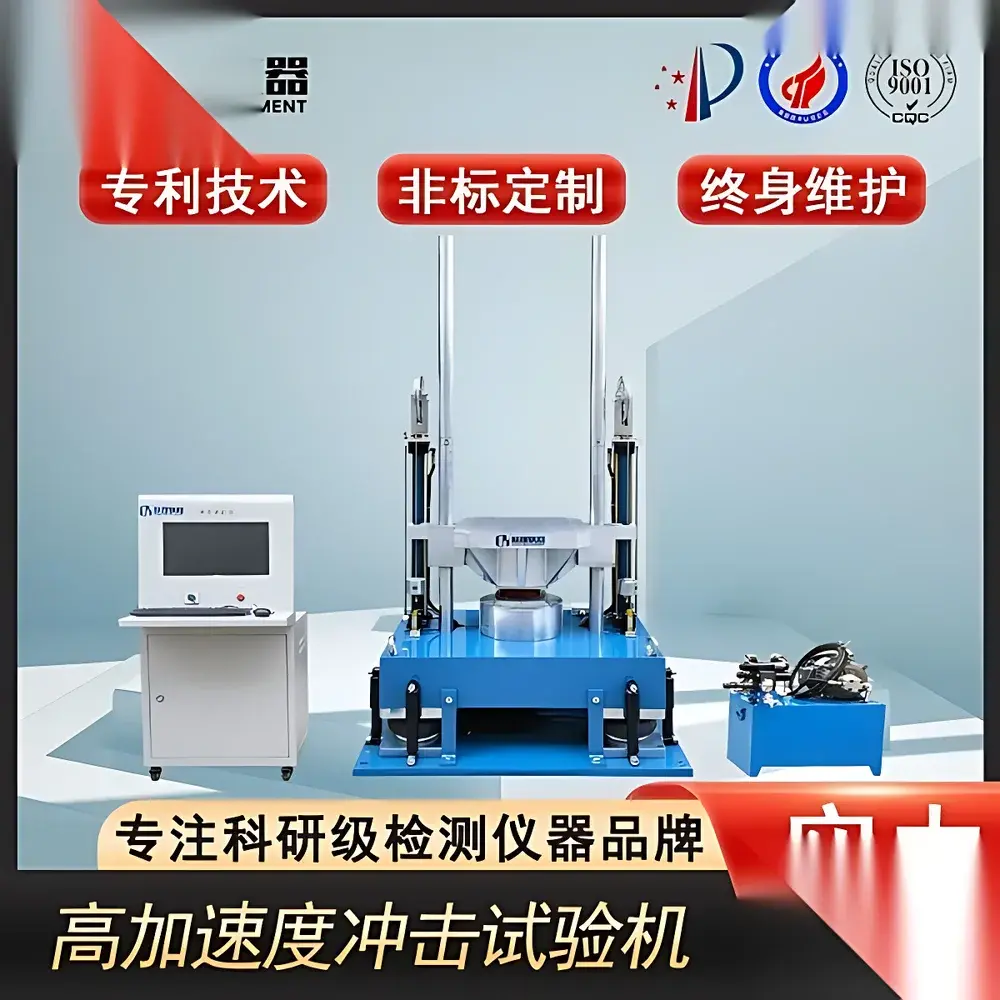
Accelerated Shock Test System
| Key | Brand: Other Brands |
|---|---|
| Origin | Imported |
| Manufacturer Type | General Distributor |
| Price | USD 14,000 (approx.) |
Overview
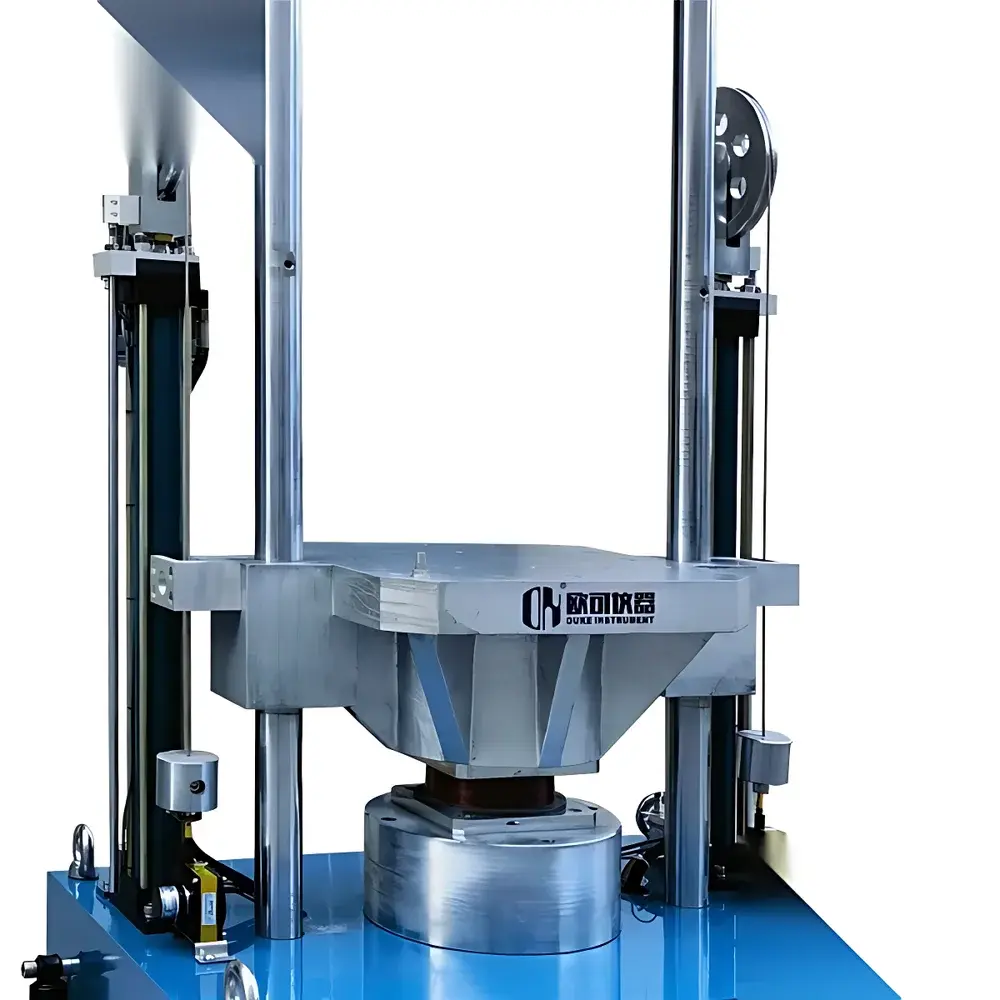
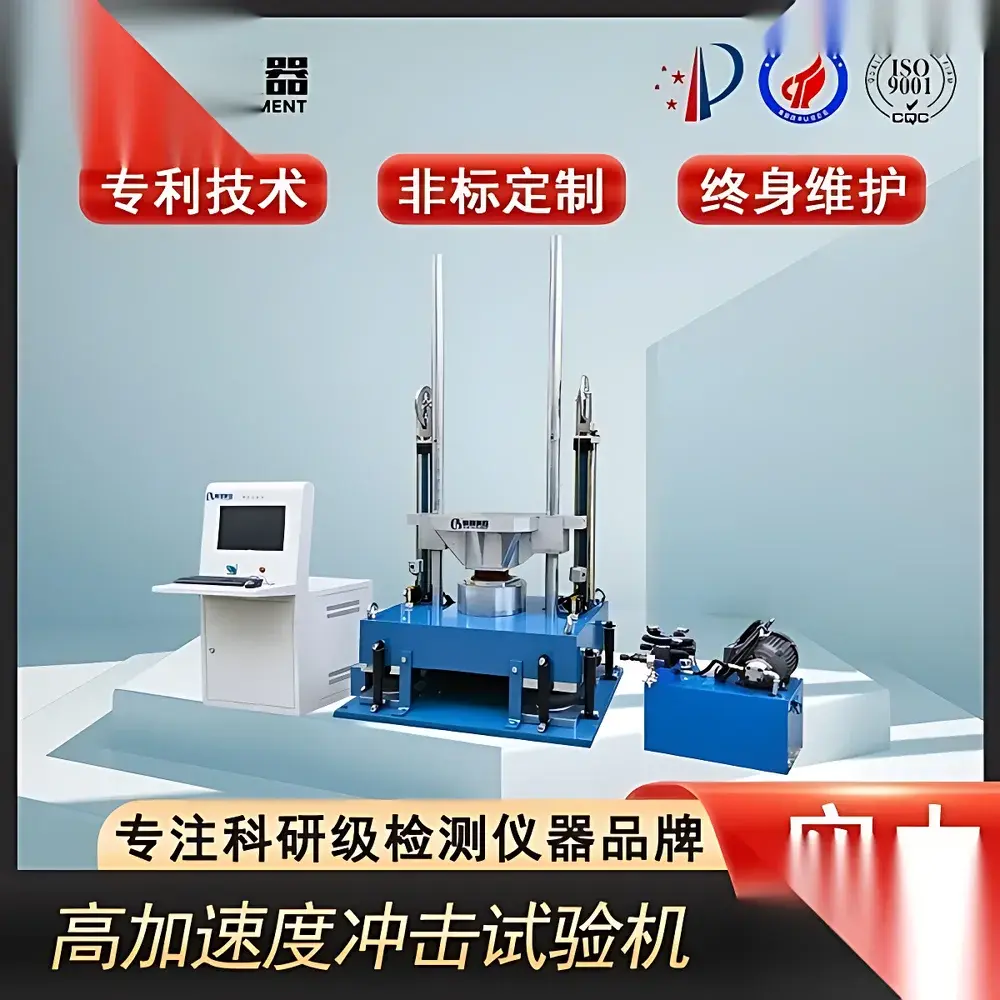
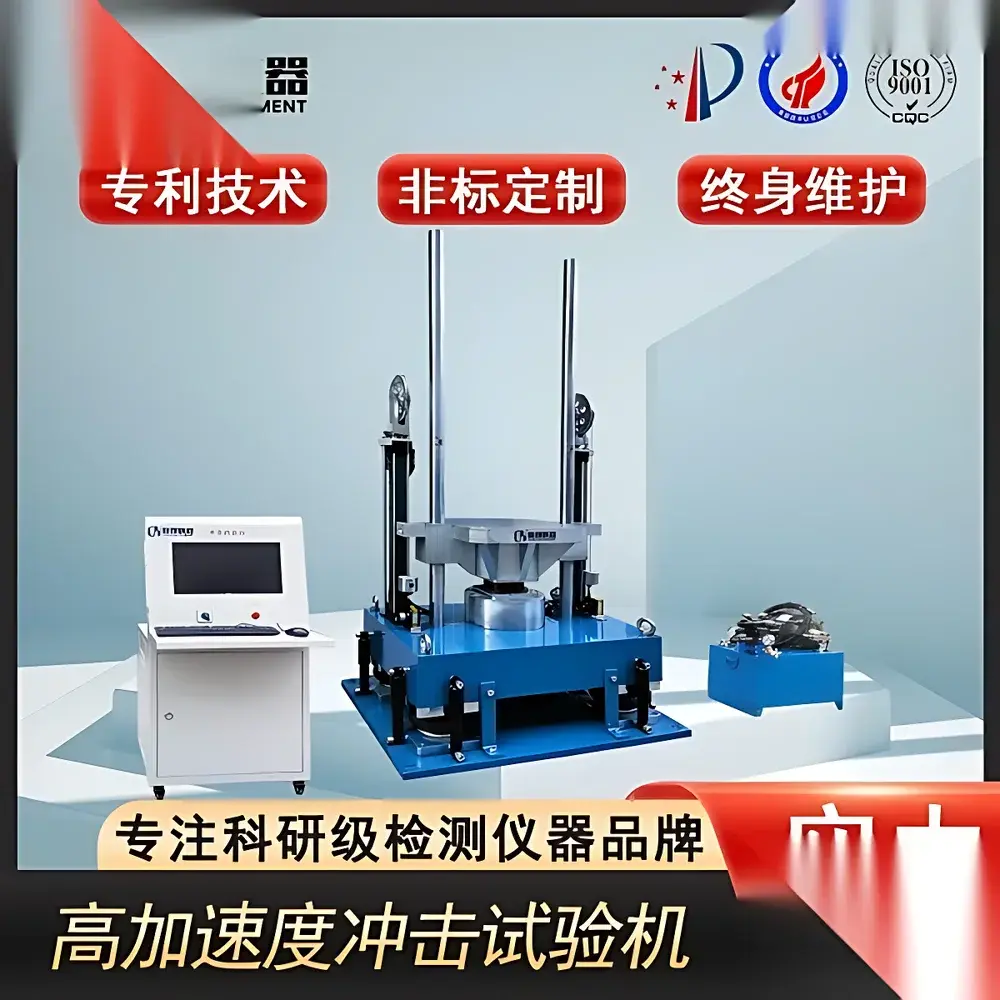
The Accelerated Shock Test System is a precision-engineered electro-mechanical shock simulator designed for laboratory- and production-line validation of product robustness under transient mechanical stress. It operates on the principle of controlled free-fall impact with active deceleration, generating calibrated shock pulses via programmable drop-height release and high-damping energy absorption. Unlike pendulum or gas-gun systems, this platform delivers repeatable, traceable half-sine, trapezoidal, and rear-peak sawtooth waveforms—each compliant with defined pulse shape tolerances per international shock standards. Engineered for reliability in QC labs and environmental test facilities, it supports accelerated life testing, packaging validation, and qualification of electronic assemblies, aerospace components, and automotive ECUs against mechanical shock exposure.
Key Features
- Digitally controlled drop height with closed-loop position feedback—repeatability ≤ ±0.2 mm across full travel range;
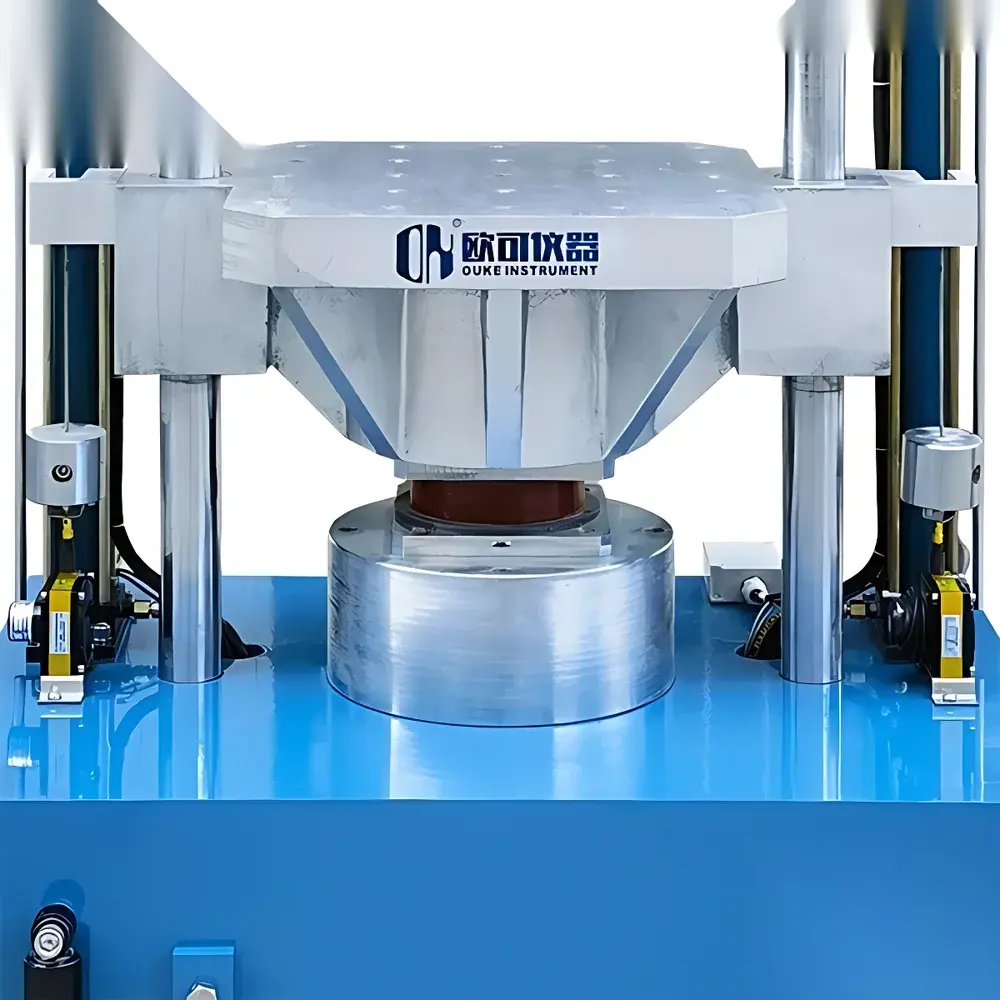
- High-stiffness carbon steel test table (first-mode resonance > 1,200 Hz) minimizing structural ringing and acoustic noise;
- Integrated hydraulic braking mechanism ensuring zero secondary rebound and precise tabletop positioning post-impact;
- Interchangeable shock pulse generators for half-sine (1–100 ms), trapezoidal (2–50 ms), and rear-peak sawtooth (3–60 ms) waveforms;
- Passive base isolation system with multi-layer elastomeric mounts—reducing transmitted vibration to ambient floor by ≥92% (measured at 10–200 Hz);
- Multi-level safety architecture: emergency stop with hardware interlock, power-loss fail-safe clamping, over-travel limit switches, and real-time accelerometer monitoring;
- Massive cast-iron foundation block (≥800 kg) optimized for modal damping and broadband energy dissipation—suppressing spurious resonances during pulse generation.
Sample Compatibility & Compliance
The system accommodates test specimens up to 50 kg and 600 × 600 × 400 mm (W × D × H), secured via standardized T-slot table configuration. Mounting fixtures are compatible with MIL-STD-810H Method 516.8, IEC 60068-2-27 Ed. 4.0, JIS C 0041:2016, ASTM D999-22, and GB/T 2423.5–2022. Pulse tolerance bands—including peak acceleration (±10%), pulse duration (±15%), and velocity change (±12%)—are preloaded per standard profiles and editable within software. All shock events are traceable to NIST-traceable accelerometers (IEPE type, ±5% amplitude linearity up to 20,000 g) and validated through third-party calibration reports conforming to ISO/IEC 17025 requirements.
Software & Data Management
Control and analysis are executed via a Windows-based application (compatible with Windows 10/11 x64) featuring real-time waveform preview, automated gain scaling, and FIR digital filtering (cutoff selectable from 1 kHz to 20 kHz). The software provides automatic parameter extraction—including peak g-value, pulse width at half-amplitude, Δv (velocity change), and zero-crossing count—with uncertainty estimation per GUM (JCGM 100:2008). Data acquisition supports single-shot and continuous burst modes (up to 200 kHz sampling rate), with built-in statistical engine for min/max/mean/stdev calculation across test series. All raw time-history data (.tdms format) and metadata (operator ID, test standard, fixture ID, environmental conditions) are stored in an encrypted SQLite database supporting audit trails, user role permissions, and export to CSV, PDF, or Microsoft Word report templates. Full compliance with FDA 21 CFR Part 11 is enabled via electronic signatures, audit logging, and data integrity controls.
Applications
- Qualification testing of avionics enclosures per DO-160 Section 8;
- Shock survivability assessment of PCBAs and MEMS sensors in automotive Tier-1 supply chains;
- Package integrity verification for medical device shipping per ISTA 3A/3E;
- Reliability screening of solder joint fatigue in high-reliability electronics (IPC-9701A);
- Validation of shock-absorbing materials (foams, gels, elastomers) using controlled input energy;
- Research into dynamic failure thresholds of composite laminates and additive-manufactured structures.
FAQ
What shock standards does this system natively support?
The system includes preconfigured tolerance bands for IEC 60068-2-27, MIL-STD-810H Method 516.8, GJB 150.18A, GB/T 2423.5–2022, and JIS C 0041:2016.
Is external calibration required before first use?
Yes—a full factory calibration certificate (including accelerometer sensitivity, height encoder linearity, and brake timing latency) is supplied; annual recalibration is recommended per ISO/IEC 17025 guidelines.
Can the system be integrated into a larger environmental test suite?
It features Ethernet (TCP/IP) and RS-232 interfaces for SCADA-level integration, with Modbus TCP and custom API support available upon request.
Does the software meet GLP/GMP documentation requirements?
Yes—the audit trail, electronic signature workflow, and immutable data archiving comply with GLP (21 CFR Part 58) and GMP (21 CFR Part 211) record-keeping mandates.
What is the maximum allowable specimen mass and footprint?
50 kg at full 600 × 600 mm table coverage; higher masses possible with center-loading and reduced horizontal envelope.



