
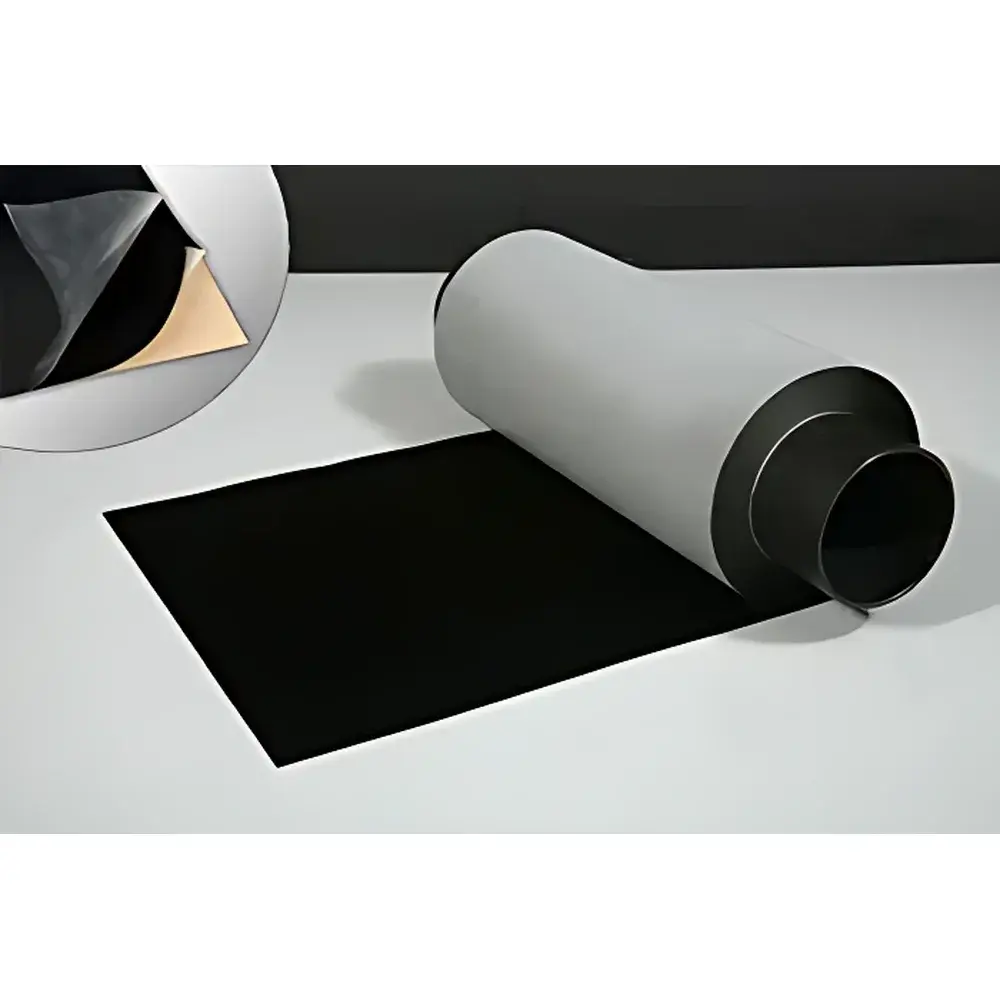
Acktar Metal Velvet Stray Light Absorption Coating Film
| Brand | Acktar |
|---|---|
| Origin | Israel |
| Model | Metal Velvet |
| Component Category | Optical Element |
| Substrate | Aluminum Foil |
| Coating Thickness | 5–7 μm |
| Operating Temperature (with Hi-Temp Adhesive) | Long-Term –40 °C to +180 °C, Short-Term up to +300 °C |
| Operating Temperature (Without Adhesive) | Long-Term –196 °C to +350 °C, Short-Term up to +400 °C |
| Humidity Resistance | MIL-C-48497A Compliant |
| Abrasion Resistance | Low (requires protective handling) |
| Width | Up to 300 mm |
| Thickness (Foil + Coating) | ~110 μm |
| Optional Adhesive Layer | 25–60 μm (customizable) |
| Storage | 21 °C / 50% RH |
| Standard Shelf Life | 6 Months from Shipment |
Overview
Acktar Metal Velvet is a high-performance, inorganic stray light absorption coating film engineered for demanding optical and electro-optical systems where minimal reflectance and maximal scatter suppression are critical. Unlike conventional black paints or anodized surfaces, Metal Velvet employs a proprietary vacuum-deposited micro-structured metallic black layer—comprising ultra-fine, vertically aligned metallic dendrites—on a flexible aluminum foil substrate. This architecture achieves near-Lambertian absorption across ultraviolet (UV), visible (VIS), and near-infrared (NIR) spectra (typically <0.5% specular reflectance at 550 nm, with diffuse reflectance <1.0% over 250–2500 nm). Its performance is rooted in geometric light trapping rather than pigment-based absorption, eliminating outgassing, curing artifacts, or binder-related thermal instability. The coating is fully inorganic, non-hygroscopic, and free of organic binders or static charge—making it suitable for ultra-high-vacuum (UHV), cryogenic, and space-qualified instrumentation.
Key Features
- Ultra-low bidirectional reflectance distribution function (BRDF) optimized for stray light control in telescopes, spectrometers, interferometers, and laser cavities
- Thermal stability across extreme environments: operational from –196 °C (liquid nitrogen) to +350 °C (unbonded); compatible with thermal cycling per MIL-STD-810G
- No outgassing or volatile condensable materials (VCM) — certified per ASTM E595 for spacecraft applications
- Non-static surface eliminates particulate attraction—a critical advantage in cleanroom-integrated optical benches and semiconductor metrology tools
- Flexible format: supplied as precision-cut sheets or continuous coils (up to 300 mm wide), enabling conformal application on curved baffles, lens barrels, and internal housing walls
- Multiple adhesive options—including high-temperature acrylic (rated to +300 °C short-term) and pressure-sensitive variants—allow permanent or semi-permanent bonding without solvent activation or UV curing
Sample Compatibility & Compliance
Metal Velvet is compatible with aluminum, stainless steel, Invar, Kovar, and other optomechanical substrates commonly used in precision optical assemblies. Surface preparation requires only standard solvent cleaning (e.g., acetone/isopropanol) and plasma treatment is optional but recommended for maximum bond durability on low-energy surfaces. The coating complies with MIL-C-48497A for humidity resistance (95% RH, 40 °C, 96 h with no blistering or delamination) and meets NASA-STD-6002 for contamination control. It is routinely specified in systems requiring compliance with ISO 10110-7 (surface imperfection standards) and referenced in optical design guidelines such as SPIE PM192 and ESA PSS-01-501.
Software & Data Management
While Metal Velvet is a passive optical component and does not incorporate embedded electronics or firmware, its integration into optical system documentation follows industry-standard data management protocols. Acktar provides full material traceability (batch-specific coating deposition logs, thickness verification reports via cross-sectional SEM, and spectral reflectance datasets measured per ASTM E275 and ISO 9050). These data files are delivered in CSV and NIST-compliant .spc formats and can be imported directly into Zemax OpticStudio, CODE V, or FRED for stray light analysis using built-in BRDF models. For GxP-regulated environments, raw test certificates and shelf-life documentation support 21 CFR Part 11–compliant audit trails when archived within validated LIMS or QMS platforms.
Applications
- Stray light suppression in spaceborne optical payloads (e.g., coronagraphs, star trackers, Earth observation sensors)
- Baffle and aperture lining in high-contrast imaging systems including adaptive optics and exoplanet detection instruments
- Cryogenic instrument enclosures for ground-based observatories (e.g., GMT, ELT, TMT subsystems)
- Internal blackening of vacuum chambers, laser pump cavities, and Raman spectroscopy sample compartments
- Calibration references for reflectance standards and integrating sphere linings requiring stable, non-aging black surfaces
- EMI-shielded enclosures where optical blackening must coexist with RF grounding continuity
FAQ
Can Metal Velvet be applied to curved or non-planar surfaces?
Yes—its flexible aluminum foil substrate and thin-film architecture allow conformal adhesion to radii as small as 5 mm when used with appropriate high-tack adhesive and controlled lamination pressure.
Is the coating resistant to cleaning solvents commonly used in optical labs?
The inorganic coating itself is impervious to IPA, acetone, and methanol; however, mechanical abrasion (e.g., wiping with lint-free wipes) must be avoided to preserve surface integrity.
What is the typical spectral reflectance profile across UV-VIS-NIR?
Measured average hemispherical reflectance is ≤0.3% from 350 nm to 1600 nm, rising gradually to ~1.2% at 2500 nm—data available per batch upon request.
Does Metal Velvet require post-application curing or baking?
No. The coating is fully stable as-deposited; adhesive cure profiles depend solely on selected bonding layer specifications.
How is shelf life extended beyond six months?
Extended shelf life (up to 12 months) is available under nitrogen-purged, desiccated packaging—subject to prior qualification testing and documented environmental monitoring.





