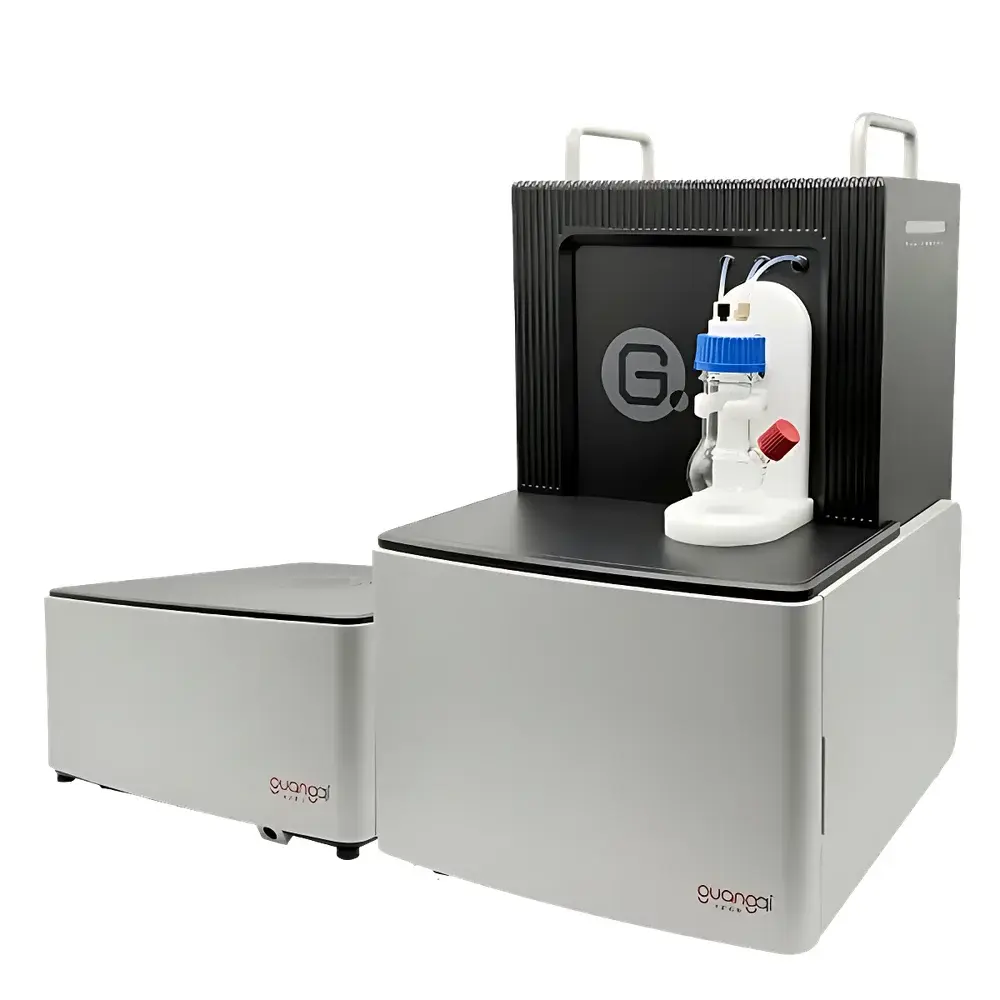
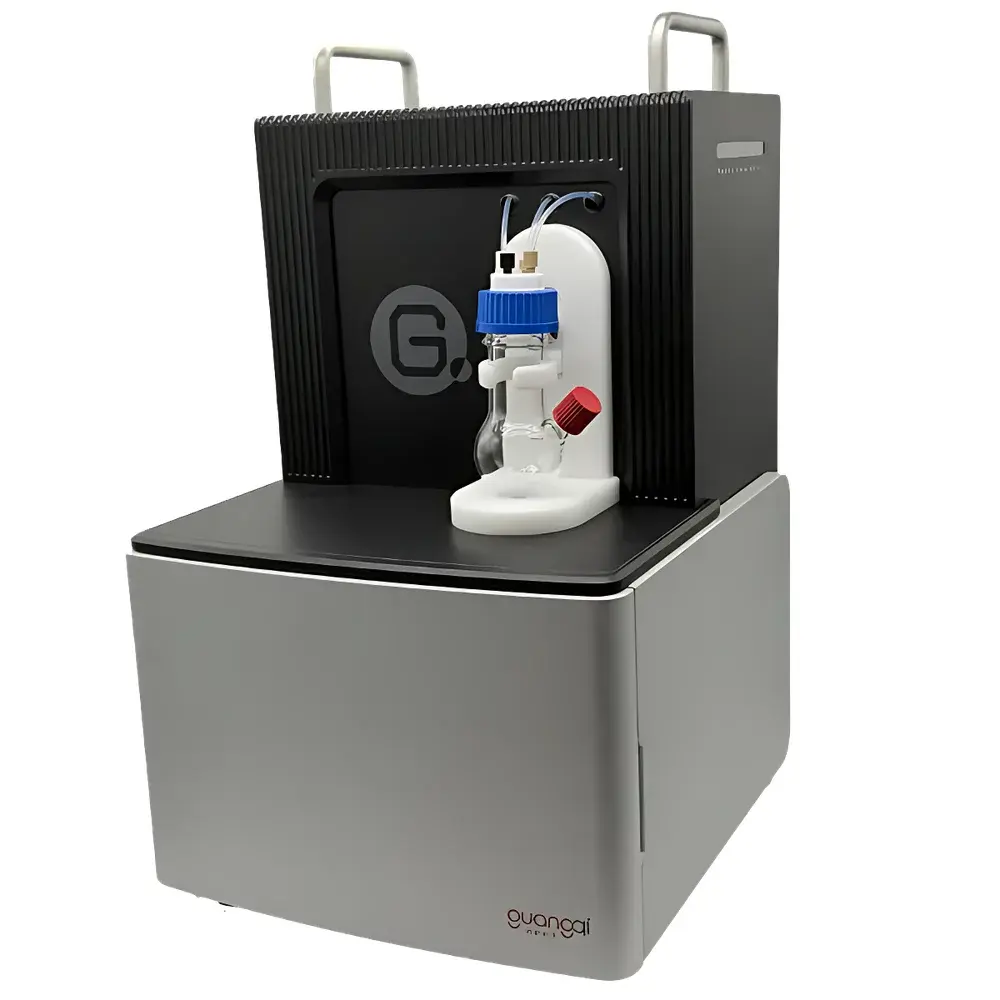
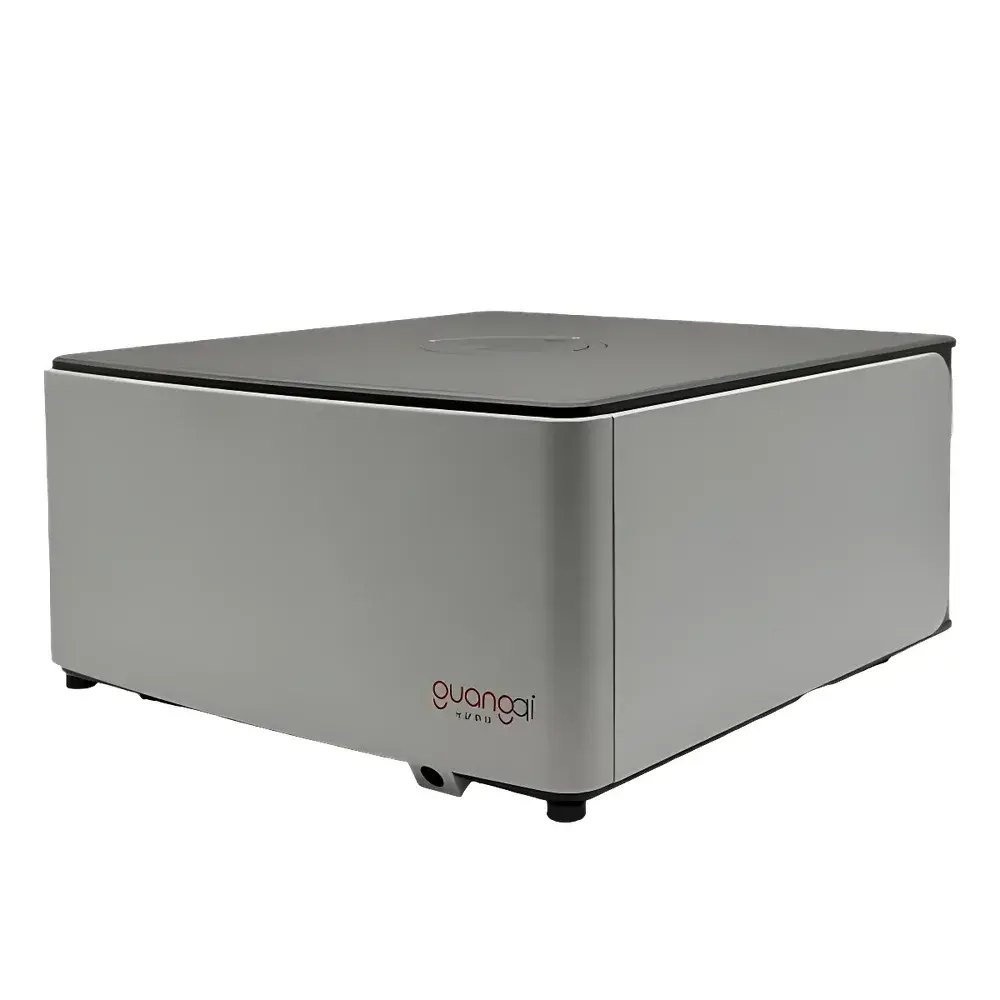
Acona 7000 AD Particle Size Analyzer
| Brand | Acona |
|---|---|
| Origin | Shanghai, China |
| Manufacturer Type | Original Equipment Manufacturer (OEM) |
| Product Category | Domestic |
| Model | Acona 7000 AD |
| Price Range | USD $1,400 – $98,000 |
Overview
The Acona 7000 AD Particle Size Analyzer is a high-precision, semiconductor-grade single-particle optical sensing (SPOS) instrument engineered for rigorous particle characterization in ultra-clean process environments. Unlike ensemble-averaging techniques such as laser diffraction (LD) or dynamic light scattering (DLS), the 7000 AD employs direct, individual-particle detection based on dual-mode optical sensing—simultaneous extinction and scattering measurement—at flow rates optimized for high-fidelity counting and sizing. This principle ensures quantitative accuracy in both number- and volume-based particle size distribution (PSD) analysis across a broad operational range of 0.5–400 µm. Designed specifically for critical applications in semiconductor slurry monitoring (e.g., CMP slurries), biopharmaceutical formulation development, and advanced photonic material QC, the system delivers trace-level sensitivity down to 10 parts per trillion (PPT) for large particle contaminants (LPCs), enabling early-stage stability assessment and root-cause analysis of aggregation or contamination events.
Key Features
- Dual-Physics SPOS Detection: Integrated LE400 sensor simultaneously captures extinction and scattering signals per particle, enhancing resolution for sub-micron particles while maintaining counting integrity for particles up to 400 µm.
- Automated Dilution Module: On-board precision dilution system dynamically adjusts sample concentration in real time to maintain optimal particle flux (<1000 particles/sec), eliminating coincidence error and operator-induced variability.
- 1024-Channel High-Resolution Histogramming: Delivers true 0.01 µm bin resolution—enabling unambiguous deconvolution of multimodal distributions (e.g., 0.8 µm, 2.0 µm, and 5.0 µm reference standards) without spectral overlap or artificial peak broadening.
- Trace-Level LPC Sensitivity: Achieves 10 PPT detection limit for ≥0.8 µm particles—approximately 6,000× more sensitive than conventional LD systems for tail-end large particle quantification.
- Ruggedized Fluidic Architecture: Chemically resistant wetted path (316L SS, sapphire flow cell, PFA tubing) compatible with aggressive solvents, acidic/alkaline slurries, and low-conductivity deionized water matrices.
Sample Compatibility & Compliance
The Acona 7000 AD supports liquid-phase analysis of aqueous and non-aqueous suspensions, including CMP slurries, photoresist developers, drug product intermediates, and nanomaterial dispersions. It complies with key regulatory frameworks for quality-critical industries: ASTM F3252–21 (Standard Guide for Particle Counting in Semiconductor Slurries), ISO 21501-4 (Calibration of particle counters), and USP / for particulate matter testing. Its hardware and firmware architecture are validated for alignment with FDA 21 CFR Part 11 requirements—including role-based access control, immutable audit trails, electronic signature support, and LIMS-integrated data export—making it suitable for GLP/GMP-regulated laboratories conducting method validation, stability studies, or release testing.
Software & Data Management
The embedded Acona Analyze™ software suite provides full 21 CFR Part 11 compliance out-of-the-box. It features hierarchical user permission sets (e.g., Operator, Supervisor, Administrator) governing test execution, calibration, report generation, database deletion, and firmware updates. All system interactions—including login/logout, parameter changes, calibration events, and report approvals—are timestamped, attributed, and stored in a tamper-evident audit log. Raw count data and processed PSDs are stored in an encrypted local SQL database with automated daily backups and optional cloud sync. Reports include configurable Pass/Fail criteria per ISO/USP thresholds, digital signatures, and PDF/A-1b archival output. API support enables bidirectional integration with enterprise LIMS and MES platforms via HTTPS/RESTful endpoints.
Applications
- Semiconductor Manufacturing: Real-time monitoring of CMP slurry cleanliness, post-filter verification, and wafer rinse water qualification per SEMI F63 standards.
- Biopharmaceutical Development: Quantitative assessment of subvisible particles (≥0.5 µm) in monoclonal antibody formulations, viral vector suspensions, and lipid nanoparticle (LNP) batches.
- Advanced Materials R&D: Characterization of quantum dot dispersions, metal oxide nanopowders, and conductive ink formulations where batch-to-batch PSD consistency directly impacts device performance.
- Medical Device Sterility Assurance: Verification of filter integrity and leachables profiling in implantable device manufacturing environments.
- Quality Control Laboratories: Routine release testing of raw materials, excipients, and final drug products under cGMP-compliant workflows.
FAQ
What particle size range does the Acona 7000 AD cover?
The instrument measures particles from 0.5 µm to 400 µm using dual-mode SPOS detection with verified traceability to NIST-traceable reference standards.
How does the automatic dilution system ensure measurement accuracy?
It maintains particle flux within the linear counting regime (<1000 particles/sec) by dynamically adjusting diluent ratio based on real-time signal density, preventing coincidence error and enabling accurate back-calculation of undiluted concentration.
Is the system compliant with FDA 21 CFR Part 11?
Yes—the software includes electronic signatures, role-based permissions, immutable audit logs, and data integrity safeguards validated per Part 11 Annex A guidance.
Can the Acona 7000 AD interface with existing LIMS infrastructure?
Yes—it supports secure HTTPS-based REST API integration and standardized CSV/PDF report exports for seamless LIMS ingestion and metadata synchronization.
What maintenance is required for long-term operational reliability?
Routine maintenance includes quarterly flow cell inspection, annual sensor calibration using certified latex standards, and biannual fluidic path cleaning per SOP 7000-MAINT-01.
Related Products