Acoustic Bubble Spectrometer ABS
| Origin | USA |
|---|---|
| Manufacturer Type | Distributor |
| Origin Category | Imported |
| Model | ABS |
| Pricing | Upon Request |
Overview
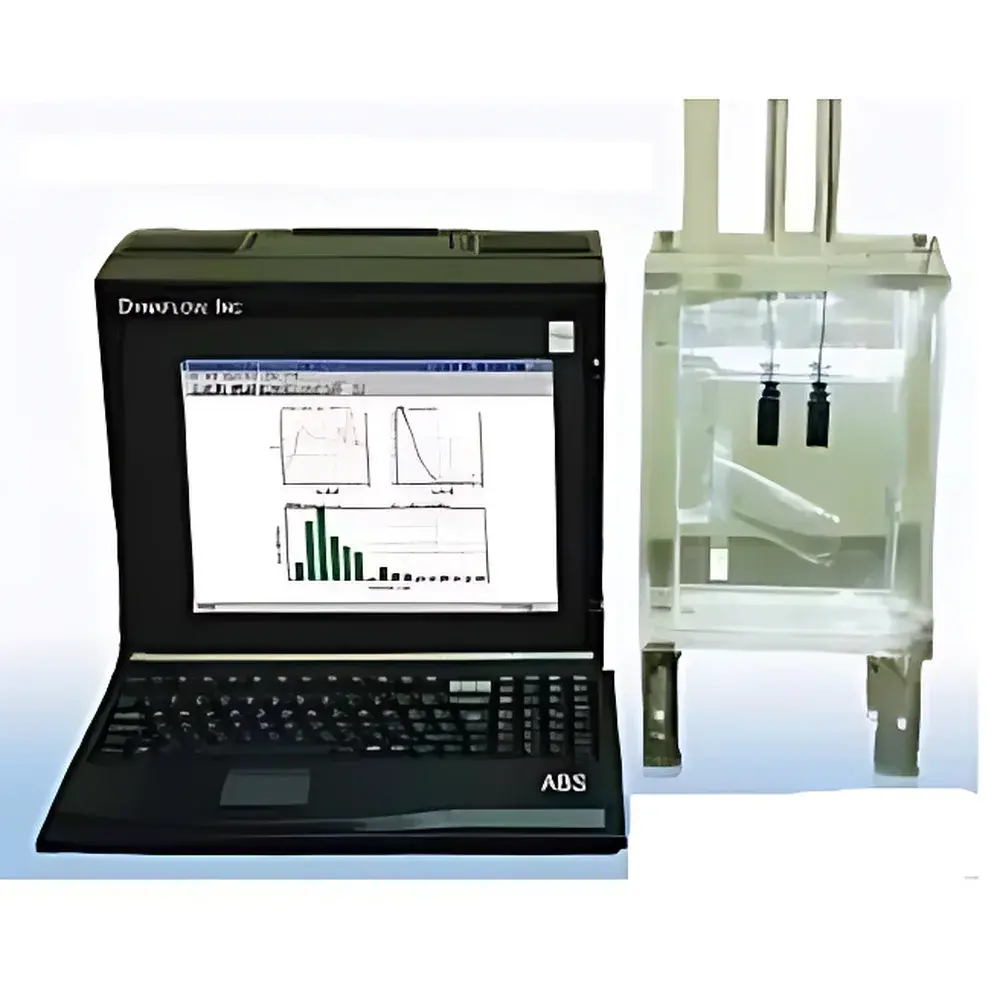
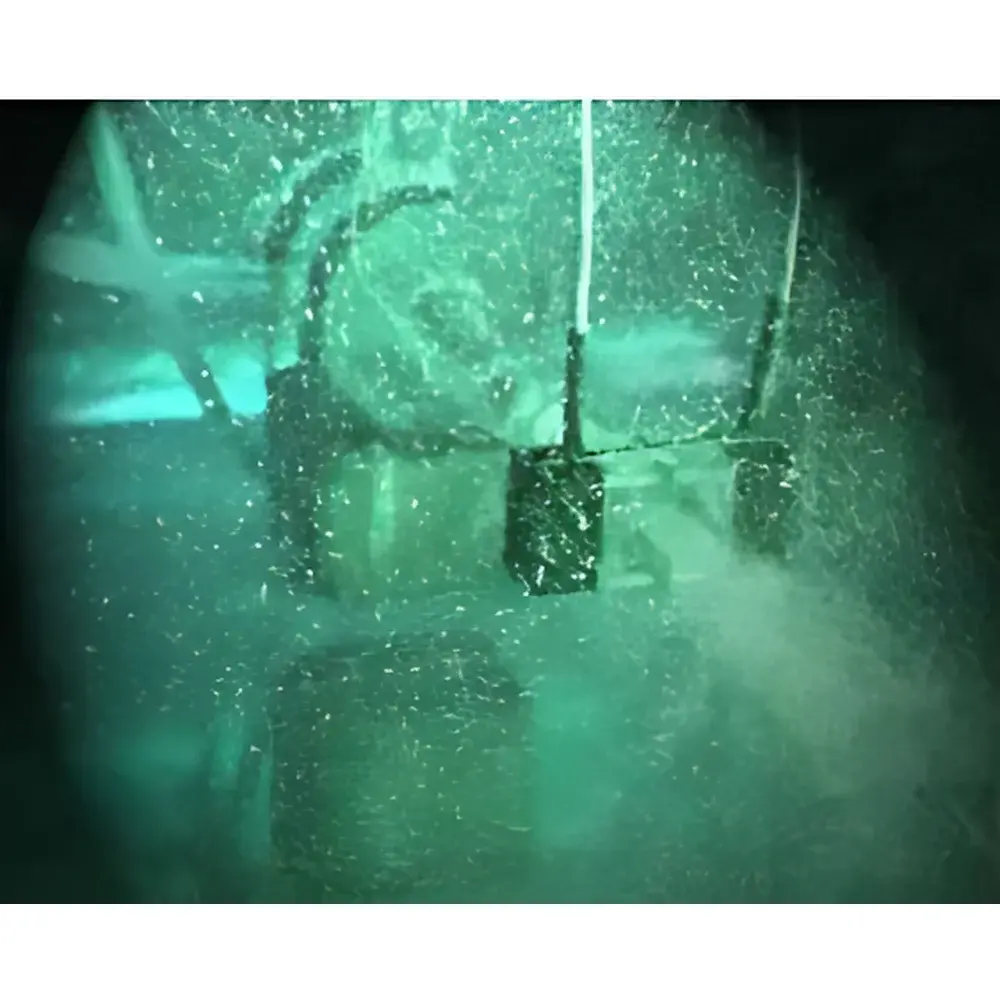
The Acoustic Bubble Spectrometer (ABS) is a precision industrial process analytical instrument engineered for non-invasive, real-time measurement of bubble size distribution (BSD) and gas volume fraction in opaque or optically heterogeneous liquids. Unlike optical or imaging-based techniques—such as high-speed microscopy, laser diffraction, or shadowgraphy—the ABS operates on the physical principle of broadband acoustic scattering: it transmits controlled ultrasonic pulses across a defined frequency band (typically 100 kHz–10 MHz, depending on transducer configuration) and analyzes the backscattered and forward-scattered pressure signals to invert the bubble size spectrum using established scattering models (e.g., Rayleigh–Plesset, coupled with Mie or far-field approximations for sub-wavelength to resonant bubbles). This methodology enables quantitative characterization of bubbles from sub-micron nuclei (~0.5 µm) up to several millimeters in diameter, without requiring optical access, transparent media, or sample dilution. The system is particularly suited for dynamic multiphase environments where conventional sensors fail—such as cavitating flows, aerated bioreactors, or turbid wastewater streams—making it an essential tool for fundamental fluid dynamics research and mission-critical process monitoring.
Key Features
- Non-optical, acoustic-based detection: Eliminates dependency on liquid transparency, container geometry, or particulate clarity.
- Real-time BSD acquisition: Continuous spectral output at configurable temporal resolution (1–10 Hz typical), supporting transient cavitation event capture.
- Simultaneous quantification: Outputs both volumetric gas fraction (φ, %) and full bubble size distribution (dN/dd, per µm bin) in SI units.
- Robust transducer architecture: Stainless-steel wetted parts; IP67-rated electronics; compatible with pressurized vessels and submerged deployment.
- Computer-controlled operation: Windows-based GUI with intuitive workflow navigation, calibration wizards, and export-ready data formatting (CSV, HDF5, MATLAB-compatible).
- Validation-ready design: Supports traceable calibration via polystyrene microsphere standards and reference bubbly water phantoms per ASTM E2943-21 (Standard Guide for Acoustic Characterization of Bubbly Liquids).
Sample Compatibility & Compliance
The ABS accommodates a wide range of industrial and laboratory fluids—including seawater, crude oil emulsions, polymer solutions, cell culture media, and activated sludge—regardless of turbidity, color, or suspended solids concentration. It complies with IEC 61000-6-2 (EMC immunity) and IEC 61000-6-4 (EMC emission) standards. For regulated environments, the software supports audit trail logging and user-access controls aligned with FDA 21 CFR Part 11 requirements when configured with optional electronic signature modules. Data integrity adheres to GLP/GMP documentation practices, and measurement protocols are referenced against ISO 20486:2020 (Acoustics — Measurement of bubble size distribution in liquids by acoustic spectroscopy).
Software & Data Management
The ABS Control Suite provides integrated signal processing, spectral inversion, and post-acquisition analysis. Core algorithms include deconvolution-based noise suppression, multi-frequency scattering inversion, and adaptive thresholding for overlapping bubble populations. Raw time-series voltage data, power spectra, and inverted BSDs are stored with metadata (temperature, pressure, transducer ID, operator, timestamp). Export formats include ASCII-delimited tables for statistical analysis in JMP or Python (Pandas), and native binary files for reprocessing. Batch processing mode enables comparative analysis across experimental runs, while API access (via COM/ActiveX) permits integration into SCADA or DCS platforms for closed-loop process control applications.
Applications
- Marine & Propulsion Engineering: Quantifying cavitation inception and collapse dynamics on propeller blades, hydrofoils, and pump impellers under variable load conditions.
- Biomedical Device Testing: Monitoring microbubble formation during cardiopulmonary bypass, artificial heart valve operation, and decompression physiology studies.
- Energy Systems: Assessing air entrainment in nuclear coolant loops, turbine draft tubes, and hydropower intake structures.
- Environmental Engineering: Tracking bubble-mediated oxygen transfer efficiency in wastewater aeration basins and evaluating fish passage safety at dam spillways.
- Chemical & Process Industries: Optimizing gas–liquid reactor performance, validating foam suppression strategies, and diagnosing fouling-induced flow instabilities.
- Space Fluid Physics: Characterizing bubble nucleation and coalescence behavior under microgravity analog conditions (e.g., parabolic flight or drop tower experiments).
FAQ
What physical principle does the ABS use to distinguish bubbles from solid particles?
It exploits the orders-of-magnitude difference in compressibility between gas-filled bubbles and solid/liquid-phase particles—resulting in distinct resonance frequencies and scattering cross-sections across the ultrasonic bandwidth.
Can the ABS operate in highly viscous or non-Newtonian fluids?
Yes—acoustic propagation remains effective in viscosities up to ~1000 mPa·s; however, attenuation correction models must be applied for accurate size inversion beyond ~200 mPa·s.
Is calibration required before each measurement?
A one-time factory calibration is sufficient for stable operating conditions; field verification using reference bubbly water is recommended before critical campaigns.
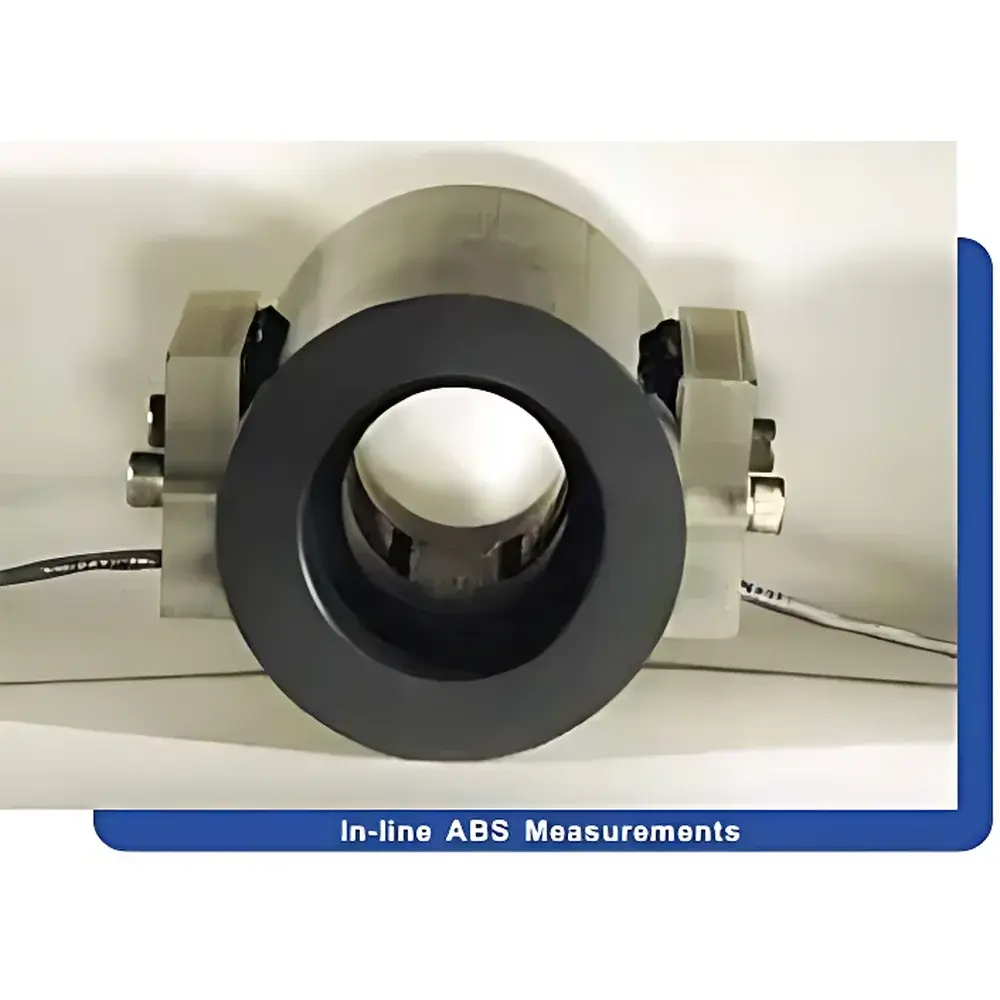
Does the system support in-line installation in pressurized pipelines?
Yes—clamp-on or flanged transducer variants are available for nominal pipe diameters from DN25 to DN300, rated up to 10 bar and 80 °C.
How is bubble size resolution determined?
Resolution depends on transducer bandwidth, signal-to-noise ratio, and inversion algorithm constraints—notably, sub-µm resolution requires high-frequency (>5 MHz) transducers and low-noise preamplification.