
ACV ProLux Series Fully Automated Stain-Free Western Blotting System
| Brand | ACV |
|---|---|
| Origin | Shandong, China |
| Model | ProLux Series |
| Instrument Type | WB Imaging & Processing System |
| Automation Level | Fully Automated |
| Transfer Method | Wet Transfer |
| Maximum Gel Capacity (Electrophoresis) | 4 mini-gels |
| Maximum Transfer Capacity | 2 gels (100 mm × 75 mm) |
| Temperature Control Range | 2–40 °C (Peltier-based) |
| Incubation Channels | 12 independent channels |
| Membrane Throughput | up to 24 membranes per run |
| Wash Buffer Volume Control | Adjustable per cycle |
| Imaging Sensor | High-sensitivity cooled CMOS |
| Light Sources | LED-based transillumination and epi-illumination |
| Fluorescence Channels | RGB + Far-Red/NIR (upgradable) |
| Software Compliance | FDA 21 CFR Part 11-ready audit trail, GLP/GMP-compatible workflow logging |
Overview
The ACV ProLux Series Fully Automated Stain-Free Western Blotting System is an integrated platform engineered for end-to-end western blot processing — from electrophoretic separation through transfer, antibody incubation, washing, and digital chemiluminescent/fluorescent imaging. Unlike conventional manual or semi-automated workflows, the ProLux system eliminates staining steps by leveraging intrinsic protein fluorescence under UV excitation (280 nm), enabling rapid, quantitative, and reproducible total-protein normalization without Coomassie or Ponceau S. Its core architecture integrates vertical electrophoresis, wet-transfer electroblotting, multi-channel programmable incubation with precise thermal control, and high-dynamic-range digital imaging — all within a single compact footprint. Designed for laboratories operating under GLP, GMP, or academic rigor, the system supports traceable, auditable workflows compliant with ISO/IEC 17025 and USP analytical instrument qualification frameworks.
Key Features
- Fully automated stain-free workflow: Eliminates chemical stains and enables direct in-gel or on-membrane total-protein visualization via native tryptophan/tyrosine fluorescence.
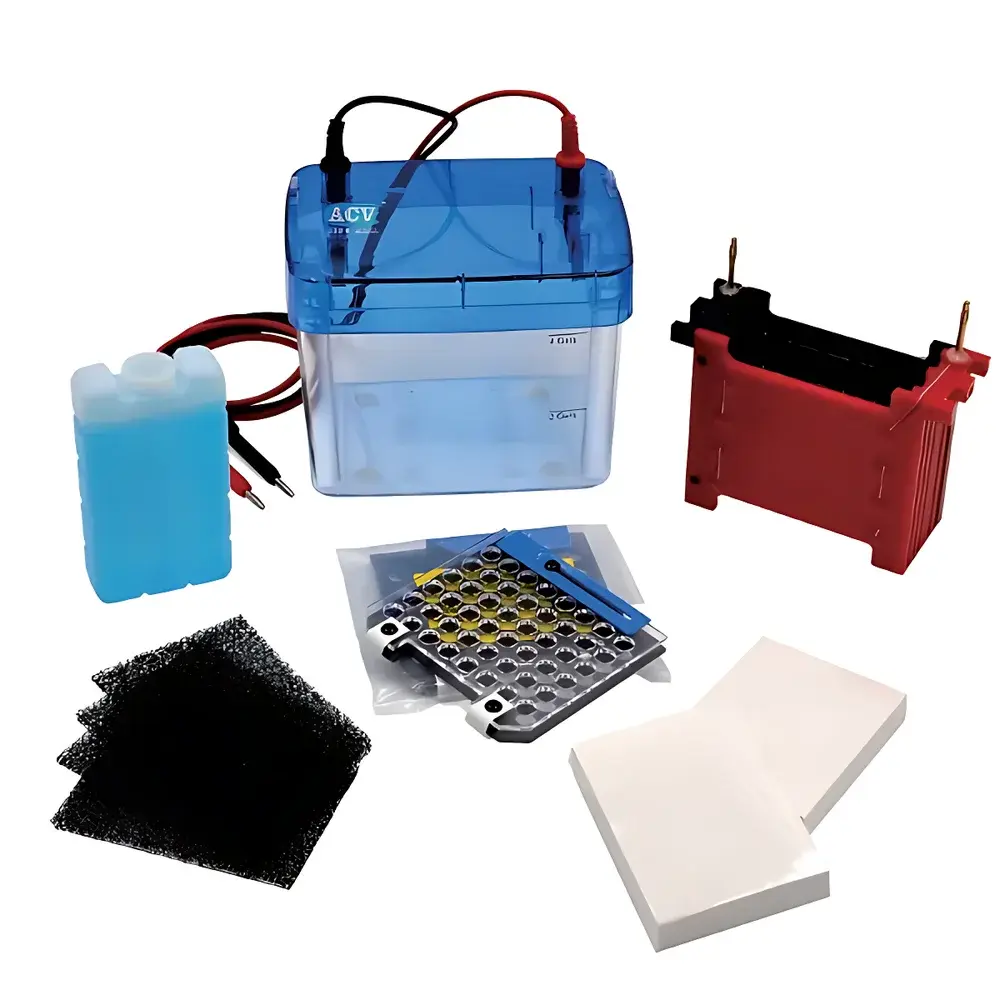
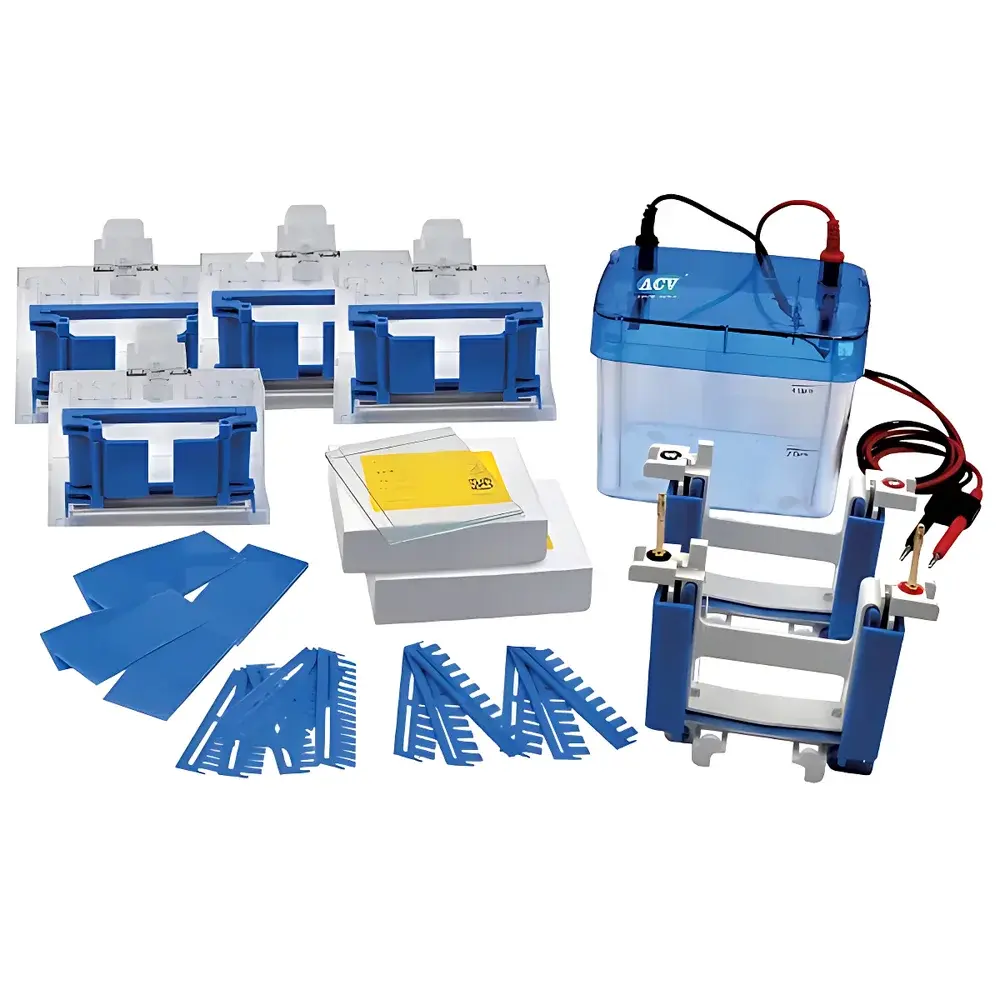
- Modular vertical electrophoresis unit: Supports 1–4 mini-gels (up to 100 mm × 75 mm) with optimized buffer circulation, leak-proof sealing, and compatibility with 2D second-dimension electrophoresis.
- High-efficiency wet-transfer module: Dual-electrode configuration with minimized inter-electrode distance ensures uniform electric field distribution and consistent transfer efficiency across 2 gels simultaneously.
- 12-channel independent incubation system: Each channel supports discrete temperature profiles (2–40 °C), reagent selection, incubation timing, and wash volume — enabling parallel validation of multiple targets or conditions.
- Peltier-driven thermal management: Delivers ±0.3 °C stability during blocking, primary/secondary antibody incubation, and low-background washing — critical for reproducible signal-to-noise ratios.
- Digital imaging subsystem: Equipped with a thermoelectrically cooled CMOS sensor (effective pixel resolution ≥ 6.3 megapixels), wide-dynamic-range acquisition (16-bit), and tunable LED illumination for chemiluminescence, RGB, and far-red/NIR fluorescence detection.
- Reagent conservation engineering: >95% primary/secondary antibody recovery via closed-loop fluidics; programmable wash buffer dosing minimizes carryover and background noise.
Sample Compatibility & Compliance
The ProLux system accommodates standard PVDF and nitrocellulose membranes (0.2 µm and 0.45 µm pore sizes), as well as pre-cast or hand-cast polyacrylamide gels (8–20% T). It supports common western blot buffers (e.g., TBS-T, PBST, 5% non-fat milk, BSA-based blockers) and commercial HRP- or fluorescent-conjugated secondary antibodies. All hardware and software components are designed to meet IEC 61010-1 safety standards for laboratory equipment. The embedded firmware includes configurable electronic logbooks with timestamped operator ID, parameter changes, and error events — fulfilling requirements for FDA 21 CFR Part 11 compliance when deployed with appropriate IT infrastructure and access controls. IQ/OQ documentation packages are available for installation and operational qualification under GxP environments.
Software & Data Management
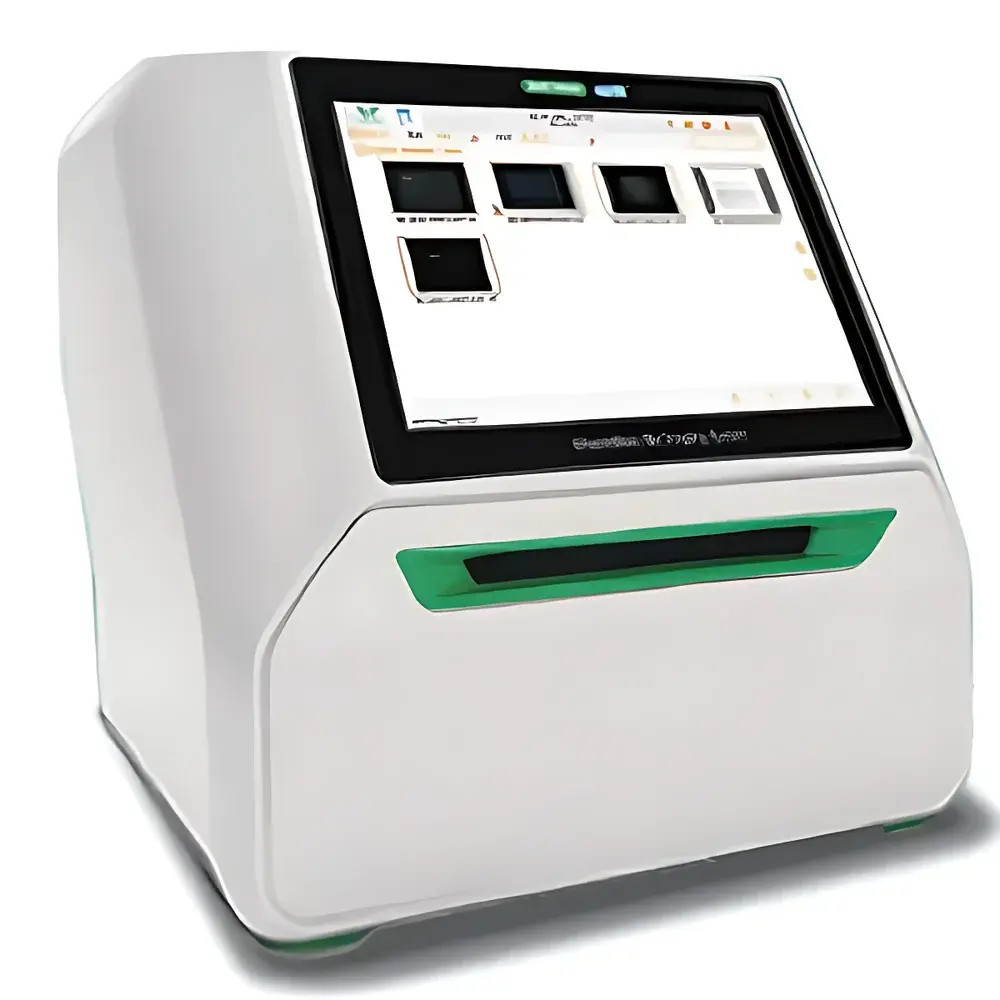
The ProLux Control Suite runs on a 12-inch capacitive touchscreen interface with intuitive icon-driven navigation. Users can store up to 50 customizable protocols, each defining voltage/current profiles, transfer duration, incubation temperatures, agitation speed (60–110 rpm), and imaging exposure parameters. Real-time status monitoring displays active channel states, temperature deviations, fluid levels, and remaining cycle time. Image acquisition is managed via ACV ImageQuant™ software — featuring automatic band detection, molecular weight calibration using ladder recognition, densitometric quantification with background subtraction, and export of MIAME-compliant metadata. Raw image files (TIFF/FITS) and processed data (CSV, PDF reports) are exportable via USB or cloud-synced to secure institutional servers using TLS 1.2 encryption.
Applications
This system is validated for quantitative western blotting in target validation, biomarker verification, post-translational modification analysis (e.g., phosphorylation, ubiquitination), and comparative proteomics studies. Its stain-free capability enables accurate normalization against total protein load — avoiding actin/tubulin loading control bias. The dual-mode imaging supports multiplexed detection using orthogonal fluorophores (e.g., Alexa Fluor 488 + IRDye 800CW), while chemiluminescent sensitivity reaches sub-femtogram detection limits for HRP substrates. Academic core facilities, CROs, and biopharmaceutical QC labs utilize the ProLux platform for method transfer, assay development, and routine release testing where regulatory traceability and inter-laboratory reproducibility are mandatory.
FAQ
Does the system require proprietary reagents or consumables?
No — the ProLux platform is fully compatible with third-party electrophoresis buffers, transfer membranes, blocking agents, and labeled antibodies. Only the imaging calibration slides and optional IQ/OQ kits are ACV-supplied.
Can the incubation module be used independently of the electrophoresis and imaging modules?
Yes — all three functional units (electrophoresis, transfer, incubation/imaging) operate as modular subsystems and may be deployed separately or in any combination.
What validation support is provided for regulated environments?
ACV supplies comprehensive IQ/OQ documentation templates, calibration certificates for temperature and power output, and software validation reports aligned with ASTM E2500 and Annex 11 principles.
Is remote monitoring or troubleshooting supported?
The system includes Ethernet and Wi-Fi connectivity for secure remote diagnostics via encrypted VNC session — subject to local IT policy approval.
How is carryover between runs prevented in the fluidic system?
Automated post-run cleaning cycles flush all reagent lines with ethanol/water mixtures followed by air purging; tubing materials are chemically resistant and certified for repeated sterilization.



