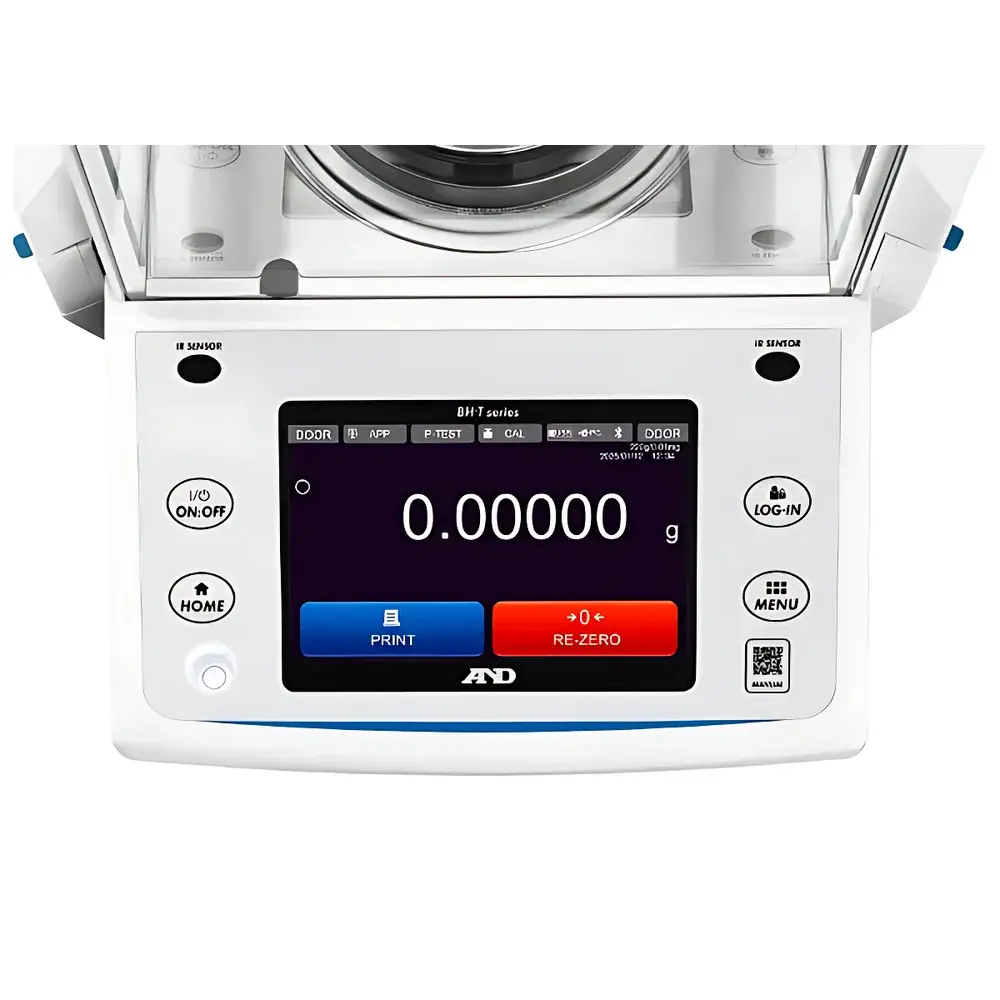
A&D BH324 Semi-Micro Analytical Balance
| Brand | A&D |
|---|---|
| Origin | Japan |
| Manufacturer | A&D Company, Ltd. |
| Type | Analytical Balance |
| Maximum Capacity | 320 g |
| Readability | 0.1 mg |
| Repeatability | 0.1 mg |
| Calibration | Internal Automatic Calibration |
| Compliance | GLP/GMP/GCP/ISO-compliant data output |
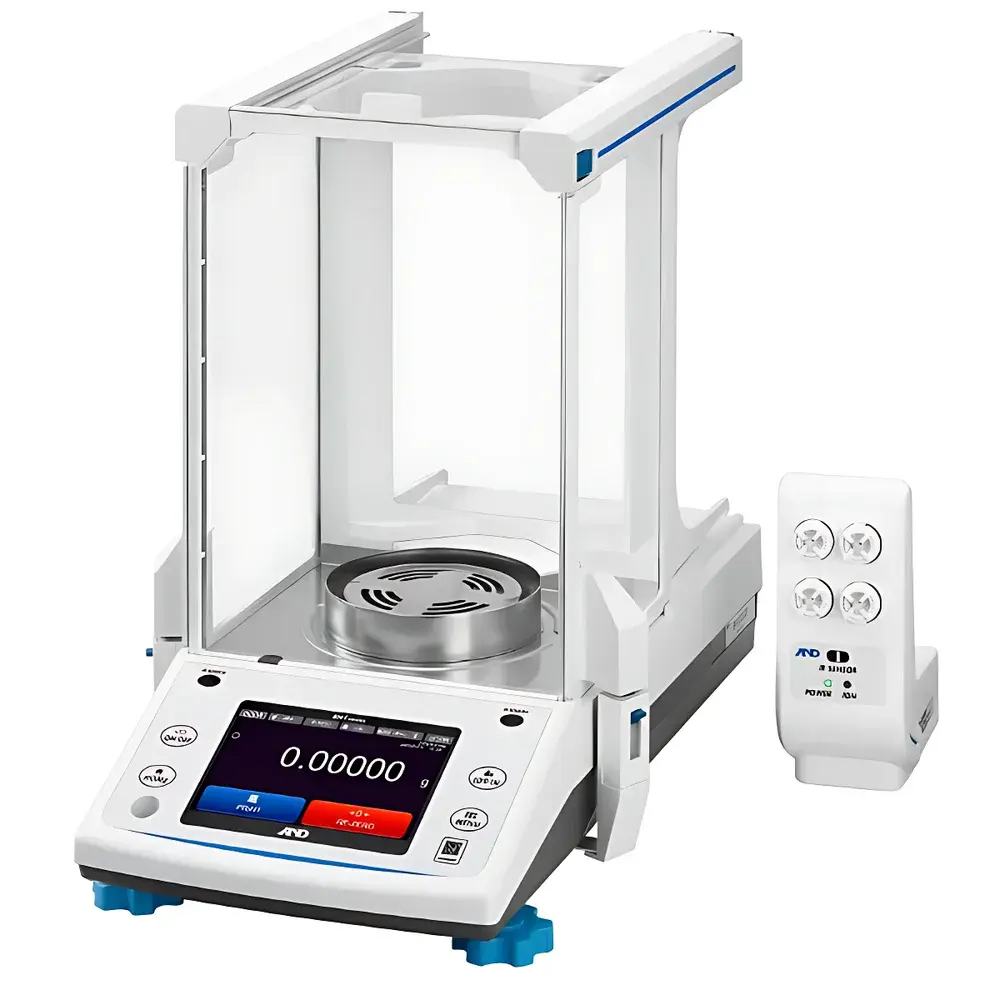
| Display | 5-inch full-color capacitive touchscreen (BH-T series) |
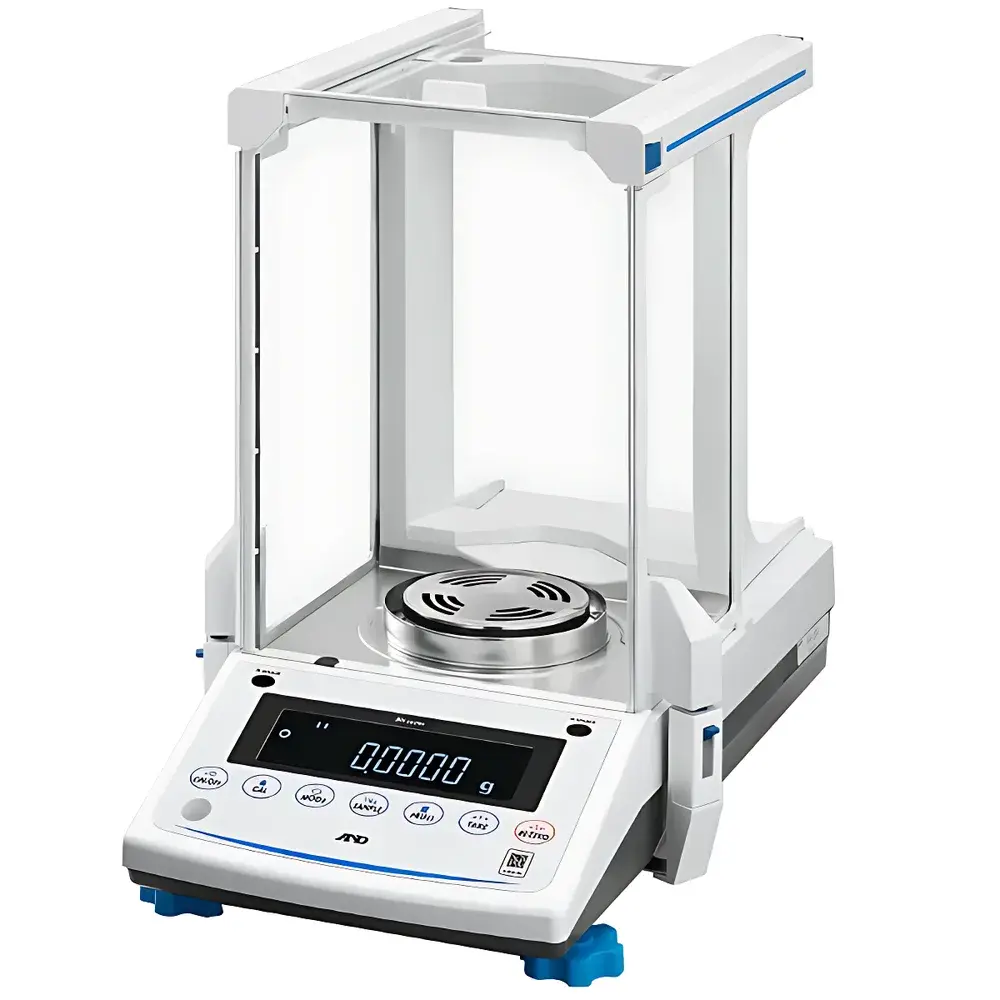
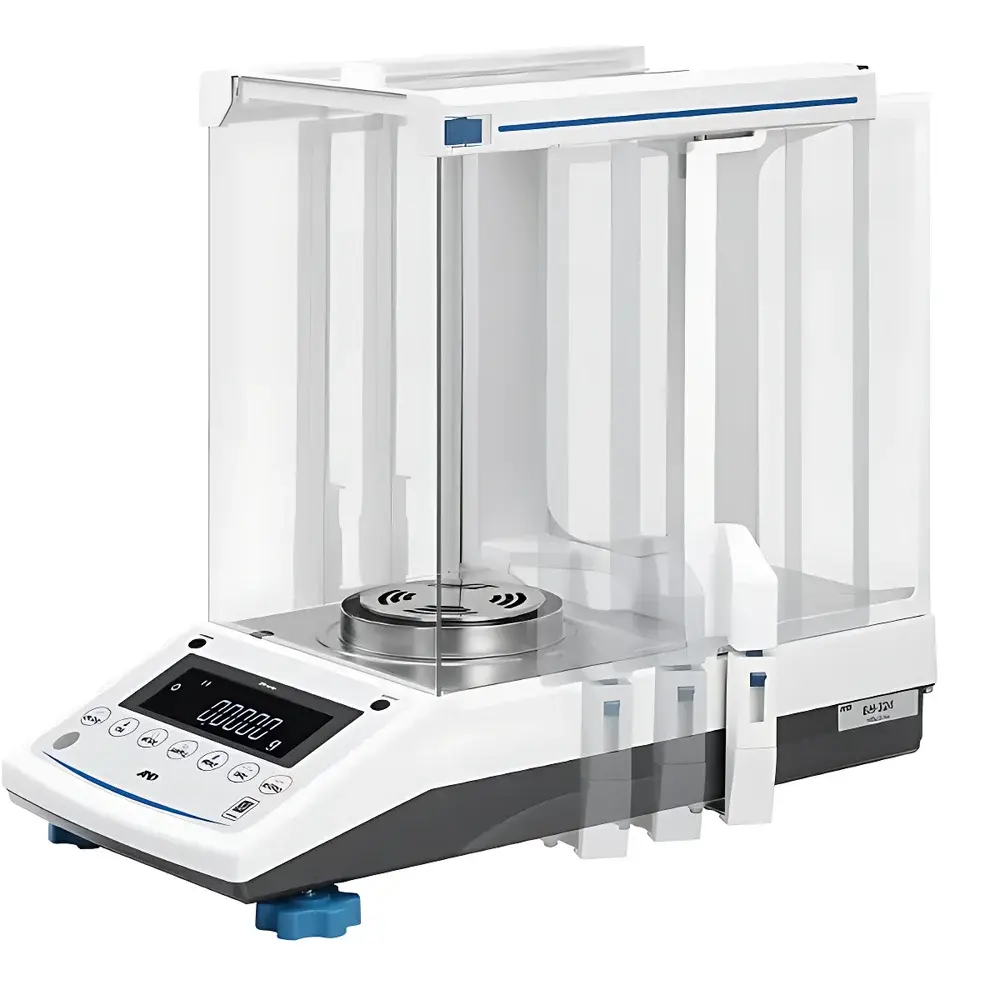
| Draft Shield | Motorized auto-sensing infrared door with seamless flush design |
| Electrostatic Control | External DC ionizer (optional, BH-T model) |
| Weighing Pan | Perforated anti-convection pan (φ90 mm) |
| Stabilization Time | ≤3 s |
| Operating Environment | 15–30 °C, 20–80% RH (non-condensing) |
| Connectivity | RS-232, USB, optional Ethernet |
| Software Features | Built-in daily/periodic performance verification, minimum weight auto-detection per USP <41> & ChP 2025, user-defined print formats, audit trail, role-based access control |
Overview
The A&D BH324 Semi-Micro Analytical Balance is a high-precision mass measurement instrument engineered for laboratories requiring trace-level accuracy in regulated and research-intensive environments. Utilizing electromagnetic force compensation (EMFC) technology, the BH324 delivers stable, drift-compensated measurements under dynamic environmental conditions. Its 320 g maximum capacity and 0.1 mg readability meet the requirements of semi-micro applications—including active pharmaceutical ingredient (API) quantification, reference standard preparation, catalyst dosing, and gravimetric titration—where conventional analytical balances (0.01 mg) may introduce unnecessary cost or over-specification. Designed and manufactured in Japan by A&D Company, Ltd., the BH324 complies with international metrological standards including OIML R76-1 and adheres to the uncertainty evaluation framework defined in EURAMET cg-18. The balance operates within a tightly controlled thermal and mechanical architecture, incorporating temperature-compensated load cell electronics and real-time internal diagnostics to ensure long-term metrological integrity.
Key Features
- Internal automatic calibration system with motorized calibration mass deployment—activated manually or scheduled via time/date triggers
- Motorized draft shield with non-contact infrared sensing; door opens/closes without physical contact, eliminating mechanical wear and minimizing vibration transmission
- Flush-mounted, groove-free door design enables rapid cleaning and reduces particle entrapment—critical for ISO 14644-1 Class 5 cleanroom compatibility
- Perforated weighing pan (φ90 mm) engineered to suppress convective air currents, improving stability during low-mass measurements (<100 mg)
- Dedicated external DC ionizer (optional, BH-T configuration) neutralizes static charge on powders and insulating samples without airflow—eliminating electrostatic drift in hygroscopic or low-conductivity materials
- AD-JUST™ real-time sensitivity adjustment compensates for minor environmental fluctuations (e.g., barometric pressure shifts, thermal gradients) without manual recalibration
- Impact detection (ISU) alerts users when mechanical shock exceeds ISO 17025-defined thresholds, flagging potentially compromised measurement events
- Onboard performance verification suite supports daily/weekly checks per USP <41>, EP 2.1.6, and ASTM E898—automatically recording repeatability, eccentricity, and linearity test results
Sample Compatibility & Compliance
The BH324 accommodates diverse sample forms—powders, crystals, liquids in tared vessels, and small solid components—within its optimized draft enclosure. Its static mitigation and convection suppression systems significantly enhance reproducibility for low-mass, high-surface-area samples (e.g., nanomaterials, lyophilized proteins). Regulatory compliance is embedded at the firmware level: role-based user access (administrator, operator, reviewer), full audit trail with timestamped event logging (including calibration, zeroing, and parameter changes), and GLP/GMP-compliant report generation with electronic signature support. Data export conforms to 21 CFR Part 11 requirements when paired with A&D’s optional LabX®-compatible software modules. Minimum weight determination follows USP <41> methodology with automatic calculation and threshold alerting—fully aligned with the revised Chinese Pharmacopoeia (ChP) 2025 Chapter 0611.
Software & Data Management
The 5-inch capacitive touchscreen interface runs A&D’s proprietary BH-T OS, supporting multilingual operation (EN/DE/FR/ES/ZH/JP) and intuitive workflow navigation. All measurement data—including raw values, metadata (operator ID, timestamp, environment log), and verification reports—are stored internally with 10,000-entry capacity. Export options include CSV, PDF, and XML formats compatible with LIMS and ELN systems. User-defined print templates allow customization of header fields, units, and compliance statements (e.g., “Calibrated per ISO/IEC 17025:2017”). Optional PC connectivity via RS-232 or USB enables remote monitoring, automated data archiving, and integration into centralized QA/QC dashboards. Firmware updates are performed via USB drive with cryptographic signature verification.
Applications
- Pharmaceutical quality control: API assay, blend uniformity testing, and reference standard dilution
- Academic and industrial research: catalyst loading in heterogeneous catalysis, stoichiometric reagent dispensing for synthetic chemistry
- Materials science: precise mass measurement of thin films, nanoparticles, and battery electrode coatings
- Environmental testing: gravimetric analysis of PM2.5 filters and sorbent tubes per EPA Method 201A
- Food & cosmetics: formulation verification, nutrient fortification validation, and preservative dosage control
- Regulatory submissions: generating auditable mass records compliant with ICH Q5C, Q7, and Annex 11
FAQ
What is the difference between the BH324 and a standard analytical balance?
The BH324 is classified as a semi-micro balance—optimized for 0.1 mg readability across a 320 g range—offering enhanced stability for mid-range mass work while avoiding the higher sensitivity-related vulnerabilities (e.g., acoustic noise susceptibility, thermal drift) of 0.01 mg microbalances.
Does the BH324 support USP <41> minimum weight validation?
Yes—the built-in minimum weight function automatically calculates and displays the smallest weighable quantity based on user-defined confidence limits (k=2), repeatability data, and process tolerance—fully compliant with USP <41> and ChP 2025.
Can the balance be integrated into a networked laboratory system?
Yes—via optional Ethernet module or standard RS-232/USB interfaces, the BH324 supports bidirectional communication with LIMS, ELN, and MES platforms using ASCII protocol or Modbus TCP.
Is the internal calibration mass traceable to national standards?
Yes—each BH324 is supplied with a factory-issued calibration certificate referencing JCSS (Japan Calibration Service System) traceability, with optional UKAS or DAkkS-accredited certificates available upon request.
How often should performance verification be conducted?
Per ISO/IEC 17025:2017 and FDA guidance, daily verification is recommended before first use; weekly linearity/eccentricity checks are advised for GxP environments—both fully automated via the onboard verification suite.