
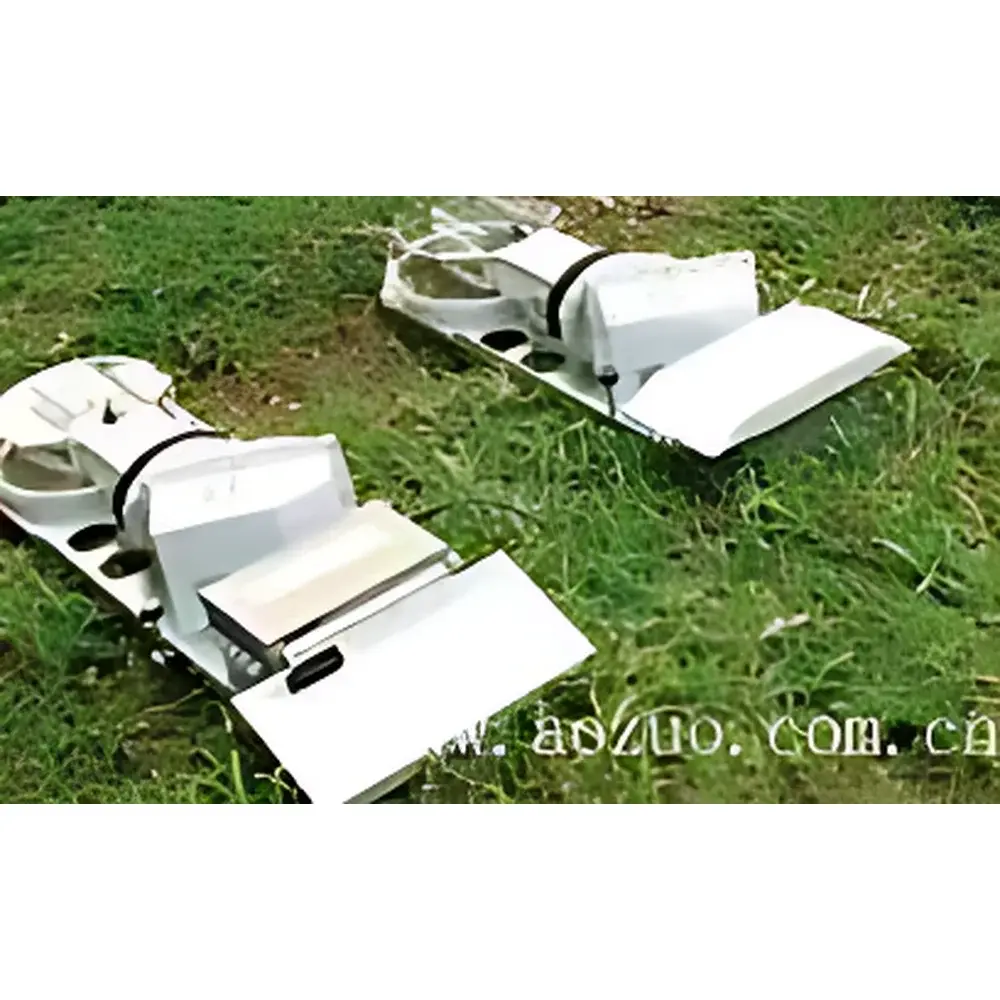
ADC Bio ACE Automated Soil Respiration Monitoring System
| Brand | ADC Bio |
|---|---|
| Origin | United Kingdom |
| Model | ACE |
| Instrument Type | Multi-parameter Soil Respiration Analyzer |
| CO₂ Measurement Range | 0–896 ppm |
| Resolution | 1 ppm |
| Accuracy | ±1% of reading |
| IRGA Drift | ≤0.6% per 24 h |
| PAR Sensor | 0–3000 µmol m⁻² s⁻¹ (Silicon Photodiode) |
| Soil Temperature Range | −20 to +50 °C |
| Soil Moisture (SM300) | 0–100 vol%, ±3% (soil-calibrated) |
| Soil Moisture (Theta Probe) | 0–1.0 m³·m⁻³, ±1% (factory-calibrated) |
| Flow Control | 200–5000 mL/min (±3% accuracy) |
| Chamber Volumes | Closed-mode 2.6 L, Open-mode 1.0 L |
| Chamber Diameter | 23 cm |
| Power Supply | 12 V DC, 40 Ah battery (28 days continuous operation) |
| Data Storage | 1 GB CompactFlash card (up to 4 million records) |
| Communication | RS-232 (up to 19200 baud), rugged 3-pin waterproof connector |
| Display | 240 × 64 pixel LCD |
| Dimensions (H×W×D) | 82 × 33 × 13 cm |
| Weight | 7.0 kg |
| Network Capacity | Up to 30 units within 200 m radius |
| Operating Modes | Closed-chamber and open-path configurable |
Overview
The ADC Bio ACE Automated Soil Respiration Monitoring System is a field-deployable, self-contained instrument engineered for high-temporal-resolution measurement of soil CO₂ efflux—the net exchange of carbon dioxide between the soil matrix and the atmosphere. It operates on the principle of dynamic closed-chamber or steady-state open-chamber gas exchange analysis, integrating an embedded non-dispersive infrared gas analyzer (NDIR IRGA) directly within the measurement chamber. This co-location eliminates transport lag, minimizes condensation artifacts, and ensures sub-second response to CO₂ concentration changes—critical for capturing diurnal and pulse-driven respiration dynamics. The system quantifies soil respiration as the rate of CO₂ accumulation (closed mode) or differential flux (open mode), normalized to chamber surface area and time, yielding results in µmol CO₂·m⁻²·s⁻¹. Its design addresses core biogeochemical questions in terrestrial carbon cycling, microbial ecology, and climate–soil feedback modeling, supporting long-term unattended deployment in remote or logistically constrained environments—including forests, grasslands, agricultural fields, and degraded ecosystems.
Key Features
- Integrated NDIR IRGA housed entirely within the measurement chamber—no external gas lines, eliminating diffusion delay and water vapor interference
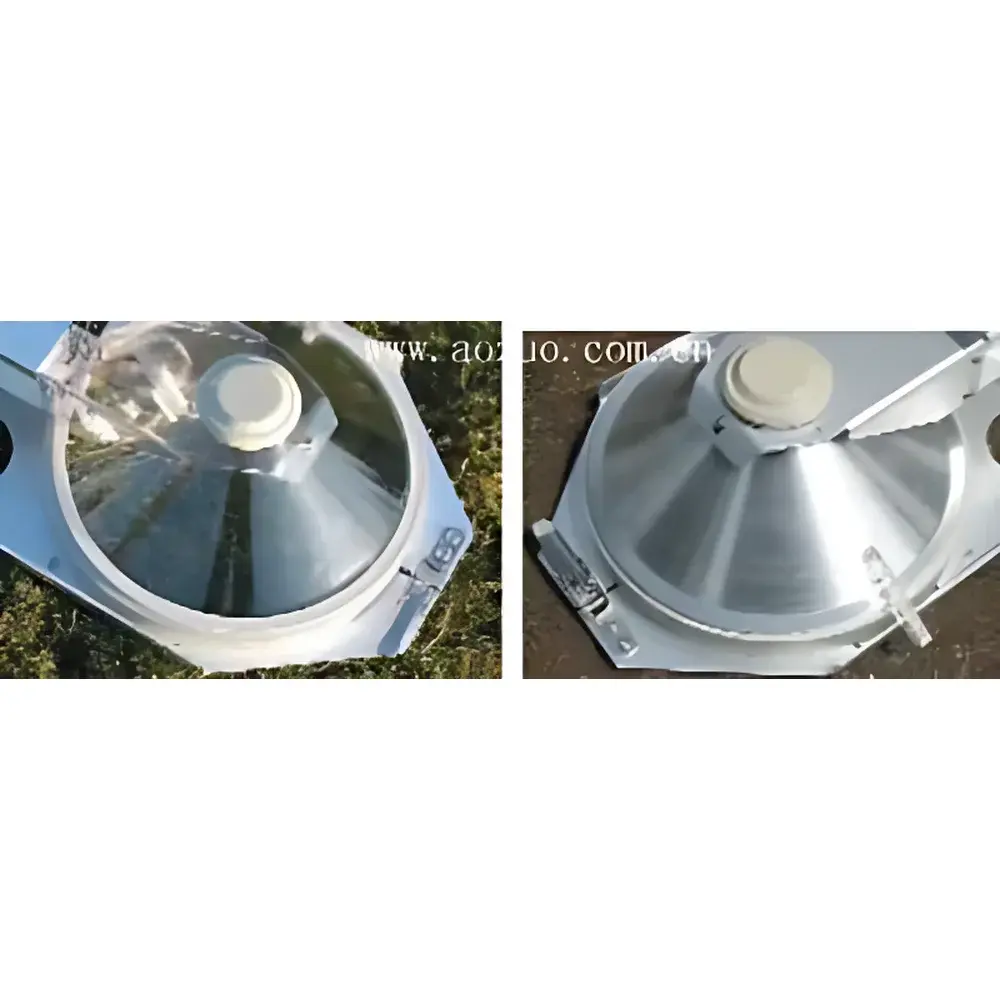
- Dual operational modes: programmable closed-chamber (2.6 L) for rapid, high-sensitivity flux estimation; open-path (1.0 L) for near-ambient pressure conditions and reduced chamber-induced microclimate artifacts
- Modular sensor expansion: supports up to six PT100 soil temperature probes and four volumetric soil moisture sensors (SM300 or Theta Probe), all calibrated per ISO 11277 and ASTM D5859 standards
- Onboard real-time data processing: automatic calculation of CO₂ flux, temperature-normalized Q₁₀, and PAR-corrected respiratory quotients
- Autonomous power architecture: compatible with 12 V DC sources including lead-acid batteries (40 Ah, 28-day runtime), solar panels, or small wind turbines—designed for off-grid sustainability
- Robust field interface: 240×64-pixel backlit LCD with five-button navigation; no external PC, PDA, or software installation required for basic operation or data retrieval
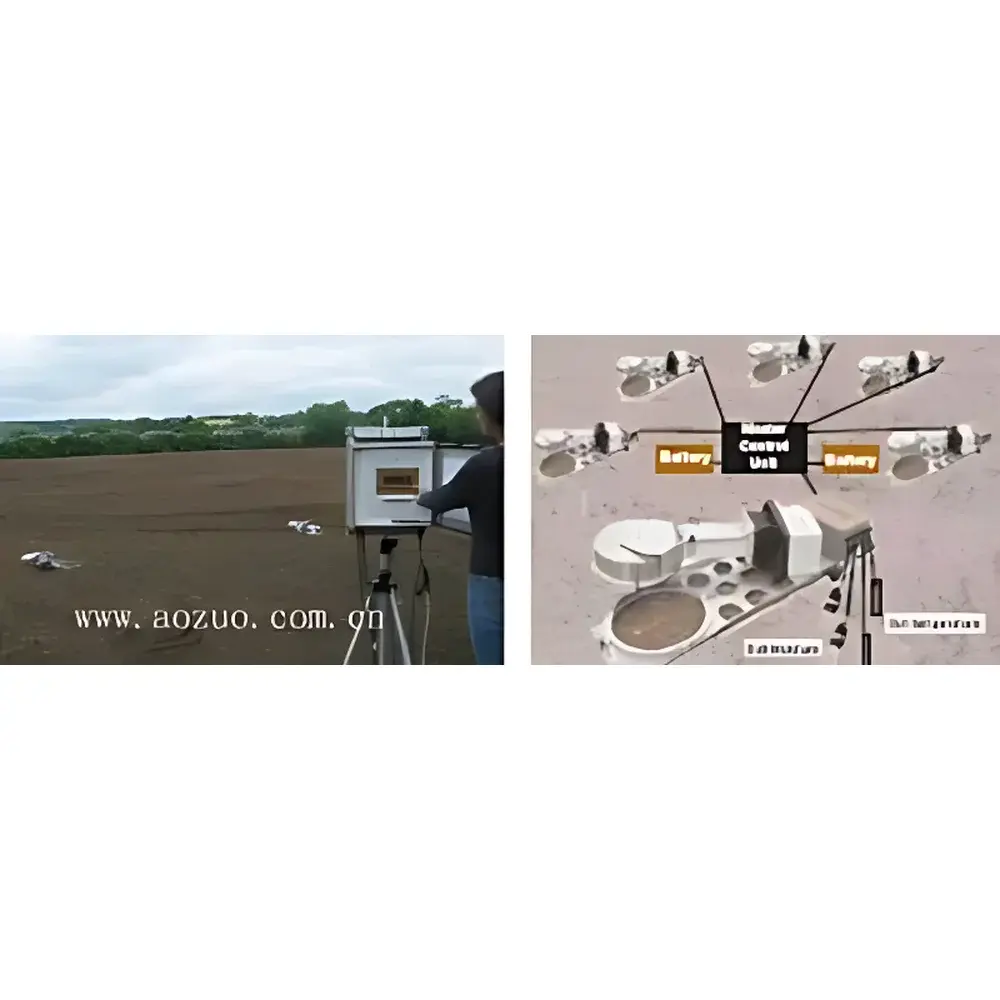
- Network scalability: one master controller synchronizes up to 30 ACE units across a 200 m radius via daisy-chained RS-232 links, enabling spatially distributed flux mapping without central server dependency
Sample Compatibility & Compliance
The ACE system accommodates heterogeneous soil substrates—from sandy loams to clay-rich hydromorphic soils—and interfaces seamlessly with standard soil collars (23 cm diameter) installed per established protocols (e.g., ISO 14246, USDA NRCS Soil Survey Manual). Its open- and closed-mode configurations comply with methodological requirements for IPCC Tier 2 soil carbon stock change reporting and support GLP-aligned experimental designs. All firmware and data logging routines adhere to ALCOA+ principles (Attributable, Legible, Contemporaneous, Original, Accurate, Complete, Consistent, Enduring, Available), with timestamped metadata and immutable record structures suitable for regulatory submission. The IRGA’s water-vapor insensitivity obviates the need for inline dryers or H₂O correction algorithms—reducing calibration drift and simplifying QA/QC workflows under variable humidity conditions typical of temperate and tropical field sites.
Software & Data Management
Data are stored locally on industrial-grade CompactFlash cards (1 GB capacity, >4 million records) with FAT32 formatting and cyclic overwrite protection. Each record includes synchronized timestamps, CO₂ concentration, chamber pressure, PAR, soil temperature (at multiple depths), volumetric water content, flow rate, and diagnostic flags (e.g., low-battery warning, sensor timeout). The master controller provides native visualization: multi-unit time-series overlays, parameter correlation matrices, and export-ready CSV files compliant with FluxNet, AmeriFlux, and ChinaFLUX metadata schemas. No proprietary software is required—raw logs are human-readable ASCII text with header annotations conforming to CF Metadata Conventions v1.8. For audit-trail integrity, all configuration changes and manual calibrations are logged with user ID (if enabled) and cryptographic hash verification. Firmware updates are delivered via CF card and validated using SHA-256 checksums prior to installation.
Applications
- Long-term monitoring of soil carbon efflux in response to land-use change, afforestation, or agricultural intensification
- Partitioning autotrophic vs. heterotrophic respiration using collar insertion depth and light-exclusion treatments
- Evaluating pesticide impacts on microbial metabolic activity and functional diversity
- Validating ecosystem models (e.g., CENTURY, DAYCENT) against in situ flux observations
- Supporting eddy covariance gap-filling through empirical temperature–moisture–respiration relationships
- Assessing biochar amendment effects on soil C stabilization and rhizosphere priming
- Field validation of remote sensing–derived soil moisture and surface temperature products
FAQ
Does the ACE system require external computers or tablets for routine operation?
No. All control, measurement, and data storage functions are fully embedded. The unit operates independently using its onboard processor and LCD interface.
Can the same ACE unit switch between open and closed chamber modes during a single deployment?
Yes. Mode selection is configurable per measurement cycle via the menu system—no hardware modification is needed.
How does the system handle condensation in high-humidity environments?
The IRGA is intrinsically insensitive to water vapor, and the absence of external tubing prevents dew-point-related blockages or signal attenuation.
What calibration procedures are recommended for long-term deployments?
Zero calibration is automated daily using an internal solenoid valve and reference gas path. Span calibration with certified CO₂ standards is advised every 3–6 months depending on ambient dust load and temperature cycling.
Is the network controller capable of real-time remote access?
The base system does not include cellular or satellite telemetry; however, the RS-232 output can be interfaced with third-party IoT gateways supporting Modbus RTU or MQTT protocols for cloud integration.
Related Products







