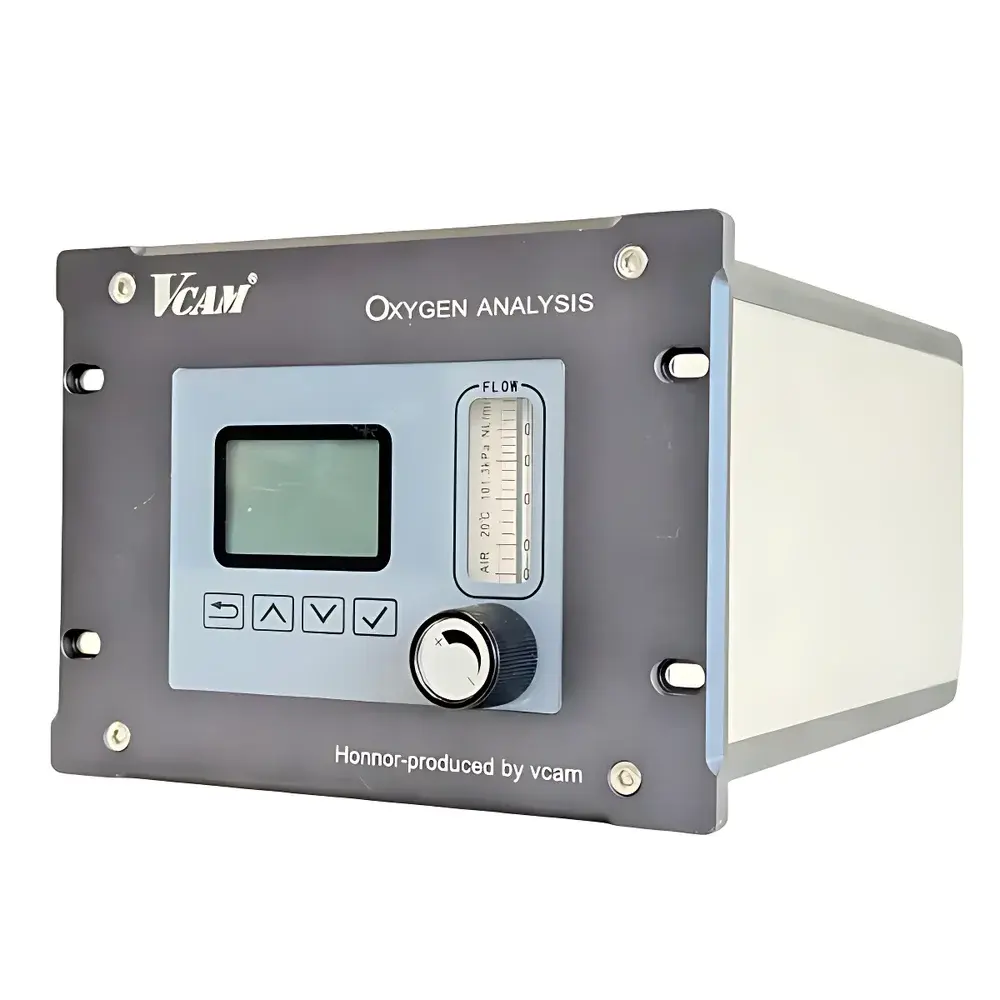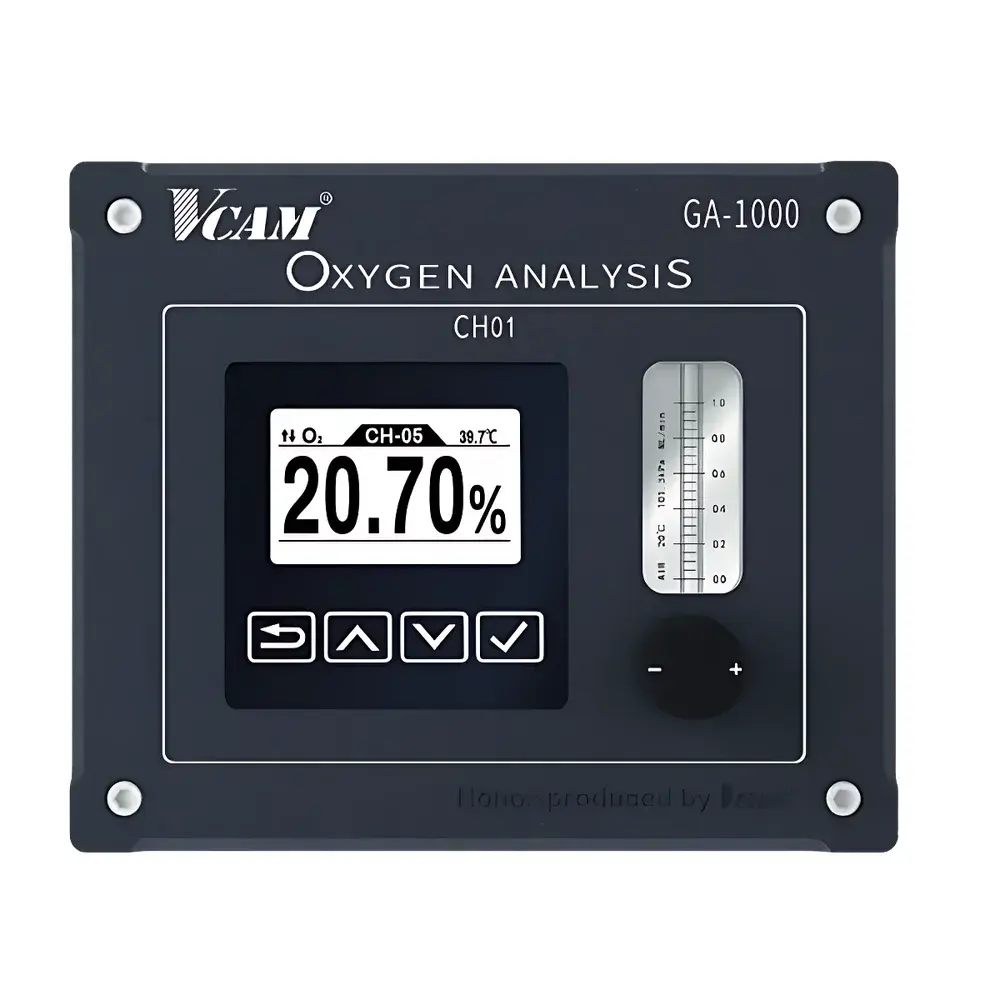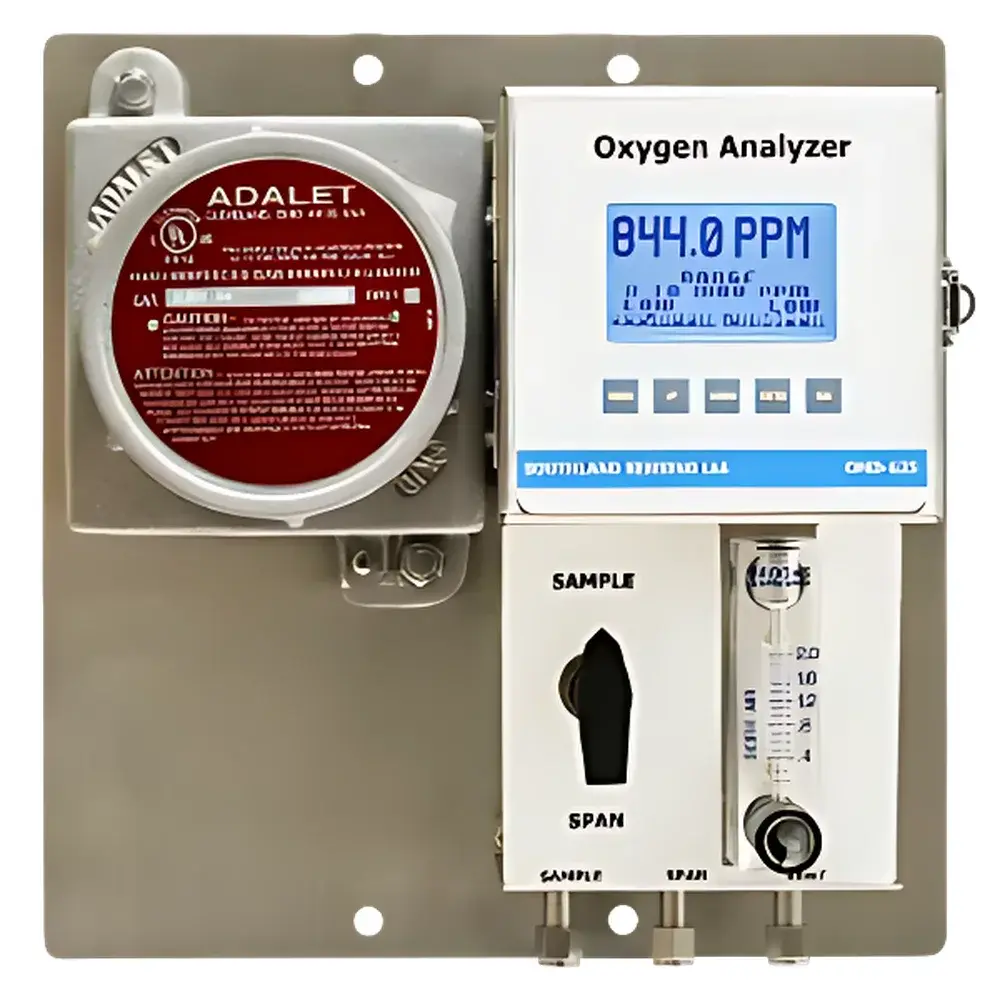
ADEV OMD-625 Intrinsically Safe Online Micro-Oxygen Analyzer
| Brand | ADEV |
|---|---|
| Origin | USA |
| Manufacturer Type | Authorized Distributor |
| Product Origin | Imported |
| Model | OMD-625 |
| Price Range | USD 4,200 – 7,000 |
| Sensor Technology | Electrochemical Fuel Cell (ppm to % range) |
| Measurement Range Options | 0–1 ppm, 0–10 ppm, 0–100 ppm, 0–1,000 ppm, 0–10,000 ppm, 0–25%, 0–100% |
| Accuracy | < ±1% of reading |
| Response Time (t₉₀) | ≤15 s |
| Operating Temperature | 5–45°C (TO2 series), –20–45°C (PO2 series) |
| Pressure Range | 0–3 MPa inlet, vent to atmosphere |
| Sample Flow Rate | 0.25–2.5 L/min (recommended: 1.0 L/min) |
| Output Signal | 4–20 mA analog |
| Power Supply | 9–28 VDC |
| Enclosure Rating | Class I, Division 1, Groups B, C, D (UL/cUL listed) |
| Certifications | CE, ATEX/IECEx equivalent intrinsic safety (IS) approval |
| Display | Backlit LCD, 0.01 ppm resolution |
| Linearity | >0.995 across all ranges |
| Temperature & Pressure Compensation | Built-in |
| Alarm Outputs | 2 SPDT relays |
| Calibration | Span calibration using certified gas at ~80% of selected range |
| Wetted Materials | 316 stainless steel |
| Sensor Lifetime | 24 months at 25°C |
| Warranty | 12 months (instrument + sensor) |
| Compliance | Designed for GLP/GMP-relevant environments |
Overview
The ADEV OMD-625 Intrinsically Safe Online Micro-Oxygen Analyzer is a high-stability, field-deployable electrochemical analyzer engineered for continuous, real-time oxygen monitoring in hazardous and inert process environments. Utilizing proprietary Southland Sensing fuel cell sensor technology, the OMD-625 delivers trace-level detection down to 0.01 ppm O₂ and full-scale measurement up to 100% O₂—within a single, maintenance-optimized platform. Its core measurement principle relies on galvanic electrochemical reaction kinetics, where oxygen diffuses through a selective membrane and undergoes controlled reduction at the cathode, generating a current linearly proportional to partial pressure. This architecture ensures high reproducibility, minimal drift, and immunity to background gas interference from CO₂, H₂, He, N₂, Ar, and hydrocarbons—critical for applications involving ultra-high-purity gases or reactive process streams. The instrument is certified for installation in Class I, Division 1, Groups B, C, D hazardous locations per UL 913 and CSA E60079-11, enabling direct mounting in explosion-risk zones without external barriers.
Key Features
- Intrinsically safe design compliant with Class I, Div. 1, Groups B, C, D—no external safety barriers required
- Five selectable auto-ranging measurement spans: 0–1 ppm to 0–100%, configurable via front-panel switch or remote command
- Integrated temperature and pressure compensation algorithms ensure accuracy across dynamic process conditions
- Backlit high-resolution LCD display with 0.01 ppm readability and intuitive menu navigation via sealed tactile keys
- Dual SPDT relay outputs programmable for high/low alarm, fault, or maintenance alerts with latching/non-latching options
- 4–20 mA isolated analog output with HART® compatibility (optional) for integration into DCS, PLC, or SCADA systems
- Robust 316 stainless steel sample-wetted path rated for up to 3 MPa inlet pressure and compatible with aggressive inert and reducing atmospheres
- Modular sensor architecture: TO2-series (ppm-range, H₂S-tolerant up to 0.5%) and PO2-series (percent-range, extended temperature operation)
Sample Compatibility & Compliance
The OMD-625 is validated for continuous analysis of oxygen in inert carrier gases (N₂, Ar, He), hydrogen, carbon dioxide, natural gas, and nitrogen-hydrogen blends—without cross-sensitivity or catalytic poisoning. It meets ISO 8573-1:2010 (compressed air purity), ASTM D6299 (precision and bias in gas analysis), and supports alignment with FDA 21 CFR Part 11 requirements when paired with compliant data acquisition software. Its intrinsic safety certification eliminates the need for purged enclosures or flameproof housings in Zone 1/Division 1 installations. All wetted components conform to ASTM A269 and ASME BPE standards. The analyzer is supplied with documentation packages suitable for GMP validation protocols—including IQ/OQ templates, calibration certificates traceable to NIST, and material compliance declarations (RoHS, REACH).
Software & Data Management
While the OMD-625 operates as a standalone field instrument, its 4–20 mA output enables seamless integration into plant-wide asset monitoring systems. When connected to ADEV’s optional AegisLink™ configuration utility (Windows-based), users can perform remote span calibration verification, adjust damping filters, configure relay logic, and export timestamped calibration logs. Audit trails include operator ID, date/time stamp, gas concentration, ambient T/P values, and sensor status flags—supporting GLP-compliant record retention. The device stores last-calibration metadata internally and supports manual or automated calibration scheduling aligned with ISO/IEC 17025 laboratory practices.
Applications
- Monitoring residual oxygen in high-purity nitrogen blanketing systems for semiconductor wafer fabrication and photolithography tools
- Trace O₂ control in hydrogen purification loops (PSA, membrane separation) and ammonia synthesis purge streams
- Leak detection and integrity verification in cryogenic air separation units (ASUs) and liquid nitrogen storage systems
- Process safeguarding in ethylene oxide sterilization chambers and pharmaceutical inerting vessels
- Quality assurance in metal heat-treating furnaces (vacuum brazing, sintering) and aerospace composite curing ovens
- Real-time oxygen ingress monitoring in fiber optic cable jacket extrusion and solar cell encapsulant production lines
FAQ
What sensor technologies are supported by the OMD-625, and how do they differ?
The OMD-625 accommodates two interchangeable sensor families: TO2-series fuel cells for sub-ppm to low-ppm measurement (0–1,000 ppm), optimized for inert and reducing gas matrices; and PO2-series sensors for percent-level ranges (0–100%), featuring extended thermal stability and compatibility with higher H₂S concentrations.
Is pressure compensation mandatory for accurate readings?
Yes—built-in absolute pressure sensing and real-time compensation are enabled by default. Uncorrected measurements under variable backpressure will deviate beyond stated accuracy specifications.
Can the OMD-625 be used in hydrogen service without catalyst poisoning?
Yes. The TO2-1x and TO2-2x sensors employ non-catalytic electrode formulations and selective membranes that resist hydrogen-induced signal suppression, verified per ASTM D7165 test protocols.
What is the recommended calibration frequency under continuous operation?
Southland Sensing recommends quarterly span calibration using certified zero and span gases traceable to NIST. More frequent checks are advised after exposure to condensable vapors, particulates, or sudden pressure transients.
Does the analyzer support digital communication protocols such as Modbus RTU or Profibus?
The base model provides analog 4–20 mA output only. Optional HART-enabled versions (OMD-625-H) support digital configuration and diagnostics over the same wiring pair, but native Modbus or Profibus requires an external protocol converter.