
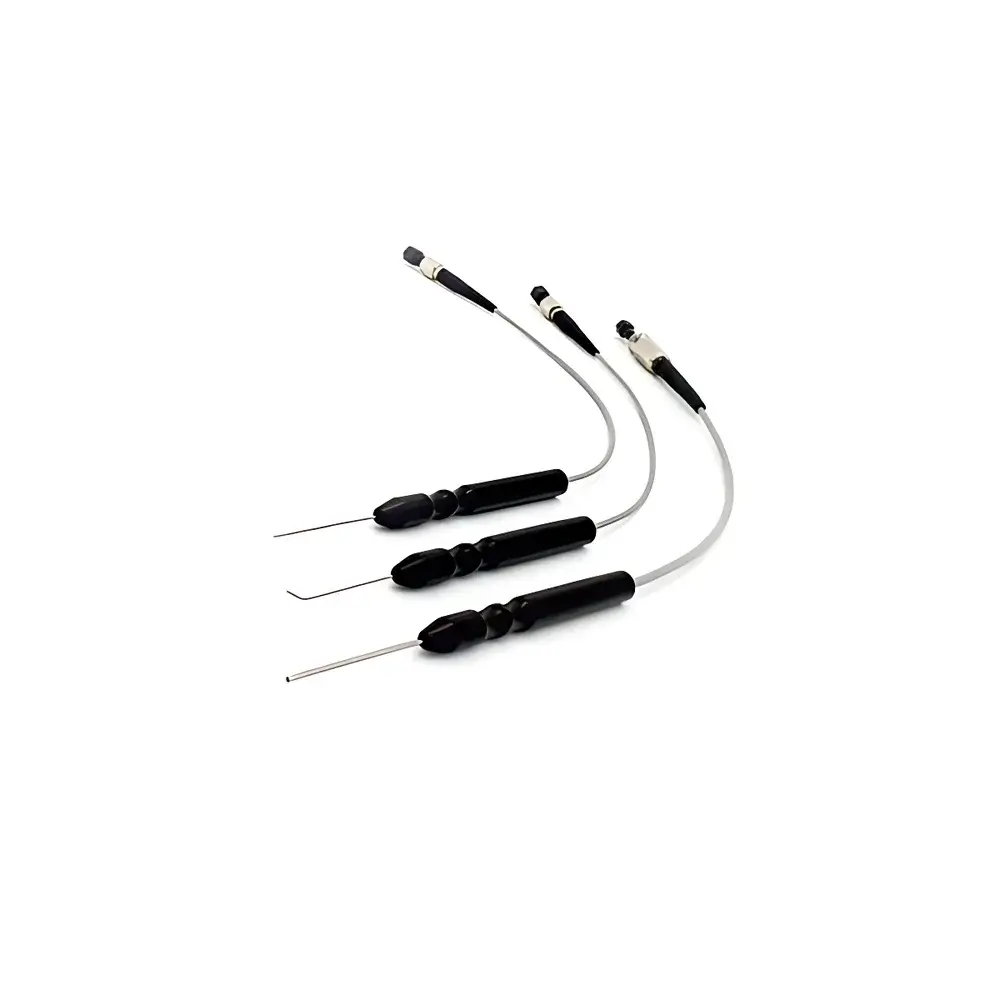
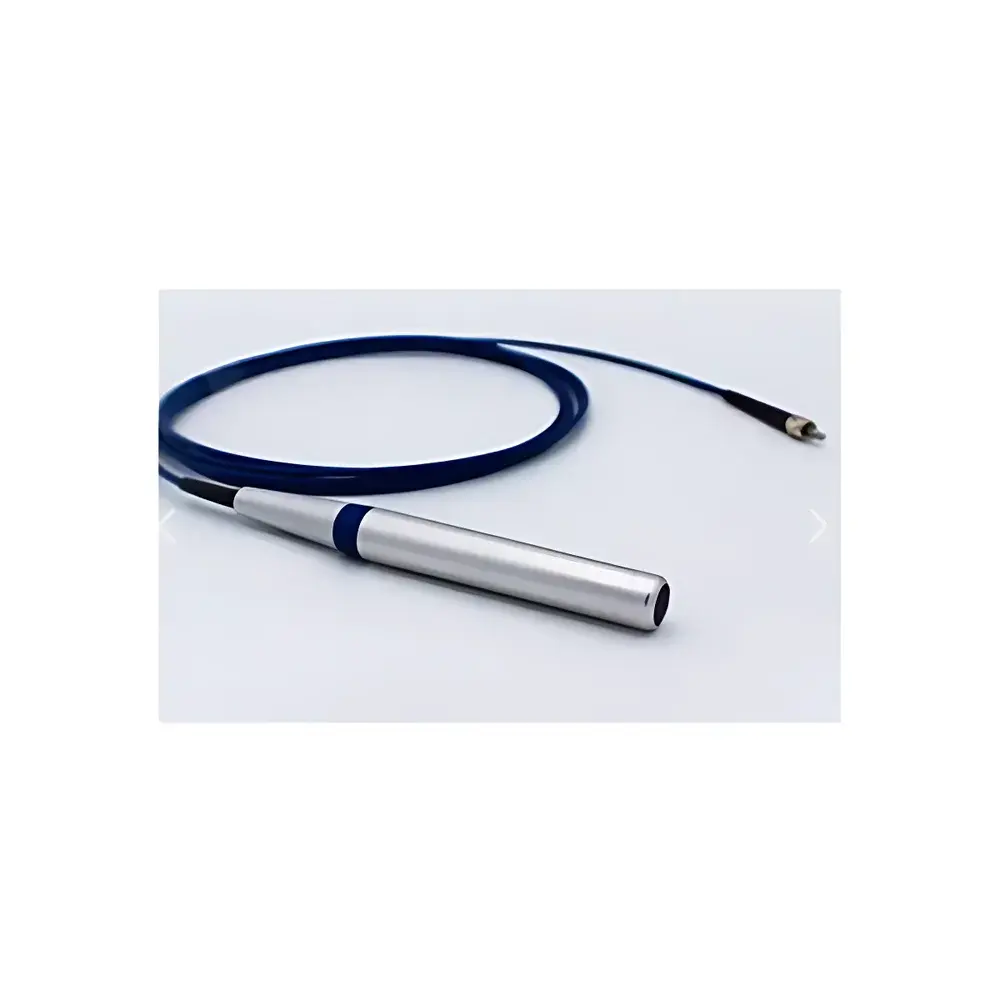
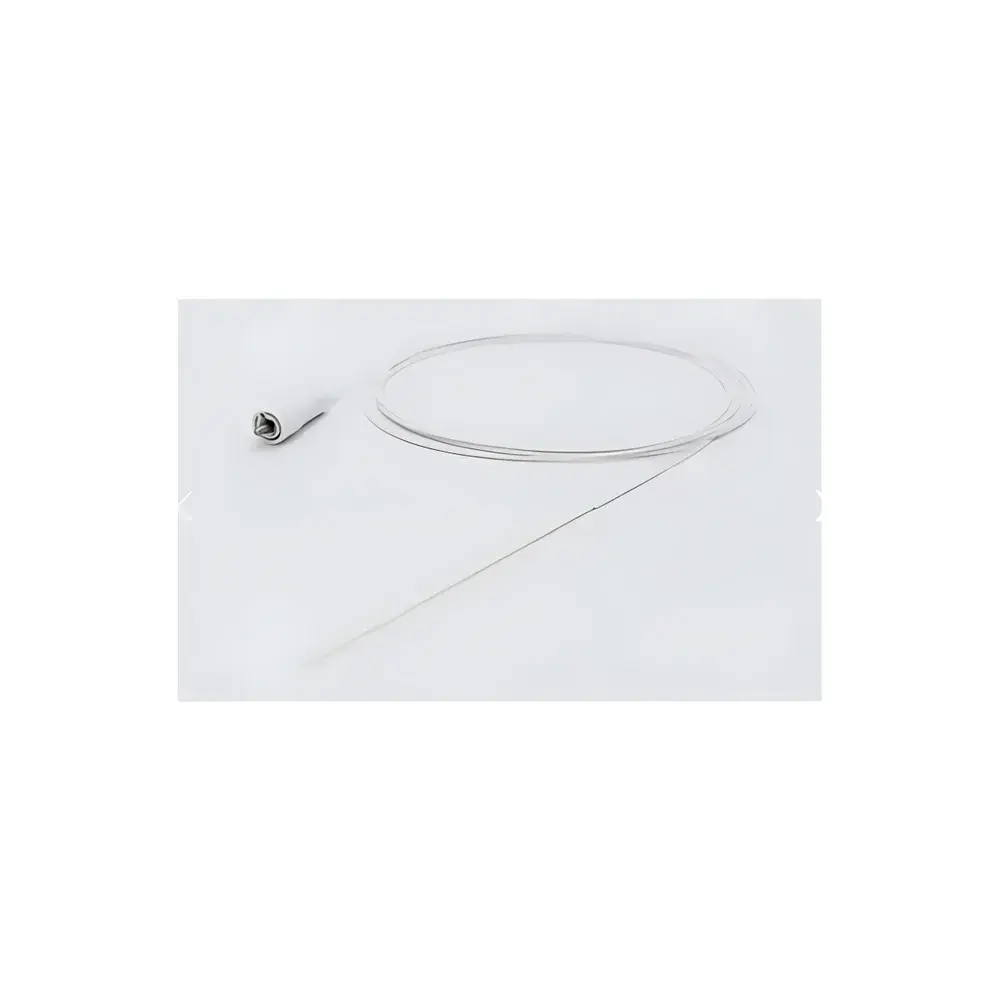
Advanced Fiber Tools AS-IR Fiber Optic Cable for NIR Spectroscopy
| Brand | Advanced Fiber Tools |
|---|---|
| Origin | Germany |
| Detector Type | CMOS |
| Spectral Range | 1500–2600 nm |
| Resolution | 2300 |
| Sensitivity | 2000 |
| Core Material | Low-OH Fused Silica |
| Cladding Material | Fluorinated Fused Silica |
| Coating Options | Acrylate (−40°C to +85°C), Silicone (−40°C to +180°C), Polyimide (−190°C to +385°C) |
| Numerical Aperture | 0.22 ± 0.02 |
| Core/Clad Ratio | 1.1, 1.2, or 1.4 |
| Biocompatibility | ISO 10993-compliant |
| Sterilization Compatibility | ETO, Steam, Electron Beam, Gamma |
| Radiation & Laser Damage Resistance | Yes |
Overview
The Advanced Fiber Tools AS-IR Fiber Optic Cable is a high-performance, specialty optical fiber engineered for demanding near-infrared (NIR) and short-wave infrared (SWIR) spectroscopic applications in regulated laboratory, industrial process monitoring, and clinical diagnostic environments. Designed around a low-hydroxyl (low-OH) fused silica core and fluorinated fused silica cladding, this fiber delivers exceptional transmission efficiency across the 1500–2600 nm spectral band—significantly outperforming conventional PCS (Plastic-Clad Silica) fibers in both attenuation and thermal stability. Its fundamental operating principle relies on total internal reflection within a precisely controlled refractive index profile, enabling robust light guidance under conditions of mechanical stress, thermal cycling, and exposure to aggressive chemical agents. The AS-IR fiber is not a passive light conduit but an integral component of calibrated spectroscopic systems—where spectral fidelity, signal-to-noise ratio, and long-term repeatability are governed by fiber transmission uniformity, modal stability, and polarization maintenance characteristics.
Key Features
- Optimized transmission window from 1500 nm to 2600 nm with minimal OH⁻ absorption peaks, ensuring high throughput in critical SWIR bands used for moisture, hydrocarbon, and polymer analysis
- Three certified coating options—acrylate, silicone, and polyimide—each validated for continuous operation across distinct thermal envelopes (−190°C to +385°C), enabling deployment in cryogenic instrumentation, high-temperature reactors, and vacuum-compatible optical benches
- Controlled numerical aperture of 0.22 ± 0.02 ensures compatibility with standard spectrometer slit optics and coupling lenses while maintaining sufficient étendue for efficient light collection from diffuse or low-brightness sources
- Core/clad ratios of 1.1, 1.2, or 1.4 provide application-specific flexibility: higher ratios support enhanced power handling for laser-based sampling; lower ratios improve mode field uniformity for interferometric or coherence-sensitive measurements
- Manufactured and tested under an EN ISO 13485:2016-certified quality management system, with full traceability of raw materials, draw parameters, and post-processing validation
- Biocompatibility verified per DIN EN ISO 10993-1, -5, and -10 series for direct tissue contact applications—including endoscopic spectroscopy, intraoperative optical biopsy, and photodynamic therapy light delivery
Sample Compatibility & Compliance
The AS-IR fiber is compatible with solid, liquid, and gaseous samples when integrated into reflection probes, immersion probes, flow cells, or attenuated total reflectance (ATR) accessories. Its inert fused silica composition prevents catalytic interference with reactive analytes such as halogenated solvents, strong acids, or peroxides. All coating variants comply with USP Class VI biological safety requirements and pass extractables testing per ISO 10993-12. For regulated environments—including pharmaceutical QC labs and medical device OEMs—the fiber supports full audit trails for sterilization cycles (validated per ISO 11135 for ethylene oxide, ISO 17665 for steam, and ISO 11137 for gamma irradiation). It meets radiation hardness requirements per MIL-STD-883H Method 1019.8 for space-qualified instrumentation and demonstrates no measurable degradation after >10⁶ pulses at 1064 nm, 10 ns, 10 Hz (1 J/cm² fluence).
Software & Data Management
While the AS-IR fiber itself is hardware-only, its integration into spectroscopic platforms requires rigorous calibration protocols. Advanced Fiber Tools provides wavelength-dependent transmission reference spectra (NIST-traceable upon request) and recommends use with spectrometers supporting dark-current subtraction, pixel binning, and real-time baseline correction. When deployed in GLP/GMP workflows, the fiber’s lot-specific certification documents—including spectral attenuation curves, NA verification reports, and biocompatibility dossiers—must be archived alongside instrument qualification records (IQ/OQ/PQ). The fiber supports FDA 21 CFR Part 11 compliance when paired with spectrometer software offering electronic signatures, audit logging, and data integrity controls (e.g., Ocean Insight OceanView, Avantes AvaSoft, or Thermo Fisher OMNIC).
Applications
- Pharmaceutical solid-state analysis: quantification of polymorphic forms and hydrate content via NIR reflectance spectroscopy (ASTM E1655, USP <857>)
- Industrial process control: real-time monitoring of moisture in granulation, polymer melt viscosity in extrusion lines, and ethanol concentration in fermentation tanks
- Clinical diagnostics: non-invasive tissue oximetry and metabolic profiling using diffuse reflectance spectroscopy at 1600–2400 nm
- Environmental sensing: detection of hydrocarbons in soil leachates and dissolved organic carbon in wastewater via SWIR absorption
- Research-grade FT-NIR and dispersive spectrometers requiring stable, low-drift light delivery over extended acquisition periods (>8 hours)
- Laser-induced breakdown spectroscopy (LIBS) light collection where UV-NIR broadband transmission and laser damage resistance are mandatory
FAQ
Is this fiber suitable for use with pulsed lasers above 1 W average power?
Yes—provided appropriate beam conditioning and coupling optics are used. The low-OH fused silica core exhibits a laser-induced damage threshold (LIDT) of ≥5 GW/cm² for nanosecond pulses at 1550 nm and ≥2 GW/cm² at 2000 nm (ISO 21254-1 tested).
Can I integrate this fiber into an existing Ocean Insight or Avantes spectrometer system?
Yes—standard SMA 905 connectors are available; custom FC/PC or ST terminations can be supplied. Coupling efficiency loss relative to vendor-supplied fibers is typically <3% when aligned per ISO 10110-3 specifications.
Does Advanced Fiber Tools provide calibration certificates with each shipment?
Yes—each spool includes a Certificate of Conformance listing lot number, draw date, spectral attenuation at 1550/1900/2300 nm, NA measurement, and biocompatibility summary. NIST-traceable spectral calibration files are available as optional add-ons.
What is the minimum bend radius for the polyimide-coated variant during installation?
For sustained operation, the recommended dynamic bend radius is ≥25 mm; static bends may approach 15 mm without measurable increase in insertion loss (<0.1 dB/m).
Are custom lengths and connector configurations available for OEM integration?
Yes—custom cut lengths (0.5 m to 50 m), dual-fiber bifurcated bundles, and hermetically sealed feedthrough assemblies for vacuum chambers are routinely supplied under NDA to medical and aerospace OEMs.
Related Products






