
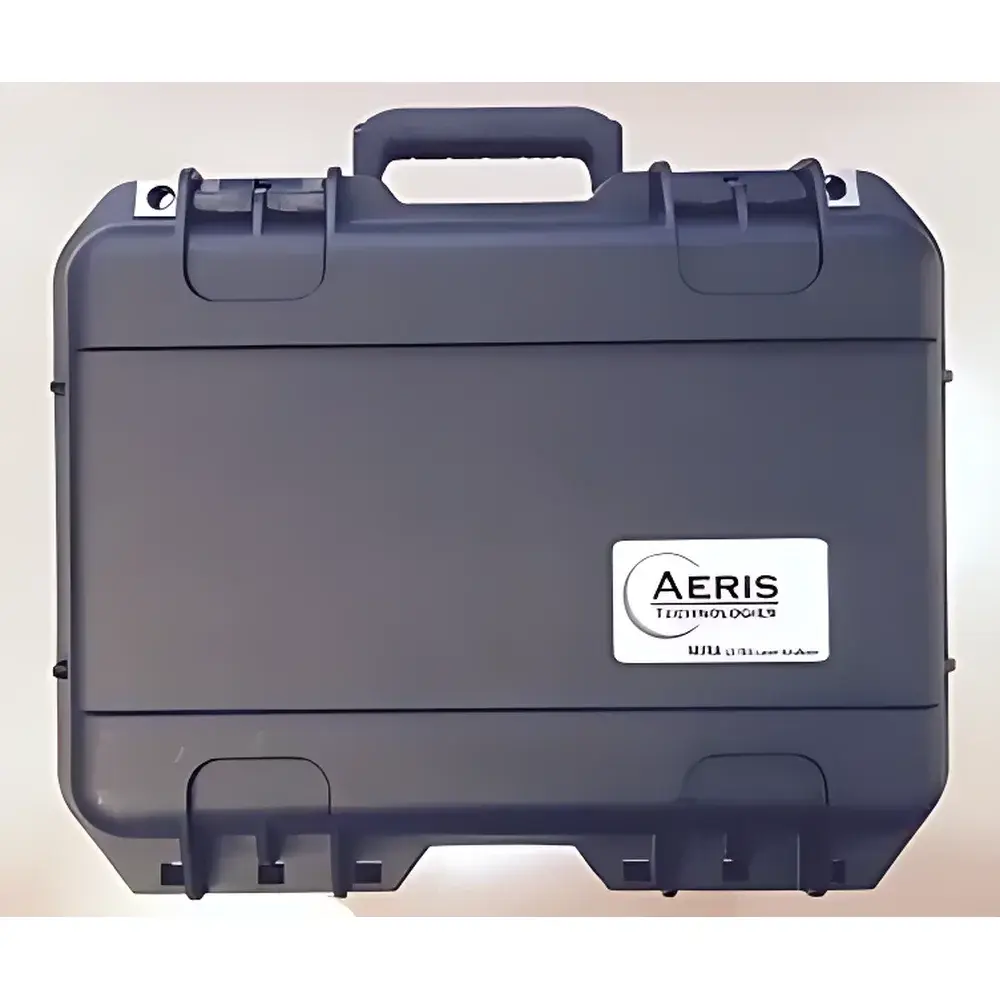
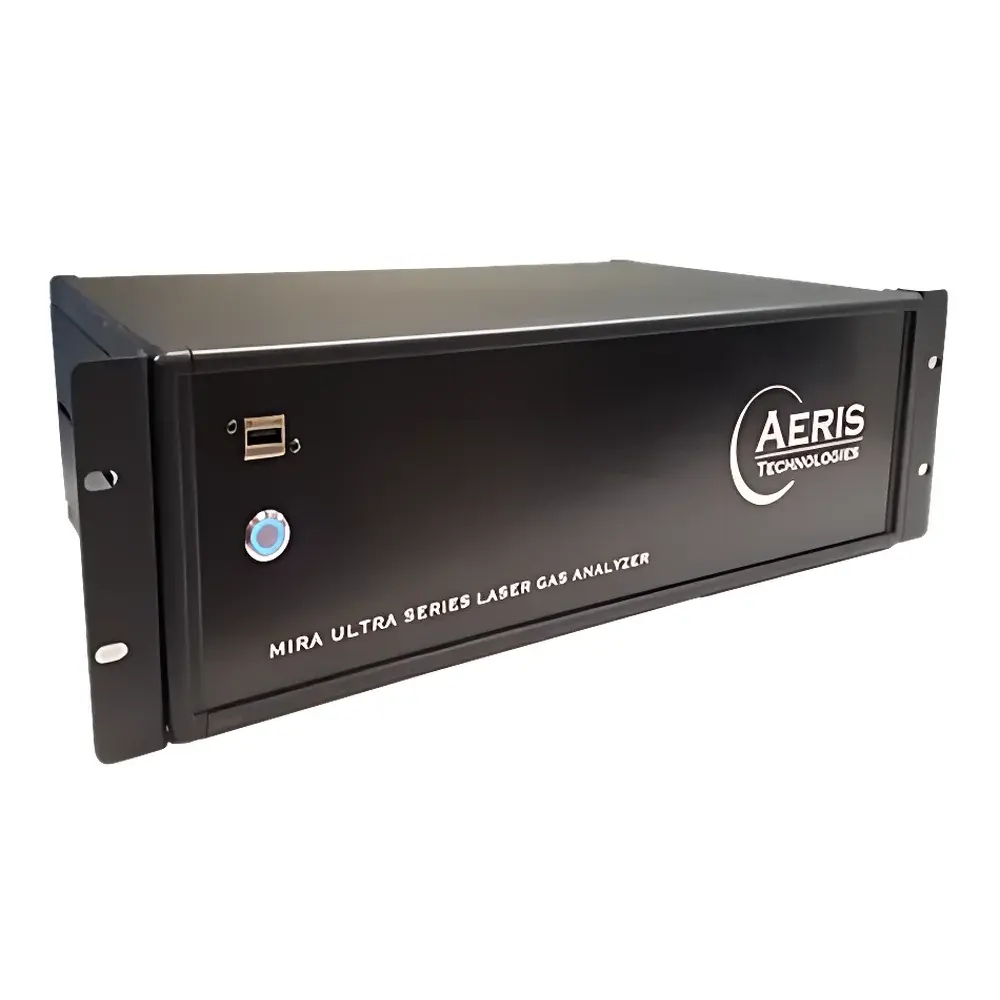
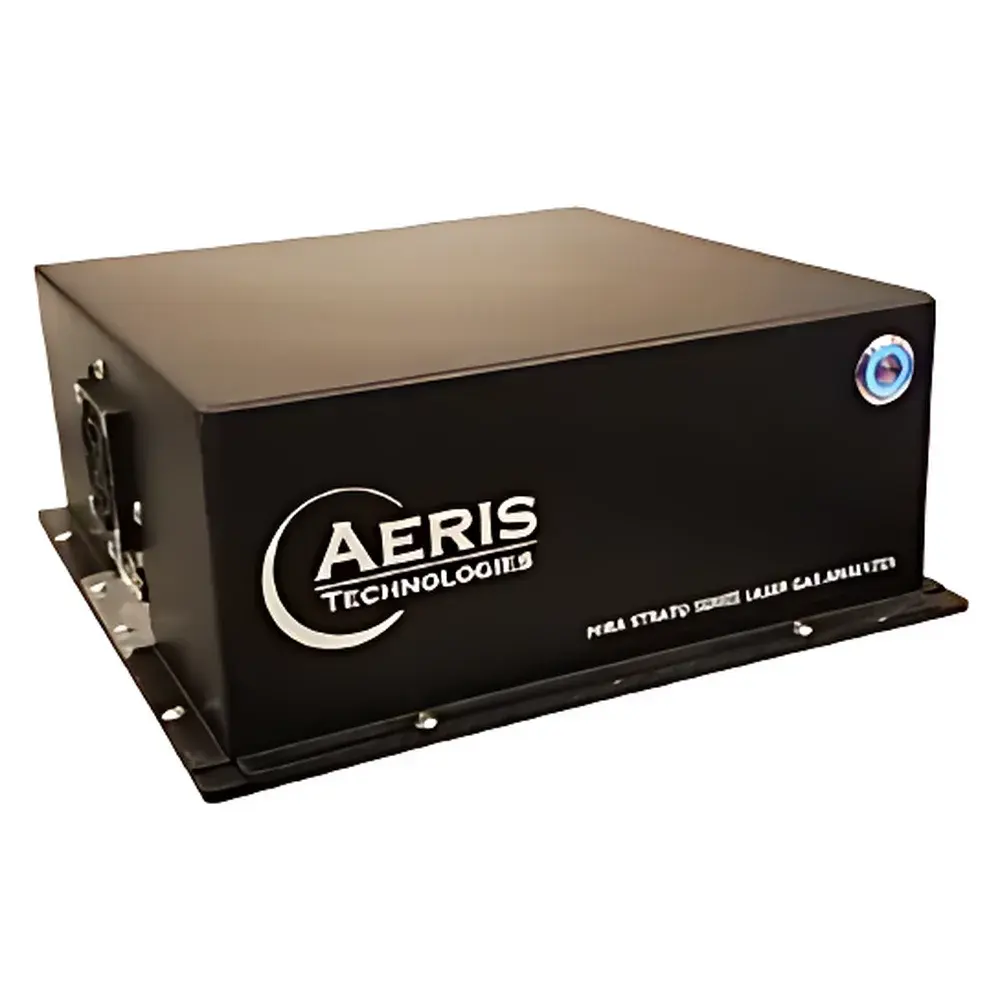
Aeris Technologies MIRA Propane Analyzer
| Brand | Aeris Technologies |
|---|---|
| Origin | USA |
| Manufacturer Type | Authorized Distributor |
| Origin Category | Imported |
| Model | MIRA Propane |
| Instrument Type | Portable |
| Detection Range | Configurable from ppb to ppm |
| Resolution | <3 ppb/s |
| Response Time | 1 s |
Overview
The Aeris Technologies MIRA Propane Analyzer is a field-deployable, high-precision gas analyzer engineered for quantitative, real-time measurement of propane (C3H8) in ambient air and industrial process streams. It employs tunable mid-infrared (MIR) laser absorption spectroscopy—leveraging propane’s strong, spectrally distinct fundamental vibrational absorption bands near 3.3 µm—to achieve laboratory-grade accuracy in a portable platform. Unlike near-infrared (NIR) or electrochemical sensors, MIR absorption delivers >1000× higher cross-section sensitivity for propane, enabling sub-ppb detection limits without pre-concentration or chemical derivatization. The optical design integrates a proprietary multi-pass absorption cell with no mirrors—eliminating alignment drift and contamination vulnerability—while achieving an effective optical path length of 15 meters within a compact 60 mL volume. This architecture ensures robustness, thermal stability, and rapid response (<1 s), making the MIRA suitable for dynamic field applications including fugitive emission surveys, atmospheric boundary layer studies, and combustion diagnostics.
Key Features
- Sub-ppb detection limit (σ < 3 ppb/s) with 1-second response time and <1-minute warm-up
- Simultaneous, co-located measurement of propane and water vapor (H2O) for direct dry-mole-fraction calculation—no external drying or post-processing correction required
- Dual programmable sample inlets: one for active sampling, the other configurable for periodic zero-gas referencing or differential synchronous measurement
- Proprietary differential signal processing algorithm compensates for thermal drift, enabling long-term stability at ppt-level baseline precision
- Integrated sampling pump, rechargeable Li-ion battery (6 h runtime for MIRA Pico), and low-power operation (15–25 W depending on model)
- Multiple form factors: handheld (MIRA Pico), benchtop/portable (MIRA Ultra), rack-mount (MIRA Ultra Rack), and UAV-compatible (MIRA Strato, 2 kg with GPS and RS-232 @ 10 Hz)
- Communication interfaces: Wi-Fi, USB, RS-232, and optional analog output; onboard 32 GB storage (expandable); data logging at 1–10 Hz
- GPS-enabled geotagging with .kml export for spatial visualization in Google Earth
Sample Compatibility & Compliance
The MIRA Propane Analyzer operates across a wide environmental envelope (10–40 °C, 10–95% RH, non-condensing) and supports direct sampling of ambient air, stack effluents, and natural gas mixtures without conditioning. Its MIR-based methodology complies with the physical measurement principles referenced in ASTM D6420 (standard test method for determination of gaseous compounds by GC), ISO 13864 (occupational health—gas detection performance requirements), and EPA Method TO-15 (for VOC speciation support). While not a certified reference method per se, its traceability to NIST-traceable calibration standards and documented linearity (R² > 0.9999 over 5 orders of magnitude) supports use in GLP-compliant monitoring programs. The dual-inlet zero-reference architecture satisfies internal quality control requirements aligned with ISO/IEC 17025 clause 7.7 (monitoring data validity).
Software & Data Management
Aeris provides the MIRA Control Suite—a cross-platform application for instrument configuration, real-time visualization, spectral diagnostics, and automated report generation. All models support timestamped, metadata-rich data export in CSV and NetCDF formats, with embedded audit trails for parameter changes and calibration events. The software enforces role-based access control and logs all user actions, supporting compliance with FDA 21 CFR Part 11 for electronic records and signatures when deployed in regulated environments. Firmware updates are delivered via secure HTTPS, and remote diagnostics are enabled through encrypted Wi-Fi or Ethernet connections. Data integrity is preserved via cyclic redundancy checks (CRC) on all transmitted packets and write-protected memory partitions.
Applications
- Fugitive methane/propane leak detection in oil & gas infrastructure (well pads, compressor stations, pipelines)
- Atmospheric chemistry research: vertical profiling via drone/UAV platforms (MIRA Strato), eddy covariance flux studies, and urban VOC source apportionment
- Combustion efficiency analysis in engines, turbines, and industrial burners—quantifying unburnt hydrocarbon slip
- Natural gas quality monitoring during transmission and distribution, including odorant (e.g., mercaptan) interference assessment
- Environmental impact assessments for landfill gas, biogas upgrading, and agricultural emissions
- Mobile monitoring campaigns using vehicle-mounted MIRA Ultra systems with synchronized GPS and inertial navigation
FAQ
What calibration standards are required for routine operation?
The MIRA incorporates an internal zero-reference channel and requires only periodic verification against certified propane-in-air standards (e.g., NIST-traceable 100 ppb or 1 ppm cylinders) every 3–6 months under typical field use.
Can the analyzer distinguish propane from other C3 hydrocarbons like propylene?
Yes—the mid-infrared fundamental band at ~3.3 µm exhibits sufficient spectral selectivity for propane due to its unique rovibrational structure; cross-sensitivity to propylene is <0.3% under standard conditions.
Is the system compatible with continuous unattended operation?
All Ultra and Strato variants support 24/7 operation with external power; the Pico model is optimized for intermittent survey use but can run continuously with auxiliary power.
How is water vapor interference handled during humid conditions?
H2O is measured simultaneously and in real time; the software applies first-principles radiative transfer modeling to compute dry-mole-fraction propane concentration without empirical correction factors.
Does the MIRA meet explosion-proof certification requirements for hazardous areas?
The base unit is rated for Class I, Division 2 environments; intrinsically safe (IS) variants with ATEX/IECEx certification are available upon request for Zone 1/2 deployment.







