
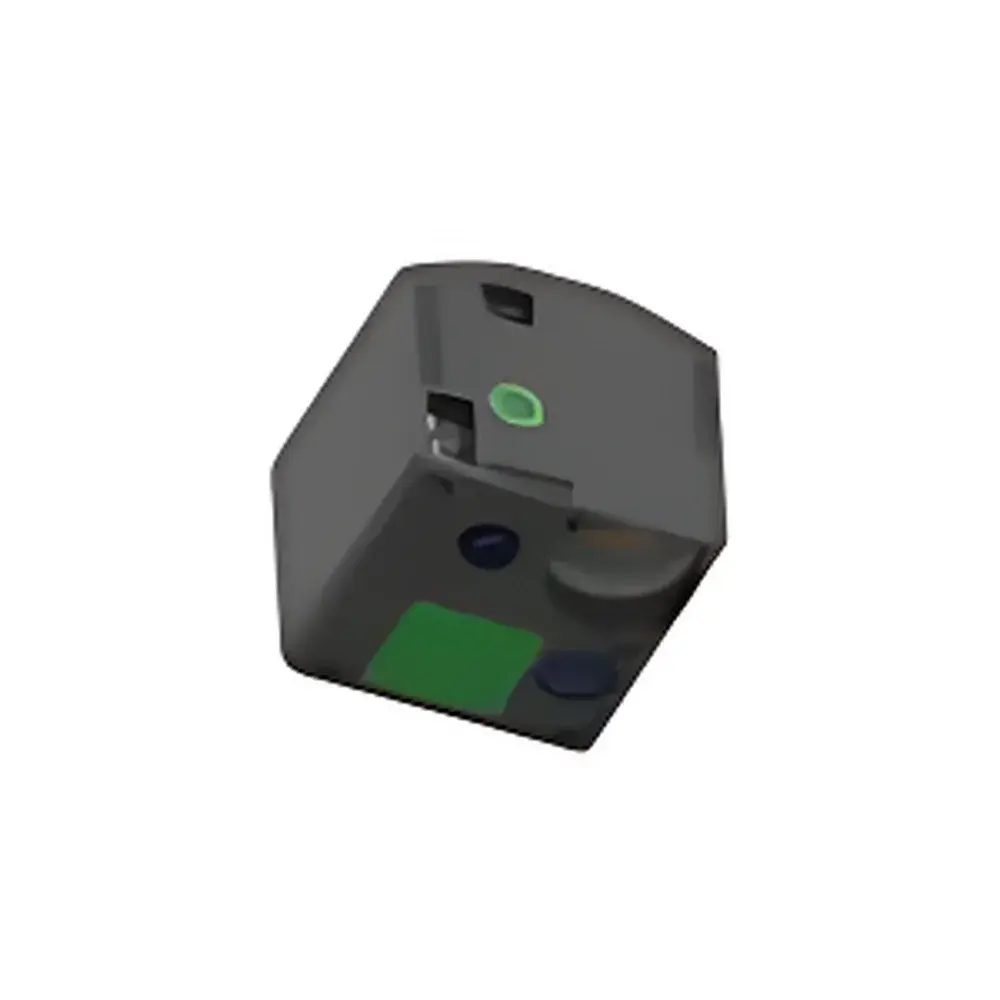
AERO X20P-LIR Airborne LiDAR-Infrared-Hyperspectral Imaging System
| Brand | AERO |
|---|---|
| Origin | Beijing, China |
| Model | X20P-LIR |
| Spectral Range | 350–1000 nm (VIS-NIR) + 905 nm (LiDAR) + 7.5–13.5 µm (MWIR/LWIR) |
| Spectral Resolution | ≥2 cubes/s (1886 × 1886 pixels per cube) |
| Spatial Resolution (IFOV) | ≤0.008° |
| Field of View (TFOV) | 0.008° |
| Frame Rate | ≥2 hyperspectral cubes per second |
| Image Format | 1886 × 1886 pixels per spectral cube |
| Thermal Imaging | 640 × 512 uncooled microbolometer, radiometrically calibrated |
| LiDAR Range | 450 m (@80% reflectivity) |
| Platform Compatibility | UAV-mounted (ground & airborne operation) |
| Onboard Systems | Integrated IMU, real-time georeferencing engine, solid-state storage, embedded control unit |
Overview
The AERO X20P-LIR is an integrated airborne remote sensing platform engineered for synchronized acquisition of hyperspectral reflectance, pulsed time-of-flight LiDAR topography, and calibrated thermal infrared emission data. Unlike conventional sequential or loosely coupled multisensor systems, the X20P-LIR employs a tightly synchronized optical architecture based on dispersive prism imaging—enabling simultaneous capture of VIS-NIR spectral radiance (350–1000 nm), discrete 905 nm laser ranging returns, and broadband thermal radiance across the 7.5–13.5 µm atmospheric window. Its core optical design leverages light-field imaging principles to eliminate geometric distortion and motion-induced smear, ensuring pixel-level spatial registration across all three modalities without post-acquisition co-registration artifacts. The system is designed for deployment on medium- to large-class UAVs with payload capacities ≥3.2 kg and power budgets ≥120 W, supporting both survey-grade geospatial mapping and process-level material characterization in environmental monitoring, precision agriculture, mineral exploration, and infrastructure inspection.
Key Features
- Triple-modality synchronization: Real-time fusion of hyperspectral cubes (325 bands @ 1886 × 1886 px), single-pulse LiDAR point clouds (450 m range, 5 cm vertical accuracy), and radiometrically calibrated thermal imagery (640 × 512 px, NETD < 50 mK).
- Dispersive prism-based hyperspectral imaging: Delivers high-fidelity spectral sampling with minimal stray light and no moving parts—optimized for UAV vibration environments.
- Embedded inertial measurement unit (IMU) with GNSS-RTK interface: Enables direct georeferencing of all datasets at ≤10 cm horizontal and ≤5 cm vertical positional uncertainty under optimal conditions.
- Onboard processing architecture: Includes FPGA-accelerated spectral calibration, radiometric correction, and lossless compression (CCSDS 122.0-B-1 compliant), reducing downlink bandwidth requirements by >65%.
- Ruggedized airframe integration: Designed to ISO 10322-2 mechanical shock and MIL-STD-810H vibration specifications; operational temperature range: −10 °C to +50 °C.
Sample Compatibility & Compliance
The X20P-LIR does not require physical sample contact or preparation—operating exclusively in passive/active remote sensing mode. It complies with international electromagnetic compatibility standards (IEC 61000-6-3, IEC 61000-6-4) and meets Class 1M laser safety requirements per IEC 60825-1:2014 for its 905 nm LiDAR subsystem. All thermal calibration procedures adhere to ASTM E1933-19 (Standard Test Methods for Measuring and Compensating for Emissivity Using Infrared Imaging Systems). Hyperspectral radiometric calibration traceability follows NIST-traceable blackbody and integrating sphere protocols. Data provenance and processing logs are structured to support GLP-compliant workflows, including audit-ready metadata embedding (ISO 19115-3 compliant XML) and optional 21 CFR Part 11–compliant digital signature modules.
Software & Data Management
The AERO HyperFusion Suite provides end-to-end workflow support—from mission planning and sensor configuration to orthorectification, spectral unmixing (using constrained non-negative matrix factorization), and LiDAR-thermal-hyperspectral data fusion. All raw data are stored in HDF5 format with embedded geotags, IMU timestamps, and calibration coefficients. Batch processing pipelines support ENVI-compatible BIL/BIP formats and export to GeoTIFF with embedded coordinate reference system (EPSG:4326 or user-defined UTM zone). The software includes automated cloud-shadow detection, atmospheric correction (QUAC and FLAASH modules), and spectral library matching against USGS, JPL, and ECOSTRESS reference sets. Exported products meet FAO’s SEPAL interoperability standards for land-cover classification and IPCC Tier 2 reporting frameworks.
Applications
- Vegetation stress phenotyping: Detection of early water deficit, nitrogen deficiency, and pathogen infection via chlorophyll fluorescence proxies (e.g., SIF at 760 nm) and thermal anomalies.
- Mineralogical mapping: Discrimination of clay species (kaolinite, smectite), carbonates, and sulfides using diagnostic absorption features between 2100–2350 nm (not covered by this model but supported via external SWIR add-on).
- Urban heat island analysis: Co-registered thermal emissivity maps overlaid with vegetation indices (NDVI, NDWI) and building height models derived from LiDAR.
- Post-wildfire assessment: Burn severity classification using dNBR and RdNBR indices combined with thermal persistence metrics and canopy structure recovery indicators.
- Power infrastructure monitoring: Thermographic detection of overheated transformers and insulators, correlated with spectral signatures of corona discharge and surface contamination.
FAQ
Is the X20P-LIR certified for commercial UAV operations in EASA or FAA jurisdictions?
Yes—the system meets EASA STS-02-01 and FAA AC 107-2A weight, power, and RF emission criteria for Category 2 BVLOS operations when integrated with approved UAV platforms.
Can the thermal and hyperspectral data be acquired simultaneously without temporal offset?
Yes—hardware-level triggering ensures sub-millisecond synchronization across all three sensors; timestamp alignment is maintained within ±15 µs RMS jitter.
What level of radiometric accuracy is achieved for the 7.5–13.5 µm thermal channel?
Absolute radiometric uncertainty is ±1.5 K across the full dynamic range (−20 °C to +150 °C), validated against NIST-traceable blackbodies at 5 K, 25 K, and 50 K intervals.
Does the system support external GNSS-RTK base station input?
Yes—dual-frequency RTK input (GPS + GLONASS + Galileo) is accepted via RS232/USB-C with 10 Hz update rate and sub-centimeter positioning solution forwarding to the onboard georeferencing engine.
Are spectral calibration files updated in-field without returning to the factory?
Yes—users may upload new dark current, flat-field, and wavelength calibration vectors via the HyperFusion Suite; all calibrations are version-controlled and embedded in output HDF5 metadata.
Related Products




