
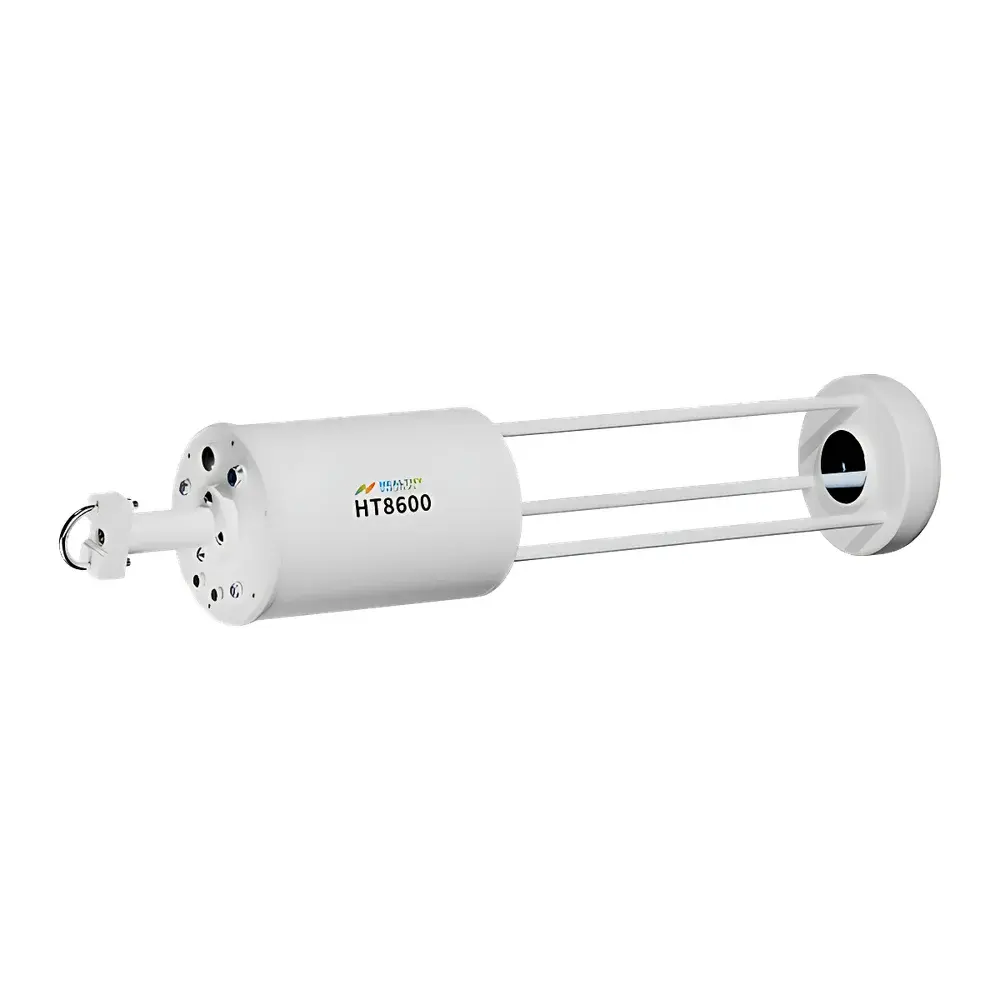
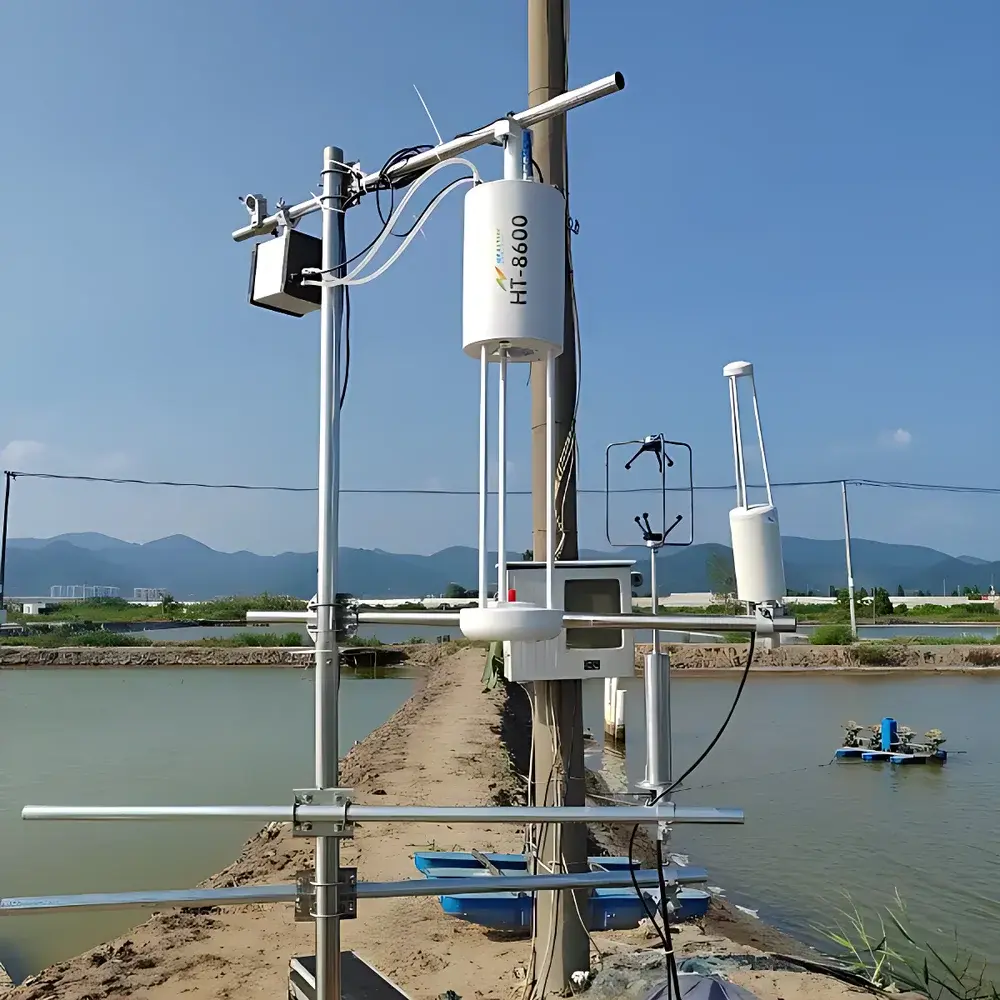
AeroNose HT8600 Open-Path Atmospheric Methane Analyzer
| Brand | AeroNose |
|---|---|
| Origin | Zhejiang, China |
| Manufacturer Type | Original Equipment Manufacturer (OEM) |
| Country of Origin | China |
| Model | HT8600 |
| Pricing | Available upon Request |
| Measurement Principle | Tunable Diode Laser Absorption Spectroscopy (TDLAS) |
| Target Gas & Range | CH₄: 0–15,000 ppb |
| Precision | <5 ppb (@0.1 s integration time, 2000 ppb CH₄, standard temperature & pressure) |
| Response Time (T₉₀) | <15 s |
| Detection Method | Real-time spectral absorption peak integration for trace gas concentration retrieval |
| Application Domain | Environmental monitoring, agricultural emissions assessment, industrial fugitive emission control |
Overview
The AeroNose HT8600 is an open-path, in-situ atmospheric methane (CH₄) analyzer engineered for high-fidelity, continuous, and non-intrusive monitoring of ambient methane concentrations. It employs Tunable Diode Laser Absorption Spectroscopy (TDLAS) — a well-established, physics-based optical technique that exploits the unique near-infrared absorption signature of methane at ~7.7 µm (1300 cm⁻¹), corresponding to fundamental vibrational-rotational transitions. Unlike extractive sampling systems, the HT8600 operates via an open optical path—typically 10–100 m in length—eliminating sample conditioning artifacts, catalytic surface losses, and transport delays. Its quantum cascade laser (QCL) source delivers narrow linewidth (<0.001 cm⁻¹), wavelength-stabilized radiation, enabling detection limits sub-5 ppb with 0.1-second temporal resolution under standard conditions (298 K, 1013 hPa). This architecture ensures metrological traceability to NIST-traceable reference spectra and supports long-term stability required for regulatory-grade environmental monitoring networks.
Key Features
- Open-path optical configuration: Eliminates inlet tubing, filters, dryers, and pumps—reducing maintenance, calibration drift, and measurement latency.
- Quantum cascade laser (QCL) source: Provides high spectral power density and intrinsic wavelength stability in the mid-infrared region where CH₄ exhibits strong, isolated absorption lines.
- Real-time spectral integration algorithm: Performs on-board Voigt-line fitting and baseline correction using least-squares minimization, rejecting interference from H₂O, CO₂, and pressure-broadening effects.
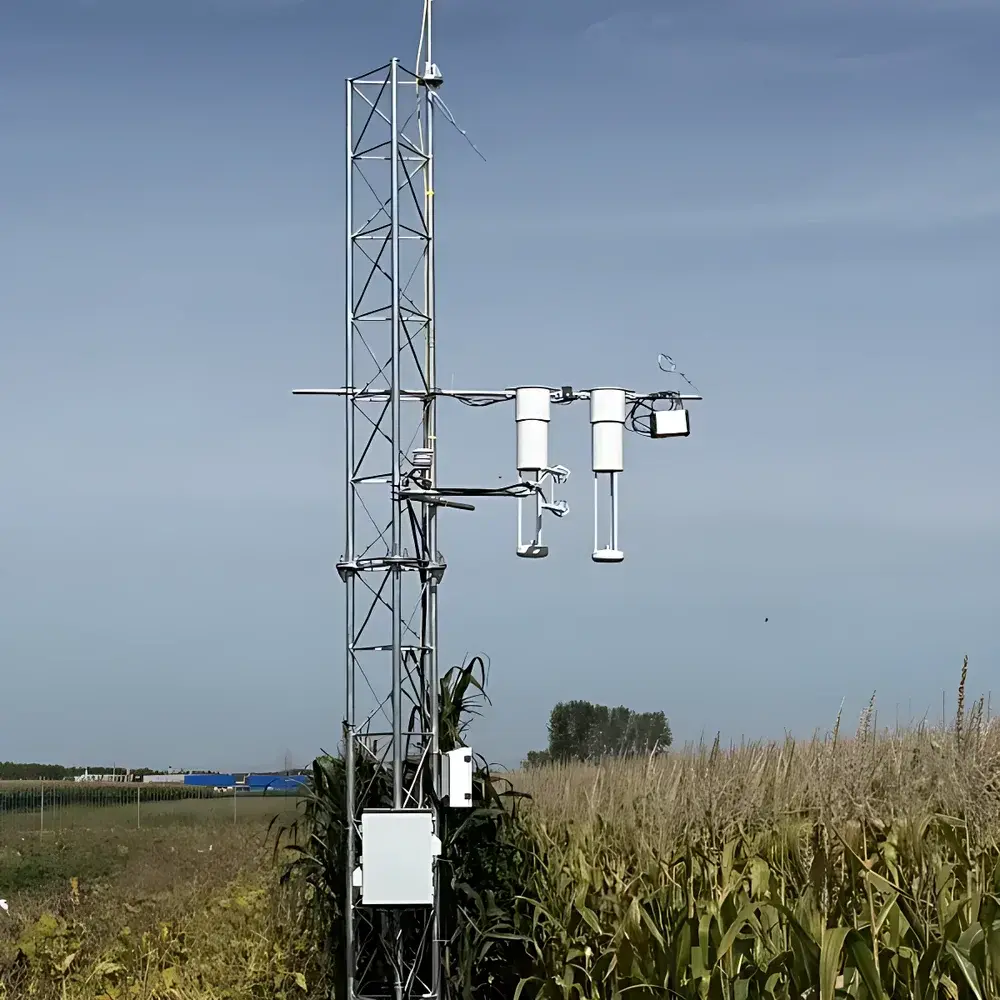
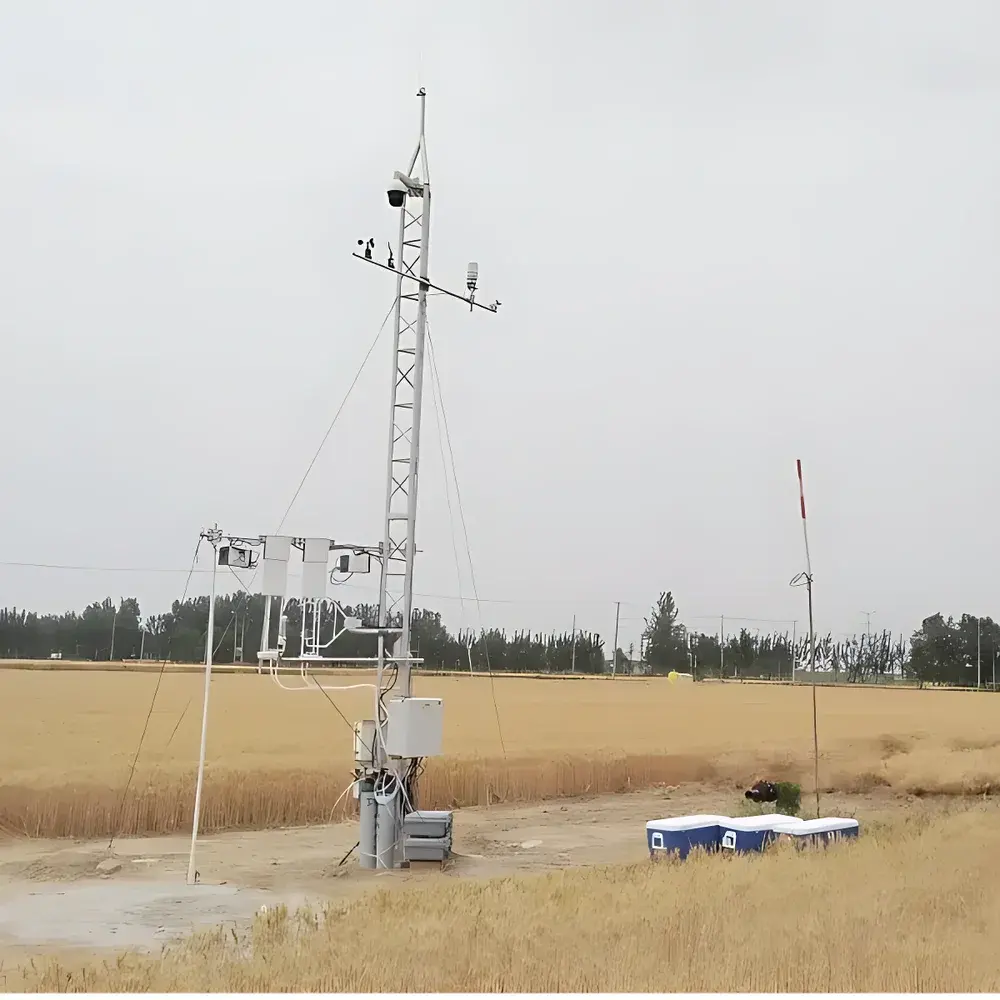
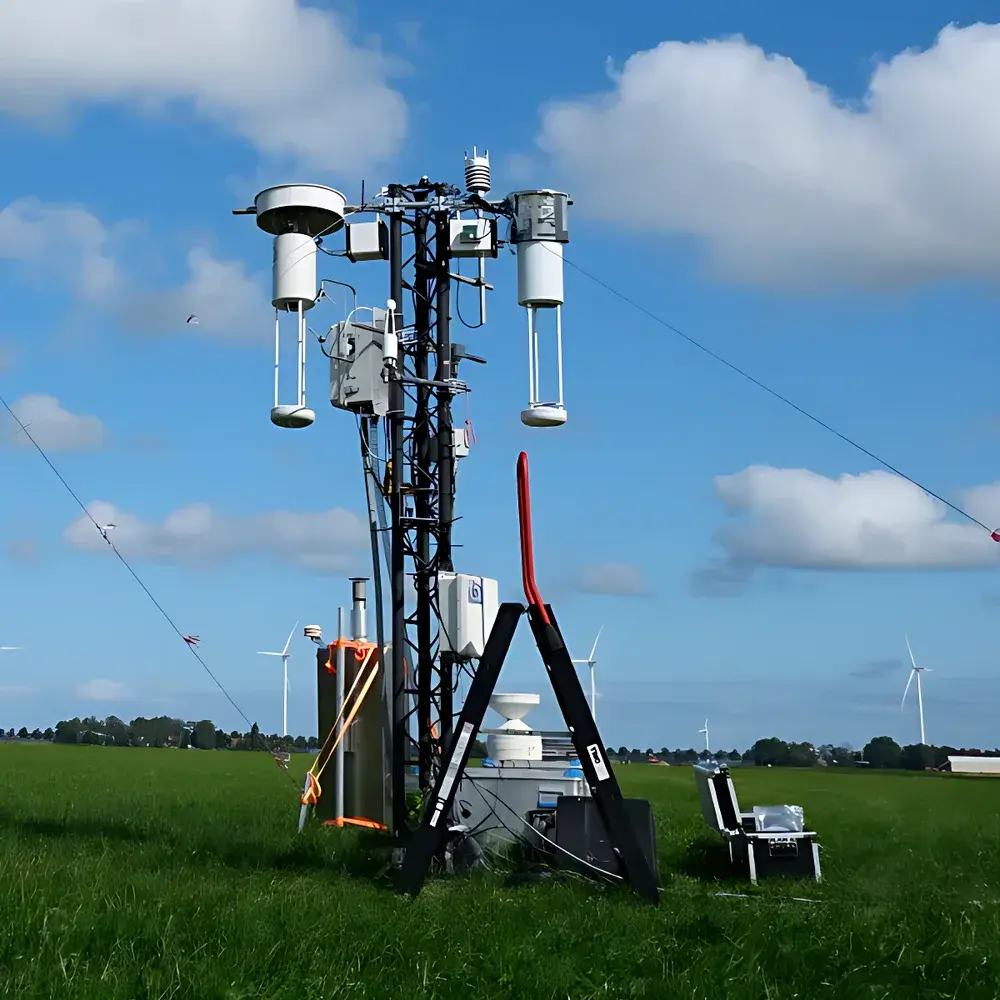
- Ruggedized field enclosure: IP65-rated housing with thermal management for operation across −20 °C to +50 °C ambient range; compatible with solar-powered deployments and mobile platforms (e.g., vehicles, drones, towers).
- Low power consumption: 7 days without recharge.
- Self-diagnostic capability: Continuous monitoring of laser current, detector signal-to-noise ratio (SNR), optical alignment status, and path-integrated transmittance.
Sample Compatibility & Compliance
The HT8600 measures path-averaged CH₄ concentration over its optical baseline—making it inherently representative of spatially distributed emissions (e.g., landfill perimeters, dairy barn plumes, pipeline corridors). It complies with core requirements of ISO 14064-3 (greenhouse gas verification), EPA Method TO-15 supplement for open-path TDLAS validation, and EU Monitoring Methodology for Methane Emissions (Commission Delegated Regulation (EU) 2023/2671). While not certified for Class I Div 1 hazardous locations, its design conforms to IEC 61326-1 (EMC) and IEC 61000-4 series immunity standards. Data output adheres to CFM (Climate FieldView Metadata) schema conventions and supports audit-ready logging aligned with GLP principles—including timestamped raw spectra, fitted parameters, and uncertainty propagation metadata.
Software & Data Management
The HT8600 integrates with AeroNose’s AERO-Link™ firmware suite, providing local edge processing and secure cloud synchronization via MQTT or HTTPS. All spectral acquisitions are stored with embedded GPS coordinates, barometric pressure, and ambient temperature—enabling post-hoc atmospheric correction (e.g., dry-air mole fraction conversion per WMO GAW recommendations). The system supports dual-mode operation: autonomous logging (SD card, 32 GB internal memory) or real-time telemetry with configurable reporting intervals (1 s to 1 hr). Export formats include NetCDF-4 (CF-compliant), CSV with ISO 8601 timestamps, and JSON-LD for interoperability with FAIR-aligned environmental data infrastructures. Audit trails meet FDA 21 CFR Part 11 requirements for electronic records, including user authentication, role-based access control, and immutable event logs.
Applications
- Urban and regional air quality networks: Long-term CH₄ trend analysis alongside CO, NOₓ, and PM₂.₅ to distinguish biogenic vs. fossil-source contributions using isotopic proxy correlations.
- Agricultural emissions quantification: Fence-line monitoring of livestock operations, rice paddies, and manure storage facilities to support IPCC Tier 2/3 inventories and mitigation strategy evaluation.
- Oil & gas infrastructure surveillance: Fugitive emission detection along compressor stations, well pads, and transmission corridors—supporting LDAR programs compliant with EPA OOOOa and EU Methane Strategy targets.
- Landfill and wastewater treatment plant monitoring: Boundary-layer flux estimation via gradient or inverse dispersion modeling using paired HT8600 units.
- Scientific campaign deployment: Mobile mapping on ground vehicles or UAV-mounted configurations for high-resolution emission hotspot identification and plume characterization.
FAQ
Does the HT8600 require calibration gas cylinders or zero-air generators?
No. The instrument uses absolute spectroscopic calibration based on HITRAN2020 line parameters and in-situ reference measurements. Periodic verification with certified permeation tubes or static cell checks is recommended every 6 months for QA/QC.
Can it operate unattended for extended periods in harsh outdoor environments?
Yes. Its solid-state optical path, passive thermal stabilization, and wide operating temperature range enable continuous deployment in rain, dust, and freeze-thaw cycles—validated over 18-month field trials across Zhejiang, Sichuan, and Inner Mongolia sites.
How is water vapor interference mitigated during humid conditions?
The QCL wavelength is selected within a CH₄-dominant spectral window exhibiting minimal H₂O cross-sensitivity. Additionally, the real-time fitting algorithm simultaneously solves for H₂O column density using adjacent weak water lines, enabling dynamic correction without external hygrometer input.
Is raw spectral data accessible for third-party analysis?
Yes. Full-resolution interferogram-equivalent spectra (wavenumber vs. intensity) are logged at 10 Hz and exportable via USB or network interface for advanced research applications including spectral library expansion and machine learning model training.
What communication protocols does the HT8600 support for integration into existing SCADA or IoT platforms?
Modbus TCP, ASCII serial (RS-232/485), and RESTful API endpoints are natively supported. Optional LTE-M/NB-IoT modem integration enables direct connection to AWS IoT Core or Azure IoT Hub without gateway hardware.







