
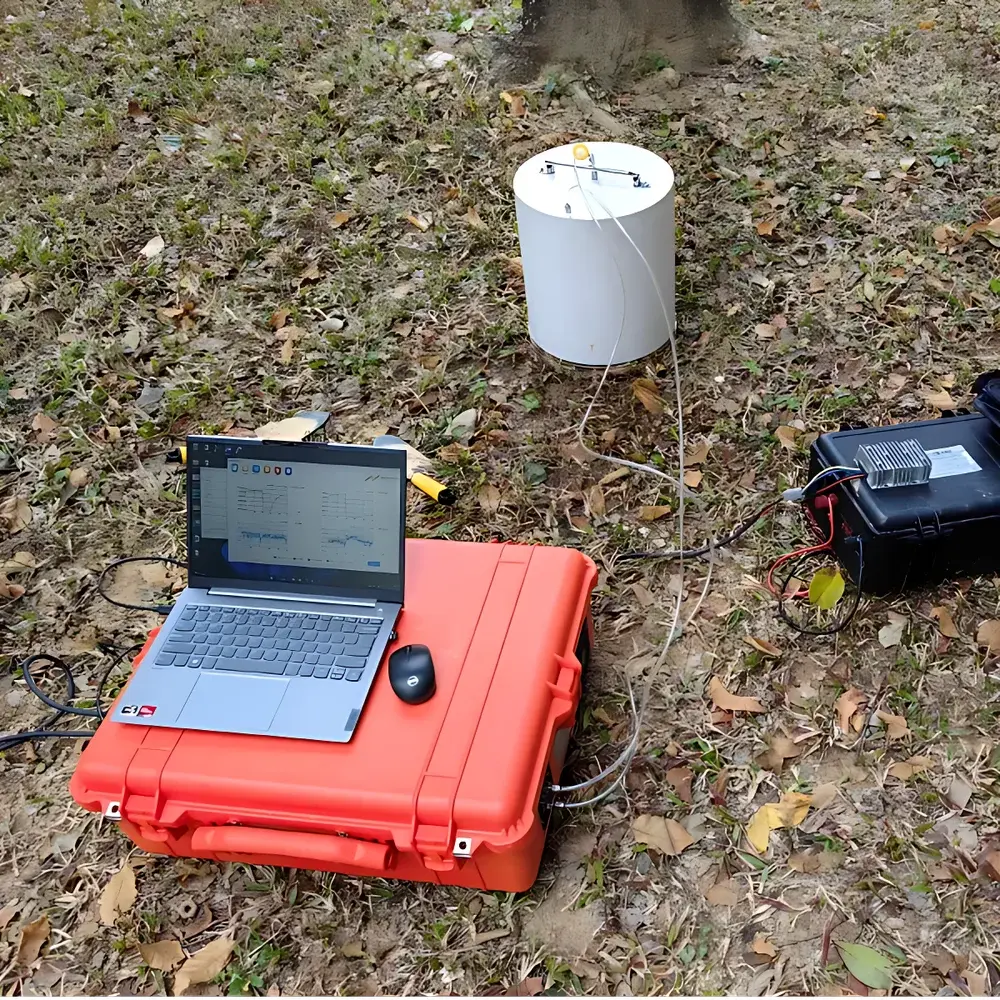
AeroNose HT8800 Series Portable High-Precision Greenhouse Gas Analyzer
| Brand | AeroNose |
|---|---|
| Origin | Zhejiang, China |
| Manufacturer Type | OEM Manufacturer |
| Country of Origin | China |
| Model | HT8800 Series |
| Price | USD 280,000 (FOB) |
| Measurement Principle | Tunable Diode Laser Absorption Spectroscopy (TDLAS) in Mid-Infrared Region |
| Target Gases | CO₂, CH₄, N₂O, H₂O |
| Detection Limits | CO₂: ±0.5 ppm (at 400 ppm) |
| CH₄ | ±3 ppb (at 2 ppm), ±0.5 ppb for HT8840 variant |
| N₂O | ±0.5 ppb (at 330 ppb), ±0.7 ppb for HT8820 variant |
| H₂O | ±10 ppm (at 10,000 ppm) |
| Measurement Ranges | CO₂: 0–5000 ppm |
| CH₄ | 0–15 ppm |
| N₂O | 0–6 ppm |
| H₂O | 0–30,000 ppm |
| Response Time (T₉₀) | ≤30 s |
| Operating Temperature | −10 °C to +45 °C |
| Storage Temperature | −25 °C to +50 °C |
| Relative Humidity | <95% RH, non-condensing |
| Atmospheric Pressure Range | 70–110 kPa |
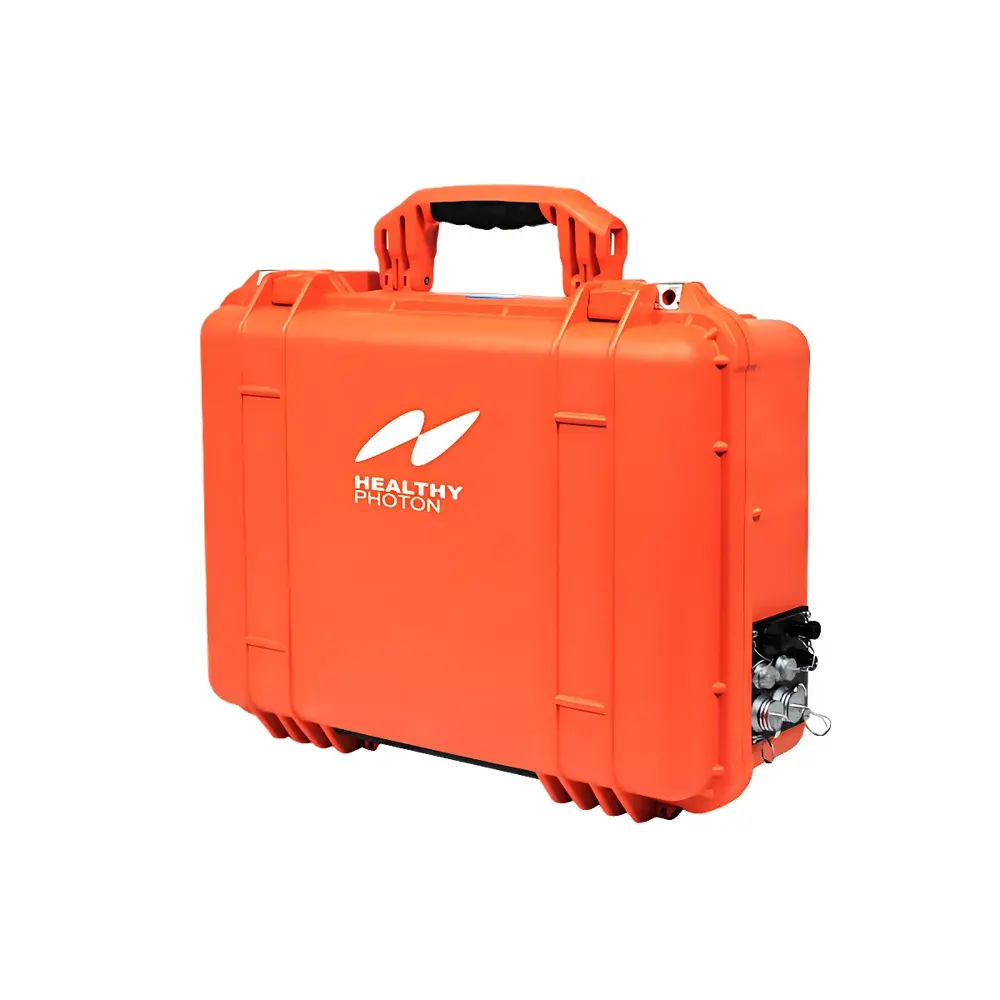
| Dimensions | 50 cm × 36 cm × 18 cm |
| Weight | <15 kg |
| Power Supply | 12 VDC / 10 A |
| Steady-State Power Consumption | <70 W |
| Data Storage | Integrated SD card or external data logger |
| Interface | RS232 serial port |
| Software Platform | Windows-based configuration and analysis suite |
Overview
The AeroNose HT8800 Series is a field-deployable, high-precision greenhouse gas (GHG) analyzer engineered for quantitative, multi-species detection using tunable diode laser absorption spectroscopy (TDLAS) in the mid-infrared (MIR) spectral region. Unlike near-infrared (NIR) systems, MIR-TDLAS leverages fundamental vibrational-rotational absorption bands—yielding orders-of-magnitude higher cross-sections for CO₂, CH₄, N₂O, and H₂O. This enables robust, interference-free quantification without reliance on ultra-long optical paths or complex calibration matrices. The HT8800 platform implements wavelength-scanned direct absorption spectroscopy with thermally stabilized lasers, high-finesse multipass gas cells, and balanced photodetection—ensuring stable baseline performance under variable ambient conditions. Designed for unattended operation in remote or resource-constrained environments, it supports both fixed-site continuous monitoring and mobile survey applications—including soil flux chambers, aquatic surface emissions, and boundary-layer atmospheric profiling.
Key Features
- Multiplexed MIR-TDLAS architecture: Simultaneous detection of CO₂, CH₄, N₂O, and H₂O using spectrally isolated, high-intensity absorption lines—eliminating cross-sensitivity from overlapping ro-vibrational features of common atmospheric interferents (e.g., CO, NH₃, C₂H₆).
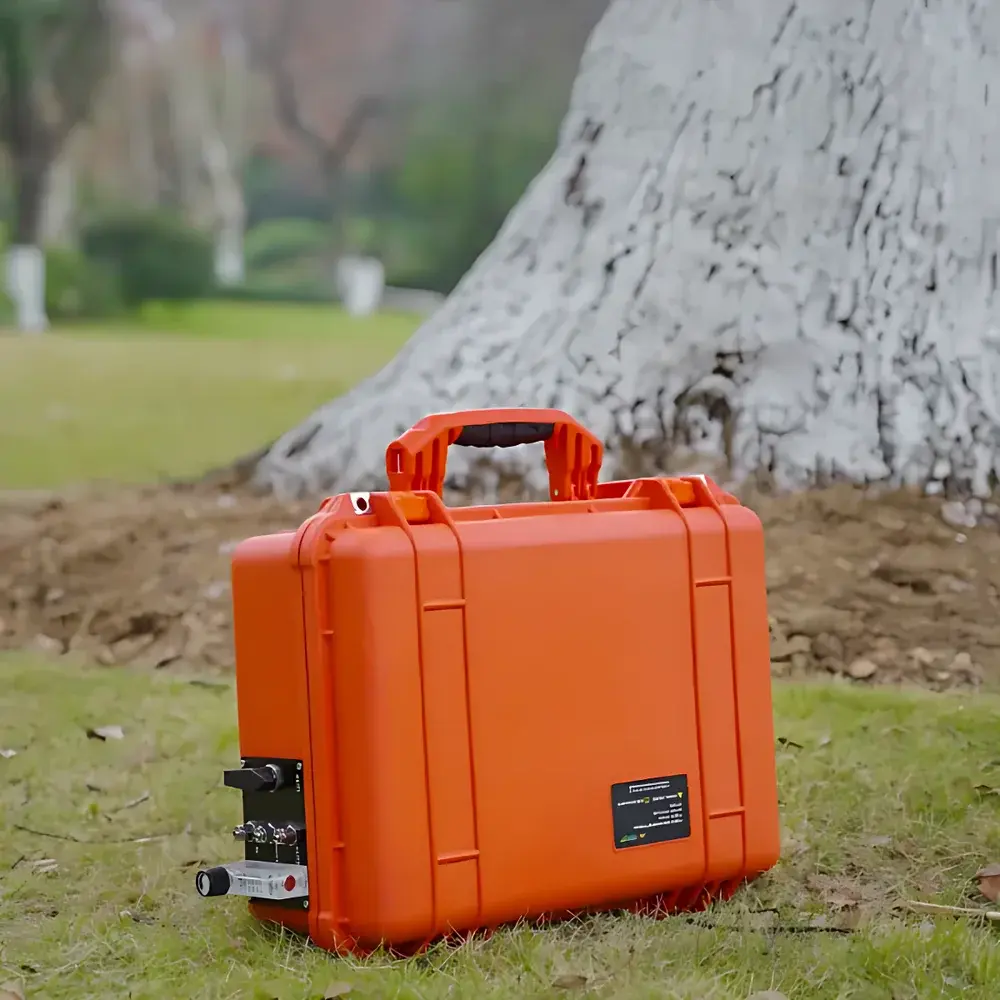
- Field-hardened portability: Compact form factor (<15 kg, 50 × 36 × 18 cm), low steady-state power draw (72 h autonomous operation without grid access.
- Thermally and mechanically stabilized optical path: Precision-machined stainless-steel gas cell with active temperature control (±0.1 °C) and vibration-damped mounting minimizes drift and ensures long-term reproducibility—critical for eddy covariance or chamber-based flux studies requiring sub-hour stability.
- Trace-level sensitivity with validated uncertainty: Detection limits meet or exceed ISO 14064-3 and EPA Method TO-15 requirements for ambient GHG verification; all specifications are traceable to NIST-certified reference standards and validated per ASTM D6348 for gas analyzers.
- Modular configuration options: Five model variants (HT8810 to HT8850) allow application-specific optimization—e.g., HT8840 prioritizes sub-part-per-trillion CH₄ resolution for wetland or landfill monitoring, while HT8850 delivers full four-species capability with integrated water vapor correction algorithms.
Sample Compatibility & Compliance
The HT8800 accepts sample gas streams at standard temperature and pressure (STP) via 6 mm OD PFA tubing, with optional heated sampling lines (up to 60 °C) to prevent condensation in high-humidity environments. It complies with IEC 61000-6-2 (immunity) and IEC 61000-6-4 (emissions) for electromagnetic compatibility. All firmware and data handling routines adhere to GLP-compliant audit trail requirements, including time-stamped event logging, user-access controls, and immutable raw-data archiving on internal SD card. The system supports 21 CFR Part 11–compliant electronic signatures when paired with validated third-party LIMS integration modules. Calibration protocols follow ISO/IEC 17025:2017 Annex A.2 guidelines for gas analysis, with documented uncertainty budgets for each target analyte across its operational range.
Software & Data Management
AeroNose ControlSuite™ (Windows 10/11 compatible) provides real-time spectral visualization, automated zero/span validation, multi-point calibration curve generation, and configurable alarm thresholds. Raw absorbance spectra (12-bit, 10 kHz sampling) are stored alongside processed concentration time series (1 Hz default output). Export formats include CSV, NetCDF4 (CF-1.8 compliant), and ASCII-compatible files suitable for ingestion into FluxNet, ICOS, or NOAA GML workflows. Remote diagnostics and firmware updates are supported over RS232 or optional Ethernet-to-serial bridge. Data integrity safeguards include cyclic redundancy checks (CRC-32), write-protection toggles, and automatic backup mirroring to external USB drives.
Applications
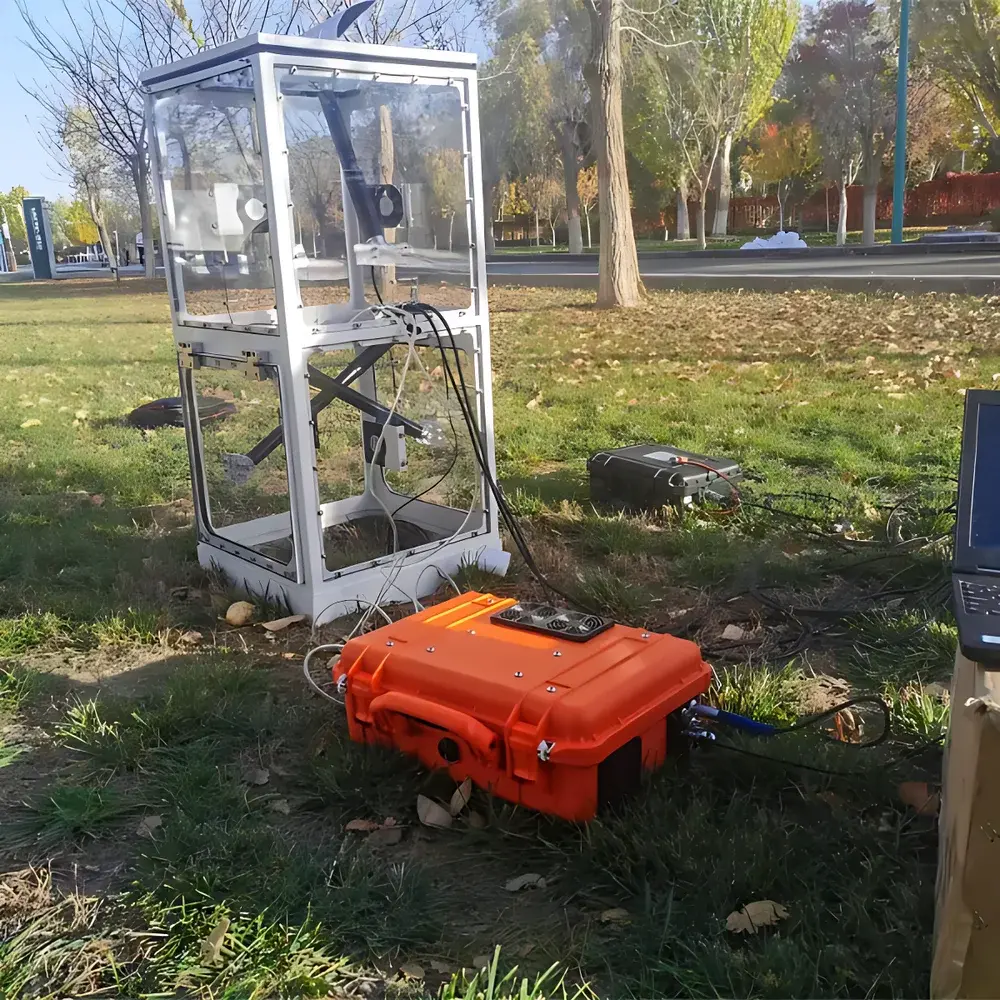
- Soil respiration studies using dynamic closed-chamber systems (ISO 18512)
- Aquatic GHG flux measurements over lakes, rivers, and estuaries (following IPCC Wetlands Supplement protocols)
- Urban background and hotspot monitoring for municipal GHG inventories (aligned with Global Protocol for Community-Scale GHG Emission Inventories)
- Validation of satellite-based GHG retrievals (e.g., OCO-2, TROPOMI, GOSAT) through ground-truthing campaigns
- Industrial fugitive emission detection and quantification (per EPA LDAR requirements)
- Long-term ecological research sites requiring autonomous, low-maintenance instrumentation (e.g., NEON, LTER networks)
FAQ
What calibration standards are required for routine operation?
Primary calibration uses certified gas mixtures traceable to NIST SRM 1662a (CO₂), NIST SRM 1663c (CH₄), and NIST SRM 1664a (N₂O), with annual verification recommended. Zero gas must be CO₂/CH₄/N₂O-free synthetic air meeting ISO 8573-1 Class 1 purity.
Can the HT8800 operate continuously in freezing temperatures?
The instrument operates between −10 °C and +45 °C. For extended sub-zero deployment, an optional heated enclosure kit (maintaining internal temperature ≥5 °C) is available—validated for −25 °C ambient exposure.
Is spectral interference from ethane or carbon monoxide a concern?
No. The HT8800 selects absorption lines in the 2.6–3.5 µm range where CO₂, CH₄, N₂O, and H₂O exhibit non-overlapping fundamental bands; spectral simulations confirm <0.1% cross-sensitivity to C₂H₆ and CO at typical ambient concentrations.
How is water vapor interference corrected in CO₂ and CH₄ measurements?
H₂O is measured simultaneously and used in real-time to apply empirically derived, pressure- and temperature-compensated correction coefficients—derived from laboratory intercomparison against CRDS-based references under variable humidity conditions.
Does the system support remote data telemetry?
Yes. Optional 4G LTE or LoRaWAN modules enable encrypted transmission of concentration time series and diagnostic logs to cloud platforms (e.g., AWS IoT Core, Azure IoT Hub) with TLS 1.2 encryption and configurable reporting intervals.
Related Products







