
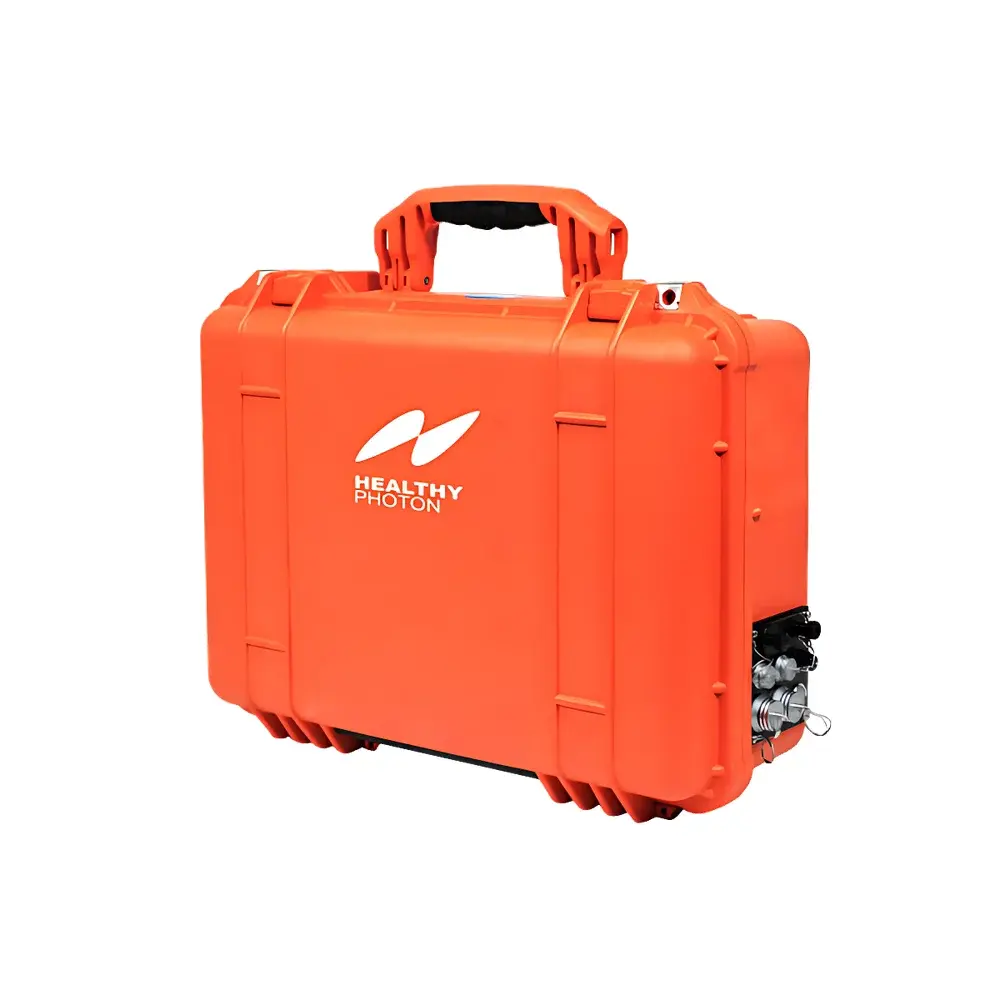
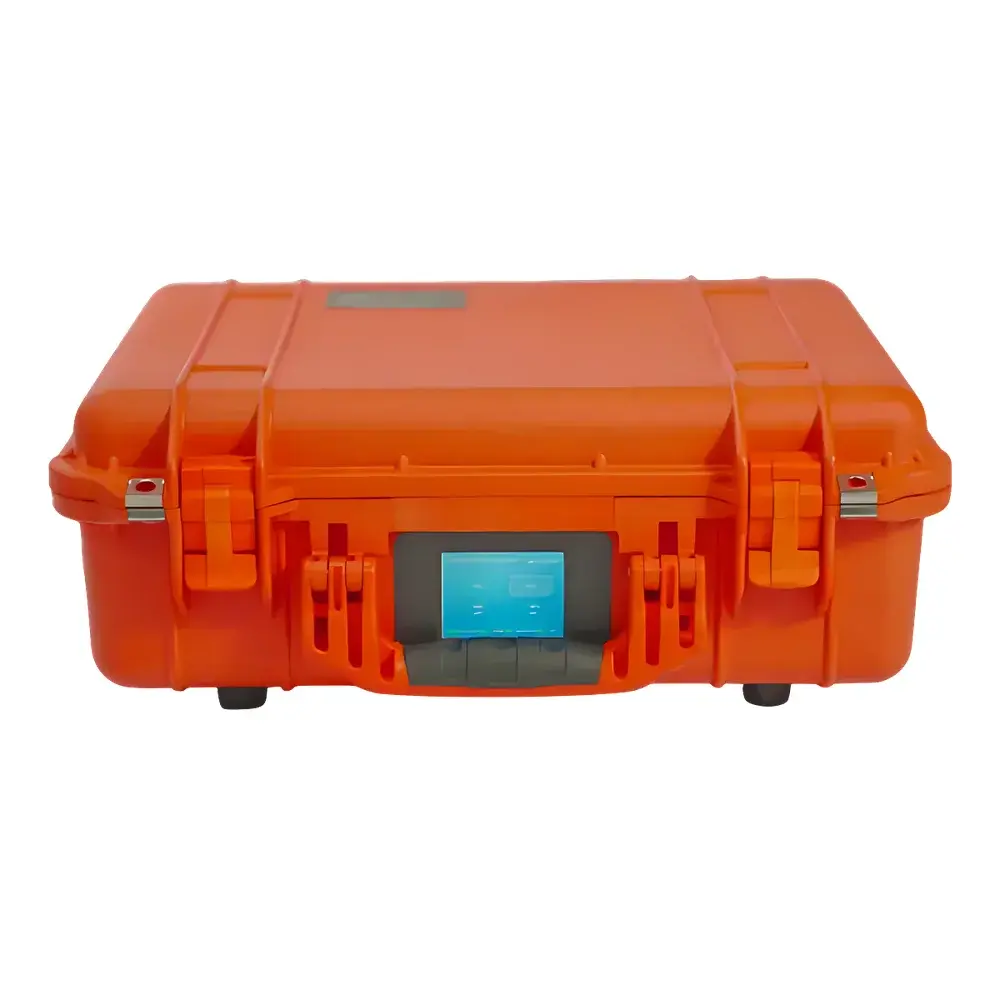
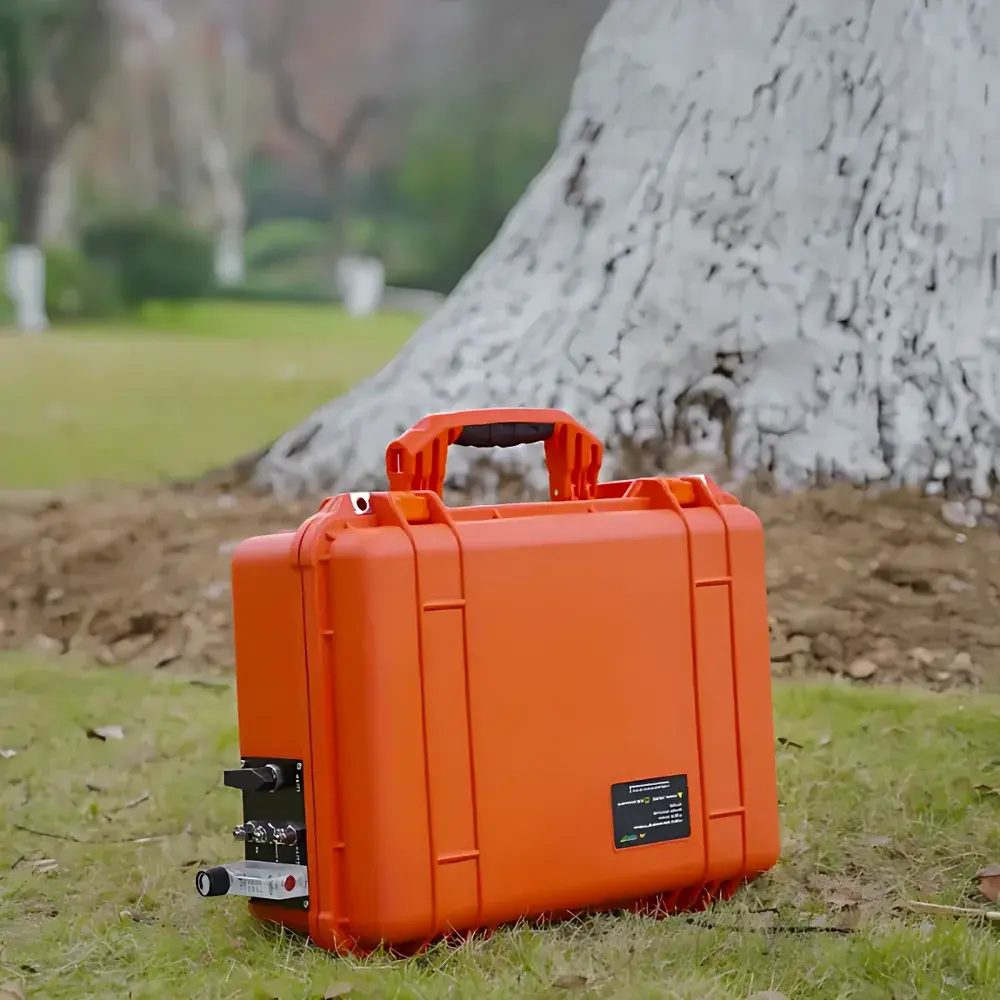
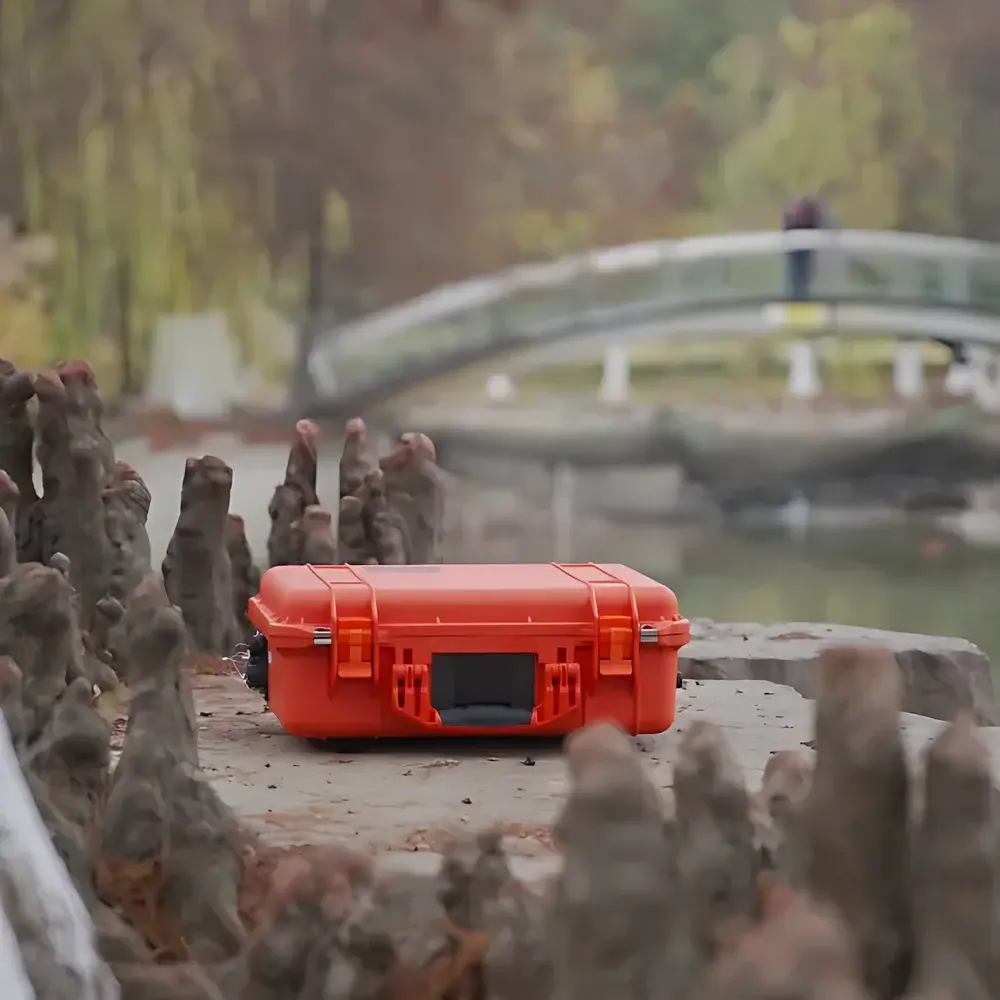
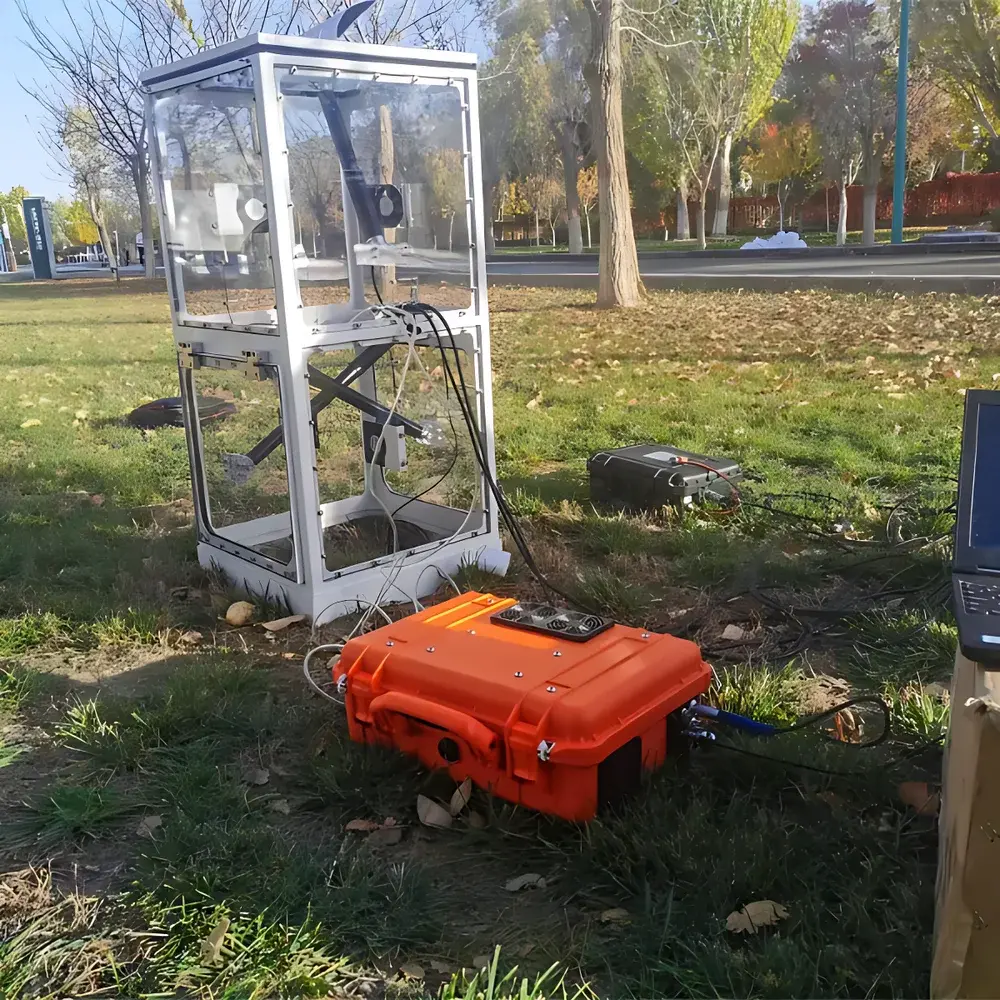
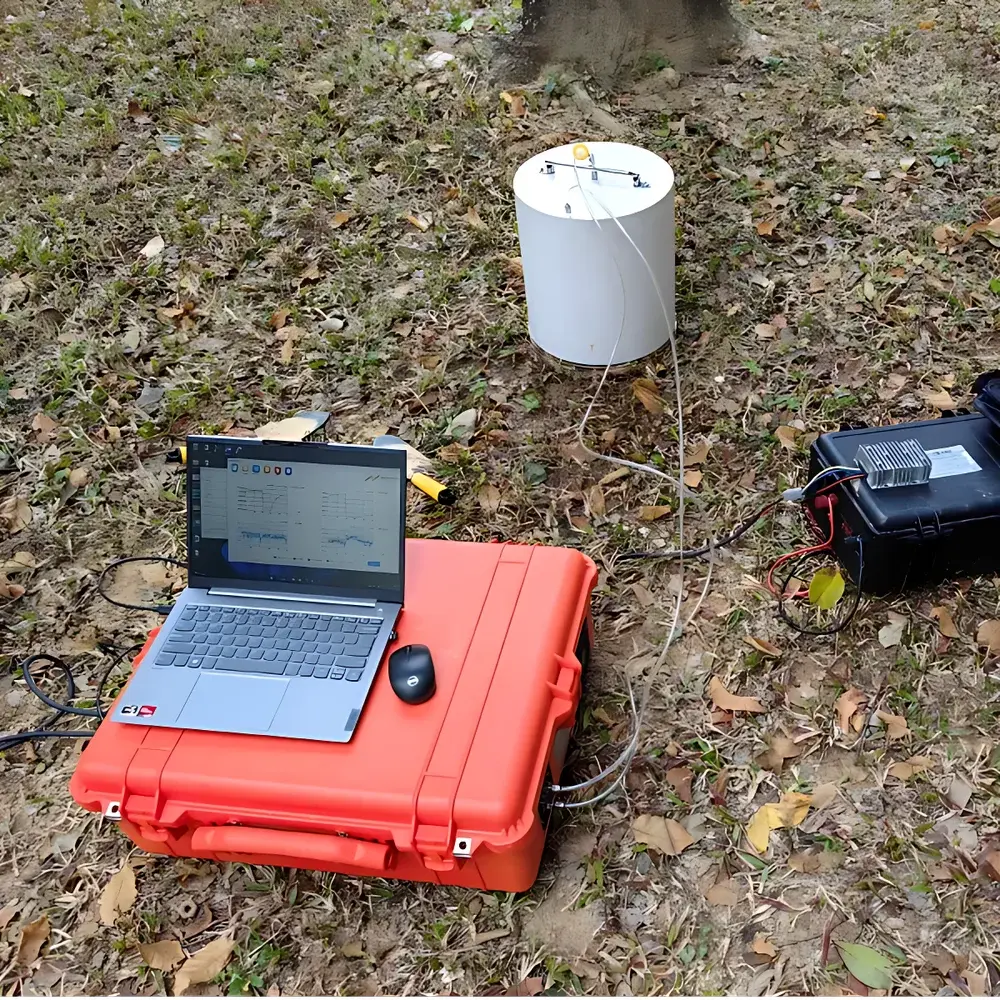
AeroNose HT8810 Portable Multi-Component Greenhouse Gas Analyzer
| Brand | AeroNose |
|---|---|
| Origin | Zhejiang, China |
| Manufacturer Type | Direct Manufacturer |
| Country of Origin | China |
| Model | HT8810 |
| Price | USD 140,000 (approx.) |
| Measurement Principle | Tunable Diode Laser Absorption Spectroscopy (TDLAS) in Mid-Infrared Region |
| Target Gases | CO₂, H₂O |
| CO₂ Range | 0–5000 ppm |
| H₂O Range | 0–30000 ppm |
| CO₂ Accuracy | ±0.5 ppm @ 400 ppm |
| H₂O Accuracy | ±10 ppm @ 10000 ppm |
| Response Time (T₉₀) | <15 s |
| Operating Temperature | −10 °C to +45 °C |
| Storage Temperature | −25 °C to +50 °C |
| Relative Humidity | <95% RH, non-condensing |
| Atmospheric Pressure | 70–110 kPa |
| Dimensions | 50 cm × 36 cm × 18 cm |
| Weight | <15 kg |
| Power Supply | 12 VDC / 10 A |
| Steady-State Power Consumption | <70 W |
| Data Storage | Integrated SD card or external DAQ system |
| Communication Interface | RS232 serial port |
| Software Platform | Windows-based configuration and analysis suite |
Overview
The AeroNose HT8810 is a field-deployable, battery- and solar-compatible multi-component greenhouse gas analyzer engineered for high-fidelity, real-time quantification of carbon dioxide (CO₂) and water vapor (H₂O) in ambient air, soil flux chambers, aquatic headspaces, and atmospheric boundary layer studies. It employs Tunable Diode Laser Absorption Spectroscopy (TDLAS) operating in the mid-infrared spectral region (typically 2–5 µm), where fundamental vibrational-rotational absorption lines of target gases exhibit orders-of-magnitude higher cross-sections than in the near-IR. By selecting spectrally isolated, interference-free rovibrational transitions—specifically the strong, narrow CO₂ ν₃ band near 4.26 µm and the H₂O ν₂/ν₃ combination band near 2.7 µm—the HT8810 achieves intrinsic selectivity without reliance on chemical scrubbers, pre-concentration, or multivariate calibration compensation. This physical selectivity eliminates cross-sensitivity from common atmospheric interferents (e.g., CH₄, CO, N₂O, NH₃, VOCs), ensuring metrological traceability to primary standards under variable environmental conditions.
Key Features
- True dual-gas simultaneous detection: Independent, parallel TDLAS channels for CO₂ and H₂O, each with dedicated laser source, thermoelectrically cooled detector, and optimized optical path length.
- Robust optical architecture: Compact Herriott-type multi-pass cell integrated within a thermally stabilized aluminum chassis; no moving parts or consumables required for routine operation.
- Field-ready power management: Operates continuously on 12 VDC input (e.g., deep-cycle lead-acid, LiFePO₄ battery packs, or photovoltaic arrays with charge controller); average steady-state draw 72 h autonomous deployment with standard 100 Ah batteries.
- Environmental resilience: Rated for continuous operation between −10 °C and +45 °C; sealed enclosure meets IP54 ingress protection; internal temperature and pressure sensors enable real-time density correction per ideal gas law.
- Modular firmware architecture: Supports over-the-air updates via USB or RS232; configurable measurement cycles (1–60 s integration), auto-zero referencing, and dynamic background subtraction.
Sample Compatibility & Compliance
The HT8810 accepts standard 1/4″ Swagelok®-compatible sample inlets and is compatible with certified permeation tubes, dynamic dilution systems, and commercial soil flux chambers (e.g., LICOR LI-8100A, Picarro GGA-2401). Sample flow rate is maintained at 0.5–2.0 L/min via integrated mass flow controller with active feedback. All optical and electronic subsystems comply with IEC 61326-1:2013 (EMC for laboratory and industrial use) and IEC 61010-1:2010 (safety requirements for electrical equipment). While not certified for regulatory stack monitoring under EPA Method TO-15 or ISO 13864, its performance characteristics meet or exceed the precision and stability thresholds specified in ISO 14064-3 Annex B for GHG inventory verification and IPCC Tier 2 flux estimation protocols. Data logging adheres to GLP-aligned timestamping (UTC-synced RTC) and supports optional audit-trail-enabling firmware modules compliant with FDA 21 CFR Part 11 principles.
Software & Data Management
Instrument control, real-time visualization, and post-processing are executed via AeroNose’s Windows-native software suite (v3.2+), which provides: (1) graphical spectral view with line-fit residuals and baseline drift diagnostics; (2) automated zero/span validation reports with pass/fail flags per ICH Q2(R2) guidelines; (3) export in CSV, NetCDF-4, or CF-compliant format with embedded metadata (sensor ID, GPS coordinates if externally fed, ambient T/P, calibration history); (4) batch processing of SD-card archives with configurable smoothing (Savitzky-Golay), outlier rejection (modified Thompson τ), and unit conversion (ppm → µmol/mol → mg/m³). Raw spectra and processed concentration time series are stored with SHA-256 checksums to ensure data integrity across transfer and archival.
Applications
- Soil respiration flux studies: Coupled with static or dynamic closed-chamber systems to quantify CO₂ efflux rates under controlled moisture/temperature gradients; H₂O co-measurement corrects for dilution effects and informs evapotranspiration partitioning.
- Aquatic GHG dynamics: Deployed aboard research vessels or fixed buoys to monitor surface water pCO₂ and humidity-corrected headspace equilibration, supporting ocean carbon sink assessments per GO-SHIP protocols.
- Urban and peri-urban atmospheric profiling: Mounted on light-duty vehicles or UAV payloads (with custom vibration-damping mount) for mobile mapping of CO₂ plumes correlated with traffic density, building energy use, or vegetation cover.
- Calibration transfer and intercomparison: Used as a transportable reference analyzer during field campaigns involving eddy covariance towers, cavity ring-down spectrometers, or gas chromatographic systems.
- Ecosystem-scale process validation: Supports DOE NGEE-Arctic, FLUXNET, and ICOS site-level QA/QC by providing independent, physically grounded validation of long-term sensor drift and environmental bias.
FAQ
Does the HT8810 require periodic factory recalibration?
No scheduled factory recalibration is mandated. Users perform field zero/span checks using certified NIST-traceable gas standards (e.g., Scott-Marrin CO₂-in-air, Air Liquide H₂O-in-N₂). Full spectral validation is recommended annually or after mechanical shock exposure.
Can the HT8810 be integrated into existing SCADA or IoT platforms?
Yes. RS232 output supports Modbus RTU protocol (custom register map available); ASCII-formatted streaming mode enables direct ingestion into Node-RED, Ignition SCADA, or AWS IoT Core via serial-to-ethernet gateways.
Is the optical path susceptible to condensation or particulate fouling in humid environments?
The sample stream passes through a heated Nafion™ dryer (optional accessory) prior to the measurement cell. Internal purge gas (zero air or N₂) maintains positive pressure in the optical compartment, preventing ingress of ambient aerosols or condensate.
What is the minimum detectable change (MDC) for CO₂ under typical field conditions?
Based on Allan variance analysis at 1 Hz sampling, the MDC (3σ, 100 s averaging) is 0.12 ppm for CO₂, verified across five independent field deployments with concurrent Picarro G2301-F measurements.
Does the firmware support user-defined alarm thresholds and relay outputs?
Yes. Configurable high/low concentration alarms trigger opto-isolated dry-contact closures (1 A @ 30 VDC) for external actuation (e.g., valve switching, audible alerts, or data logger flagging).







