
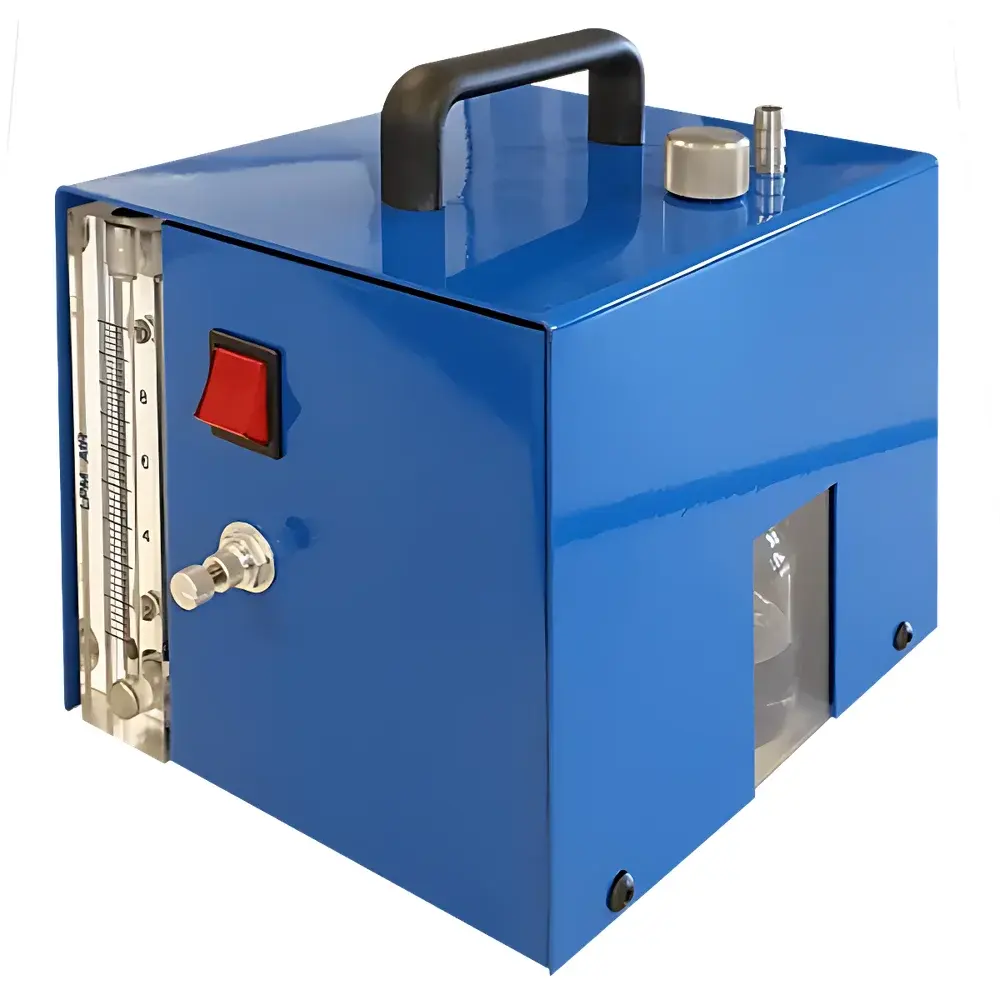
Aerosol Generator by AWT (UK-Made)
| Key | Brand: AWT |
|---|---|
| Origin | United Kingdom |
| Distribution Type | Authorized Distributor |
| Import Status | Imported |
| Compliance Standard | EN 54-20 (Fire Detection and Alarm Systems – Smoke Detectors) |
Overview
The AWT Aerosol Generator is a precision-engineered instrument designed for the controlled, repeatable generation of polydisperse or monodisperse test aerosols in fire detection system certification, laboratory validation, and functional testing environments. Operating on the principle of thermal vaporization followed by controlled condensation and nucleation, this generator produces stable, traceable aerosol clouds with defined particle size distributions—primarily targeting the 0.3–10 µm aerodynamic diameter range relevant to optical smoke detector response characterization. Its design adheres strictly to the requirements of EN 54-20:2021, which specifies performance criteria for aerosol generators used in the type testing and routine verification of point-type smoke detectors. Unlike generic nebulizers or dust dispersers, this unit delivers metrologically traceable output with calibrated mass concentration stability (< ±5% over 30 min), enabling compliance-driven test repeatability across accredited fire testing laboratories.
Key Features
- EN 54-20:2021 certified aerosol output profile, validated for use in third-party notified body testing (e.g., LPCB, VdS, UL)
- Adjustable aerosol concentration control via precision mass flow regulation and heater temperature feedback loop
- Integrated real-time monitoring interface for generator status (temperature, pressure, flow rate) via RS-232/USB
- Stainless-steel fluid path and ceramic heating elements ensuring long-term chemical compatibility with standard test agents (e.g., diethylene glycol, camphor, or polyethylene glycol-based solutions)
- Modular design supporting integration into automated test rigs, including synchronization with detector alarm signal acquisition systems
- No moving parts in the aerosol generation chamber—minimizing maintenance intervals and drift-related uncertainty
Sample Compatibility & Compliance
The AWT Aerosol Generator is qualified for use with internationally recognized test aerosols specified in EN 54-20 Annex A, including but not limited to: diethylene glycol (DEG) aerosol for light-scattering detector evaluation; camphor-derived particles for ionization chamber sensitivity assessment; and PEG-400 based challenge aerosols for obscuration-based optical detectors. All generated aerosols meet the required geometric standard deviation (σg ≤ 1.3) and median particle diameter tolerances outlined in Clause 6.2 of EN 54-20. The unit itself carries CE marking under the EU Construction Products Regulation (CPR) and is supplied with full Declaration of Conformity, calibration certificate (traceable to NPL UK), and test report documentation aligned with ISO/IEC 17025 requirements for accredited laboratories.
Software & Data Management
The generator operates standalone or integrates with optional AWT ControlSuite™ software (v3.2+), which provides protocol-driven test sequencing, time-synchronized data logging, and audit-ready reporting. Software features include: user-defined exposure profiles (ramp-up, dwell, decay), automatic event tagging upon detector alarm confirmation (via dry-contact input), and export of timestamped concentration/time series in CSV and XML formats compliant with ASTM E648 and ISO 5659-2 data archiving standards. Full 21 CFR Part 11 compliance is supported through role-based access control, electronic signatures, and immutable audit trails—essential for laboratories operating under GLP or fire safety certification schemes requiring regulatory traceability.
Applications
- Type approval testing of optical, ionization, and multi-criteria smoke detectors per EN 54-7, EN 54-20, and UL 268
- Factory production line verification and periodic in-service performance checks of installed fire alarm systems
- Research into detector response latency, obscuration thresholds, and false alarm susceptibility under controlled aerosol challenges
- Calibration and verification of reference photometers and particle counters used in fire test chambers
- Development and validation of new aerosol-based fire simulation methodologies for large-scale enclosure testing (e.g., ISO 9705 rooms)
FAQ
Does this generator support automated test sequences compliant with EN 54-20 Annex B?
Yes—the built-in timing logic and external trigger I/O enable full execution of Annex B’s prescribed exposure cycles (e.g., 120 s ramp + 180 s dwell) without manual intervention.
Is the aerosol output traceable to national measurement standards?
Yes—each unit ships with a UKAS-accredited calibration certificate referencing NPL (National Physical Laboratory, UK) primary standards for aerosol number concentration and size distribution.
Can it be used with alternative test agents beyond DEG and camphor?
Only agents explicitly listed in EN 54-20 Annex A are validated; substitution requires requalification per Clause 7.3 and documented risk assessment.
What maintenance is required between qualification tests?
Routine cleaning of the nozzle assembly and verification of heater resistance every 50 operational hours; full recalibration recommended annually or after 500 test cycles.
Is remote operation possible via Ethernet or industrial fieldbus protocols?
Standard configuration includes USB and RS-232; EtherNet/IP and Modbus TCP modules are available as factory-installed options for SCADA-integrated fire test facilities.





