
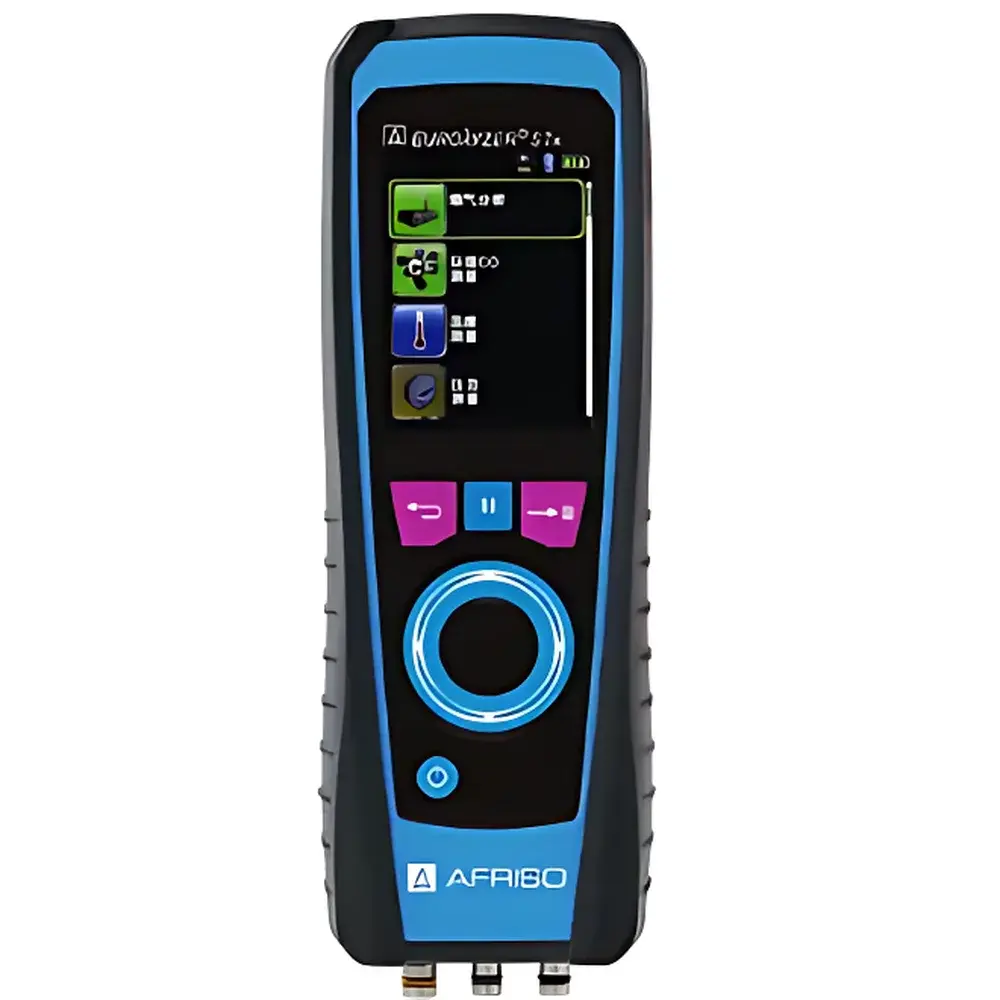
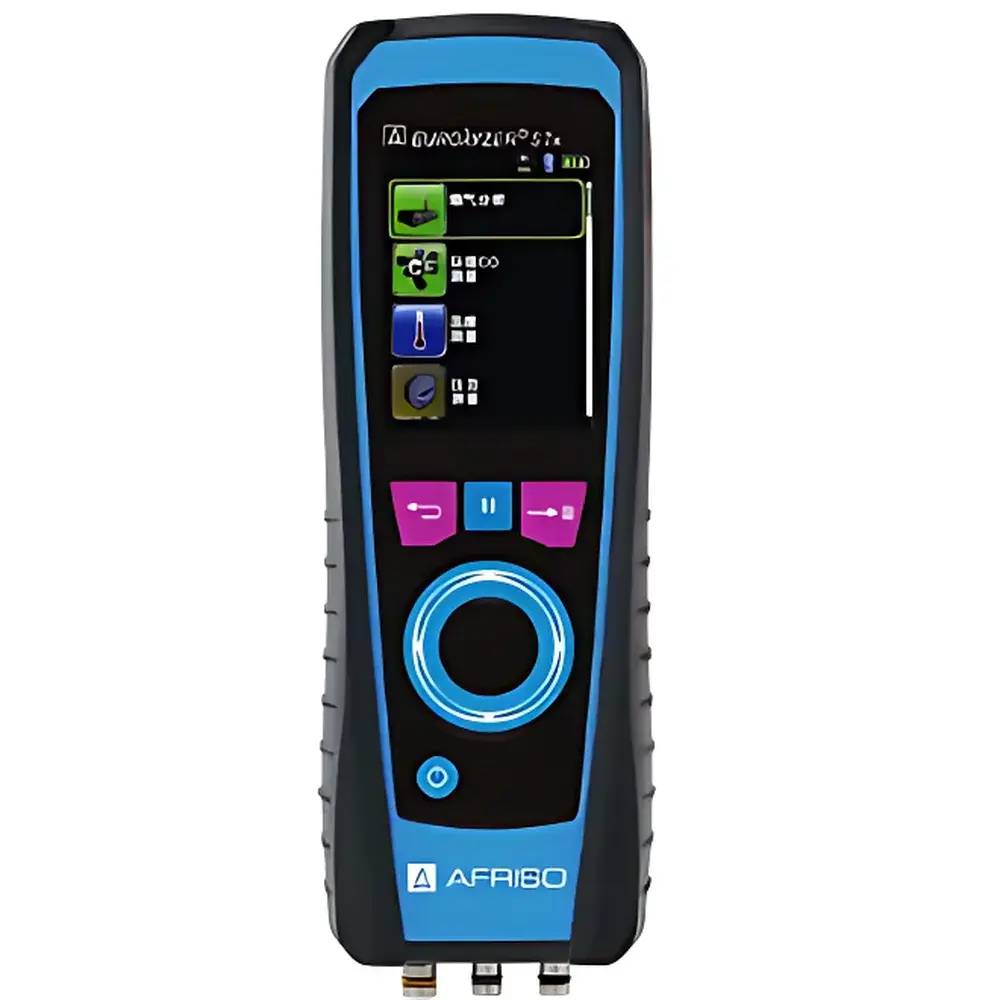
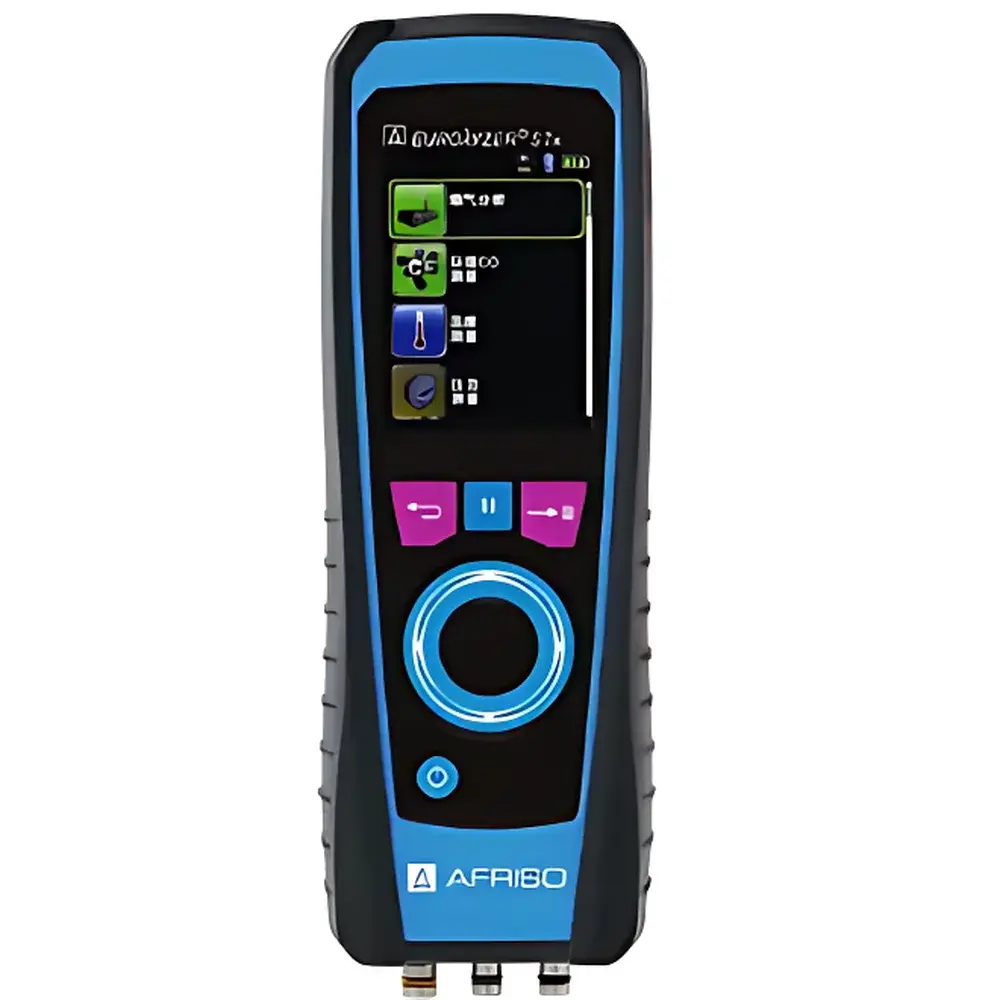
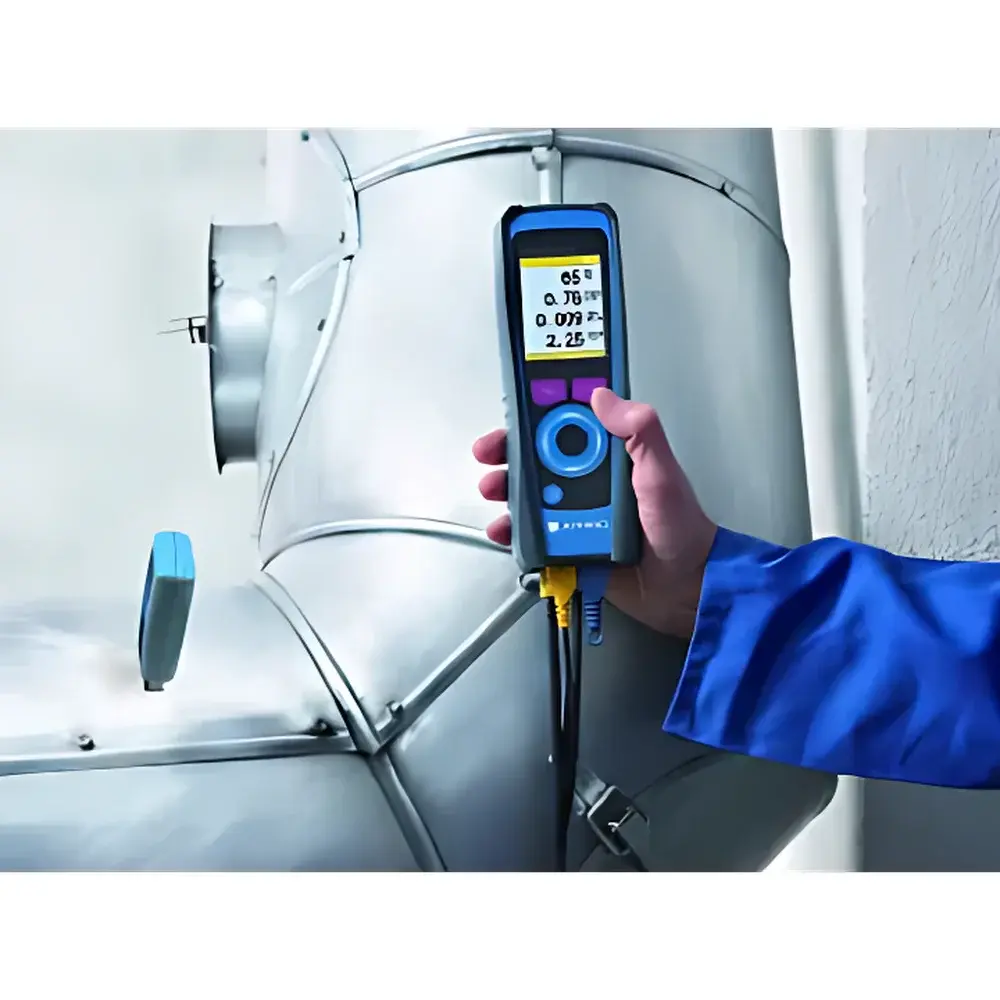
AFRISO EUROLYZER STX E30X Portable Flue Gas Analyzer
| Brand | AFRISO |
|---|---|
| Model | E30X |
| Type | Portable Flue Gas Analyzer |
| Sensor Technology | Electrochemical (O₂, CO, NO, NO₂, SO₂, H₂S, etc.) |
| Display | 4.3" TFT Color Screen with Chinese/English UI |
| Data Storage | MicroSD card (up to 16 GB) |
| Battery Life | Up to 12 h (Li-ion, rechargeable during operation) |
| Auto-Calibration | Built-in zero and span check |
| Response Time | <20 s (T90) |
| Accuracy | CO measurement ±2 ppm (low-range), NOₗₒw ≤2 ppm error |
| Compliance | EN 50379-1/-2, DIN EN 15545, CE marked |
| Connectivity | Bluetooth 4.2, USB-C, QR code export |
| Operating Temperature | 0–40 °C |
| Dimensions | 230 × 120 × 65 mm |
| Weight | 1.2 kg |
| Magnetic Mount | Integrated rear magnet for hands-free mounting |
Overview
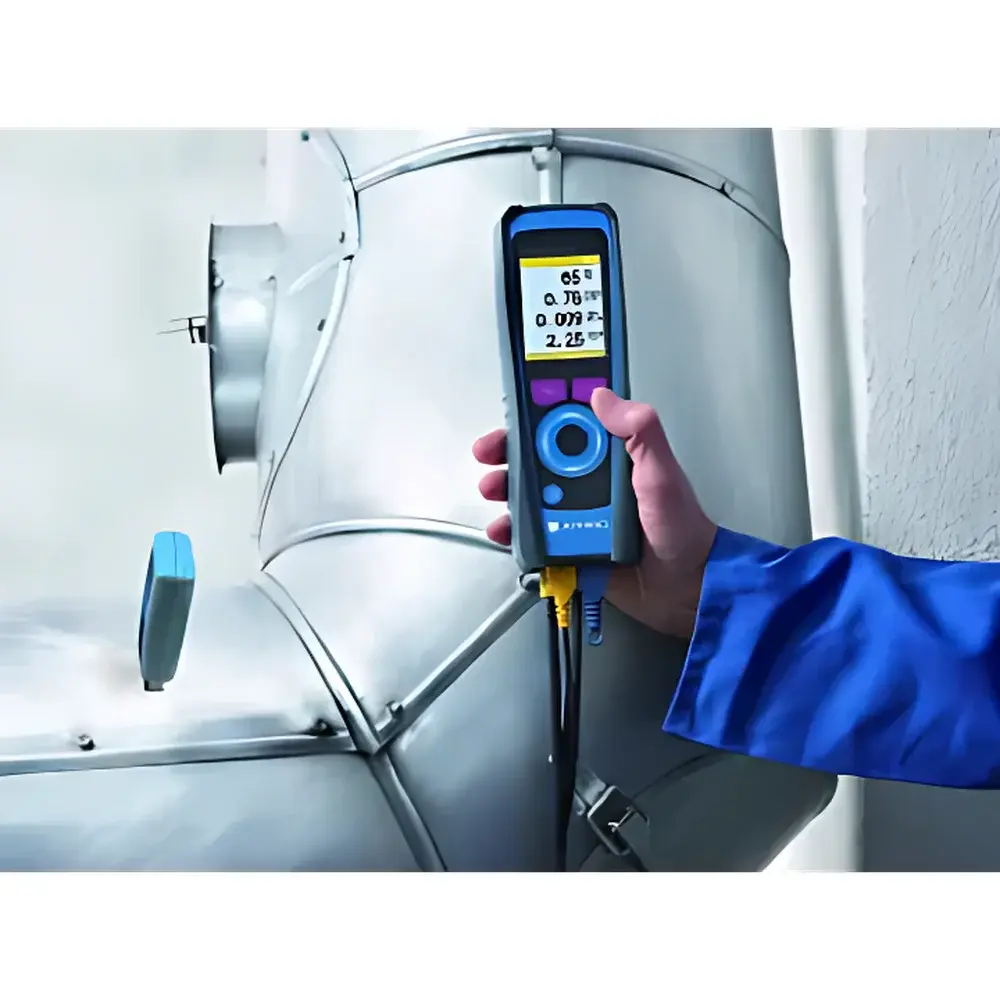
The AFRISO EUROLYZER STX E30X is a high-integrity portable flue gas analyzer engineered for precision combustion efficiency assessment and regulatory-compliant emissions monitoring in industrial boilers, heating systems, cogeneration units, and commercial HVAC installations. Based on electrochemical sensor technology validated per EN 50379-1/-2 and DIN EN 15545, the instrument delivers trace-level detection of key combustion gases—including O₂, CO, NO, NO₂, SO₂, and H₂S—alongside physical parameters such as flue gas temperature, differential pressure, volumetric flow rate, and dew point. Its modular architecture supports both stoichiometric combustion diagnostics and low-emission verification (e.g., NOlow mode with ≤2 ppm uncertainty), making it suitable for routine maintenance, commissioning, and periodic compliance audits under EU Directive 2010/75/EU (IED) and local air quality ordinances.
Key Features
- Multi-parameter real-time acquisition: Simultaneous measurement of up to 8 gas components plus temperature, pressure, velocity, and calculated combustion indices (excess air ratio λ, combustion efficiency η, flue gas loss qloss, CO undiluted).
- High-stability electrochemical sensors: Factory-calibrated O₂ sensor with ≥5-year service life; low-range CO and NO sensors optimized for sub-50 ppm quantification with T90 response <20 s.
- Intuitive 4.3″ TFT color display: Dual-language interface (English/Chinese), configurable data layout (1-/4-/8-line view), and color-coded operational menus aligned with measurement modes (e.g., boiler test, ambient CO survey, draft check).
- Integrated data management: Standard 4 GB MicroSD card (expandable to 16 GB); programmable auto-logging interval (1–999 s); timestamped CSV export compatible with LIMS and QA/QC reporting workflows.
- Remote supervision capability: Bluetooth 4.2 connectivity enables live streaming of numerical values, trend curves, and bar charts to iOS/Android tablets or Windows PCs via dedicated AFRISO Connect software.
- Ergonomic field deployment: Magnetically mounted rear housing allows secure attachment to ferrous surfaces; IP54-rated enclosure; hot-swappable Li-ion battery supporting continuous operation and charging.
Sample Compatibility & Compliance
The EUROLYZER STX E30X is designed for direct in-situ sampling of dry or moderately humid flue gases (condensate trap included). It accommodates standard 3 m or 5 m probe assemblies with integrated thermocouple and Pitot tube. All sensor modules comply with EN 50379-1 (safety) and EN 50379-2 (performance) for portable gas analyzers used in combustion appliance testing. The device meets essential requirements of the EU Measuring Instruments Directive (MID) for non-automatic weighing instruments when configured with certified pressure transducers. Data integrity protocols align with GLP principles, including automatic audit trail generation for calibration events, zero checks, and firmware updates. Optional QR code generation per measurement set facilitates traceable field data capture without manual transcription.
Software & Data Management
AFRISO Connect software (Windows/macOS compatible) provides post-processing tools for combustion optimization analysis, including lambda correction, NOx conversion modeling (NO + NO₂), and seasonal efficiency benchmarking. Raw data files (.csv) retain full metadata: GPS coordinates (if enabled via paired smartphone), operator ID, probe serial number, ambient conditions, and sensor health status. The system supports FDA 21 CFR Part 11–compliant user access control when deployed in regulated environments (e.g., pharmaceutical clean steam generators). Firmware updates are delivered via MicroSD card or over-the-air through Bluetooth, with version rollback capability and SHA-256 signature verification.
Applications
- Routine combustion tuning of oil-, gas-, and biomass-fired boilers per EN 12952 and VDI 2066.
- Post-retrofit verification of low-NOx burner performance in municipal heating plants.
- Ambient CO screening near residential chimneys and garage exhaust ducts per WHO indoor air guidelines.
- Technical due diligence during facility acquisition or energy audit (ISO 50001 Annex A.5.2).
- Training and certification of heating engineers under national vocational frameworks (e.g., UK Gas Safe, German HWK).
FAQ
Does the E30X support automatic calculation of dew point?
Yes—the instrument computes dew point temperature in real time using measured flue gas humidity (derived from O₂ and CO₂ partial pressures) and saturation vapor pressure algorithms compliant with ISO 4677-2.
Can sensor cross-interference be compensated during multi-gas measurement?
All electrochemical cells undergo factory-based interference matrix calibration; onboard compensation algorithms adjust for known cross-sensitivities (e.g., NO₂ on CO sensor) per EN 15267-3 Annex C.
Is the device suitable for use in explosive atmospheres?
No—the E30X is not ATEX or IECEx certified; it is intended for use in non-hazardous locations only.
How often does the O₂ sensor require recalibration?
Under normal operating conditions, annual verification against certified span gas is recommended; the built-in zero-check function validates baseline stability before each measurement sequence.
What is the maximum allowable flue gas temperature at the probe inlet?
The standard probe supports continuous exposure up to 650 °C; optional high-temp probes extend this to 1000 °C with active cooling module.
Related Products







