
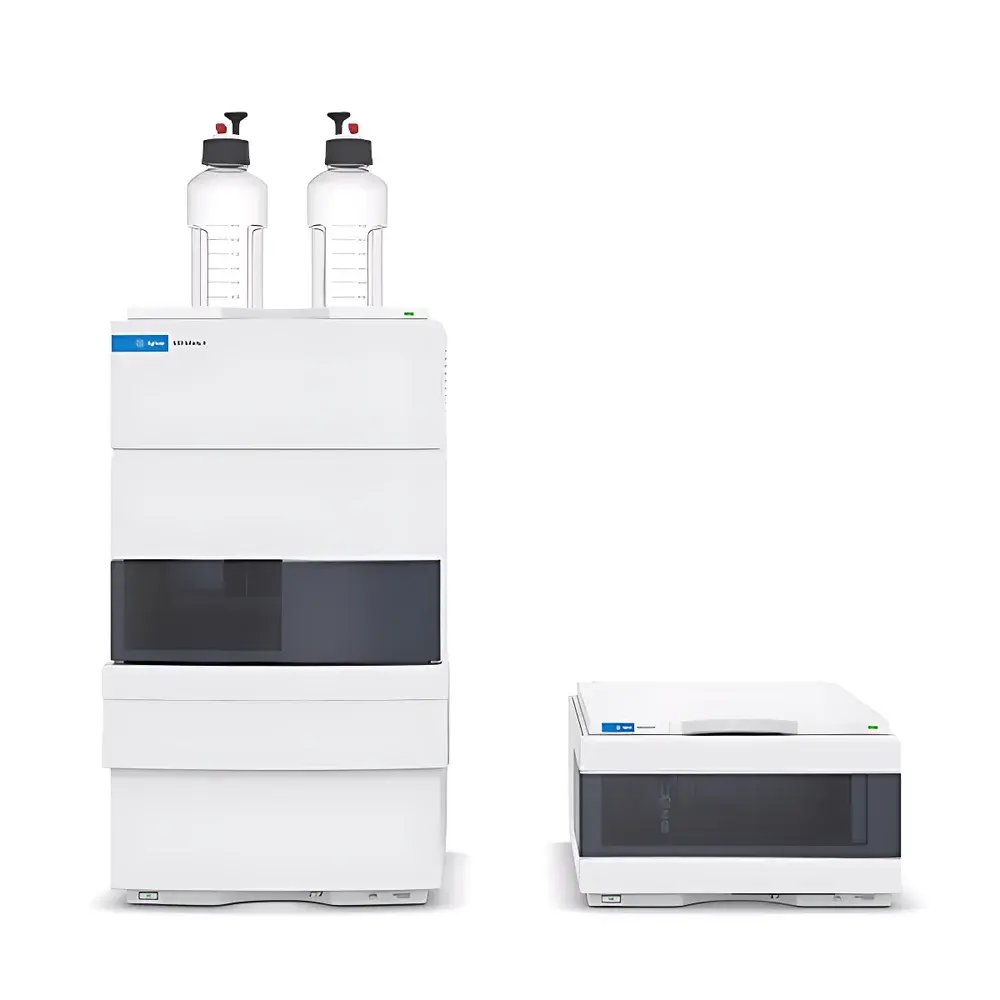
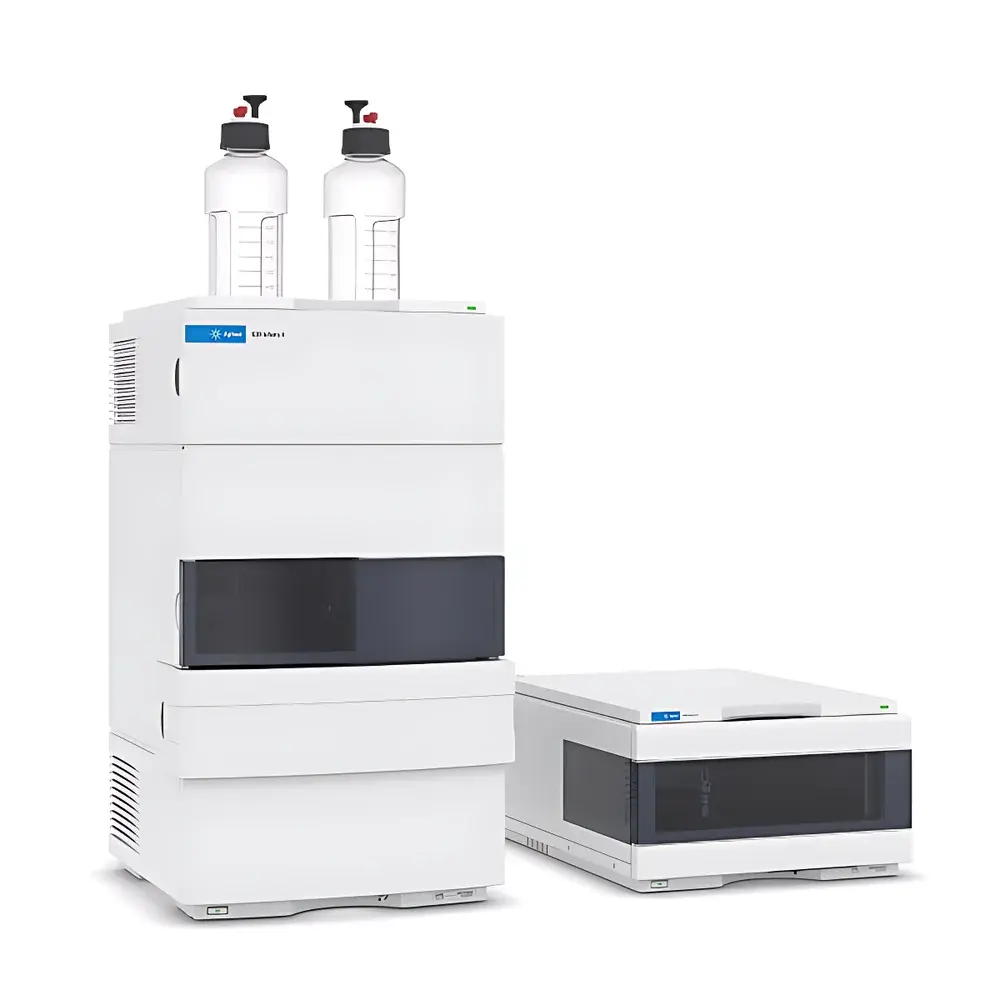
Agilent 1220 Infinity II Analytical-Scale Purification HPLC System
| Brand | Agilent Technologies |
|---|---|
| Origin | Germany |
| Manufacturer Type | Original Equipment Manufacturer (OEM) |
| Product Origin | Imported |
| Model | 1220 Infinity II Analytical-Scale Purification |
| Application Level | Laboratory Grade |
| Instrument Type | High-Pressure Preparative Liquid Chromatography |
| Flow Rate Range | 0.2–10 mL/min |
Overview
The Agilent 1220 Infinity II Analytical-Scale Purification HPLC System is a robust, entry-level high-performance liquid chromatography platform engineered for reliable analytical purification workflows in research and quality control laboratories. Built upon Agilent’s proven Infinity II architecture, the system implements gradient-capable, high-pressure binary pumping with precise flow delivery and low dwell volume—enabling reproducible separation of small- to medium-scale compound mixtures (typically 0.1–50 mg per injection). Its core operational principle relies on reversed-phase, normal-phase, or hydrophilic interaction liquid chromatography (HILIC), with compatibility for silica- and polymer-based stationary phases ranging from 3 to 10 µm particle size. Designed for scalability from analytical method development to early-stage purification, it operates at up to 420 bar (6000 psi), supporting columns from 2.1 mm to 10 mm internal diameter. The system integrates seamlessly into regulated environments through hardware-level leak detection, pressure monitoring, and firmware-controlled valve sequencing—ensuring operational integrity across routine and method-transfer applications.
Key Features
- Compact single-stack configuration minimizes benchtop footprint while maintaining full analytical purification capability
- Binary high-pressure gradient pump delivering stable flow rates from 0.2 to 10 mL/min with ≤0.1% RSD over 1–10 mL/min range
- Integrated fraction collector with automated delay volume compensation using real-time UV-triggered sensor logic—reducing cross-contamination and improving recovery purity
- Modular detector expansion support: compatible with Agilent Infinity II Refractive Index (RI), Fluorescence (FLD), Evaporative Light Scattering (ELSD), and single-quadrupole LC/MSD modules
- Onboard leak sensors in all fluidic modules automatically initiate system shutdown upon detection of >10 µL/min leakage—meeting IEC 61010-1 safety requirements
- Pre-configured “all-in-one” system bundles (e.g., Pump + Autosampler + UV/Vis Detector + Fraction Collector) accelerate deployment and validation
Sample Compatibility & Compliance
The system accommodates diverse sample matrices including synthetic organic intermediates, natural product extracts, peptide fractions, and pharmaceutical impurities. It supports standard 96-well microtiter plate collection (up to 4 plates × 96 wells = 384 fractions) or tube-based collection using four selectable outer diameters (12, 13, 16, and 18 mm), enabling up to 216 discrete fractions per run. All fluidic pathways are constructed from chemically resistant materials (e.g., PEEK, stainless steel 316L, sapphire) compatible with mobile phases containing acetonitrile, methanol, THF, and aqueous buffers (pH 1.5–12). The platform complies with ISO/IEC 17025:2017 requirements for testing laboratories and supports audit-ready operation under FDA 21 CFR Part 11 when paired with Agilent OpenLab CDS ChemStation software configured with electronic signatures and audit trail logging.
Software & Data Management
Agilent OpenLab CDS ChemStation provides a validated, GxP-ready software environment for method development, sequence execution, peak integration, and fraction triggering. Its modular architecture allows direct integration of third-party detectors and custom scripting via COM/DCOM interfaces. All acquisition and processing parameters—including gradient profiles, collection thresholds, and retention time windows—are stored as metadata within .D files, ensuring full traceability. The software supports instrument qualification documentation packages (IQ/OQ/PQ), electronic signature enforcement, and automatic generation of raw data backup archives compliant with ALCOA+ principles (Attributable, Legible, Contemporaneous, Original, Accurate, Complete, Consistent, Enduring, Available).
Applications
- Method scouting and transfer between analytical and preparative scales
- Purification of reaction mixtures for NMR characterization or biological screening
- Isolation of metabolites and degradation products in stability studies
- Fractionation of combinatorial libraries prior to high-throughput screening
- Supporting ICH Q5A/Q5B assessments of protein variants and glycoforms
- Preparative isolation of reference standards for USP/EP monograph development
FAQ
What is the maximum operating pressure of the 1220 Infinity II Analytical-Scale Purification System?
The system is rated for continuous operation up to 420 bar (6000 psi), optimized for columns with 5–10 µm particles and internal diameters up to 10 mm.
Can this system be used for regulatory submissions under GLP or GMP conditions?
Yes—when deployed with OpenLab CDS ChemStation in validated configuration and supported by documented IQ/OQ/PQ protocols, it meets requirements for GLP-compliant purification and GMP-aligned impurity isolation.
Is fraction collection triggered solely by UV absorbance, or are alternative detection modes supported?
Fraction collection can be triggered by UV/Vis, RI, FLD, ELSD, or MS signal output—either individually or in logical combination (e.g., AND/OR gate logic) via ChemStation’s event-based collection engine.
Does the system support column switching or heart-cutting techniques?
While the base configuration does not include multi-position valves, optional Infinity II Column Selector modules enable automated column selection, backflush, and heart-cutting—fully programmable within ChemStation methods.
How is system suitability verified during routine use?
Built-in system suitability tests (SSTs) include retention time precision, peak area RSD, resolution between critical pairs, and fraction recovery accuracy—automatically calculated and reported in compliance with USP and ICH Q2(R2).






