
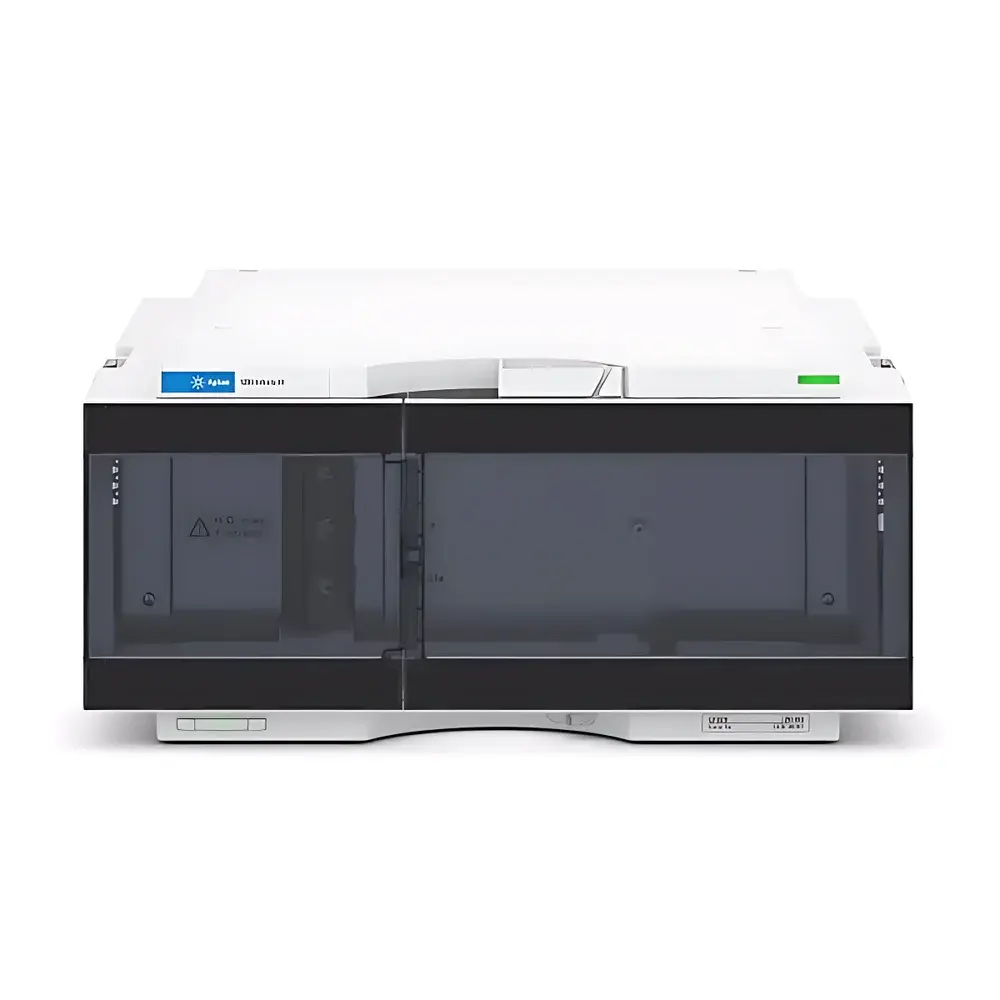
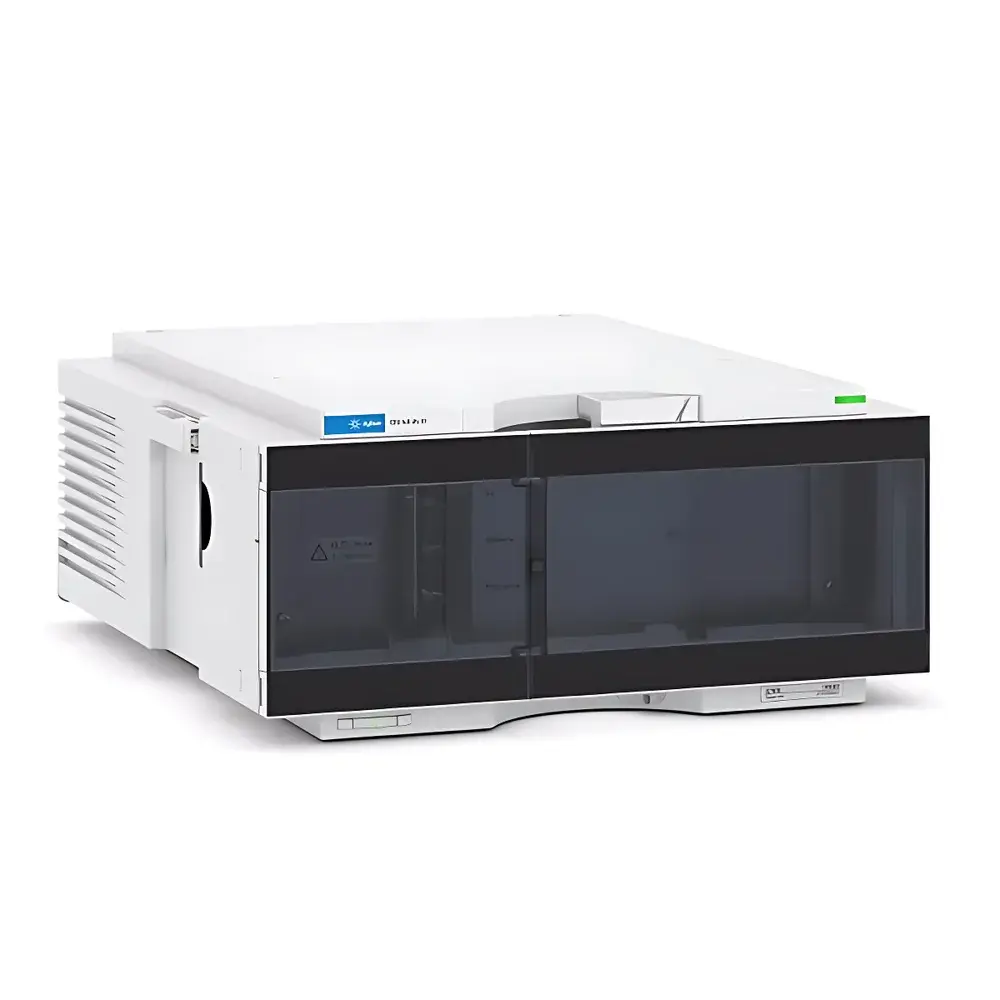
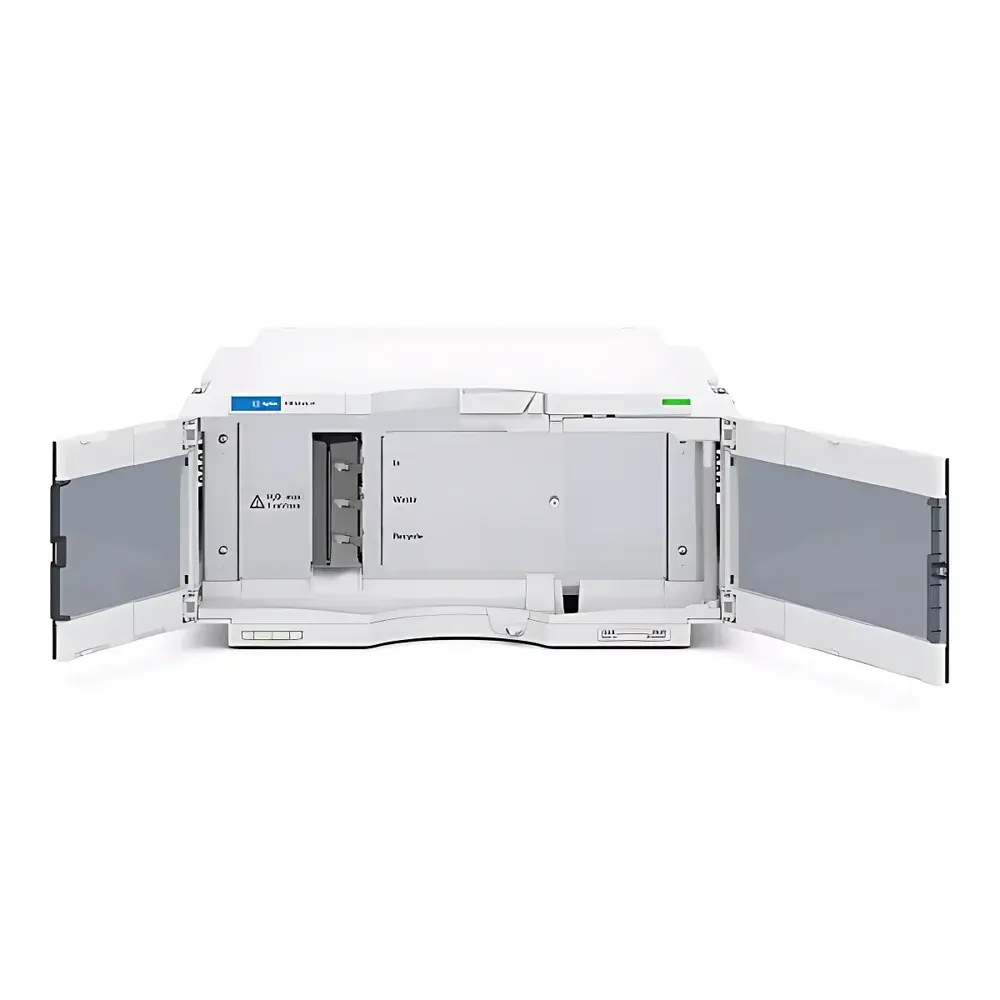
Agilent 1290 Infinity III Refractive Index Detector
| Brand | Agilent Technologies |
|---|---|
| Origin | Germany |
| Manufacturer Type | Original Equipment Manufacturer (OEM) |
| Origin Category | Imported Instrument |
| Model | 1290 Infinity III RID |
| Instrument Type | Refractive Index Detector (RID) |
| Compatible System | Ultra-High Performance Liquid Chromatography (UHPLC) |
| Flow Cell Design | Ultra-Low Dispersion Micro-Flow Cell |
| Data Acquisition Rate | 148 Hz |
| Detection Principle | Differential Refractometry |
| Compliance | Designed for GLP/GMP environments with support for FDA 21 CFR Part 11–compliant software workflows |
Overview
The Agilent 1290 Infinity III Refractive Index Detector (RID) is a high-performance, UHPLC-compatible differential refractometer engineered for universal detection of non-UV-absorbing analytes in liquid chromatography. Unlike UV-Vis or mass spectrometric detectors, the RID operates on the principle of measuring minute changes in the refractive index of the mobile phase as analyte molecules elute—making it indispensable for carbohydrates, polymers, surfactants, lipids, and other compounds lacking chromophores. Its integration into the Agilent 1290 Infinity III LC platform ensures full synchronization with binary and quaternary pumps, thermostatted column compartments, and advanced autosamplers—enabling seamless method transfer, gradient compatibility, and robust baseline stability under high-pressure (up to 1300 bar), high-flow-rate conditions. The detector’s optical architecture features a precisely temperature-controlled dual-beam interferometric system, minimizing thermal drift and enabling stable operation over extended run times without recalibration.
Key Features
- Ultra-low dispersion micro-flow cell (≤ 0.5 µL volume) minimizes band broadening and preserves chromatographic resolution—critical for narrow UHPLC peaks (FWHM < 2 s).
- 148 Hz real-time data acquisition rate captures transient peaks with high fidelity, supporting accurate integration and quantitation even at flow rates up to 2.0 mL/min.
- Integrated recirculation valve enables sample loop re-injection without passing through the flow cell—reducing solvent consumption by up to 30% per analysis and extending flow cell lifetime.
- Automated reference cell rinse function with programmable dwell and flush durations ensures consistent baseline stability across multi-day polymer characterization campaigns.
- Front-access service panel and modular component layout simplify routine maintenance—including lamp replacement, prism cleaning, and seal inspection—without requiring internal chassis disassembly.
- Early Maintenance Feedback (EMF) system monitors operational parameters (e.g., lamp intensity decay, temperature variance, pressure fluctuations) and triggers predictive alerts via OpenLab CDS software, aligning with preventive maintenance schedules required under ISO/IEC 17025 and ASTM D5296.
Advanced low-thermal-mass design reduces warm-up time to under two hours, accelerating instrument readiness and reducing downtime between analytical sequences.
Sample Compatibility & Compliance
The 1290 Infinity III RID supports aqueous and organic mobile phases including THF, chloroform, DMF, and acetonitrile—enabling broad applicability in synthetic polymer analysis (e.g., polystyrene, PMMA, PEG standards), natural polysaccharide profiling (e.g., dextran, cellulose derivatives), and small-molecule excipient quantification in pharmaceutical formulations. It complies with key regulatory frameworks: its hardware and firmware architecture are validated for use in GLP-compliant laboratories; when paired with Agilent OpenLab CDS 2.x or higher, it supports audit trails, electronic signatures, and 21 CFR Part 11–aligned user access controls. The detector meets IEC 61010-1 safety standards and carries CE marking for electromagnetic compatibility (EMC) and low-voltage directive compliance.
Software & Data Management
Native control and data processing are performed through Agilent OpenLab CDS, which provides method-driven acquisition, automated baseline correction algorithms (e.g., linear and polynomial drift compensation), and integrated calibration curve generation using certified polymer standards (e.g., NIST SRM 1475a). Raw refractometric signals are stored in vendor-neutral .d format and exportable to ASCII or CSV for third-party analysis (e.g., GPC/SEC software such as Cirrus or Empower). All instrument events—including lamp on/off cycles, temperature setpoint changes, and EMF-triggered warnings—are timestamped and logged with operator ID, satisfying traceability requirements for FDA inspections and internal quality audits.
Applications
- Gel Permeation Chromatography (GPC) / Size Exclusion Chromatography (SEC) for absolute molecular weight distribution (Mw, Mn, PDI) of synthetic and natural polymers.
- Quantitative analysis of sugars (e.g., glucose, fructose, sucrose) and sugar alcohols in food, beverage, and biofuel feedstock matrices.
- Stability-indicating assays for non-chromophoric excipients (e.g., mannitol, lactose) in parenteral and lyophilized drug products.
- Process monitoring of oligomer formation during condensation polymerization reactions.
- Method development and validation per USP , EP 2.2.46, and ISO 16000-18 for refractive index–based detection in regulated environments.
FAQ
What types of solvents are compatible with the 1290 Infinity III RID?
THF, chloroform, DMF, dichloromethane, and aqueous buffers are fully supported; methanol and ethanol require careful optimization due to volatility-induced baseline noise.
Can this RID be used with gradient elution methods?
Yes—its dual-beam optical compensation and active reference cell stabilization enable stable operation across solvent gradients, though refractive index shifts must be accounted for during calibration.
Is the detector compatible with third-party LC systems?
It supports analog voltage output (0–1 V) and digital communication via LAN, allowing integration with non-Agilent UHPLC platforms when configured with appropriate interface modules.
How often does the flow cell require cleaning?
Under typical polymer analysis conditions (THF + 0.1% BHT), cleaning is recommended every 200 injections or when baseline noise exceeds 5 nRIU RMS over 10 minutes.
Does the system support 21 CFR Part 11 compliance out-of-the-box?
Yes—when deployed with OpenLab CDS v2.5 or later and configured with role-based user accounts, electronic signatures, and immutable audit trails.





