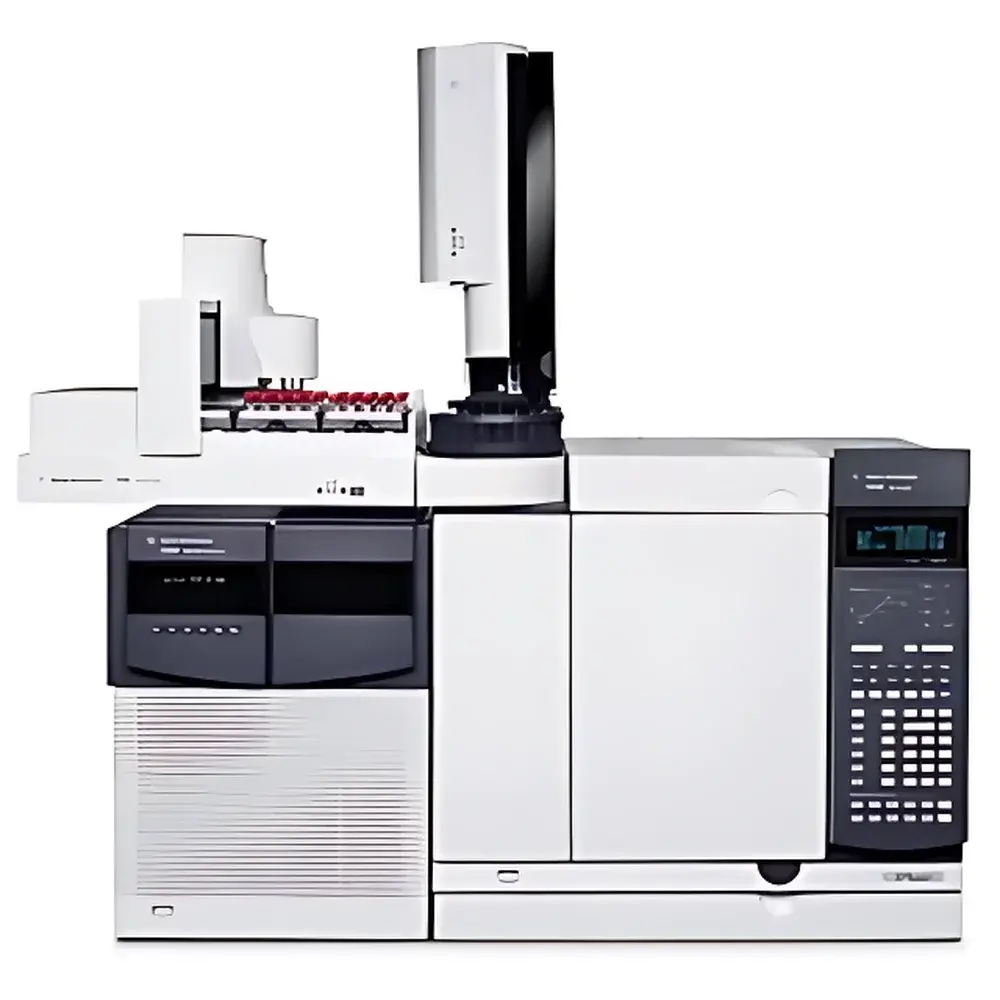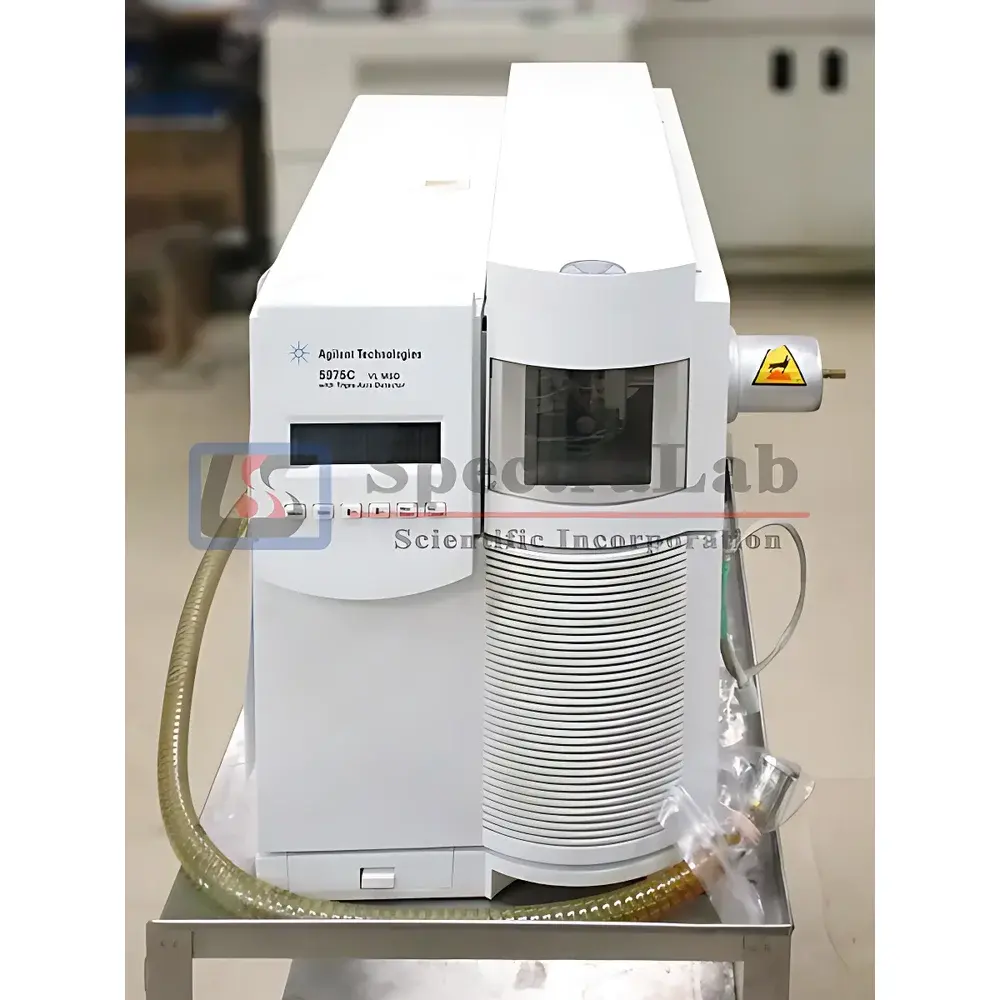
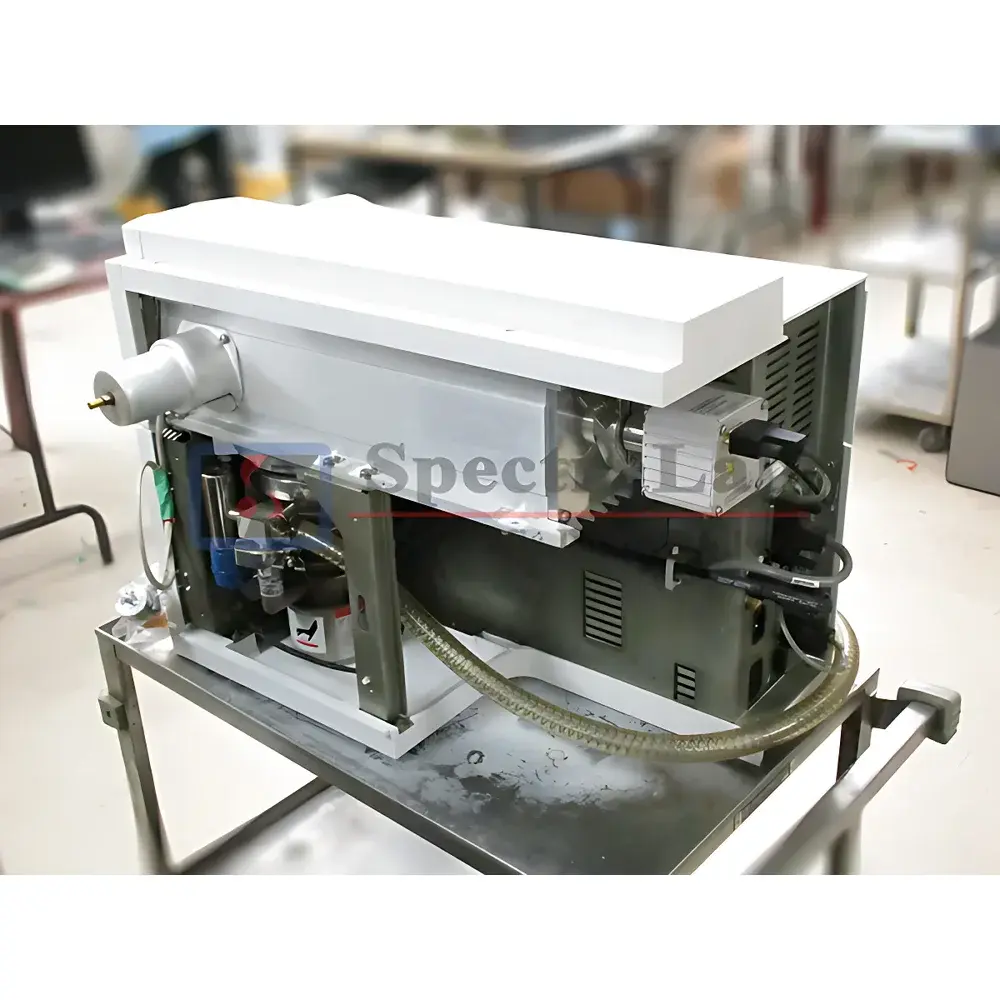
Agilent 5975C VL MSD Gas Chromatography/Mass Spectrometry Detector
| Brand | Agilent Technologies |
|---|---|
| Origin | USA |
| Model | 5975C VL MSD |
| Instrument Type | Quadrupole Mass Spectrometer (Electron Ionization) |
| Detection Principle | Electron Impact Ionization (EI) with Triple-Axis HED-EM Detector |
| Operating Temperature Range | Ion Source up to 350 °C, Quadrupole up to 200 °C |
| Mass Range | 1.6–1050 u |
| Mass Resolution | Unit Mass Resolution (Standard) |
| Dynamic Range | >10⁶ (Peak-to-Peak) |
| Typical Detection Limit (IDL) | <10 fg OFN (Octafluoronaphthalene) in Full Scan Mode |
| Software Platform | Agilent ChemStation (G1701EA) with DRS v2.x and TID Support |
| Compliance | ASTM E260, ISO 17025 (when operated under GLP conditions), USP <1225>, FDA 21 CFR Part 11 (with validated configuration) |
Overview
The Agilent 5975C VL MSD is a compact, high-reliability quadrupole mass spectrometer designed for routine gas chromatography/mass spectrometry (GC/MS) analysis. Engineered for precision and long-term stability, it integrates Agilent’s proprietary triple-axis high-energy dynode electron multiplier (HED-EM) detector, a high-temperature inert ion source (up to 350 °C), and a gold-coated quartz quadrupole mass filter. Its measurement principle relies on electron impact (EI) ionization at 70 eV, followed by mass-selective filtering via RF/DC voltage scanning across the quadrupole rods and detection of transmitted ions using secondary electron multiplication. This architecture delivers robust sensitivity, excellent signal-to-noise ratio, and consistent mass axis stability—even under extended operational cycles typical in QC laboratories performing environmental, food safety, or pharmaceutical residual solvent testing.
Key Features
- Triple-axis HED-EM detector: Enhances ion capture efficiency while rejecting neutral species, resulting in improved signal intensity and reduced chemical noise.
- Inert, high-temperature ion source (350 °C): Minimizes adsorption and decomposition of thermally labile or polar analytes; reduces source contamination from high-boiling compounds.
- Gold-coated quartz quadrupole: Provides true hyperbolic rod geometry for minimal field distortion, superior mass resolution, and exceptional mass calibration stability across temperature gradients (operable up to 200 °C).
- Normalized tuning algorithm: Dynamically balances electron multiplier gain, linearity, and longevity—ensuring reproducible response over instrument lifetime and enabling cross-system method transfer.
- Simultaneous SIM/Scan acquisition: Enables full-scan spectral confirmation and targeted quantitation within a single run without sensitivity trade-offs; dwell times configurable from 1 to 100 ms in 1-ms increments.
- Microfluidic flow control (5th-generation EPC): Delivers precise, leak-free carrier gas regulation with ultra-low dead volume; supports backflush, Deans switching, and multi-detector configurations (e.g., MSD/ECD).
Sample Compatibility & Compliance
The 5975C VL MSD is compatible with standard capillary GC columns (0.1–0.53 mm ID) and interfaces seamlessly with Agilent 6890N/7890A GC systems. It supports volatile and semi-volatile organic compounds (VOCs/SVOCs) including pesticides, PAHs, PCBs, residual solvents, and fragrance components. When operated with documented procedures and calibrated reference standards, the system meets analytical requirements defined in ASTM E260 (Standard Practice for Calibration of GC/MS Systems), ISO/IEC 17025 (for accredited testing labs), and USP (Validation of Compendial Procedures). With appropriate audit trail configuration and electronic signature implementation, it can be deployed in environments governed by FDA 21 CFR Part 11 and GLP/GMP frameworks.
Software & Data Management
Controlled via Agilent ChemStation G1701EA software, the 5975C VL MSD supports integrated data acquisition, processing, and reporting. Key capabilities include:
- Decomposition Report Software (DRS v2.x): Performs automated spectral deconvolution of co-eluting peaks using NIST AMDIS algorithms—enabling accurate library matching and quantitative correction for overlapping components.
- Trace Ion Detection (TID): Applies real-time baseline subtraction and noise filtering to enhance detection limits in complex matrices without compromising specificity.
- QEdit integration: Allows side-by-side comparison of raw scan spectra, deconvoluted spectra, and SIM traces—facilitating method validation and troubleshooting.
- Report generation: Exportable in PDF, CSV, and XML formats; supports custom templates compliant with internal QA/QC or regulatory submission requirements.
All software modules are fully compatible with Windows 7/10 (32-bit) platforms and support LIMS connectivity via OpenLab CDS interfaces.
Applications
This system is routinely deployed in environmental monitoring (EPA Method 8270D, 8082A), food contaminant screening (EU Regulation 2023/1489), forensic toxicology (SWGDAM guidelines), and pharmaceutical impurity profiling (ICH Q2(R2)). Its compact footprint and low maintenance profile make it especially suitable for contract testing labs, university core facilities, and mid-sized R&D departments requiring reliable, cost-effective GC/MS capability without sacrificing data quality or regulatory readiness.
FAQ
What is the typical service life expectancy of a refurbished 5975C VL MSD?
With proper maintenance—including regular ion source cleaning, EM replacement every 12–18 months, and annual quadrupole calibration—the unit demonstrates stable performance for 8–10 years post-manufacture.
Is this instrument compatible with modern GC systems such as the 7890B or 8890?
Yes, when equipped with the appropriate interface kit (G3430A or G3431A) and firmware update (Rev. A.03.02 or later), it operates natively with all Agilent GC platforms released since 2005.
Does the 6-month warranty cover detector components and electronics?
Yes—the warranty includes full coverage of the HED-EM detector assembly, quadrupole housing, ion source, and all embedded control electronics, excluding consumables (filaments, gaskets, septa).
Can the system be validated per 21 CFR Part 11 requirements?
Yes—when configured with ChemStation G1701EA Rev. E.02.01.1820 or higher, enabled audit trails, user access controls, and electronic signatures, it satisfies key technical controls outlined in FDA guidance.
What documentation accompanies a refurbished unit?
Each shipment includes a Certificate of Inspection, calibration report (per ASTM E260), full service history, and a copy of the original factory test data—all traceable to Agilent’s serial-numbered records.