
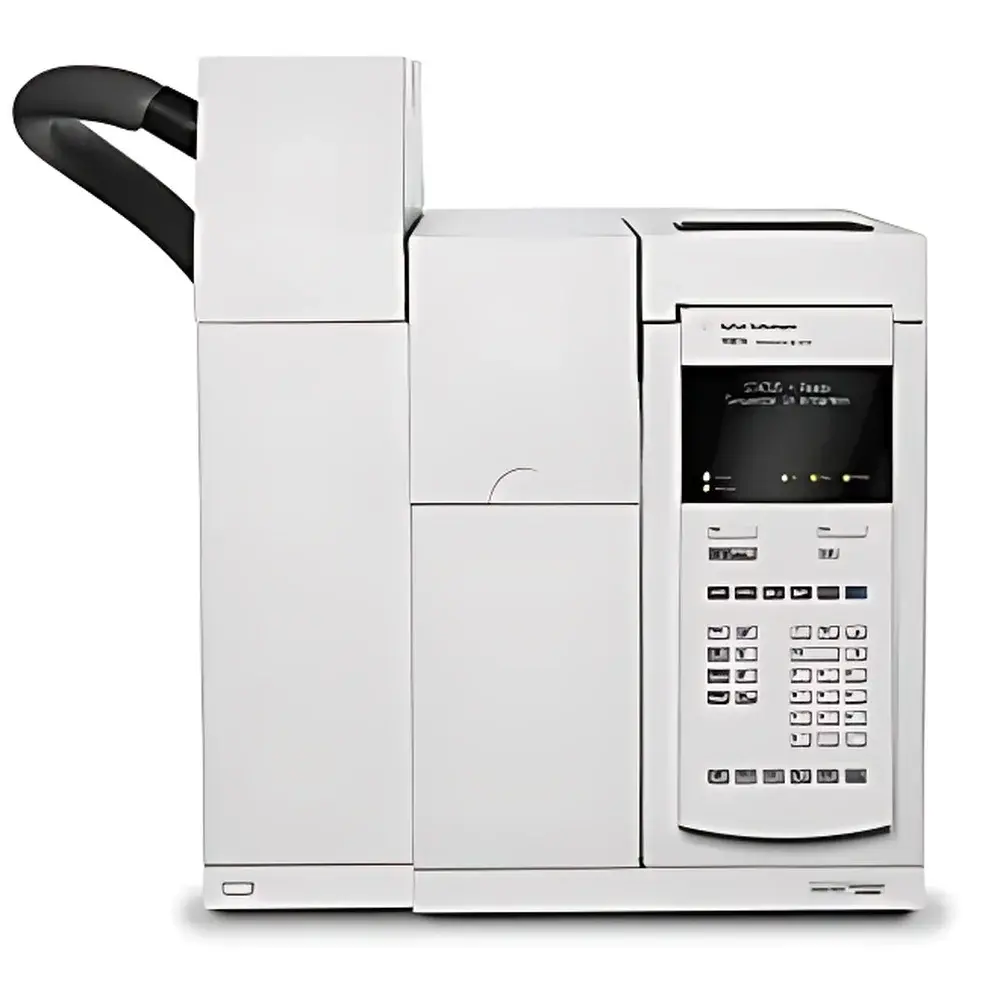
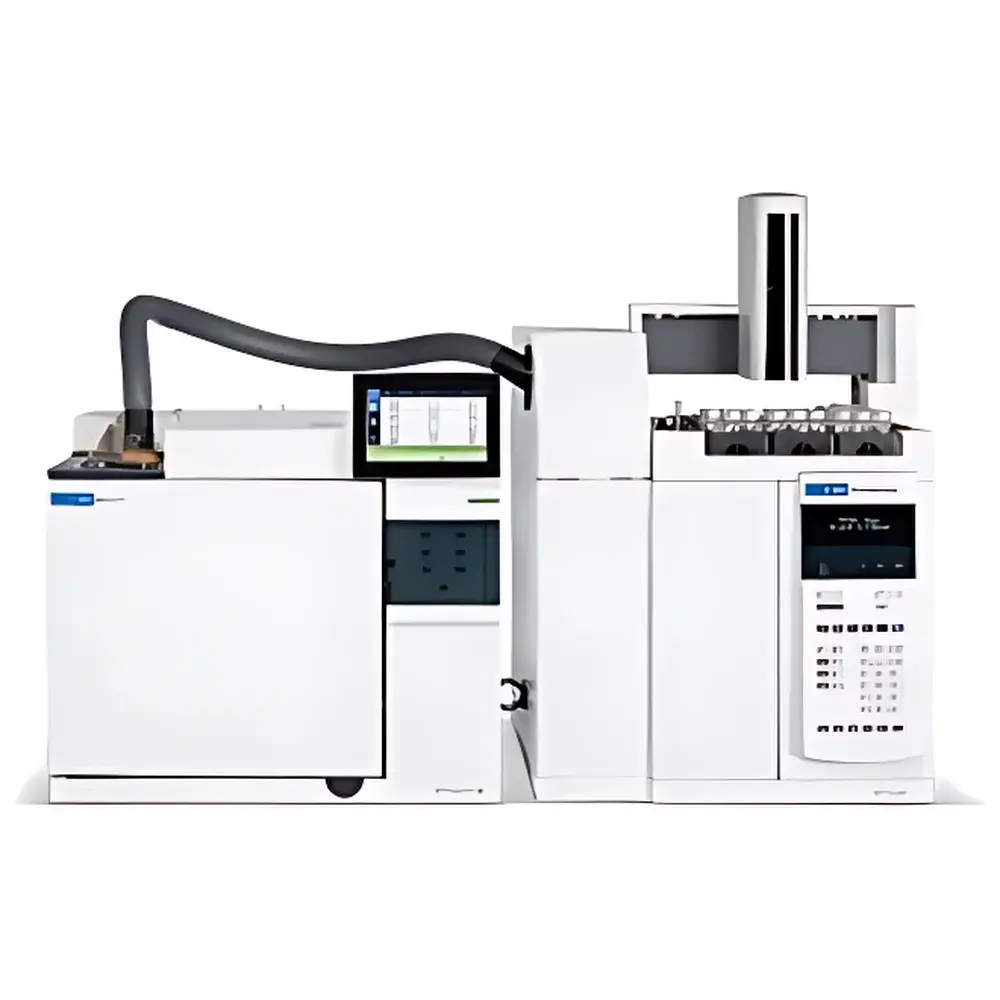
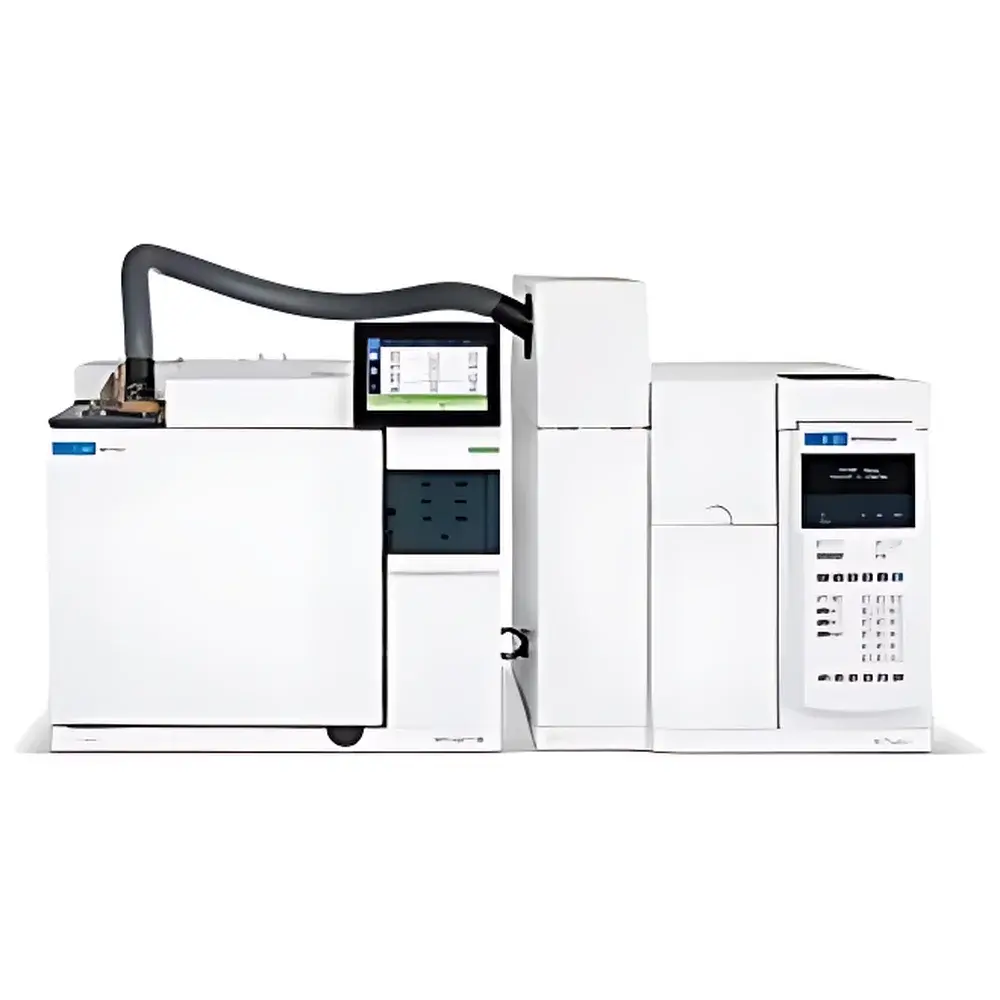
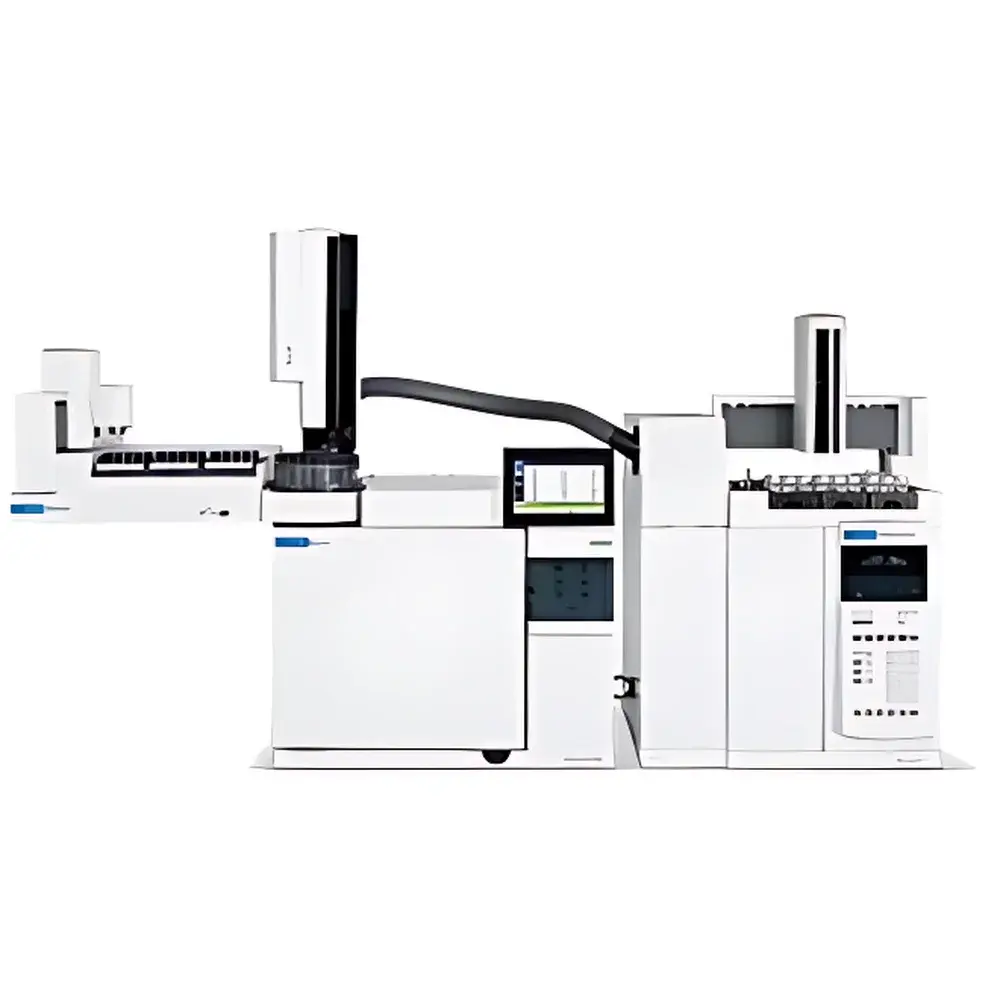
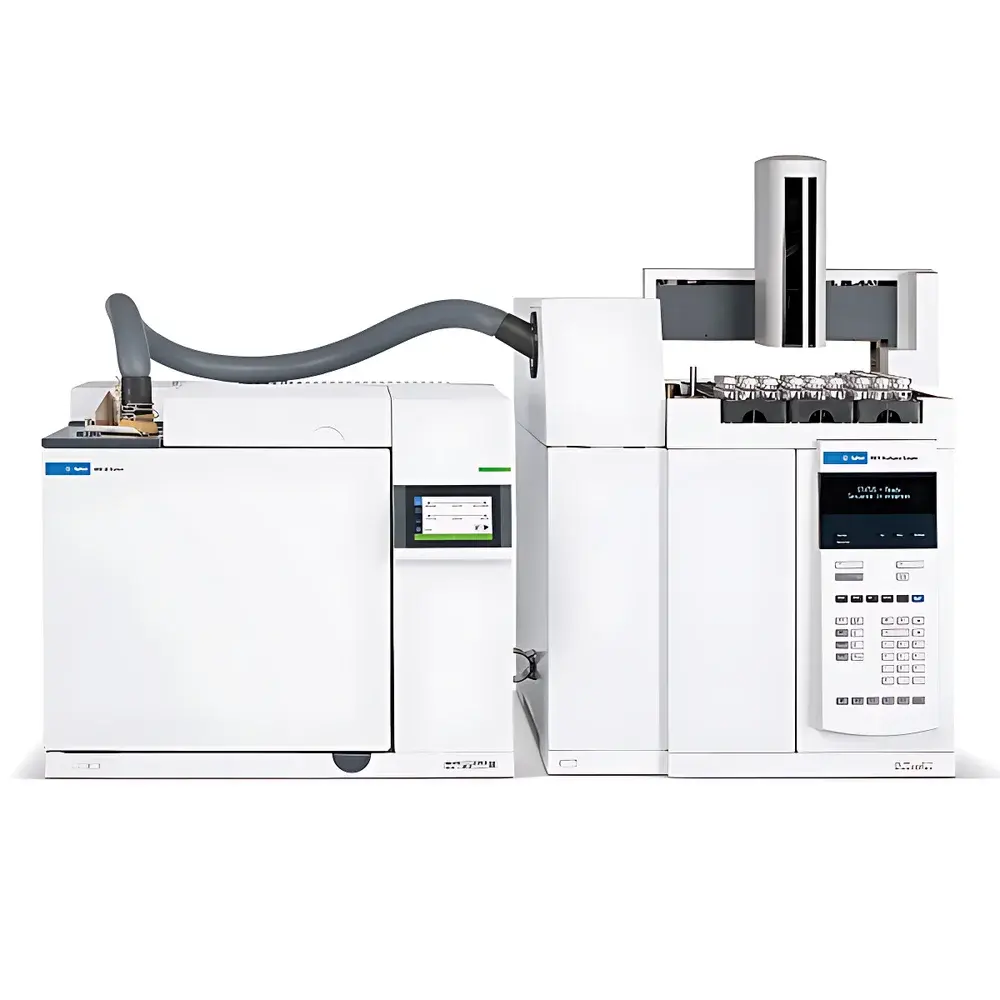
Agilent 7697A Headspace Sampler
| Brand | Agilent Technologies |
|---|---|
| Origin | Shanghai, China |
| Manufacturer Type | Original Equipment Manufacturer (OEM) |
| Product Category | Domestic |
| Model | Agilent 7697A |
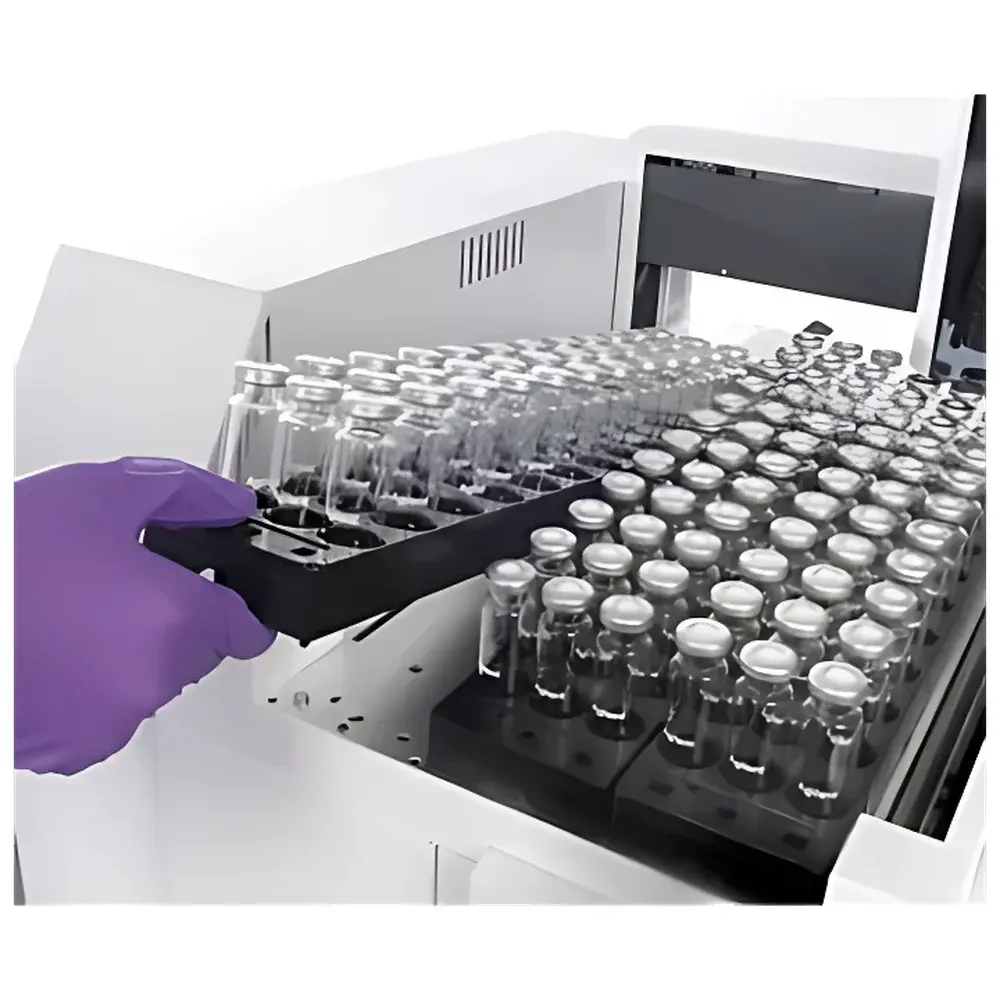
| Sample Vial Capacity (Standard) | 111 positions, including 3 priority vial slots |
| Sample Vial Capacity (Optional) | 12-position configuration for academic or low-throughput labs |
| Vial Sizes Supported | 10 mL, 20 mL, and 22 mL vials without adapters |
| Injection Valve Loop Volume | Not specified in source data |
| Carrier Gas Compatibility | Hydrogen (H₂), Helium (He), Nitrogen (N₂) |
| Leak Detection | Automated, real-time vial pressure integrity check prior to analysis |
| Pressure Control | Independent headspace vial pressure and column head pressure regulation |
| Barcoding | Integrated sample vial barcode reader with LIMS-compatible data transmission |
| Method Transfer | Cross-platform method conversion and rapid re-optimization via Agilent Method Translation Software |
| Multi-HeadSpace Modes | Multiple Headspace Extraction (MHE) up to 100 cycles per vial |
| Vial Depressurization | Automatic post-analysis vial depressurization before return to tray |
| Interface | GC inlet-compatible transfer line kit for co-location with Agilent 7693A ALS on same GC inlet |
Overview
The Agilent 7697A Headspace Sampler is a fully automated, high-precision sample introduction system engineered for quantitative volatile and semi-volatile compound analysis in gas chromatography (GC). It operates on the principle of equilibrium headspace sampling—where analytes partition between a liquid or solid matrix and the vapor phase above it at controlled temperature and pressure. Designed as a native extension of the Agilent 7890 GC platform and leveraging architectural synergies with the 7693A AutoLiquid Sampler (ALS), the 7697A delivers inert, low-dead-volume sample pathways to minimize analyte degradation, adsorption, or carryover. Its thermally stable oven and precision pressure control architecture ensure reproducible equilibration kinetics across diverse matrices—including pharmaceutical formulations, environmental water samples, food packaging migrants, and forensic toxicology specimens. The system supports both static and dynamic headspace configurations through firmware-enabled operational modes and integrates seamlessly into regulated laboratory environments requiring audit-ready workflows.
Key Features
- Inert flow path constructed from deactivated fused silica and electropolished stainless steel to preserve labile analytes (e.g., aldehydes, terpenes, residual solvents)
- Automated, pressure-based vial leak detection performed during pressurization—no calibration required, eliminating false positives and preserving method robustness
- Independent dual-pressure control: headspace vial pressure (0–30 psi) and column head pressure (0–100 psi) are regulated separately to prevent backpressure-induced peak distortion or transfer inefficiency
- Hydrogen-compatible operation with integrated safety logic, including automatic shutdown upon pressure anomaly detection and leak verification prior to each injection
- Priority vial slots (3 positions) enable urgent sample insertion mid-sequence without interrupting ongoing runs—critical for QA/QC release testing and clinical turnaround scenarios
- Hot-swappable sample trays: users may replace full trays during active sequence execution, minimizing instrument downtime and maximizing throughput in multi-shift operations
- Integrated barcode reader compliant with GS1-128 and Code 128 standards; links vial ID directly to CDS acquisition metadata for full traceability under 21 CFR Part 11 and ISO/IEC 17025 requirements
- Energy-efficient sleep/wake cycle management reduces helium or hydrogen consumption by up to 65% during idle periods without compromising thermal stability or reactivation time
Sample Compatibility & Compliance
The 7697A accommodates standard crimp-top headspace vials of 10 mL, 20 mL, and 22 mL volumes without mechanical adapters—ensuring consistent septum penetration depth and minimizing vial-to-vial variability. Its universal vial heater block supports ASTM D3742, USP , EP 2.4.24, and ISO 11843-compliant methods. All firmware and hardware design elements conform to IEC 61000-6-3 (EMC) and IEC 61010-1 (safety) standards. Data integrity features—including electronic signatures, immutable audit trails, and user-level access controls—are validated for GLP, GMP, and FDA-regulated laboratories. System qualification documentation (DQ/IQ/OQ/PQ) templates are provided in Agilent’s IQ/OQ Kit and align with Annex 11 and ALCOA+ data governance principles.
Software & Data Management
Control is natively supported via Agilent OpenLab CDS (ChemStation Edition and Modern Version) and MassHunter Quantitative Analysis software. Third-party integration includes Waters Empower™ 2 and Empower™ 3 through ASTM E1381-compliant instrument driver protocols. Method translation tools allow direct import of legacy methods from Agilent 7693A, Gerstel MPS, or Thermo TriPlus RSH platforms—requiring only vial size, equilibration time, and oven temperature as input parameters. All method parameters, sequence logs, and raw pressure/temperature event timestamps are stored in a relational database schema compatible with LIMS interfaces (e.g., LabWare, STARLIMS) via ODBC or RESTful API. Audit trail records capture operator identity, timestamp, parameter changes, and injection success/failure status—retained for ≥15 years per configurable retention policy.
Applications
The 7697A is routinely deployed in pharmaceutical residual solvent testing (ICH Q3C), environmental VOC monitoring in drinking water (EPA Method 502.2, 524.4), forensic blood alcohol quantification (AOAC 933.04), flavor and fragrance profiling in beverages, and polymer additive migration studies (ISO 10993-12). Its MHE mode enables ultra-trace detection of low-part-per-quadrillion (ppq) analytes in complex biological matrices, while MHC enhances signal-to-noise ratios for quantitative confirmation in regulated bioanalysis. Academic users leverage its modular architecture for method development in green chemistry applications—substituting helium with hydrogen carrier gas without sacrificing resolution or repeatability.
FAQ
Can the 7697A be used with non-Agilent GC systems?
Yes—the 7697A communicates via industry-standard RS-232, Ethernet, and GPIB interfaces and supports generic GC trigger protocols compatible with Shimadzu, Thermo Fisher, and PerkinElmer instruments.
Is method validation support included?
Agilent provides application notes, system suitability test (SST) checklists, and IQ/OQ documentation packages aligned with USP and ASTM E2500-13 guidelines.
What maintenance intervals are recommended for the vial piercer and transfer line?
The septum-piercing needle requires replacement every 10,000 injections; the heated transfer line should undergo quarterly bake-out and annual passivation per Agilent Maintenance Guide G1892-90003.
Does the system support unattended overnight operation?
Yes—integrated thermal stabilization, power-fail recovery, and watchdog timer functions ensure uninterrupted multi-day sequences with automatic error logging and email alerting via SMTP configuration.
How is data integrity ensured during networked operation?
All communications use TLS 1.2 encryption; CDS-generated raw data files (.D, .CDF) are SHA-256 hashed at acquisition and digitally signed to prevent tampering—fully compliant with 21 CFR Part 11 Subpart B §11.10(d).




