
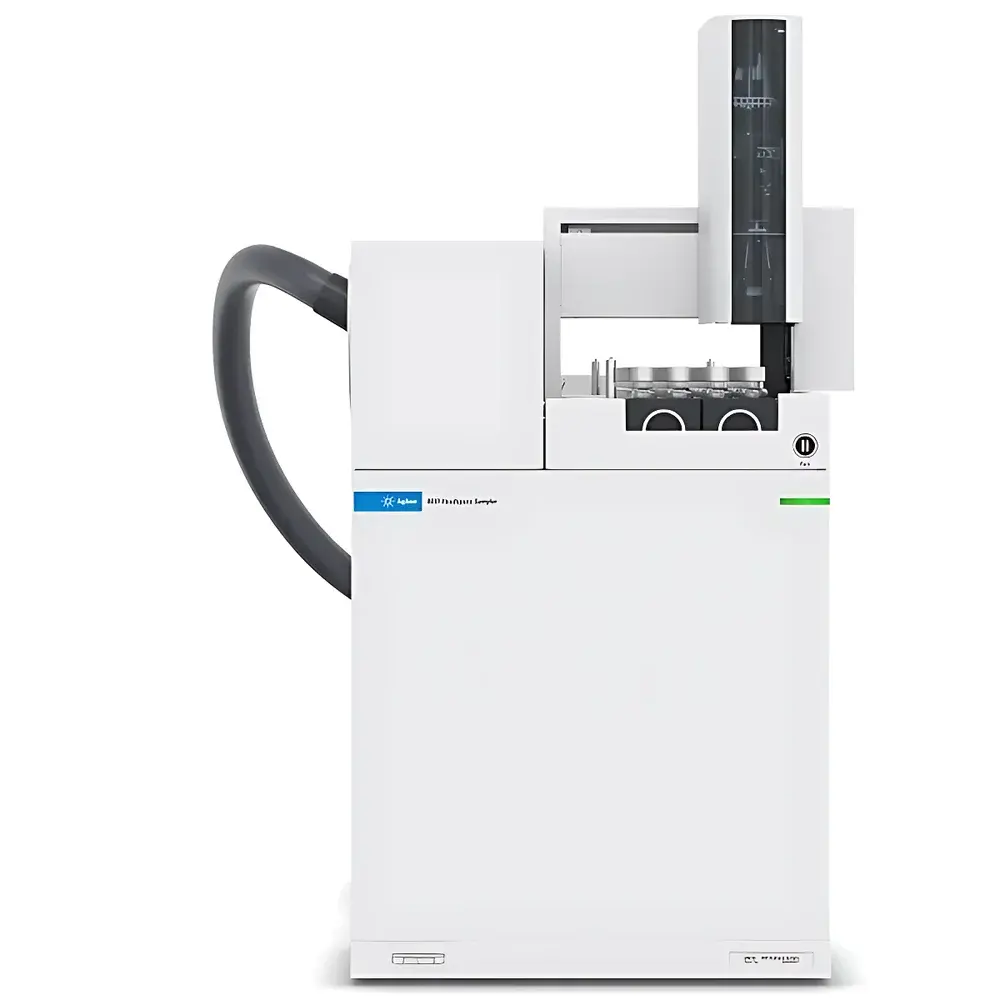
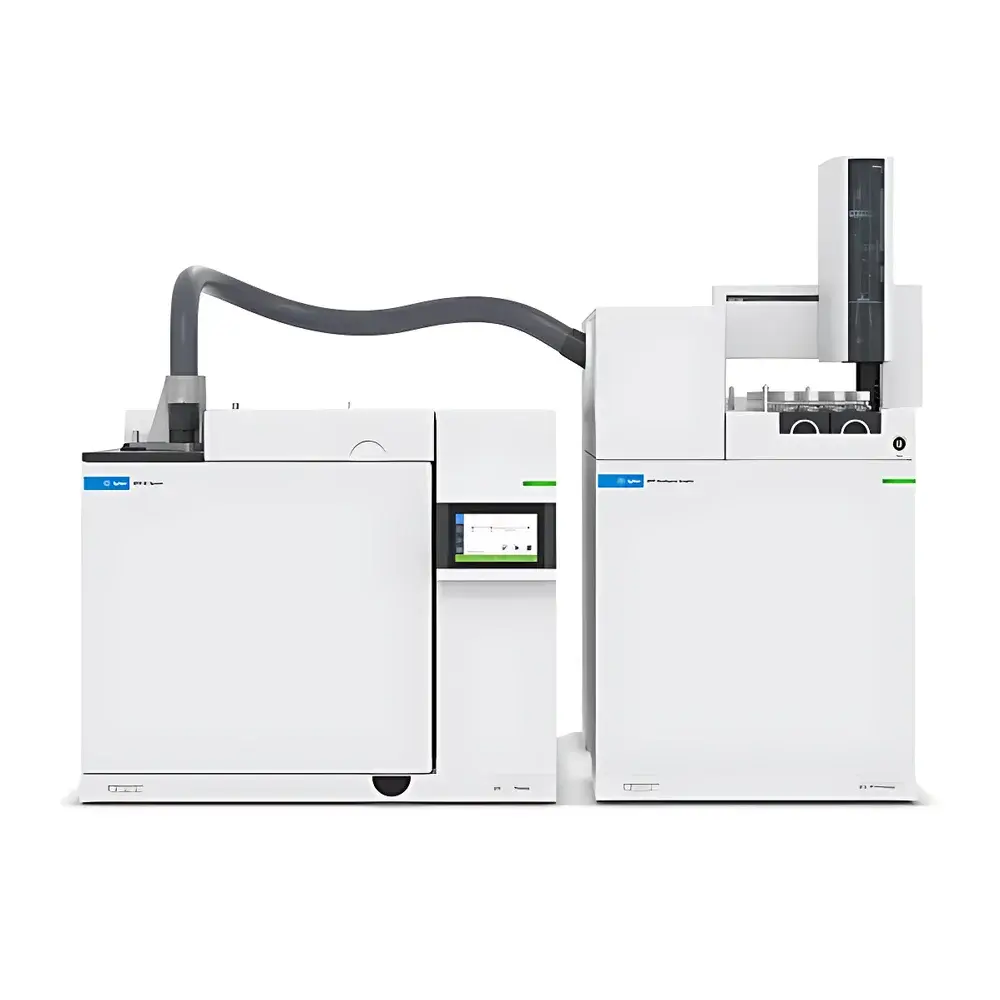
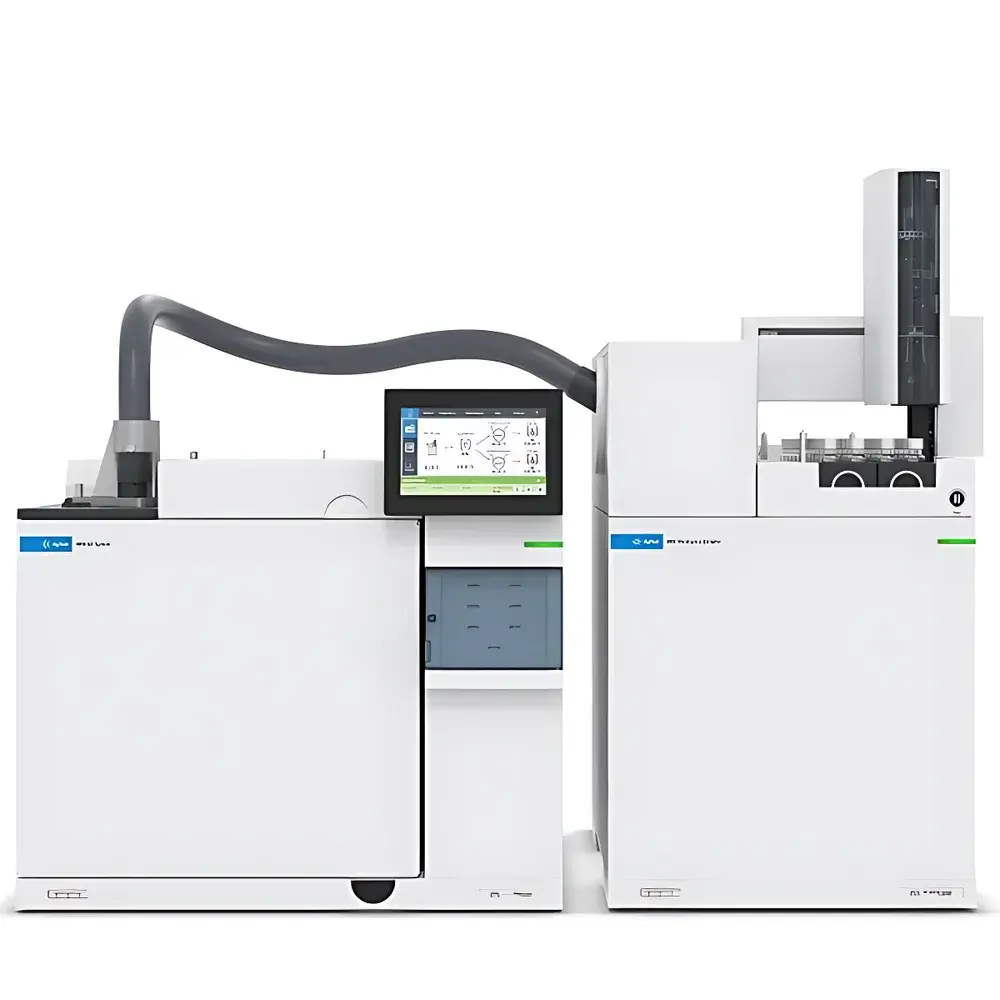
Agilent 8697 Headspace Sampler
| Brand | Agilent Technologies |
|---|---|
| Origin | Shanghai, China |
| Manufacturer Type | Original Equipment Manufacturer (OEM) |
| Regional Classification | Domestic (China-manufactured) |
| Model | 8697 |
| Instrument Type | Static Headspace Sampler |
| Automation Level | Fully Automatic |
| Valve Temperature Control Range | Ambient + 5 °C to 300 °C |
| Sample Vial Capacity | 48 positions |
| Compatible Vial Sizes | 10 mL, 20 mL, 22 mL |
Overview
The Agilent 8697 Headspace Sampler is a fully automated static headspace sampling platform engineered for high-precision, high-throughput volatile organic compound (VOC) analysis in gas chromatography (GC) workflows. It operates on the fundamental principle of static headspace equilibrium—where a sealed sample vial containing liquid or solid matrix is heated to promote partitioning of volatile analytes into the vapor phase above the sample (the “headspace”). Once thermodynamic equilibrium is achieved, a precise volume of headspace gas is transferred via a pressurized, temperature-controlled valve system directly into the GC inlet. This technique eliminates matrix interference from complex, non-volatile samples such as blood, soil, polymers, pharmaceutical formulations, and electronic materials—enabling robust quantitation without derivatization or extensive sample preparation. Designed for seamless integration with Agilent GC platforms—including the 8890, 8850, 8860, and Intuvo 9000 series—the 8697 leverages microflow Electronic Pressure Control (EPC) modules with atmospheric pressure compensation to ensure consistent carrier gas delivery, minimize carryover, and support method transferability across laboratories.
Key Features
- Fully automated operation with intuitive touchscreen and web-browser interface for real-time monitoring of sampler status, method guidance, consumables tracking, and system diagnostics
- 48-position standard sample tray (expandable to 120 positions using optional 8697-XL tray with five removable racks)
- Independent carrier gas flow path—identical to that of the Agilent 7697A—enabling safe, controlled venting of sample vials prior to injection
- Optimized transfer line with Captive septum retention nut and reinforced inlet bracket for leak-tight, reproducible connections
- Simultaneous heating and agitation of up to 12 vials (sample stacking), reducing total analysis cycle time by up to 60% compared to sequential processing
- Universal vial compatibility: supports 10 mL, 20 mL, and 22 mL crimp-top vials—multiple sizes may be loaded concurrently within a single sequence
- Hot-swappable sample trays with intelligent pause functionality: allows tray replacement mid-sequence without interrupting instrument calibration or method integrity
- Optional 4 °C cooling plate for the 8697-XL tray to stabilize thermolabile analytes
- Optional barcode reader for automated sample identification and LIMS-compatible workflow traceability
- XLSI (eXtended Liquid/Sample Interface) accessory enables co-location of headspace sampler and autosampler on a single GC inlet port
Sample Compatibility & Compliance
The 8697 accommodates diverse sample matrices requiring VOC analysis under regulatory-compliant conditions. It supports applications aligned with ASTM D3699 (benzene in gasoline), USP (residual solvents in pharmaceuticals), ISO 11843-7 (detection capability for headspace-GC), and EPA Method 502.2 (volatile halogenated hydrocarbons in water). Its EPC architecture meets GLP/GMP requirements for audit-ready operation, including full electronic logging of method parameters, run history, maintenance events, and calibration records. The system supports 21 CFR Part 11–compliant data integrity features when used with Agilent OpenLab CDS software, including user authentication, electronic signatures, and immutable audit trails.
Software & Data Management
Controlled via Agilent OpenLab CDS or GC’s native browser-based interface, the 8697 provides guided setup wizards, automatic leak detection, retention time and resolution trend reporting, and predictive consumables monitoring. System logs—including temperature profiles, valve actuation timestamps, pressure transients, and error codes—are exportable in CSV or PDF format for internal review or regulatory submission. Sequence files embed metadata such as vial position, equilibration time, oven ramp rate, and agitation speed—ensuring full method reproducibility and traceability. Firmware updates are delivered through secure, authenticated channels to maintain compliance continuity.
Applications
The 8697 delivers reliable performance in environmental testing (e.g., VOCs in soil and groundwater), clinical toxicology (blood ethanol, volatile anesthetics), food and beverage quality control (residual solvents, flavor compounds), polymer manufacturing (monomer residuals, extractables), and pharmaceutical QC (ICH Q3C-compliant residual solvent testing). Its ability to handle heterogeneous solids, viscous emulsions, and thermally labile biological fluids makes it suitable for method development where direct injection would compromise column lifetime or detector response.
FAQ
What sample vial sizes does the Agilent 8697 support?
The 8697 accepts 10 mL, 20 mL, and 22 mL crimp-top vials; multiple sizes can be loaded simultaneously in one tray.
Is the 8697 compatible with non-Agilent GC systems?
While optimized for Agilent GC platforms (8890/8850/8860/Intuvo 9000), it can interface with third-party GCs via analog/digital I/O or custom protocol configuration—subject to hardware and software validation.
How does the sample stacking function improve throughput?
By initiating equilibration and agitation of up to 12 vials in parallel during GC run time, the 8697 reduces idle instrument time and enables near-continuous injection scheduling.
Can the 8697 perform multiple headspace extraction (MHE) or multiple headspace concentration (MHC)?
Yes—method programming supports iterative headspace sampling and cold-trap accumulation protocols, enabling enhanced sensitivity and matrix-matched calibration for challenging quantitation tasks.
Does the 8697 include built-in diagnostics for preventive maintenance?
Yes—real-time pressure monitoring, automatic leak checks, valve cycle counters, and temperature deviation alerts are embedded in firmware and reported via the instrument dashboard.
Related Products





