
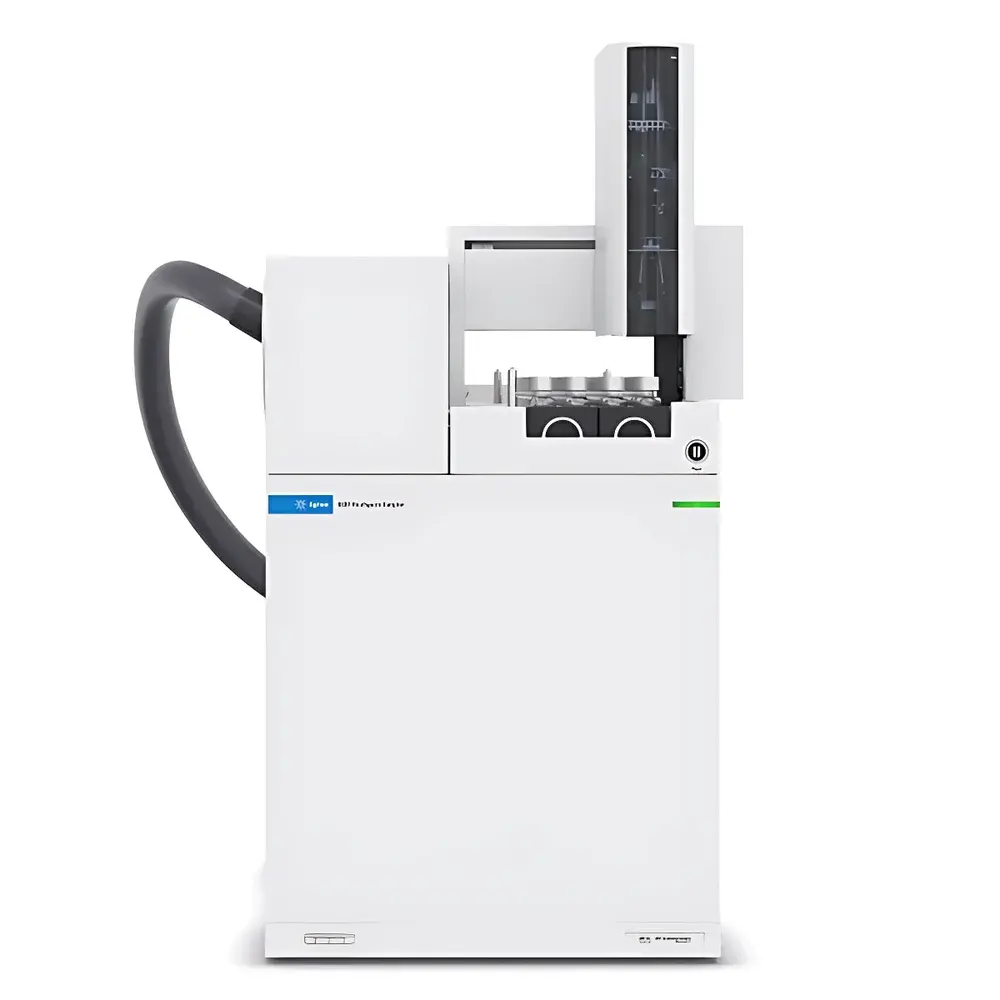
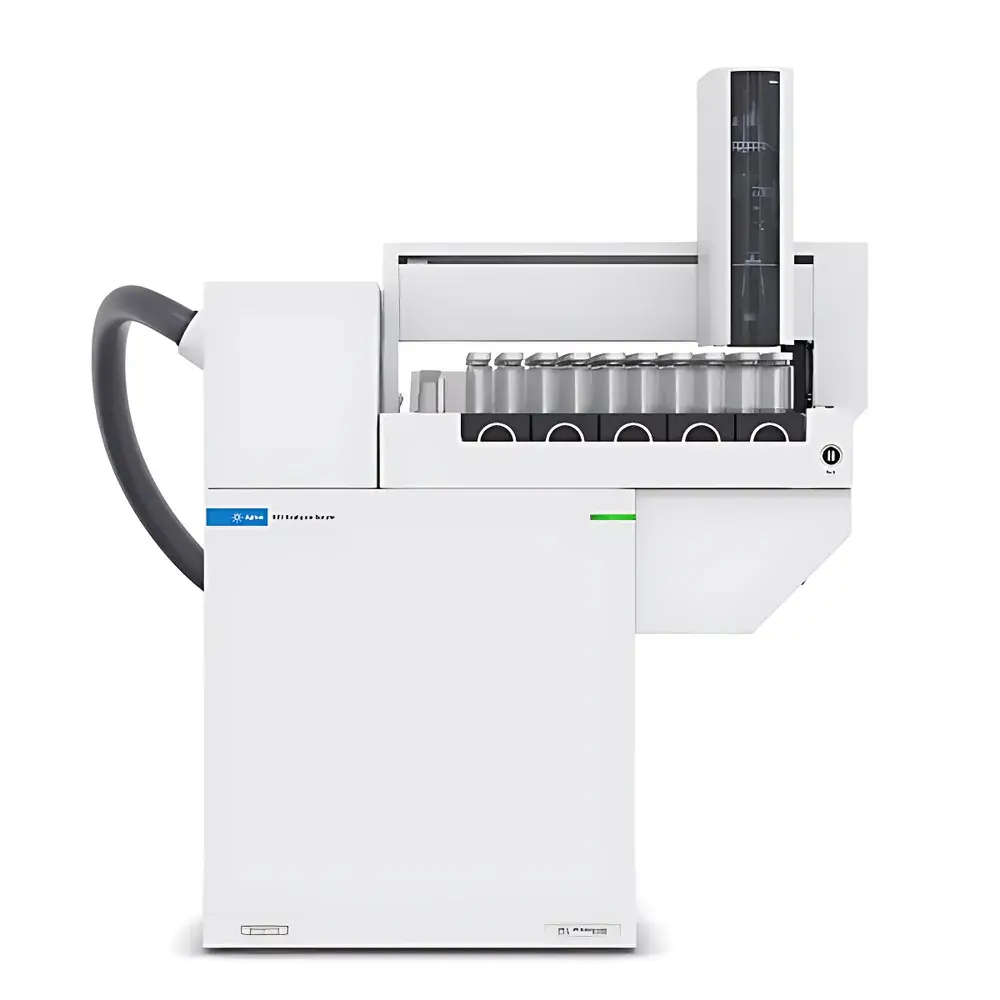
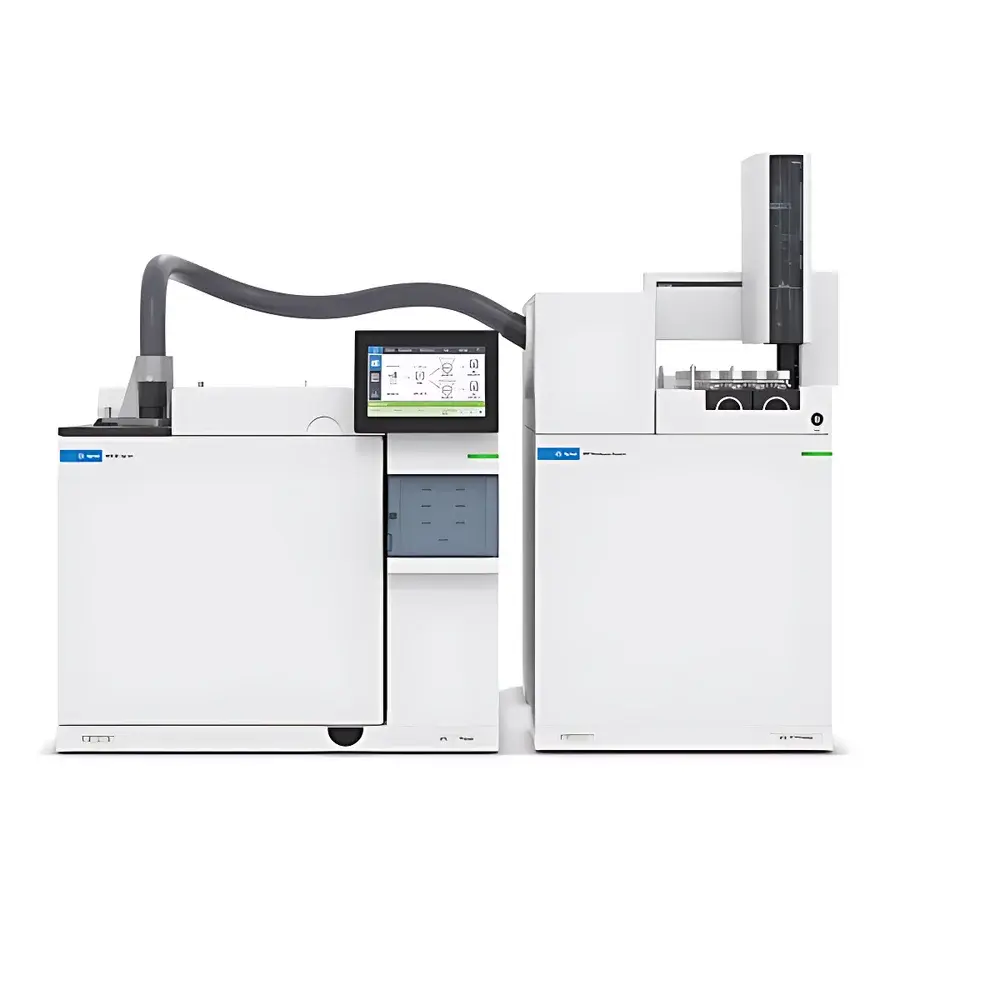
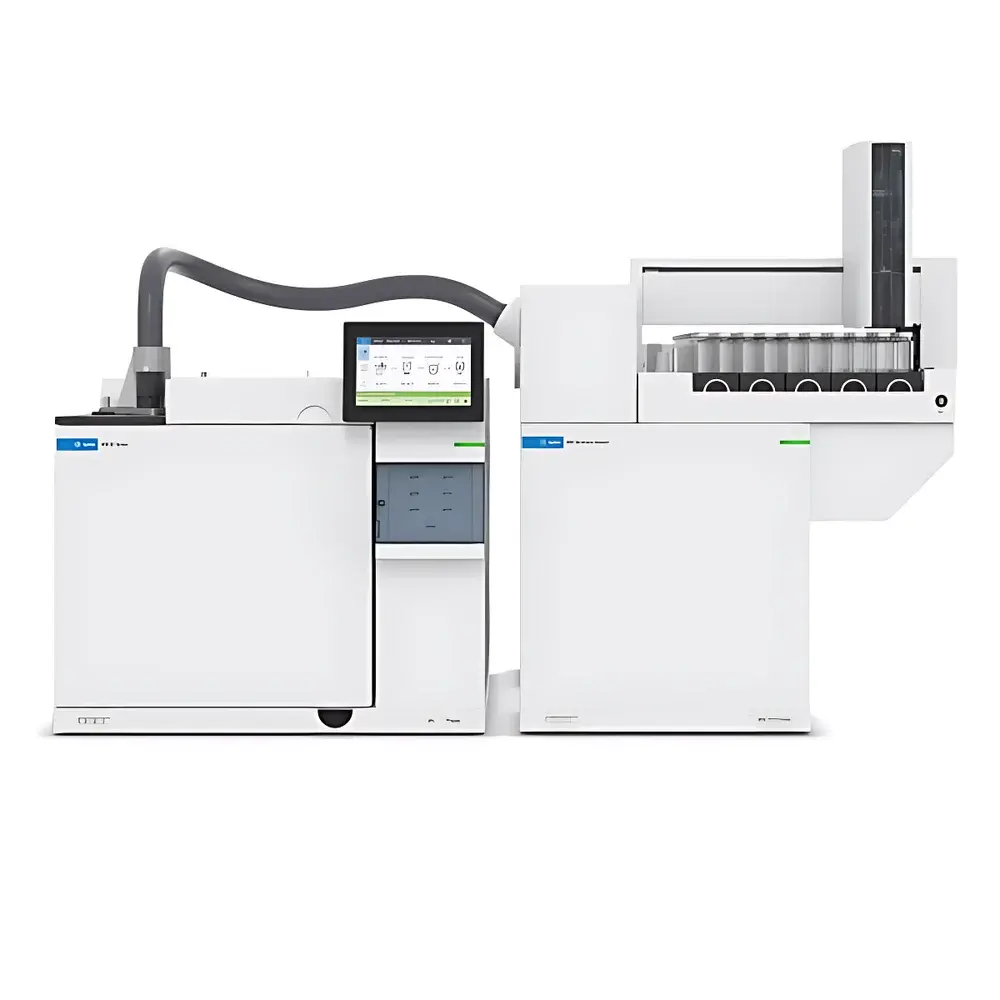
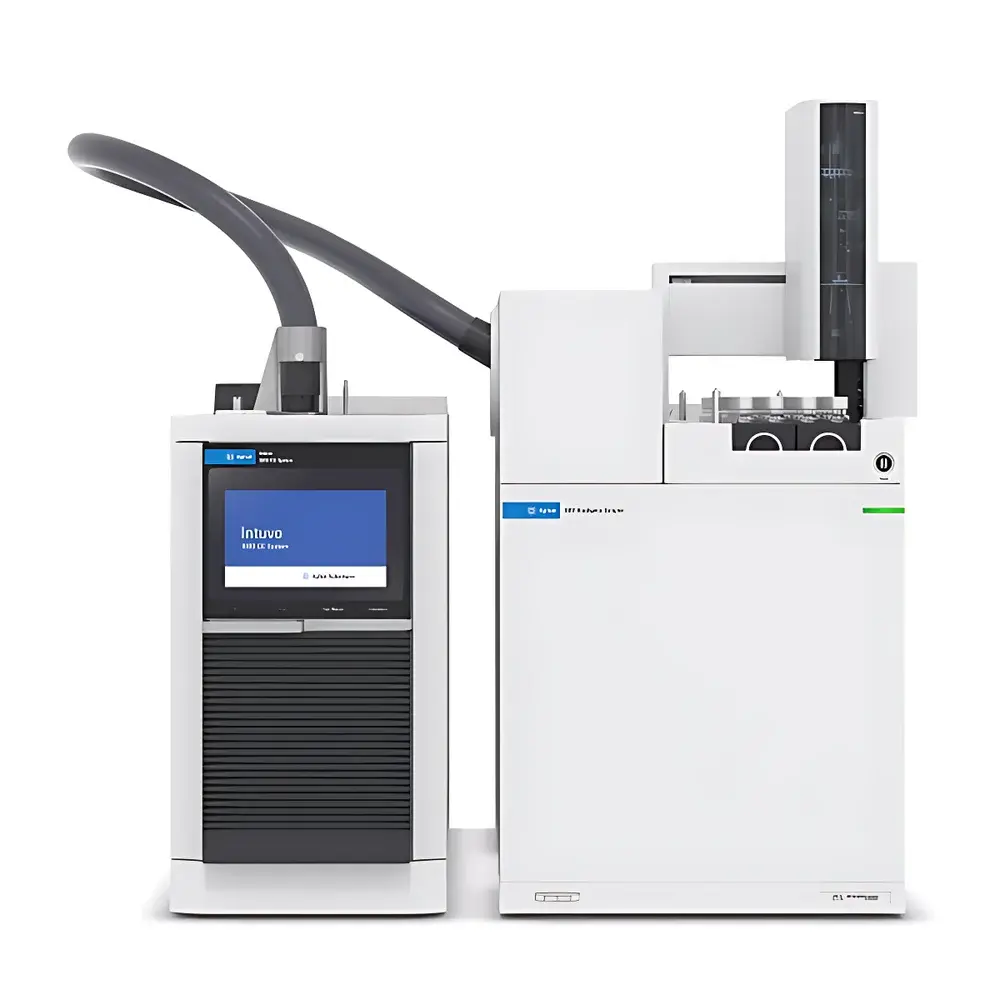
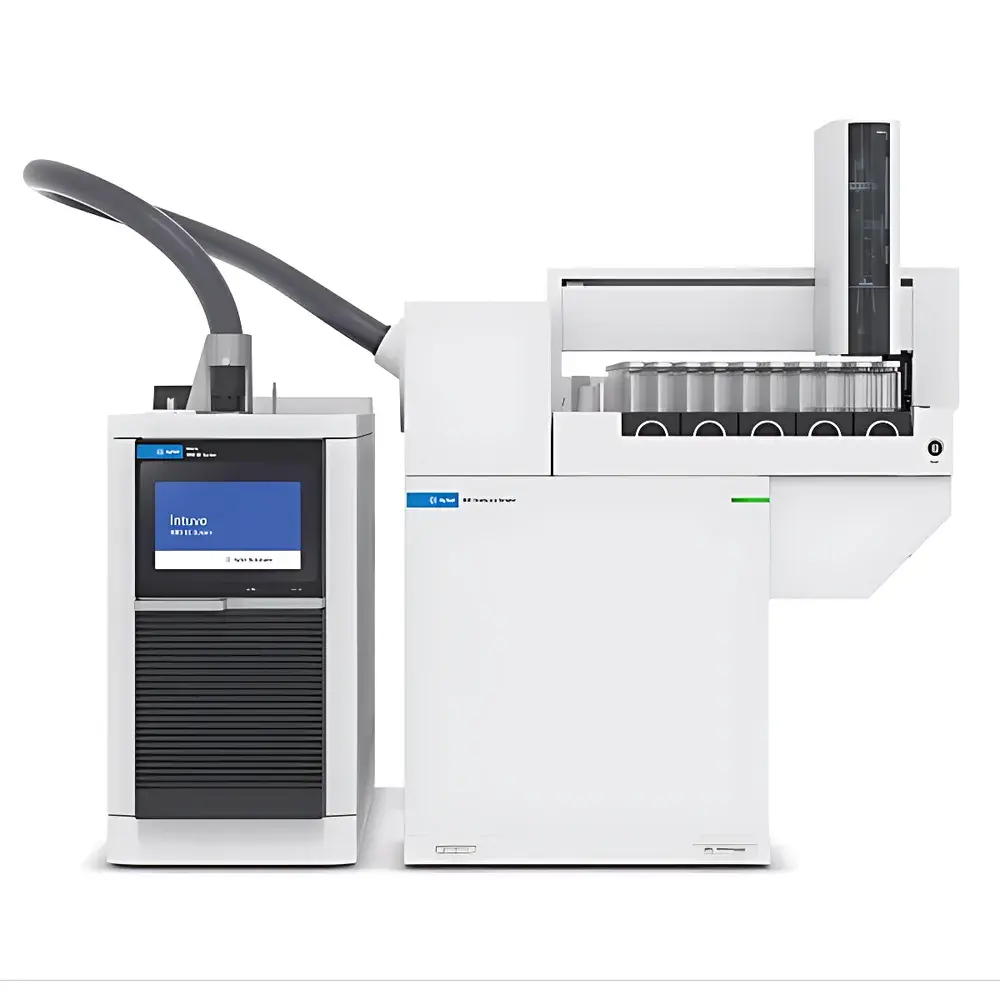
Agilent 8697 Headspace Sampler with XL Sample Tray
| Brand | Agilent Technologies |
|---|---|
| Origin | Shanghai, China |
| Manufacturer Type | Original Equipment Manufacturer (OEM) |
| Regional Classification | Domestic (China-manufactured) |
| Model | 8697 |
| Pricing | Available upon request |
| Temperature Control Precision | Optional cooling plate enables sample stabilization at 4 °C |
| Vial Sizes Supported | 10 mL, 20 mL, 22 mL |
Overview
The Agilent 8697 Headspace Sampler with XL Sample Tray is a high-integrity, GC-integrated automation platform engineered for reproducible headspace analysis in regulated and research-intensive laboratories. It operates on the principle of equilibrium headspace sampling—where volatile analytes partition between a liquid or solid sample matrix and the gas phase above it under controlled temperature and time conditions—followed by precise pneumatic transfer of the equilibrated vapor to a gas chromatograph. Designed as a native companion to Agilent’s 8890, 8860, and Intuvo 9000 GC systems, the 8697 leverages microfluidic Electronic Pressure Control (EPC) modules with atmospheric pressure compensation and valve-based injection to minimize carryover, improve retention time stability, and ensure inter-run consistency. Its architecture supports seamless method transfer, automated system diagnostics, and real-time status monitoring—making it suitable for applications requiring compliance with GLP, GMP, and FDA 21 CFR Part 11 data integrity requirements.
Key Features
- XL Sample Tray configuration accommodates up to 120 vials across five removable racks—enabling high-throughput unattended operation without compromising thermal uniformity or mechanical stability.
- Dual independent carrier gas flow paths isolate sample vial venting from analytical injection, eliminating cross-contamination risks during purge-and-trap cycles.
- Optimized simultaneous heating and agitation of up to 12 vials ensures rapid and homogeneous equilibration, critical for trace-level volatile organic compound (VOC) quantitation.
- Captive septum retention nut and reinforced inlet bracket on the transfer line provide leak-tight, vibration-resistant connections—reducing maintenance frequency and downtime.
- Modular, tool-free sample rack design allows hot-swap capability: operators may insert or replace trays mid-sequence using the Smart Pause function, supported by status-indicating LEDs on each rack.
- Optional Peltier-cooled tray accessory maintains temperature-sensitive samples at 4 °C prior to equilibration—preserving labile analytes such as aldehydes, terpenes, or residual solvents in pharmaceutical formulations.
- Integrated barcode reader option enables full sample traceability, linking vial IDs directly to acquisition methods and audit trails within OpenLab CDS or MassHunter software environments.
Sample Compatibility & Compliance
The 8697 supports standard crimp-top headspace vials in 10 mL, 20 mL, and 22 mL formats—including mixed-size loading within a single sequence. Vial sealing integrity is maintained via precision-matched crimping force and septum compression profiles calibrated per ASTM D6866 and USP guidelines. All fluidic pathways are constructed from inert, passivated stainless steel and fused silica components to prevent adsorption or catalytic degradation of polar or reactive volatiles. The system complies with ISO/IEC 17025 documentation standards for method validation and meets essential requirements for ICH Q2(R2) analytical procedure verification when deployed in pharmaceutical QC labs.
Software & Data Management
Native integration with Agilent OpenLab CDS 2.x and MassHunter Workstation provides unified method development, sequence scheduling, real-time instrument control, and electronic signature–enabled reporting. System logs—including leak test results, pressure profiles, temperature ramp histories, and consumables usage—are automatically timestamped and exportable in CSV or PDF format. Audit trail functionality records all user actions, parameter modifications, and calibration events in immutable format, satisfying FDA 21 CFR Part 11 and EU Annex 11 regulatory expectations. Remote browser-based access allows supervisors to monitor run progress and troubleshoot via secure HTTPS connection—without requiring local software installation.
Applications
The 8697 XL platform is routinely deployed in environmental testing (EPA Method 502.2, 624), forensic toxicology (blood alcohol and drug screening), food and flavor analysis (residual solvents, off-flavor compounds), and pharmaceutical quality control (ICH Q3C-compliant residual solvent testing per USP ). Its robustness in handling complex matrices—including viscous polymers, suspensions, and heterogeneous solids—makes it ideal for method development in R&D settings where reproducibility across instrument platforms is mandatory.
FAQ
Is the 8697 compatible with non-Agilent GC systems?
Yes—via optional Transfer Line Interface (XLSI) hardware and custom EPC configuration, though native GC synchronization and diagnostic features require Agilent 8890/8860/Intuvo platforms.
What vial caps are recommended for optimal seal integrity?
Agilent-certified 20 mm crimp caps with PTFE/silicone septa (p/n 5183-4477) are validated for use across the full operating temperature range (30–220 °C).
Can the cooling plate be used simultaneously with vial heating?
No—the cooling plate maintains pre-equilibration storage temperature only; vials are transferred to the heated oven block for controlled equilibration.
Does the system support dynamic headspace (purge-and-trap) mode?
No—the 8697 is designed exclusively for static equilibrium headspace sampling. Dynamic modes require dedicated purge-and-trap instrumentation.
How is carryover mitigated during high-concentration sample analysis?
Through sequential high-purity carrier gas purging of both vial and transfer line, coupled with EPC-regulated venting cycles and programmable bake-out steps between injections.
Related Products







