
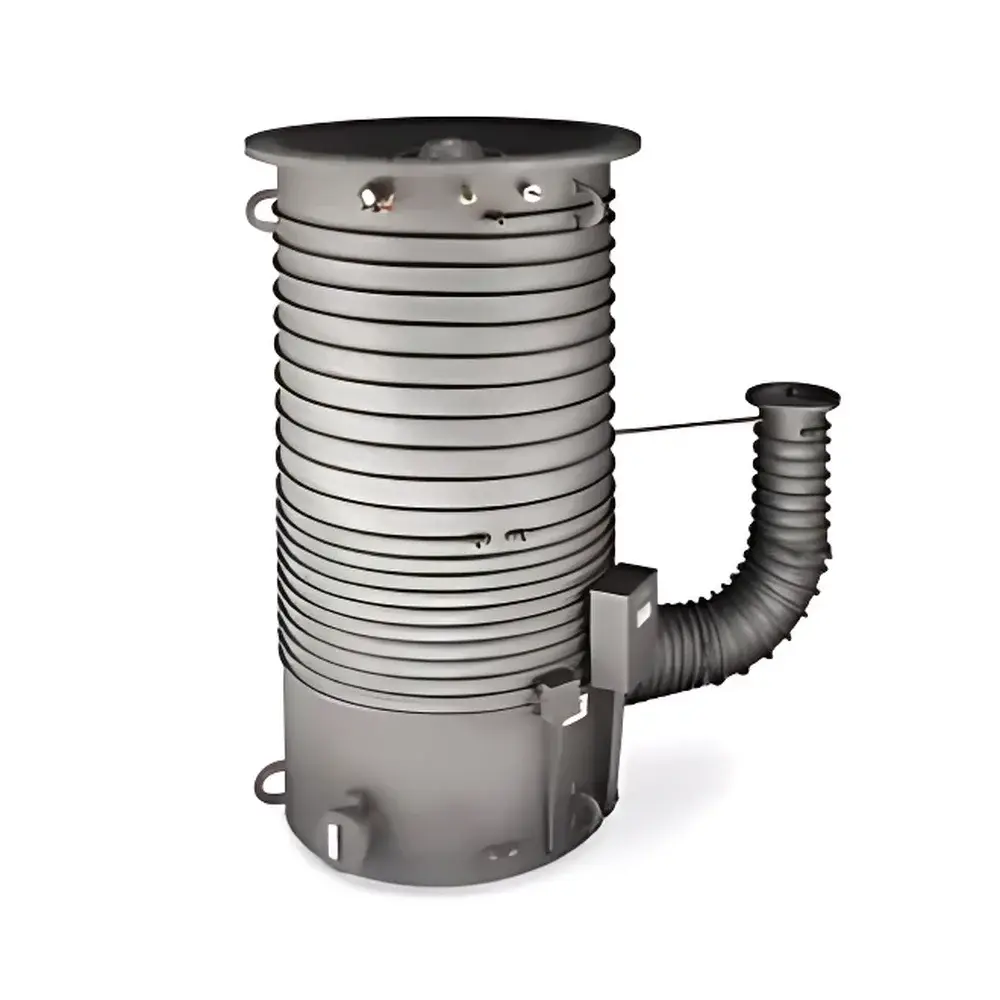
Agilent NHS-35 Oil Diffusion Vacuum Pump
| Brand | Agilent Technologies |
|---|---|
| Origin | USA |
| Manufacturer Type | Original Equipment Manufacturer (OEM) |
| Product Category | Imported Instrument |
| Model | NHS-35 |
| Pump Type | Oil Diffusion Pump |
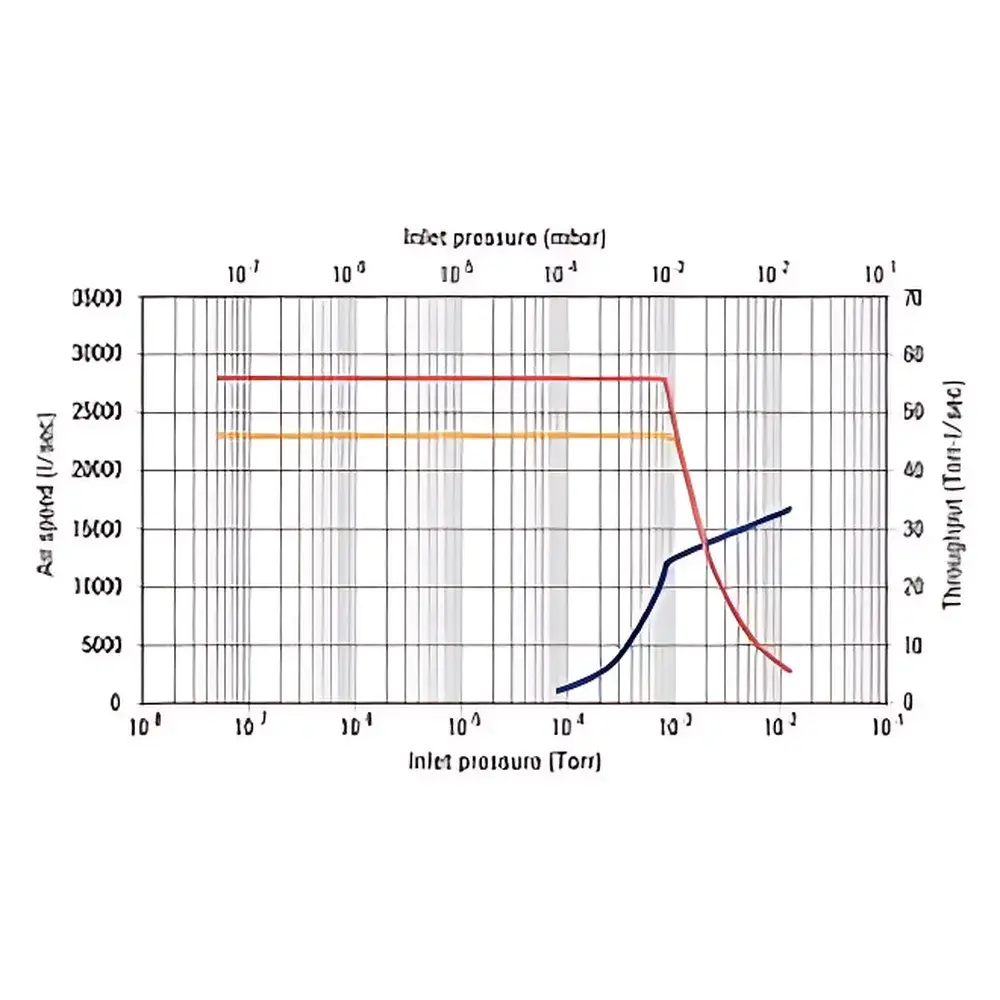
| Pumping Speed | 28,000 L/s (at N₂, typical) |
| Weight | 680.4 kg (1500 lbs) |
| Heater Power | 24 kW |
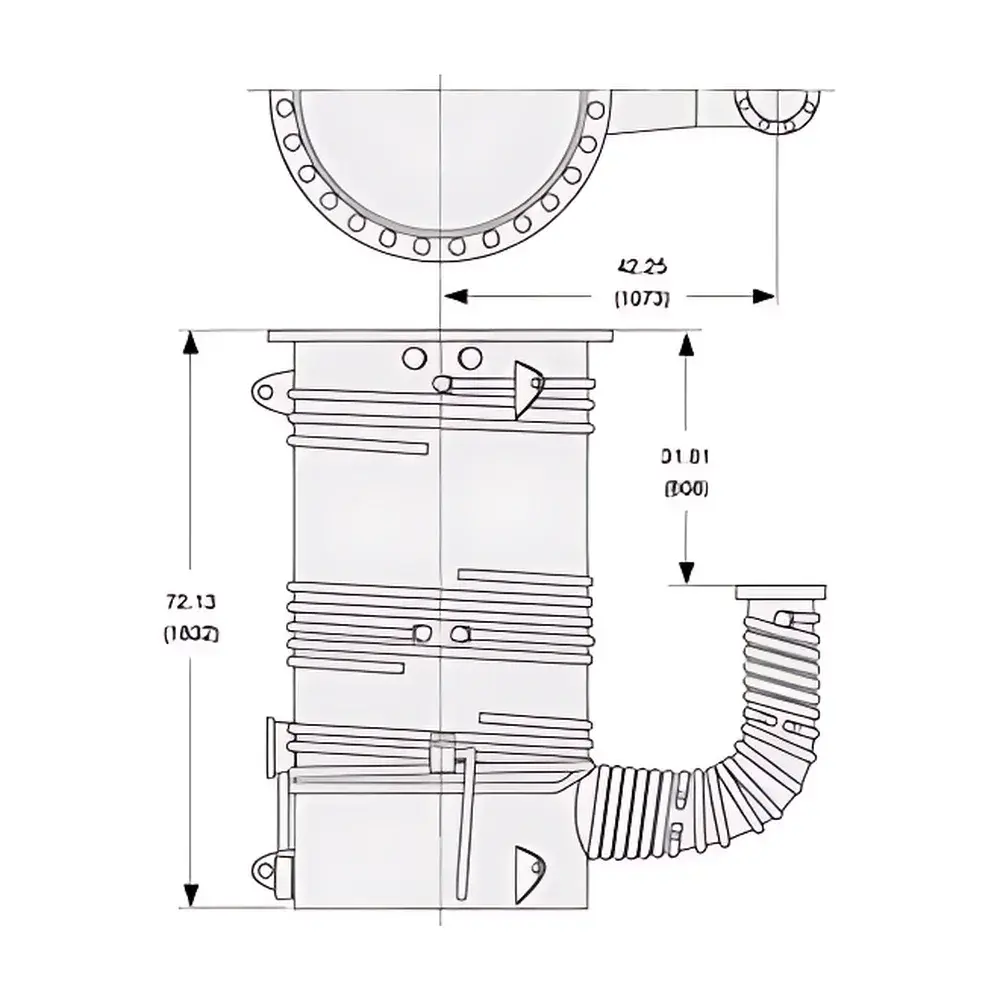
| Exhaust Flange | 35-inch ASA or ISO 1000F (bolt-hole pattern) |
Overview
The Agilent NHS-35 oil diffusion vacuum pump is a high-capacity, thermally driven vacuum generation system engineered for continuous operation in demanding high- and ultra-high-vacuum (UHV) environments. Operating on the principle of vapor jet momentum transfer, the NHS-35 utilizes precisely controlled, multi-stage hydrocarbon or silicone oil vapor jets to entrain gas molecules from the chamber and direct them toward the cooled pump wall, where condensation occurs. This fundamental mechanism enables stable, oil-mediated pumping without moving parts in the vacuum path—delivering exceptional reliability and long-term reproducibility in industrial and research-scale vacuum systems. Designed for integration with robust mechanical forepumps (typically rotary vane or dry scroll), the NHS-35 achieves ultimate pressures down to ≤1 × 10⁻⁷ Pa (≤7.5 × 10⁻¹⁰ Torr) under optimized backing conditions and proper cold trap configuration.
Key Features
- Five-stage fractional nozzle assembly ensures efficient oil vapor fractionation, minimizing backstreaming and enhancing pumping purity across wide pressure ranges.
- Durable, nickel-chrome alloy heating plate provides uniform thermal distribution and extended service life—even under sustained 24/7 operation at full power (24 kW).
- Integrated thermal protection switch prevents overheating and safeguards against dry-run or coolant failure scenarios.
- Front-end pressure tolerance up to 0.5 Pa (3.75 mTorr) allows compatibility with high-throughput mechanical backing systems without intermediate throttling.
- Large-diameter 35-inch (889 mm) exhaust flange conforms to both ASA and ISO 1000F standards—including bolt-hole pattern alignment—enabling seamless integration into existing vacuum chambers and custom-built UHV platforms.
- Transparent oil-level sight glass permits real-time visual verification of oil volume and clarity without system venting or disassembly.
- Modular oil fill/drain manifold simplifies routine maintenance and oil replacement—critical for maintaining consistent vapor pressure and minimizing contamination risk over decades of service.
Sample Compatibility & Compliance
The NHS-35 is not sample-contacting; it functions exclusively as a vacuum-generation component within closed vacuum systems. Its design complies with international safety and electromagnetic compatibility standards applicable to industrial vacuum equipment, including IEC 61000-6-2 (immunity) and IEC 61000-6-4 (emissions). While the pump itself does not require FDA or ISO 13485 certification, its use in GMP-compliant thin-film deposition lines—such as optical coating, semiconductor metallization, or protective barrier layer manufacturing—must be validated per ISO 14644-1 (cleanroom classification) and supported by documented preventive maintenance logs aligned with ISO 9001 quality management requirements. When paired with appropriate cryogenic or sorption fore-traps, the system meets ASTM F2624-19 guidelines for residual gas analysis (RGA) integrity in high-purity vacuum applications.
Software & Data Management
As a standalone analog vacuum component, the NHS-35 operates without embedded firmware or digital control interfaces. System-level monitoring—including heater temperature, foreline pressure, and oil sump temperature—is typically managed via external PLCs or SCADA platforms (e.g., Siemens SIMATIC, Rockwell Allen-Bradley) using standard 4–20 mA analog signals or Modbus RTU over RS-485. For traceability in regulated environments, integration with electronic logbook systems supporting 21 CFR Part 11 audit trails is achievable through third-party I/O modules. Agilent provides comprehensive technical documentation—including wiring schematics, cooling water flow specifications (minimum 12 GPM at 20°C), and oil compatibility matrices—for seamless inclusion in IQ/OQ/PQ validation protocols.
Applications
- Industrial vacuum furnaces for annealing, brazing, and sintering of aerospace alloys and advanced ceramics.
- Electron-beam and thermal evaporation systems used in optical filter fabrication, AR/HR coating, and display panel manufacturing.
- Large-area physical vapor deposition (PVD) tools for solar cell interconnect layers and transparent conductive oxide (TCO) films.
- High-rate metal spray systems for corrosion-resistant coatings on infrastructure components.
- Research-scale molecular beam epitaxy (MBE) and surface science chambers requiring stable base pressures below 10⁻⁸ Pa.
FAQ
What is the recommended forepump pairing for the NHS-35?
A minimum 120 m³/h (70 CFM) two-stage rotary vane pump—or equivalent dry forepump—is required to maintain optimal backing pressure below 0.3 Pa during full-speed operation.
Can the NHS-35 be operated continuously for extended periods?
Yes—its robust heating architecture and thermal protection circuitry support uninterrupted operation for >10,000 hours between major servicing intervals when maintained per Agilent’s OEM schedule.
Is silicone oil mandatory, or can hydrocarbon oils be used?
Both are compatible; however, silicone oils (e.g., DC-704, DC-705) are preferred for UHV applications due to lower vapor pressure and reduced backstreaming risk. Hydrocarbon oils (e.g., Apiezon L) may be selected for cost-sensitive, non-UHV processes.
Does the NHS-35 include integrated cooling water regulation?
No—the pump requires externally supplied deionized water at 12–18 GPM and ≤30°C inlet temperature. Flow and temperature interlocks must be implemented at the system level.
How is pump performance verified after installation?
Verification includes base pressure measurement (<1 × 10⁻⁷ Pa), pumping speed calibration per ISO 1606 (using test gas N₂), and oil vapor backstreaming assessment per ASTM E1041-18 using quartz crystal microbalance (QCM) methods.



