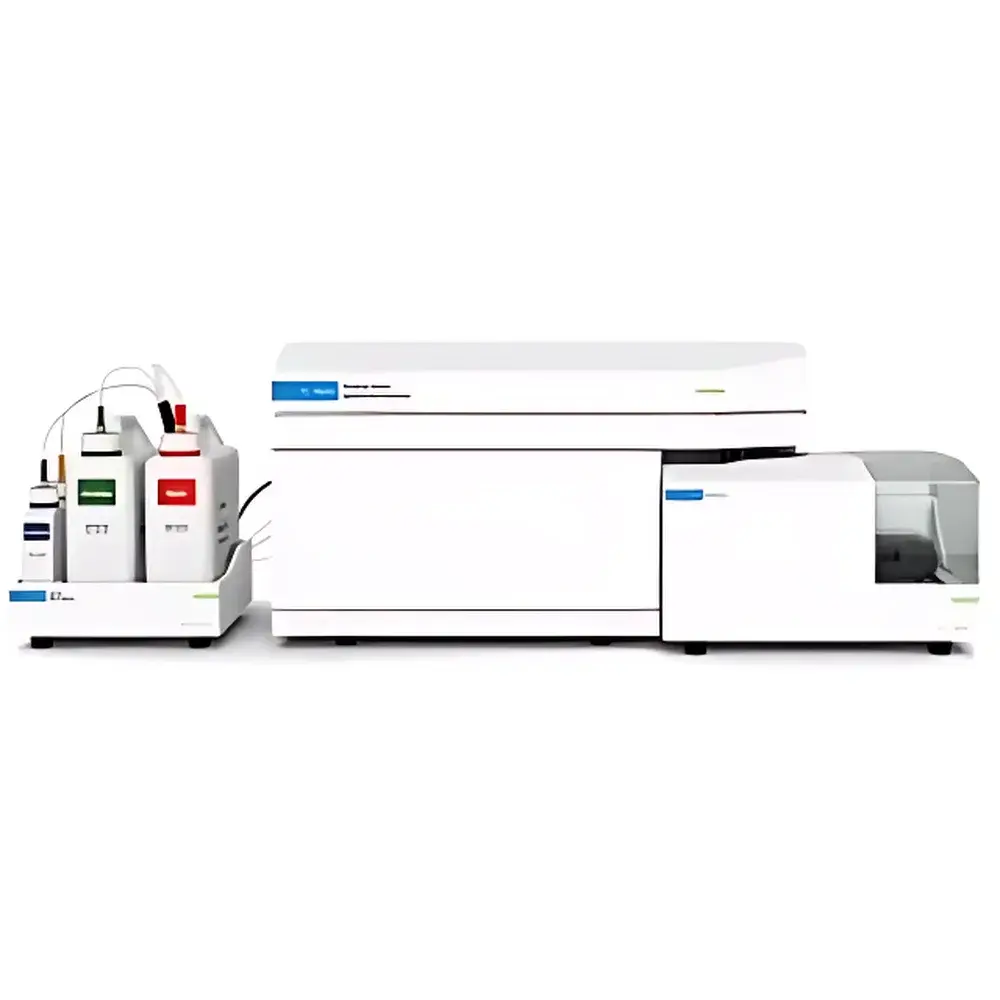
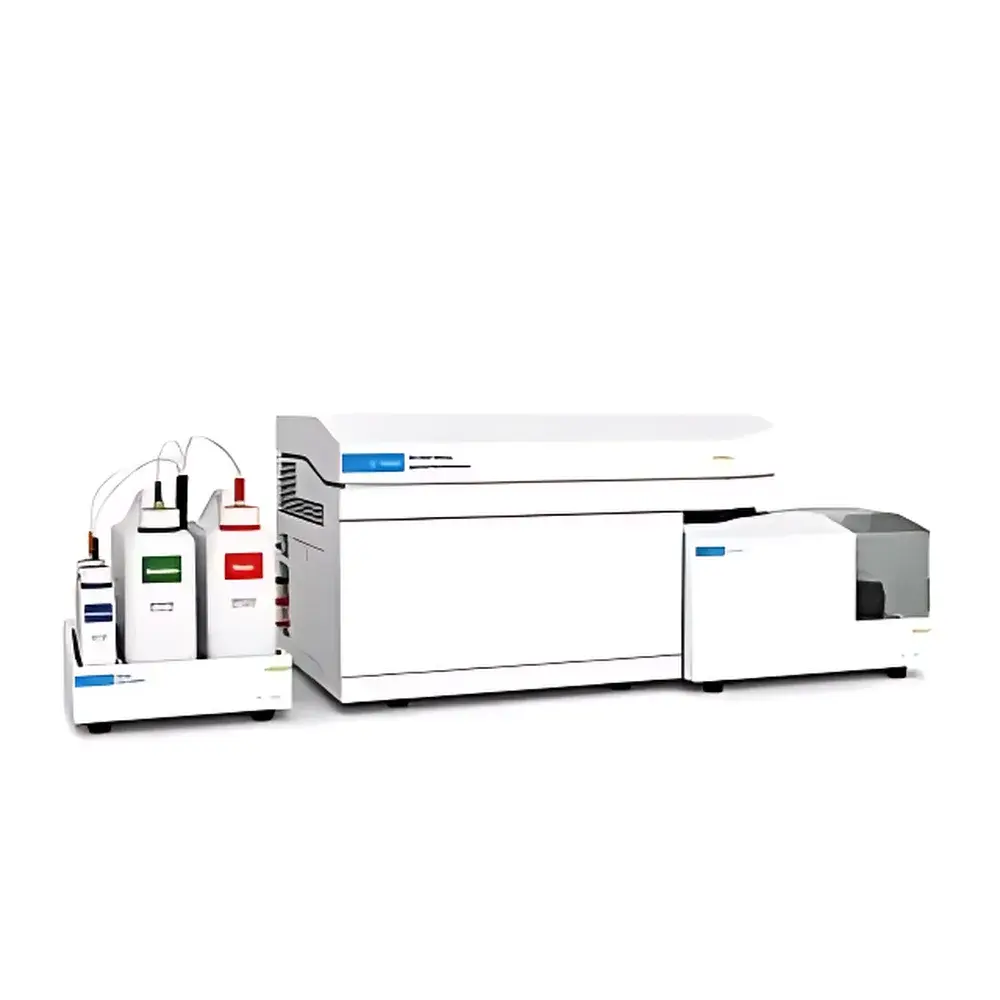
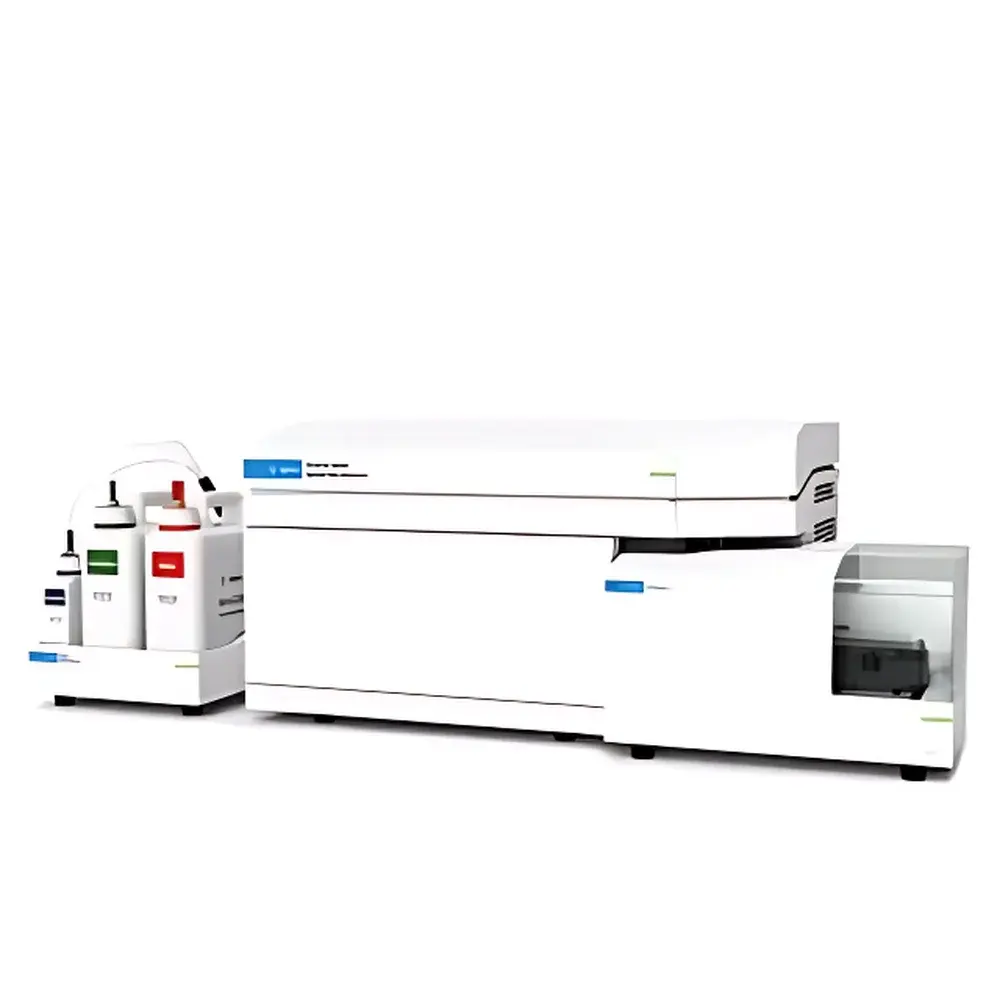
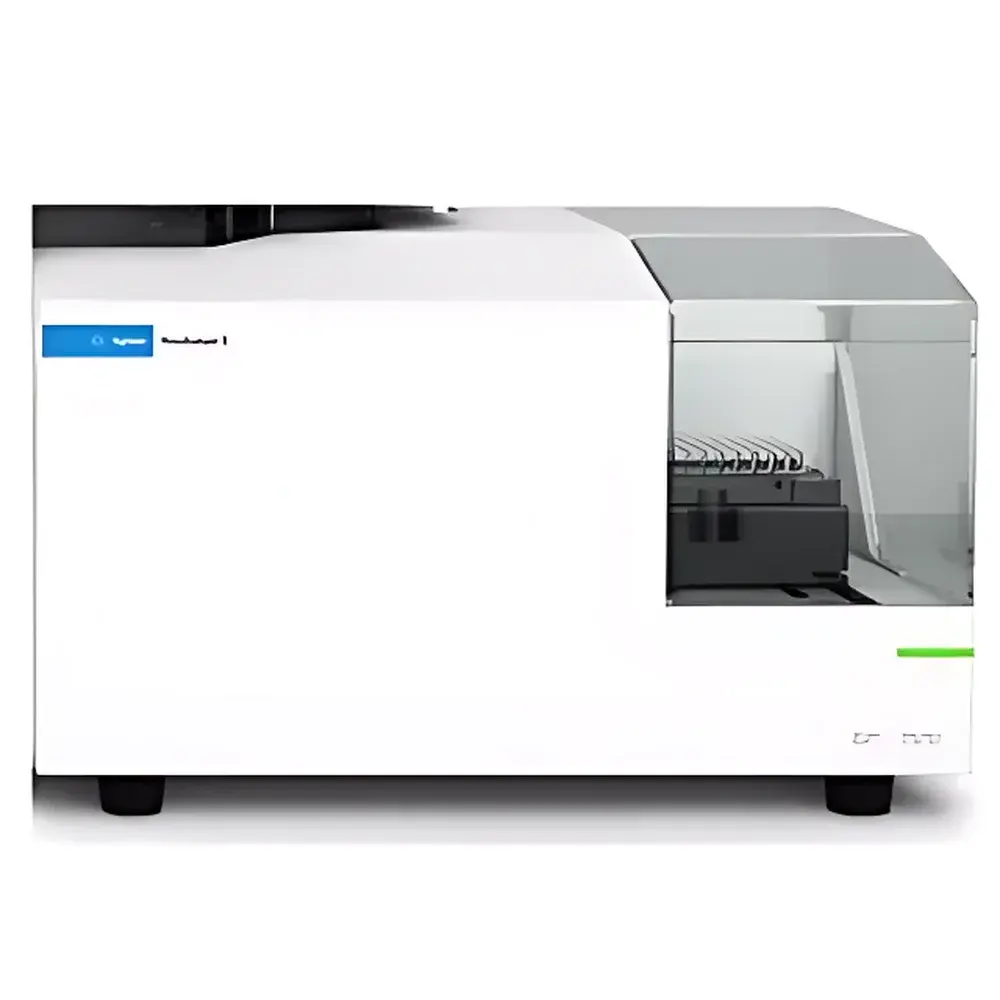
Agilent NovoCyte Opteon Spectral Flow Cytometry System
| Brand | Agilent Technologies |
|---|---|
| Origin | Zhejiang, China |
| Manufacturer Type | Original Equipment Manufacturer (OEM) |
| Regional Classification | Domestic (China-manufactured) |
| Model | NovoCyte Opteon |
| Pricing | Upon Request |
| Technology Platform | Spectral Flow Cytometry |
| Instrument Type | Flow Cytometer |
| Primary Use Case | Research |
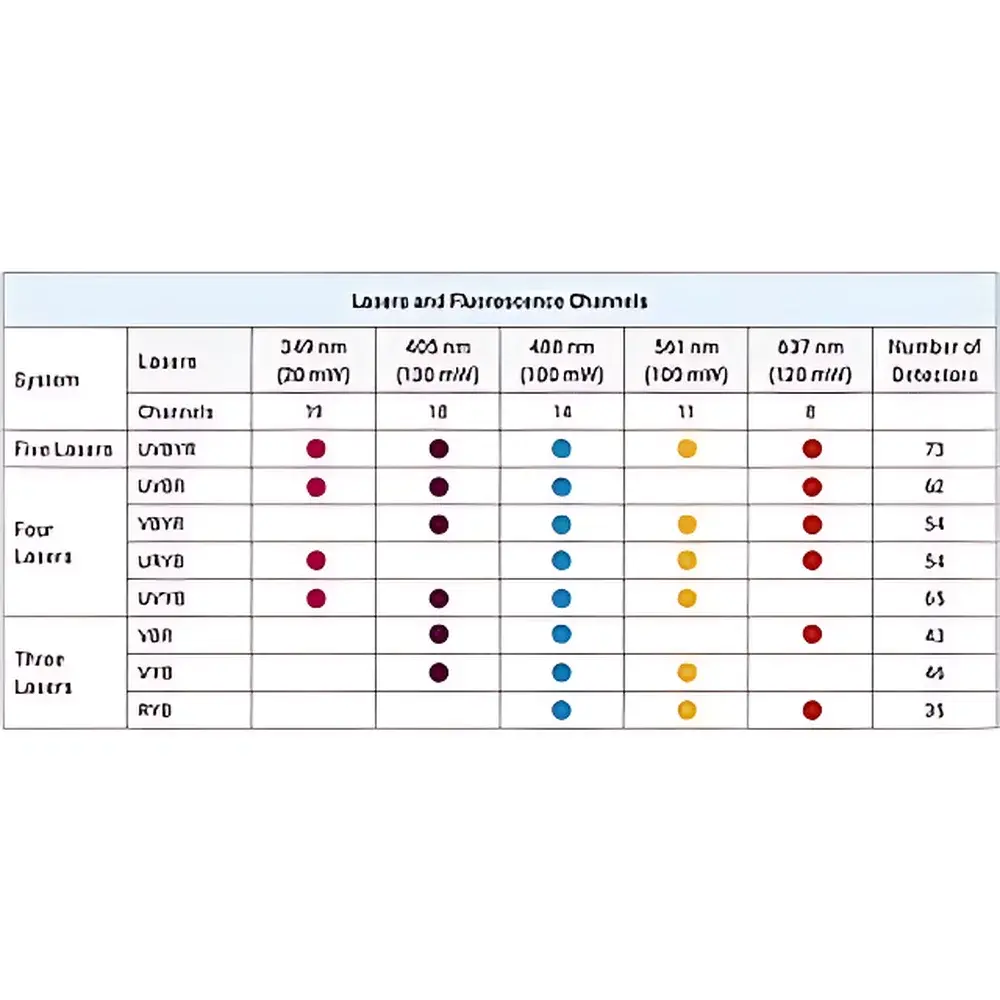
| Laser Configuration | 3–5 Lasers (UV, Violet, Blue, Yellow, Red) |
| Automated Sample Loading | Yes |
| Detector Count | 73 |
| Validated Panel Capacity | Up to 45-color |
| Forward/Side Scatter Optimization | Dual-angle (405 nm & 488 nm SSC), enabling sub-80 nm particle resolution |
| Software Platform | NovoExpress v4.0+ with real-time acquisition, spectral unmixing, and GLP-compliant audit trail |
Overview
The Agilent NovoCyte Opteon Spectral Flow Cytometry System represents a purpose-built implementation of full-spectrum detection architecture for high-parameter single-cell analysis in academic and translational research laboratories. Unlike conventional filter-based flow cytometers—which assign each fluorophore to a fixed optical channel—the NovoCyte Opteon captures the complete emission spectrum of every fluorescent probe across all lasers using a high-fidelity, low-noise detector array. This spectral acquisition approach eliminates compensation errors, enables retrospective reanalysis of archived data without reacquisition, and supports flexible panel design beyond traditional hardware-imposed limits. Engineered for precision and reproducibility, the system integrates thermally stabilized optics, real-time fluidic and electronic health monitoring, and dual-angle side scatter (SSC) detection optimized at both 405 nm and 488 nm wavelengths—enabling simultaneous resolution of sub-80 nm extracellular vesicles, bacteria, platelets, and intact leukocytes within the same sample run.
Key Features
- Multi-laser excitation platform: Configurable with up to five solid-state lasers (UV, violet, blue, yellow, red) delivering stable output for broad fluorophore excitation coverage—from Pacific Blue™ to APC-Cy7™ and beyond.
- 73-channel spectral detection: High-resolution linear CCD or CMOS-based detector array capturing full emission spectra (typically 350–800 nm) per event, enabling robust spectral unmixing with minimal cross-talk.
- Dual-wavelength SSC optimization: Independent 405 nm and 488 nm side scatter channels provide orthogonal granularity and refractive index sensitivity—critical for distinguishing RBCs from WBCs and platelets without lysis or centrifugation.
- Integrated environmental control: Onboard temperature regulation, pressure sensors, and flow-rate feedback loops maintain instrument stability across ambient fluctuations (15–30°C), ensuring inter-run comparability under GLP-aligned operating conditions.
- Modular automation readiness: Compatible with 24-, 48-, 96-, and 384-well microplates as well as 40-tube racks; supports integration into robotic liquid handling workflows via standard RS-232/USB/ethernet interfaces.
Sample Compatibility & Compliance
The NovoCyte Opteon accepts suspension-based biological samples—including peripheral blood mononuclear cells (PBMCs), bone marrow aspirates, cultured cell lines, microbial suspensions, and extracellular vesicle isolates—without requiring specialized sheath fluids or proprietary reagents. Its open fluidics architecture accommodates standard phosphate-buffered saline (PBS) or Hanks’ Balanced Salt Solution (HBSS) as sheath medium. From a regulatory standpoint, the system supports audit-trail-enabled operation compliant with FDA 21 CFR Part 11 requirements when used with NovoExpress software configured in “secure mode.” Data files adhere to FCS 3.1 and HDF5 standards, facilitating interoperability with third-party analysis platforms such as FlowJo™, Cytobank™, and R/Bioconductor packages. The instrument meets IEC 61010-1 safety standards and is CE-marked for in vitro diagnostic research use (RUO).
Software & Data Management
NovoExpress software (v4.0 and later) serves as the unified interface for instrument control, real-time visualization, spectral unmixing, and publication-ready reporting. It implements a hierarchical project structure supporting multi-user collaboration, version-controlled panel templates, and automated QC flagging based on daily calibration bead performance. All acquisition parameters—including laser power, PMT voltage, threshold settings, and unmixing matrices—are stored with metadata in encrypted .novx project files. Raw spectral data is retained in lossless format, allowing retrospective re-analysis with updated reference spectra or alternative unmixing algorithms. For laboratories operating under quality management systems, NovoExpress offers configurable electronic signatures, session locking, and tamper-evident audit logs traceable to individual users and timestamps—fully aligned with ISO/IEC 17025 and CLIA pre-analytical documentation expectations.
Applications
- High-dimensional immunophenotyping: Simultaneous interrogation of ≥45 markers enables deep immune subset characterization—e.g., T-cell exhaustion profiling (PD-1, TIM-3, LAG-3, CTLA-4), B-cell maturation staging, or myeloid-derived suppressor cell (MDSC) identification—in human, murine, or non-human primate samples.
- Extracellular vesicle (EV) phenotyping: Dual SSC detection resolves CD63+/CD81+ exosomes (~30–150 nm) alongside larger microvesicles and apoptotic bodies, permitting size-gated multiparametric surface marker mapping without density gradient separation.
- Microbial enumeration and viability assessment: Discrimination of Gram-positive vs. Gram-negative bacteria using membrane-permeant dyes (e.g., SYTO 9/PI) combined with scatter-based morphological clustering—validated against CFU counts and qPCR standards.
- Translational biomarker discovery: Longitudinal tracking of rare antigen-specific T-cell clones in clinical trial specimens, leveraging spectral flexibility to adapt panels across study phases without hardware modification.
FAQ
What distinguishes spectral flow cytometry from conventional flow cytometry?
Spectral flow cytometry captures the full fluorescence emission spectrum for each event, whereas conventional systems rely on bandpass filters that restrict detection to discrete wavelength windows. This fundamental difference eliminates manual compensation, improves resolution of spectrally overlapping fluorophores, and permits post-acquisition reanalysis.
Can the NovoCyte Opteon detect particles smaller than 100 nm?
Yes—the dual-angle SSC configuration (405 nm + 488 nm) has been experimentally validated to resolve polystyrene nanoparticles down to 80 nm diameter under standardized acquisition conditions, enabling direct analysis of small EVs and viral particles.
Is NovoExpress software compatible with third-party analysis tools?
Yes. NovoExpress exports FCS 3.1 files with embedded spectral metadata and supports batch export of transformed parameter tables in CSV/TSV format, ensuring seamless import into FlowJo, Cytobank, and open-source R packages such as Cytofkit and diffcyt.
Does the system support Good Laboratory Practice (GLP) compliance?
When operated with NovoExpress in secure mode—including user authentication, electronic signatures, and immutable audit trails—the system meets core GLP data integrity requirements as defined by OECD Principles of GLP and FDA guidance for nonclinical laboratory studies.
How is laser alignment maintained over time?
The NovoCyte Opteon incorporates active thermal stabilization of optical paths and performs automated daily alignment verification using internal reference beads; deviation alerts are logged and trigger optional recalibration protocols accessible via service mode.
Related Products