Agilent OpenLAB Software Suite
| Brand | Agilent Technologies |
|---|---|
| Origin | USA |
| Manufacturer Type | Original Equipment Manufacturer (OEM) |
| Product Category | Imported |
| Model | OpenLAB |
| Software Type | Chromatography Data System (CDS) and Laboratory Information Management System (LIMS) Suite |
| Regulatory Compliance | FDA 21 CFR Part 11, EU Annex 11, GLP/GMP-ready |
| Deployment | Client-server and web-based |
| Integration Capability | Multi-vendor instrument control (Agilent LC/GC/CE/MS and select third-party systems) |
| Core Modules | OpenLAB CDS, OpenLAB ECM, OpenLAB Data Warehouse, OpenLAB ELN |
Overview
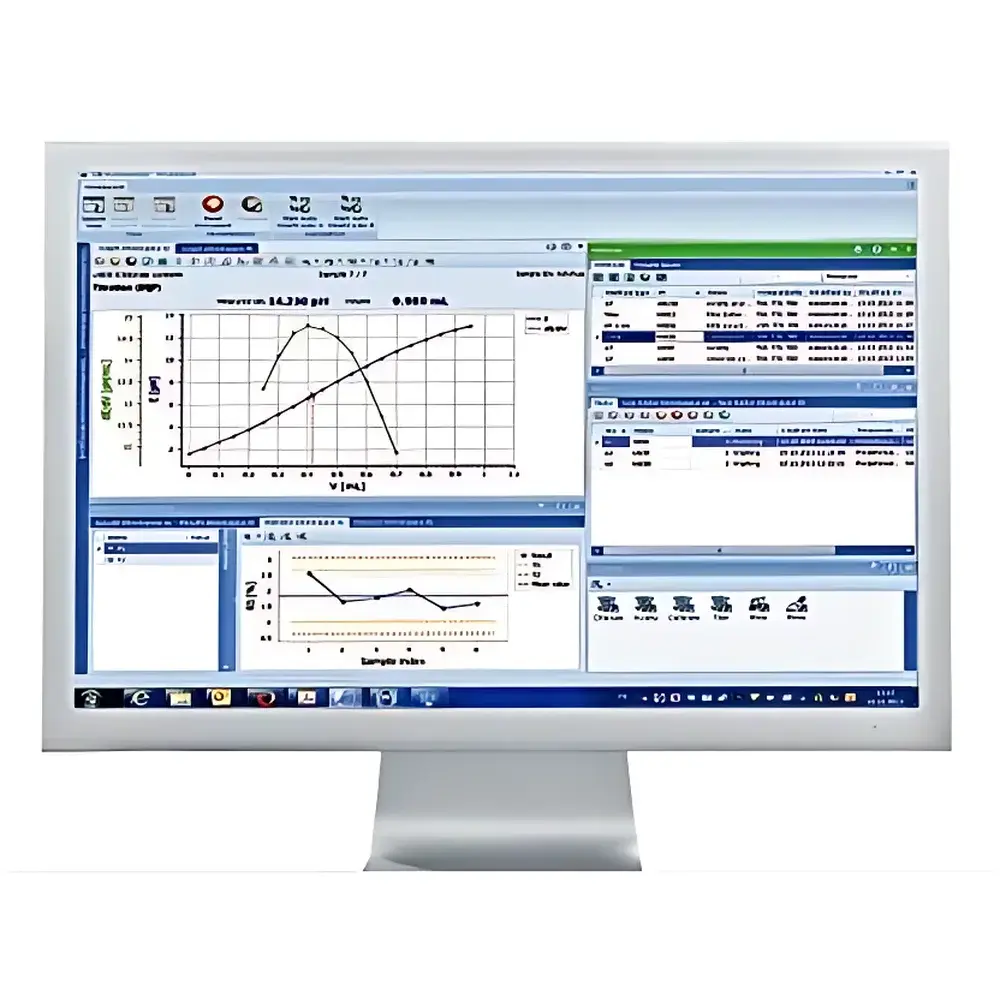
Agilent OpenLAB Software Suite is a validated, enterprise-grade laboratory informatics platform engineered for regulatory compliance, interoperability, and scalable data lifecycle management in analytical laboratories. Built on a modular architecture, it unifies chromatographic data acquisition, scientific content management, electronic recordkeeping, and long-term archival into a single cohesive environment. The suite implements core principles of analytical data integrity—including ALCOA+ (Attributable, Legible, Contemporaneous, Original, Accurate, Complete, Consistent, Enduring, Available)—across all modules. Its foundation in ISO/IEC 17025-aligned workflows and adherence to FDA 21 CFR Part 11 and EU Annex 11 requirements make it suitable for regulated environments including pharmaceutical QC/QA, clinical research, environmental testing, and contract laboratories. Unlike monolithic legacy systems, OpenLAB is designed as an open ecosystem—supporting standardized communication protocols (e.g., ASTM E1381, HL7, ASAM OASIS), vendor-neutral instrument drivers, and extensible APIs for integration with LIMS, ERP, and MES platforms.
Key Features
- Unified Chromatography Data System (CDS): OpenLAB CDS provides native control for Agilent LC, GC, CE, LC/MS, and GC/MS instruments, with optional support for select third-party chromatographs via certified instrument drivers. It enables method development, sequence execution, real-time monitoring, peak integration, and report generation—all within a single interface.
- Enterprise Content Management (ECM): OpenLAB ECM serves as a centralized, audit-trail-enabled repository for structured and unstructured scientific content—including raw instrument files (.D, .CDF), PDF reports, SOPs, calibration records, and scanned documents—regardless of source or format.
- Data Warehousing & Long-Term Archiving: OpenLAB Data Warehouse supports hierarchical storage of CDS and MassHunter data with automated retention policies, version-controlled backups, and built-in validation tools compliant with 21 CFR Part 11 §11.10(d) and Annex 11 §5.4.
- Electronic Lab Notebook (ELN): OpenLAB ELN delivers role-based access control, template-driven experiment capture, drag-and-drop data attachment, electronic signatures with biometric or PKI authentication, and full traceability from hypothesis to conclusion.
- Open Architecture & Extensibility: SDKs (e.g., RC.NET driver framework, SDMS API, Report Designer Toolkit) enable custom instrument integration, automated report generation, LIMS synchronization, and workflow orchestration without vendor lock-in.
- Validation Support Package: Includes IQ/OQ documentation templates, test scripts, configuration change control logs, and audit trail review utilities aligned with GAMP 5 guidance.
Sample Compatibility & Compliance
OpenLAB software does not process physical samples; rather, it manages digital representations of analytical results generated across diverse instrumentation platforms. It natively ingests and renders chromatographic data files from Agilent instruments (e.g., .D folders from ChemStation/OpenLAB CDS, .MSD from MassHunter) and accepts standardized formats such as ANDI/NetCDF, mzML, and AIA/CDF. All modules undergo periodic internal verification against ISO/IEC 17025 clause 5.9 (information management systems) and are pre-validated for use in environments governed by ICH M7, USP , and WHO TRS 996 Annex 6. Full electronic signature implementation satisfies FDA 21 CFR Part 11 §11.50 and Annex 11 §4.2 requirements for identity verification, intent confirmation, and non-repudiation.
Software & Data Management
Deployment options include on-premises client-server configurations (Windows Server 2016–2022) and virtualized environments compliant with VMware vSphere and Microsoft Hyper-V. Data encryption at rest (AES-256) and in transit (TLS 1.2+) is enforced system-wide. Audit trails—immutable, time-stamped, and user-attributed—are retained for minimum 30 years per configurable policy and support granular filtering by event type (e.g., “User login”, “Method modification”, “Report export”). Role-based permissions align with NIST SP 800-53 controls (AC-2, AU-2, IA-2). Integration with Active Directory/LDAP ensures centralized identity management, while SAML 2.0 support enables federated authentication. All modules generate machine-readable metadata compliant with Dublin Core and ISA-Tab standards for downstream FAIR (Findable, Accessible, Interoperable, Reusable) data practices.
Applications
- Pharmaceutical quality control laboratories performing compendial assays (USP , EP 2.2.46) requiring full audit trail and electronic signature enforcement.
- Clinical trial bioanalysis labs managing regulated LC-MS/MS workflows under FDA Bioanalytical Method Validation Guidance.
- Environmental testing facilities executing EPA Methods 8081B, 8270, and 525.3 with mandatory data integrity documentation.
- Academic core facilities supporting multi-investigator access to shared instrumentation while maintaining individual project isolation and provenance tracking.
- Contract development and manufacturing organizations (CDMOs) implementing hybrid paperless QC workflows across distributed sites.
- Regulatory submission support through automated eCTD-compliant report packaging and metadata tagging.
FAQ
Is OpenLAB CDS qualified for use in GxP-regulated environments?
Yes. When installed and configured per Agilent’s documented validation guidance and operated within defined procedural controls, OpenLAB CDS meets the technical and documentary requirements of FDA 21 CFR Part 11, EU Annex 11, and PIC/S PI 011-3 for computerized systems used in GxP activities.
Can OpenLAB integrate with non-Agilent LIMS platforms?
Yes. Through its open SDMS (Scientific Data Management System) interface and RESTful APIs, OpenLAB supports bidirectional data exchange with commercial LIMS solutions—including Thermo Fisher SampleManager, LabVantage, and STARLIMS—using HL7, ASTM E1381, or custom XML/JSON schemas.
Does OpenLAB ELN support 21 CFR Part 11-compliant electronic signatures?
Yes. It implements multi-factor authentication (password + token or certificate), signature justification fields, and binding of signatures to specific actions and data objects—fully satisfying §11.50 and §11.70 requirements.
What level of third-party instrument support does OpenLAB CDS provide?
OpenLAB CDS EZChrom Edition offers broad third-party instrument control (e.g., Shimadzu, Waters, Thermo) via certified drivers; ChemStation Edition focuses on Agilent-native control with limited external compatibility.
How is data migration handled when upgrading from legacy ChemStation to OpenLAB CDS?
Agilent provides validated migration utilities that preserve original acquisition parameters, processing methods, and audit trail references—ensuring continuity of data integrity throughout the transition.
Is OpenLAB available as a cloud-hosted solution?
Agilent offers OpenLAB Cloud Services as a managed service option, hosted on AWS GovCloud or Azure Government environments, with SOC 2 Type II attestation and FedRAMP Moderate authorization pending.
Related Products