
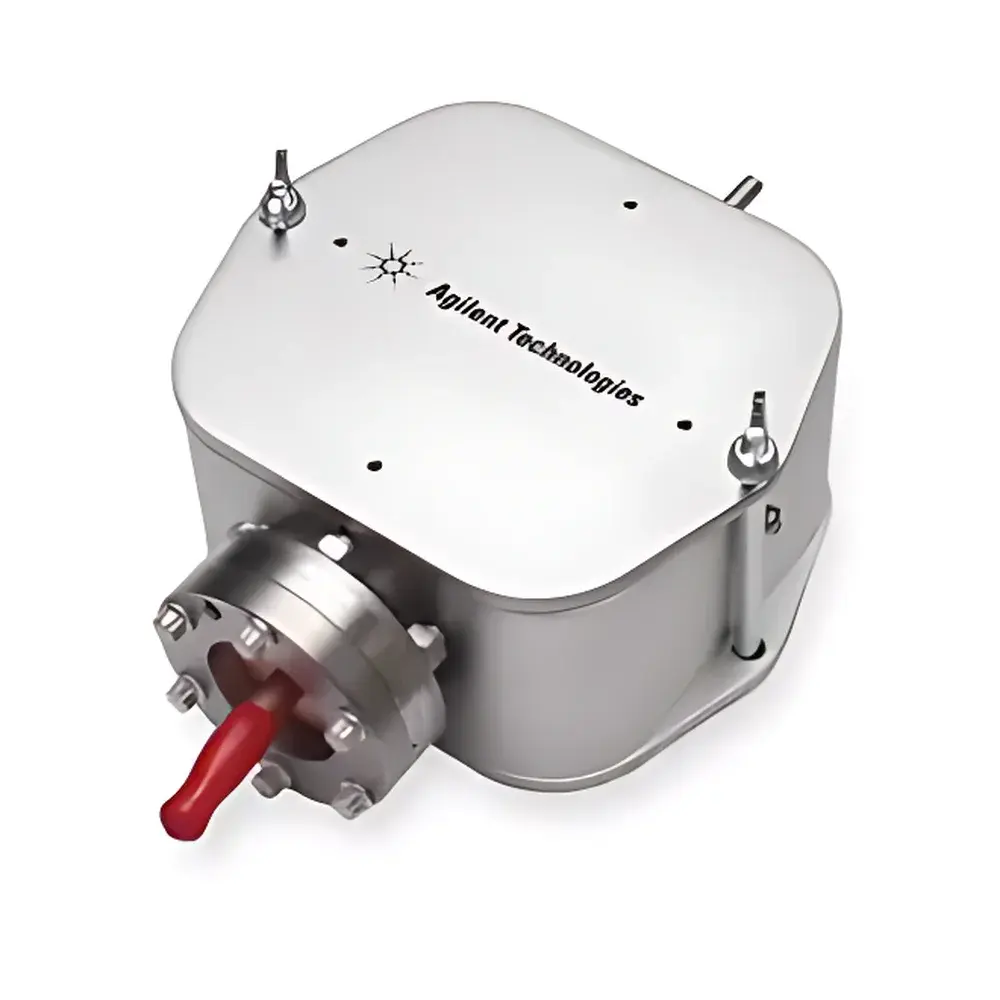
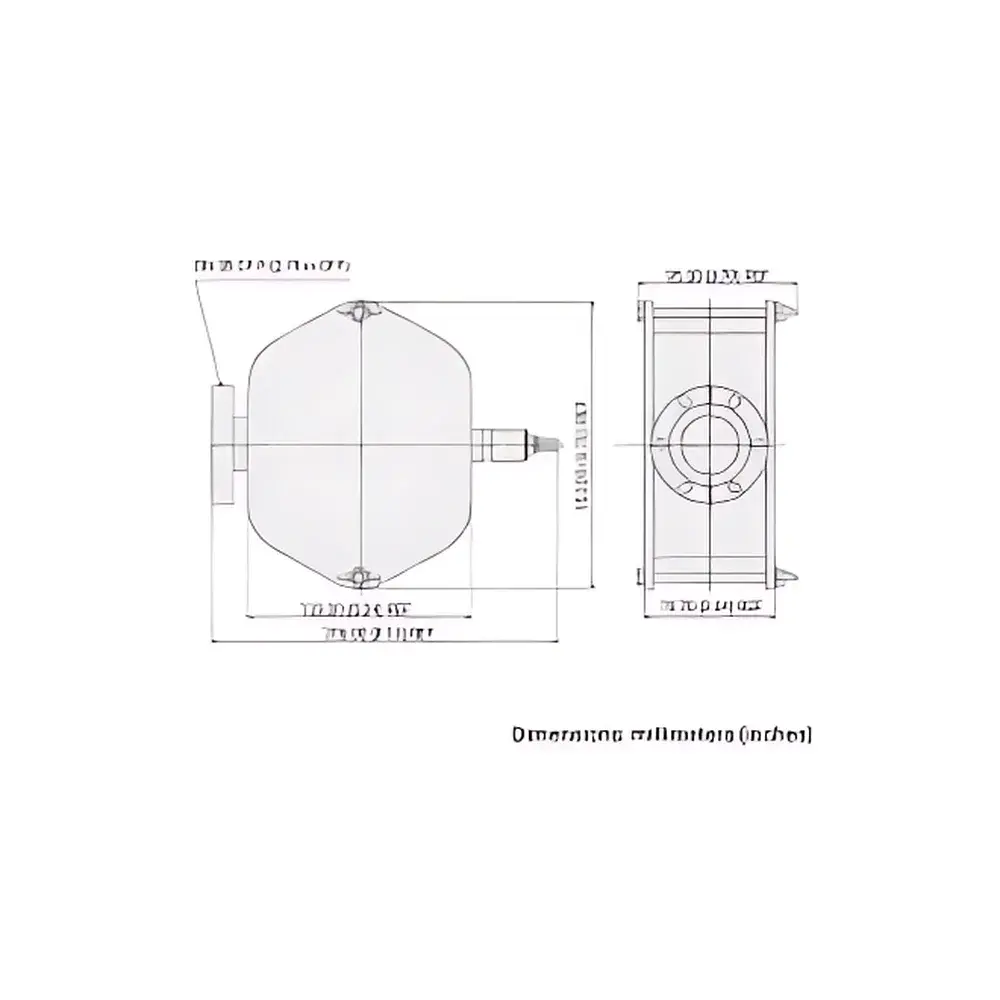
Agilent VacIon 10 L/s Ion Pump
| Brand | Agilent Technologies |
|---|---|
| Origin | USA |
| Manufacturer Type | Original Equipment Manufacturer (OEM) |
| Product Category | Imported |
| Model | VacIon 10 L/s Ion Pump |
| Pump Type | Oil-Free Ion Pump |
| Ultimate Vacuum | < 1 × 10⁻¹¹ mbar |
| Weight | 4 kg (9 lbs) |
Overview
The Agilent VacIon 10 L/s Ion Pump is a compact, high-performance, oil-free vacuum pumping solution engineered for ultra-high vacuum (UHV) and extreme-high vacuum (XHV) environments. Operating on the principle of Penning discharge ionization, this diode-type ion pump utilizes a strong permanent magnetic field (typically ≥ 0.15 T) and high-voltage electrodes (±3–7 kV) to ionize residual gas molecules—primarily H₂, He, Ar, N₂, O₂, and CO—and subsequently trap them electrostatically on chemically active cathode surfaces (typically titanium). Unlike sputter-ion pumps with triode configurations, the VacIon 10 L/s employs an optimized diode or modified-diode architecture, enhancing hydrogen pumping speed and long-term stability under inert gas loads. Its design eliminates moving parts, hydrocarbon contamination, vibration, and particulate generation—making it ideal for sensitive applications such as surface science instrumentation, electron microscopy sample chambers, atomic clock enclosures, and quantum physics experiments where vacuum integrity and signal fidelity are non-negotiable.
Key Features
- Compact footprint (≤ 120 mm length, ≤ 80 mm diameter) enabling integration into space-constrained UHV/XHV systems
- Low magnetic field emission (< 0.5 mT at 100 mm distance), minimizing interference with electron beams, laser paths, and magnetic sensors
- Thermal compatibility: rated for bake-out up to 400 °C under vacuum; all internal components are vacuum-compatible and fully degasable
- Integrated vacuum isolation capability: equipped with a vacuum-tight pinch-off port for in-situ sealing prior to system installation, preserving cleanliness and pre-pump conditioning
- Low leakage current (< 10 nA typical at operating voltage), ensuring stable pressure readout and minimal drift during extended operation
- Customizable high-voltage feedthroughs (e.g., ceramic-metal sealed, ISO-KF or CF flange-mounted), cathode geometry, and modular mounting arrangements to match specific chamber layouts
Sample Compatibility & Compliance
The VacIon 10 L/s is compatible with standard UHV/XHV materials including 316L stainless steel, oxygen-free copper, and aluminum alloys. It complies with ASTM E575-21 (Standard Practice for Reporting Results of Analysis of Metals and Alloys) for material traceability and meets ISO 10110-7 optical surface cleanliness requirements when installed in optical vacuum systems. While not a standalone regulatory device, its design supports GLP and GMP-compliant vacuum infrastructure—particularly when integrated with pressure gauges meeting IEC 60747-17 (vacuum sensor accuracy) and controllers compliant with FDA 21 CFR Part 11 audit-trail requirements. The pump requires no consumables and exhibits > 10⁵ hours MTBF under continuous operation at base pressure.
Software & Data Management
The VacIon 10 L/s operates as a passive, controller-independent vacuum component. However, it is routinely paired with Agilent’s VACUUBRAND DCP 3000 or MKS 974B series vacuum controllers for real-time voltage/current monitoring, fault logging, and interlock integration. When used with compliant controllers, system-level data—including pump current, elapsed run time, and thermal history—can be exported via RS-485, Ethernet/IP, or Modbus TCP for inclusion in electronic lab notebooks (ELN) and LIMS platforms. Optional firmware-enabled diagnostic routines (e.g., step-voltage ramp test, cathode activation sequence) support qualification per ISO/IEC 17025 calibration protocols.
Applications
- UHV chambers for X-ray photoelectron spectroscopy (XPS), Auger electron spectroscopy (AES), and low-energy electron diffraction (LEED)
- Vacuum feedthroughs and beamline sections in synchrotron radiation facilities
- Cryogenic vacuum jackets for superconducting quantum interference devices (SQUIDs) and dilution refrigerators
- Atomic vapor cells and magneto-optical traps (MOTs) requiring particle-free, vibrationless vacuum maintenance
- Hermetically sealed analytical instruments, including residual gas analyzers (RGAs) and quadrupole mass spectrometers (QMS)
- Space simulation test chambers where outgassing and magnetic perturbation must remain below mission-critical thresholds
FAQ
What gases does the VacIon 10 L/s pump most effectively?
It achieves highest pumping speeds for reactive gases (O₂, N₂, CO) and hydrogen (H₂), with moderate but stable performance for noble gases (He, Ar, Ne) due to its titanium cathode sputtering dynamics and optimized electrode geometry.
Can the pump be operated without a controller?
Yes—it functions autonomously once powered, but a compatible high-voltage controller is required for safe startup, current regulation, overvoltage protection, and operational diagnostics.
Is the pump suitable for use after exposure to atmospheric pressure?
Yes, provided it undergoes proper reconditioning: a minimum 24-hour bake-out at ≥ 150 °C under rough vacuum (≤ 10⁻³ mbar) is recommended before re-energizing to restore cathode activity and remove adsorbed water/hydrocarbons.
Does the pump require periodic maintenance or replacement parts?
No consumables or scheduled replacements are needed; however, cathode sputtering lifetime is finite and correlates with total accumulated charge (Coulombs). Typical service life exceeds 5 years under nominal UHV conditions (≤ 10⁻⁹ mbar average pressure).
How is vacuum integrity verified prior to installation?
Each unit undergoes helium leak testing to ≤ 1 × 10⁻¹² mbar·L/s and is supplied with a certified cleanroom packaging seal and a post-bake residual gas analysis (RGA) report verifying hydrocarbon content < 1 × 10⁻¹³ Torr equivalent.



