
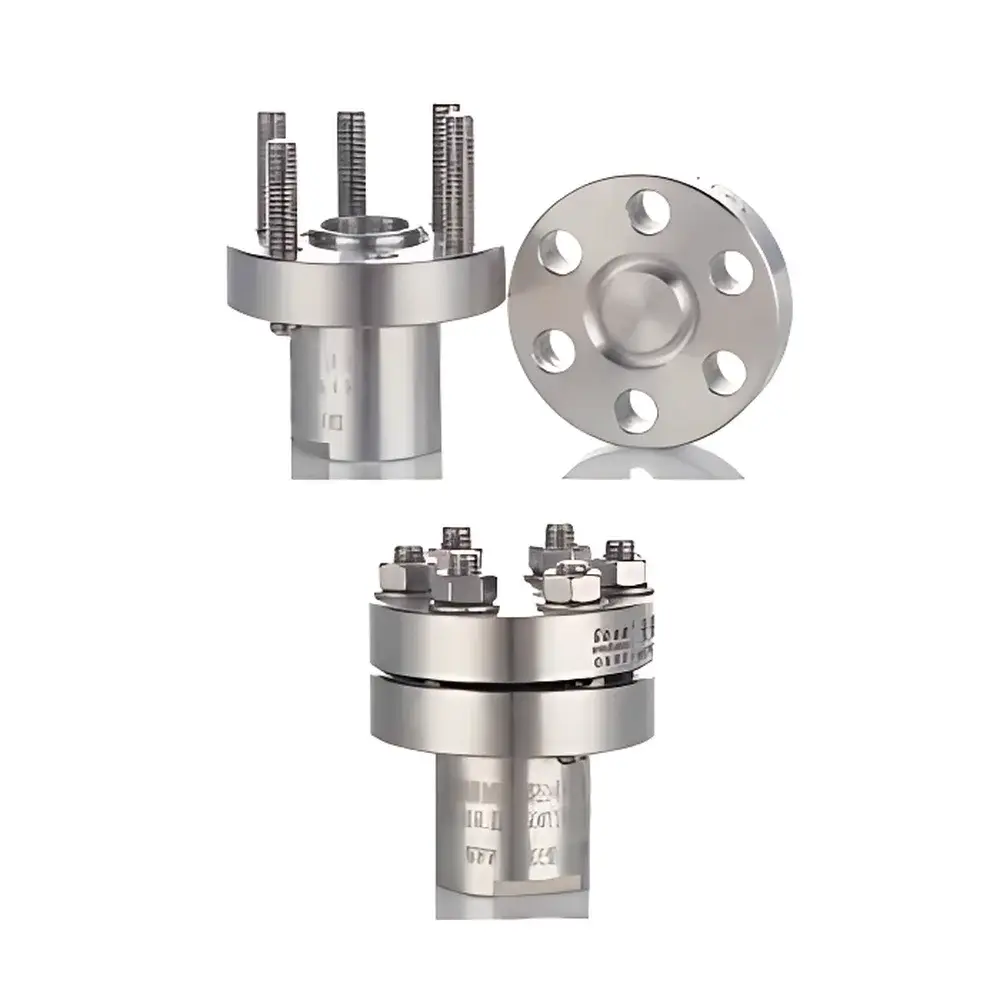
Ahkemi HTF Flanged Hydrothermal Autoclave Reactor
| Brand | Ahkemi |
|---|---|
| Origin | Anhui, China |
| Model | HTF |
| Volumes | 10 / 25 / 50 / 100 mL |
| Construction Material | Non-magnetic 0Cr18Ni9Ti stainless steel (AISI 321 equivalent) |
| Liner Material | PTFE (polytetrafluoroethylene) |
| Maximum Working Pressure | 49 bar (710 psi) |
| Maximum Operating Temperature | 500 °C |
| Sealing Type | Metal-to-metal hard seal with symmetrical bolt-tightening |
| Vacuum Rating | 49 bar (absolute) |
| Compliance | Designed for laboratory-scale hydrothermal synthesis and acid digestion under controlled high-pressure/high-temperature conditions |
Overview
The Ahkemi HTF Flanged Hydrothermal Autoclave Reactor is a precision-engineered, benchtop pressure vessel designed for controlled hydrothermal synthesis, sample digestion, and solvothermal reactions under elevated temperature and pressure. Based on the fundamental principles of closed-system thermodynamics, the reactor enables rapid decomposition of refractory matrices—including silicates, oxides, biological tissues, and organic polymers—using acidic or alkaline media in a sealed, inert environment. Its metal-to-metal hard seal architecture eliminates elastomeric gasket degradation at high temperatures, ensuring long-term integrity during repeated thermal cycling up to 500 °C. Unlike threaded-cap reactors, the flanged design employs symmetrical bolt torque application to achieve uniform compressive load distribution across the sealing surface—critical for reproducible pressure containment and leak-free operation in trace-element analysis workflows.
Key Features
- Flanged closure system with precision-machined 0Cr18Ni9Ti stainless steel body (equivalent to AISI 321), offering superior resistance to intergranular corrosion and thermal fatigue
- PTFE-lined inner chamber providing chemical inertness against concentrated HNO₃, HF, HCl, NaOH, and other aggressive reagents commonly used in EPA Method 3050B, ISO 11466, and ASTM D3682 digestions
- Rated for continuous operation at 49 bar (710 psi) and transient peaks up to 500 °C—validated per ASME BPVC Section VIII Division 1 design principles for laboratory pressure equipment
- Multiple standard volumes (10, 25, 50, and 100 mL) optimized for ICP-MS, AAS, and IC analyses where sample mass minimization and contamination control are critical
- Surface-finished internal cavity and polished flange faces to minimize particle entrapment and facilitate complete residue recovery
- Dual-layer protection: metallic pressure shell + chemically resistant PTFE liner ensures compatibility with both oxidative and reductive reaction chemistries
Sample Compatibility & Compliance
The HTF reactor supports digestion of diverse sample matrices including soils, sediments, plant tissues, foodstuffs, pharmaceutical excipients, catalysts, and geological specimens. It complies with key regulatory frameworks governing analytical sample preparation: US EPA SW-846 Methods 3015A, 3050B, and 3051A; ISO 11466 for heavy metal extraction from soils; and ASTM D3682 for ash content determination in coal and coke. The PTFE liner meets FDA 21 CFR 177.1550 requirements for fluoropolymer contact with food-related samples. All units undergo hydrostatic pressure testing at 1.5× rated pressure (73.5 bar) prior to shipment. Note: Use is restricted to non-volatile solvents with boiling points ≥60 °C (e.g., water, ethylene glycol, DMF); prohibited for low-boiling solvents (e.g., diethyl ether, acetone), gas-evolving reactions, or highly toxic/explosive substances per HG 20660–2000 classification.
Software & Data Management
While the HTF reactor operates manually without integrated electronics, it is fully compatible with GLP-compliant laboratory documentation systems. Users are advised to log batch-specific parameters—including solvent type, fill ratio (≤70% volume), ramp rate, dwell time, and final pressure/temperature readings—within validated LIMS or ELN platforms. For audit readiness, torque values applied to flange bolts (recommended range: 15–22 N·m depending on size) should be recorded alongside post-run visual inspection notes for liner deformation or discoloration. Optional calibration certificates (traceable to NIST standards) are available upon request for pressure and temperature validation protocols.
Applications
- Trace metal analysis in environmental monitoring (e.g., Cd, Pb, As in municipal sludge per ISO 17294-2)
- Synthesis of nanomaterials including metal oxides (TiO₂, ZnO), MOFs, and quantum dots via controlled nucleation kinetics
- Digestion of biological samples for elemental profiling in clinical nutrition studies
- Preparation of certified reference materials (CRMs) requiring matrix-matched digestion consistency
- Method development for hyphenated techniques such as ICP-MS coupled with online dilution systems
- Routine QC/QA in food safety labs performing multi-element screening per EU Regulation 2023/915
FAQ
What is the maximum safe operating temperature for continuous use?
The reactor is rated for continuous operation at ≤500 °C; however, for routine digestion applications, sustained exposure above 260 °C requires verification of solvent vapor pressure against the 49 bar limit using published Antoine equation data.
Can the PTFE liner be replaced independently?
Yes—custom PTFE liners are available for all standard volumes; OEM drawings or physical samples are required for non-standard geometries.
Is lubrication required on the flange threads?
For models with bare stainless steel threads, application of high-temperature lithium-based grease is recommended above 150 °C; units with silver-plated threads do not require lubrication.
How is pressure containment verified during manufacturing?
Each unit undergoes hydrostatic proof testing at 73.5 bar and visual inspection of seal integrity under simulated thermal cycling conditions before release.
Does this reactor support automated heating systems?
Yes—it is dimensionally compatible with standard programmable muffle furnaces, sand baths, and oil bath circulators equipped with external temperature probes and over-temperature cut-off safeguards.



