
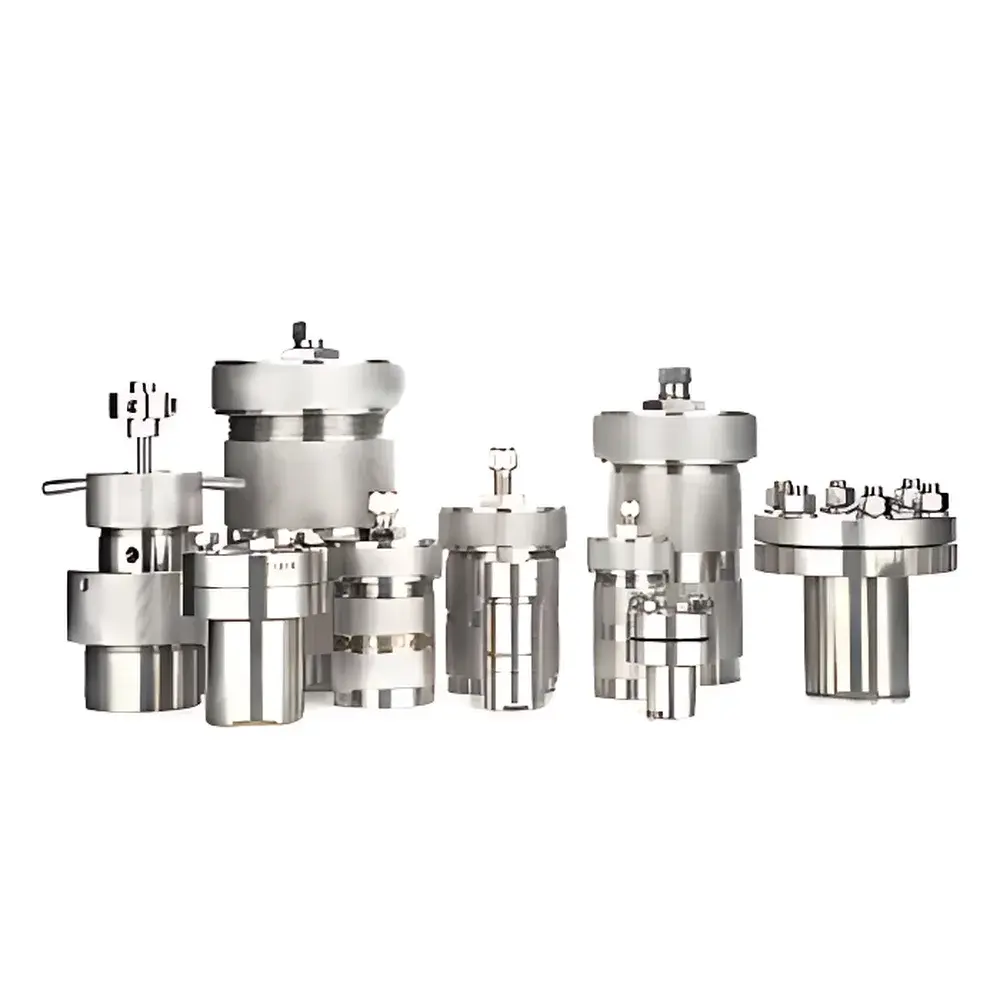
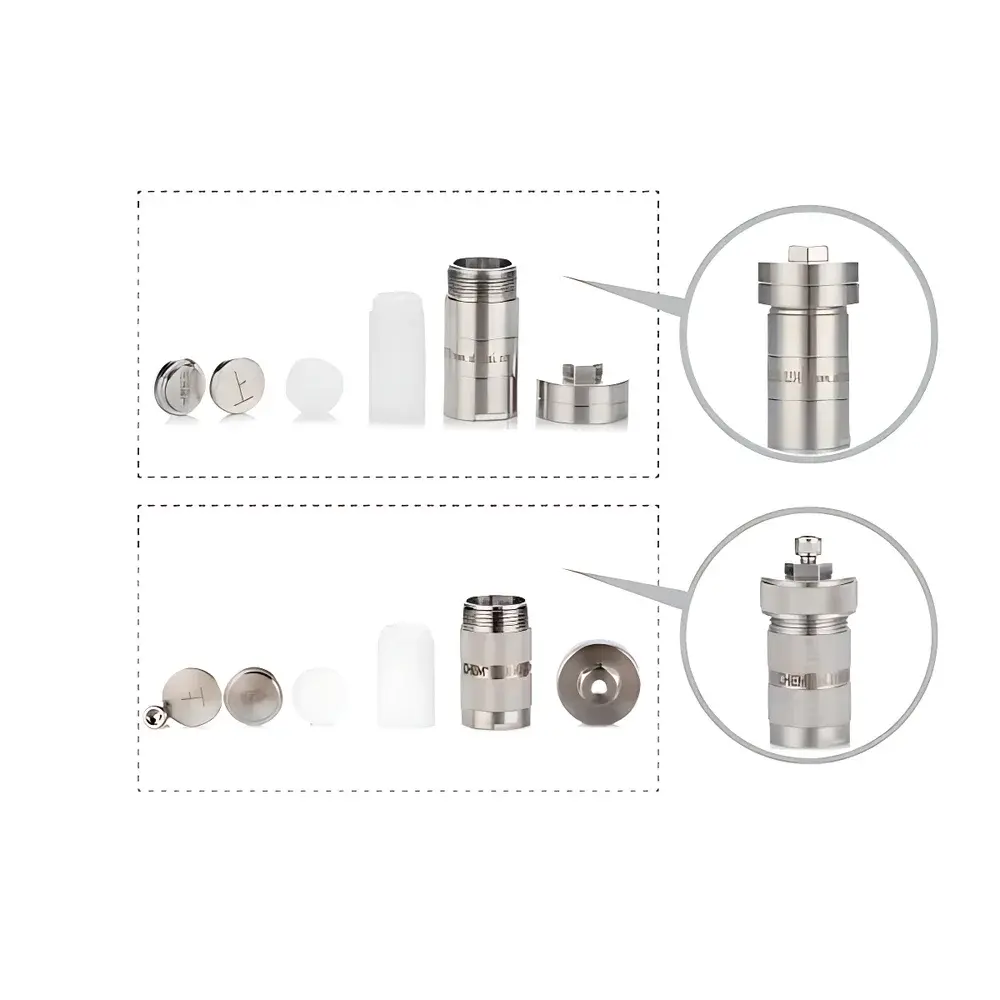
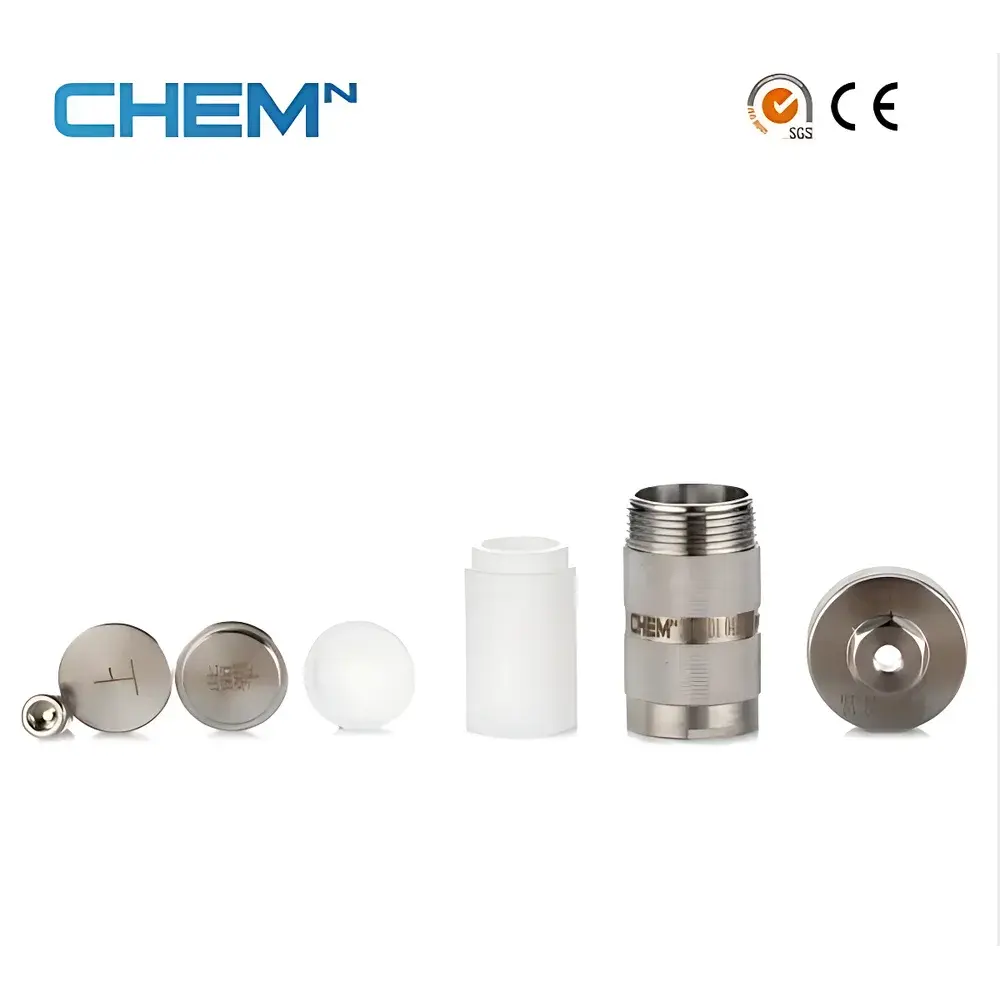
Ahkemi HTG Series General-Purpose Hydrothermal Reaction Vessels
| Brand | Ahkemi |
|---|---|
| Origin | Anhui, China |
| Manufacturer Type | Authorized Distributor |
| Origin Category | Domestic (China) |
| Model Capacities | 300 mL / 500 mL / 1000 mL |
| Price Range | USD 0–2,800 |
| Usable Volume | Small-scale |
| Construction Material | Non-magnetic 0Cr18Ni9Ti Stainless Steel (AISI 304 equivalent) with PTFE Liner |
| Maximum Working Pressure | 30 bar (435 psi) |
| Vacuum Rating | 30 bar (absolute) |
| Max Operating Temperature | 260 °C |
| Sealing Mechanism | Groove-face self-sealing design |
| Thread Treatment | Silver-plated threads to prevent galling |
| Compliance | Designed per GB/T 150.1–2011 (Chinese pressure vessel standard), compatible with ASTM D5233 and ISO 17025 laboratory practice requirements |
Overview
The Ahkemi HTG Series General-Purpose Hydrothermal Reaction Vessels are precision-engineered stainless steel pressure vessels designed for controlled solvothermal synthesis, acid/alkali digestion, and high-temperature, high-pressure sample preparation in analytical and materials science laboratories. Based on the fundamental principle of sealed-vessel hydrothermal chemistry, these reactors enable rapid decomposition of refractory matrices—including silicates, metal oxides, biological tissues, and organic polymers—under elevated temperature and pressure conditions that significantly exceed ambient boiling points. The system operates via a dual-layer architecture: an outer shell fabricated from non-magnetic 0Cr18Ni9Ti stainless steel (chemically equivalent to AISI 304) provides mechanical integrity and thermal stability, while the inner liner is constructed from high-purity polytetrafluoroethylene (PTFE), offering exceptional chemical resistance to concentrated acids (e.g., HNO₃, HF, HCl, H₂SO₄), alkalis, and oxidizing agents at temperatures up to 260 °C. This configuration ensures reproducible reaction environments suitable for trace-element analysis by ICP-OES, ICP-MS, AAS, and XRF, as well as nanomaterial crystallization (e.g., TiO₂, ZnO, MOFs) under solvothermal conditions.
Key Features
- Dual-material construction: 0Cr18Ni9Ti stainless steel body with seamless PTFE liner ensures corrosion resistance and thermal compatibility across aggressive reagent systems.
- Groove-face self-sealing interface eliminates reliance on elastomeric gaskets, enhancing long-term sealing reliability and reducing contamination risk.
- Silver-plated thread surfaces prevent cold welding and galling during repeated thermal cycling—critical for maintaining torque consistency and safe disassembly after operation.
- Pressure-rated to 30 bar (435 psi) with validated burst safety margin per GB/T 150.1–2011; maximum service temperature limited to 260 °C to preserve PTFE structural integrity.
- Available in three standardized capacities—300 mL, 500 mL, and 1000 mL—with optional custom liner geometries available upon technical drawing submission.
- Optimized wall thickness and stress distribution support uniform heat transfer and minimize thermal gradients during oven-based heating.
Sample Compatibility & Compliance
The HTG series is validated for use with samples requiring closed-vessel digestion or synthesis under inert or reactive atmospheres. Compatible matrices include environmental solids (soils, sediments, sludges), biological tissues, foodstuffs, pharmaceutical excipients, and geological specimens. It is explicitly incompatible with low-boiling solvents (bp < 60 °C), highly exothermic reactions, gas-evolving systems, and substances classified as extremely or highly hazardous per HG 20660–2000. All units comply with Chinese national pressure equipment standards (GB/T 150.1–2011) and support GLP-aligned workflows when integrated into documented laboratory procedures. While not certified to ASME BPVC Section VIII Div. 1, the design incorporates conservative safety factors appropriate for research-grade applications where full regulatory certification is not mandated.
Software & Data Management
As a passive, oven-operated reactor system, the HTG series does not incorporate embedded electronics or digital control interfaces. However, it is fully compatible with external process documentation systems compliant with ISO/IEC 17025 and FDA 21 CFR Part 11 when used within auditable workflows. Users are advised to log batch-specific parameters—including fill volume, reagent composition, target temperature, ramp rate, dwell time, and cooling protocol—in laboratory notebooks or LIMS platforms. Traceability is enhanced through optional engraved serial numbering and material certification documentation (3.1 Mill Test Reports available upon request).
Applications
- Routine microwave- and oven-assisted acid digestion for heavy metals (Pb, Cd, As, Hg), rare earth elements (REEs), and nutrients in food, feed, and clinical samples.
- Solvothermal synthesis of metal oxide nanoparticles, perovskites, and coordination polymers under controlled stoichiometric and kinetic conditions.
- Preparation of certified reference materials (CRMs) requiring matrix-matched digestion prior to multi-element quantification.
- Environmental monitoring applications including EPA Method 3050B/3051A/3052 adaptation for soil and sediment analysis.
- Method development for novel digestion protocols targeting recalcitrant carbonaceous or siliceous matrices.
FAQ
What is the maximum recommended fill volume for safe operation?
For optimal pressure management and thermal expansion accommodation, the recommended fill volume is ≤ 60% of total internal capacity (e.g., ≤ 600 mL in a 1000 mL vessel).
Can the PTFE liner be replaced independently?
Yes—standardized PTFE liners are available as consumables; custom liners can be manufactured from supplied CAD drawings or physical samples.
Is lubrication required on the threads before each use?
Lubrication with high-temperature lithium grease is recommended only when operating above 150 °C and only for non-silver-plated models; silver-plated variants inherently resist galling without additional lubricants.
Are these vessels suitable for use in microwave digestion systems?
No—HTG series vessels are engineered exclusively for convection or forced-air oven heating. Microwave compatibility requires magnetron-safe geometry and dielectric properties not present in this design.
How should users verify pressure integrity before first use?
Perform a dry heat test at 200 °C for 30 minutes with empty vessel and no reagents; inspect for deformation, leakage signs, or abnormal discoloration of PTFE liner post-cooling.



