
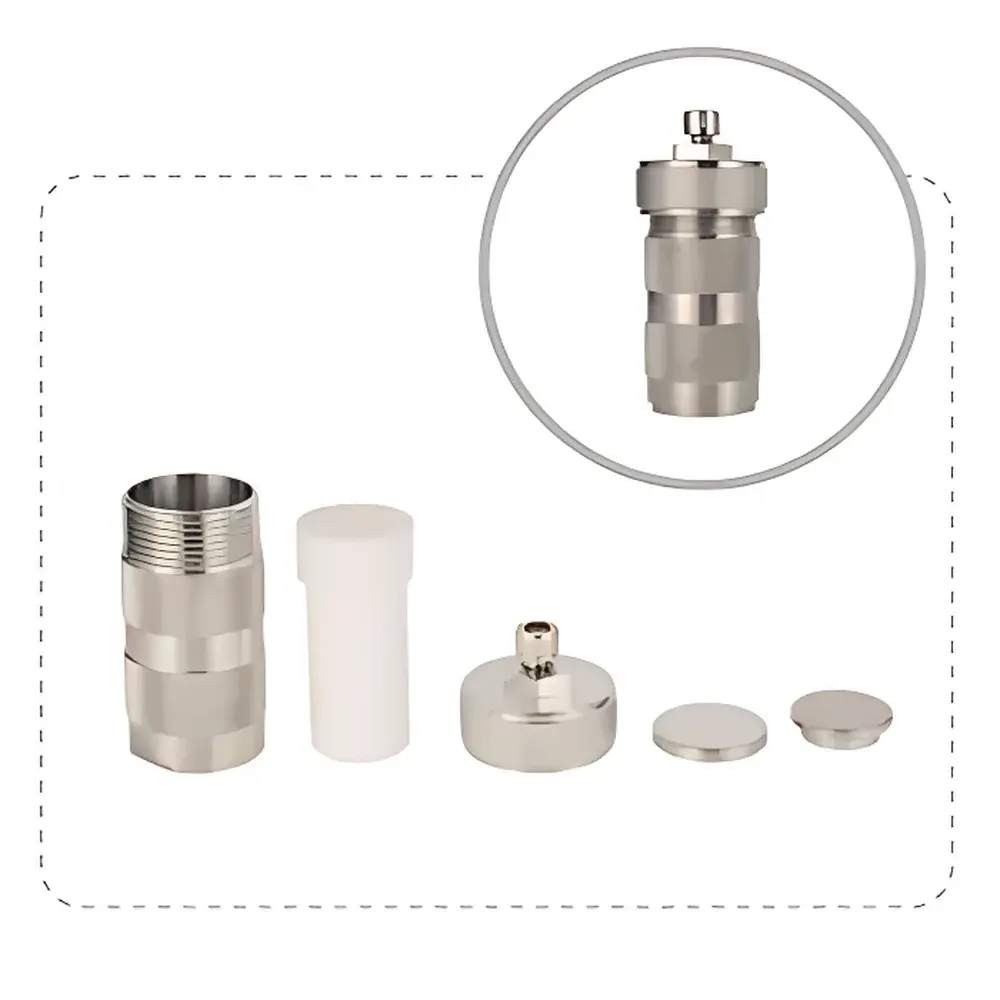
Ahkemi HTS Step-Positioning Hydrothermal Autoclave
| Brand | Ahkemi |
|---|---|
| Origin | Anhui, China |
| Model | 25/50/100/200 mL |
| Working Pressure | 30 bar (max) |
| Max Operating Temperature | 260 °C |
| Vessel Material | Non-magnetic 0Cr18Ni9Ti stainless steel |
| Liner Material | PTFE |
| Vacuum Rating | 30 bar |
| Volume Range | 25–200 mL |
| Compliance | Designed for ASTM E2482, ISO 17025-compliant sample digestion workflows |
Overview
The Ahkemi HTS Step-Positioning Hydrothermal Autoclave is a precision-engineered, benchtop pressure digestion vessel designed for controlled high-temperature, high-pressure hydrothermal synthesis and sample decomposition under inert or acidic/alkaline conditions. Based on the fundamental principle of sealed-vessel thermal decomposition—where elevated temperature and autogenous pressure accelerate chemical reaction kinetics—the HTS series leverages a mechanically stabilized liner positioning system to maintain volumetric integrity during thermal cycling. Unlike conventional hydrothermal reactors that rely solely on threaded compression or spring-loaded sealing, the HTS design incorporates a machined step interface between the stainless-steel body and the PTFE liner. This geometry ensures axial and radial constraint of the liner during heating and cooling phases, mitigating cold-flow deformation—a common failure mode in fluoropolymer liners subjected to repeated thermal stress above 200 °C. The result is improved long-term liner dimensional stability, reproducible reaction volumes across cycles, and reduced risk of cross-contamination due to liner distortion or micro-cracking.
Key Features
- Step-positioning liner interface: Precision-machined stainless-steel cavity with axial shoulder ensures consistent PTFE liner seating depth and prevents lateral extrusion under pressure.
- Dual-material construction: Outer vessel fabricated from non-magnetic 0Cr18Ni9Ti austenitic stainless steel (equivalent to AISI 321), offering superior creep resistance and corrosion immunity in acidic media; inner liner composed of virgin, low-extractable PTFE meeting ASTM D4894 specifications.
- Pressure-rated sealing: Groove-and-gasket-free self-sealing design utilizing conformal contact between polished stainless-steel flange surface and PTFE liner rim—eliminates sealant dependency and reduces maintenance overhead.
- Thermal management compatibility: Optimized wall thickness and thermal mass distribution support uniform heat transfer in standard laboratory ovens and programmable heating blocks; validated for continuous operation up to 260 °C at ≤30 bar.
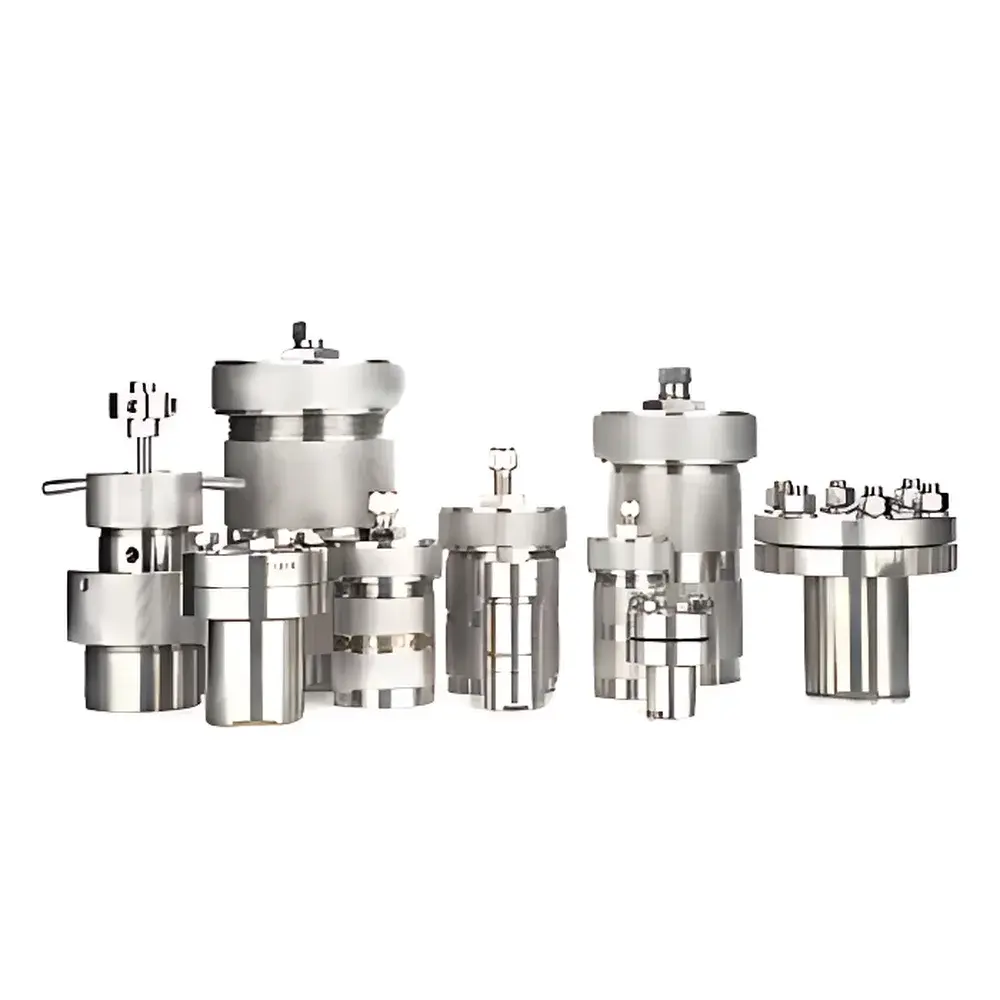
- Modular volume options: Available in calibrated nominal capacities of 25 mL, 50 mL, 100 mL, and 200 mL—each certified for ±2% volumetric accuracy per ISO 4787.
Sample Compatibility & Compliance
The HTS autoclave is intended for use with aqueous mineral acids (e.g., HNO₃, HCl, HF–HNO₃ mixtures), alkaline solutions (e.g., NaOH, KOH), and organic solvents exhibiting boiling points >60 °C (e.g., ethylene glycol, DMF). It is explicitly unsuitable for low-boiling solvents (e.g., diethyl ether, acetone, dichloromethane), gas-evolving reactions, or materials classified as extremely or highly hazardous per HG 20660–2000. Each unit complies with mechanical design principles aligned with PED 2014/68/EU Annex I (Category I pressure equipment) and supports GLP/GMP documentation requirements through traceable batch certification of liner material (including extractables testing reports). For regulated environments, the reactor is compatible with audit-ready workflows per FDA 21 CFR Part 11 when integrated with compliant data acquisition systems.
Software & Data Management
While the HTS autoclave operates as a standalone passive reactor, its design enables full integration into digital lab infrastructure. Users may log operating parameters—including ramp rate, dwell time, maximum temperature, and estimated internal pressure (calculated via Antoine equation-based solvent vapor pressure models)—into LIMS or ELN platforms. Optional QR-coded vessel identification tags facilitate asset tracking and usage history logging. All PTFE liners are supplied with lot-specific certificates of conformance detailing melt flow index (MFI), density, and heavy metal impurity profiles (<10 ppb Pb, Cd, As, Hg), supporting ISO/IEC 17025 method validation requirements for trace elemental analysis.
Applications
The HTS series is routinely deployed in accredited laboratories for microwave- and oven-assisted sample preparation prior to ICP-MS, ICP-OES, AAS, and ion chromatography analysis. Key application domains include: digestion of environmental matrices (soil, sludge, sediments), food safety testing (heavy metals in seafood, pesticide residue extraction), geological sample dissolution (rare earth elements in monazite), pharmaceutical excipient characterization, and nanomaterial synthesis (e.g., TiO₂, ZnO, MOFs) under subcritical water conditions. Its dimensional stability makes it particularly suitable for quantitative recovery studies where liner volume drift would otherwise introduce systematic bias in calibration curve linearity.
FAQ
What is the maximum recommended operating temperature for the PTFE liner?
The PTFE liner is rated for continuous service up to 260 °C. Exceeding this temperature risks irreversible thermal degradation, loss of mechanical integrity, and increased fluorine leaching.
Is lubrication required on the threads before tightening?
For standard stainless-steel-threaded models, application of high-temperature lithium-based grease is advised when operating above 150 °C to prevent galling. Models with silver-plated threads do not require lubrication.
Can the HTS autoclave be used for explosive or highly volatile reactions?
No. Per safety protocol, the HTS series must not be used with substances classified as extremely or highly hazardous (HG 20660–2000), low-boiling solvents (<60 °C), or reactions generating significant gas evolution.
How is liner volume consistency maintained over multiple thermal cycles?
The step-positioning geometry restricts axial displacement of the PTFE liner during thermal expansion and contraction, minimizing cold-flow deformation and preserving nominal capacity within ±1.5% over 50+ cycles under recommended operating conditions.
Does Ahkemi provide custom liner fabrication services?
Yes—custom PTFE liners can be manufactured to customer-provided drawings or physical samples, with dimensional tolerances held to ±0.05 mm and full material traceability documentation available upon request.



