
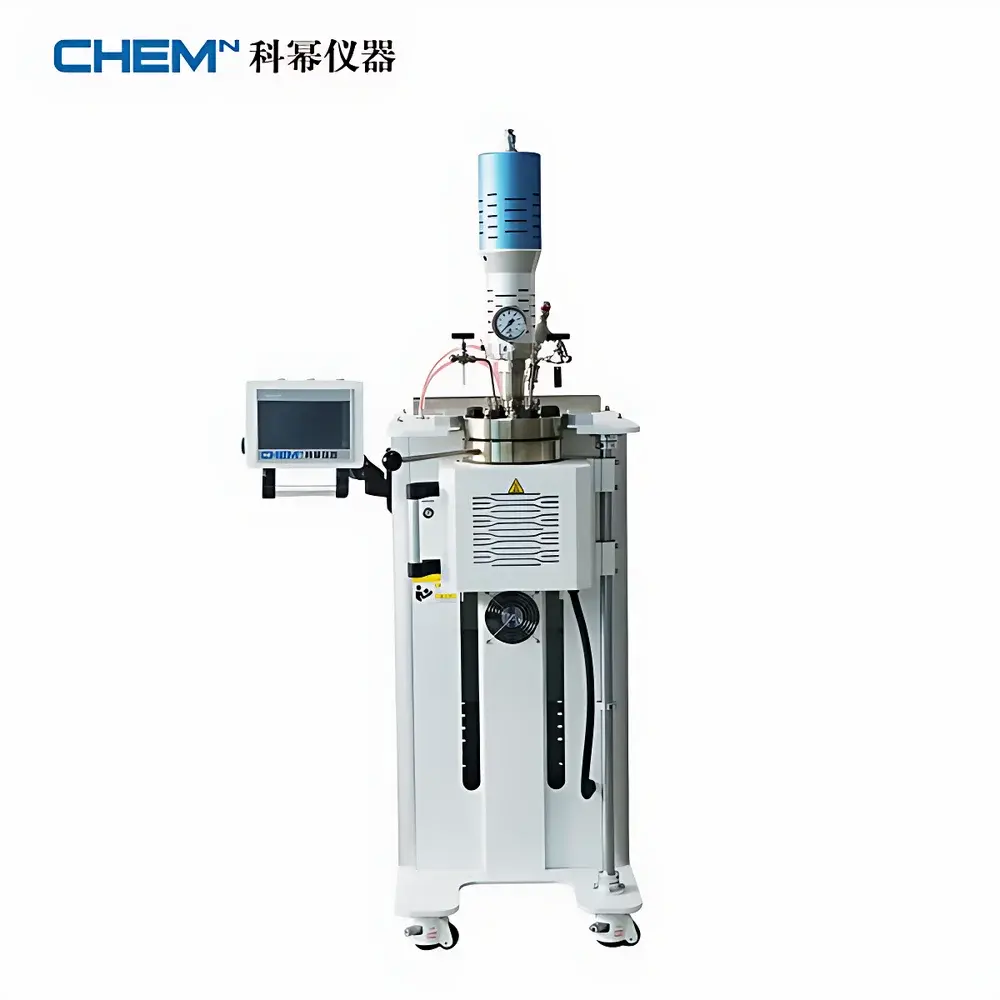
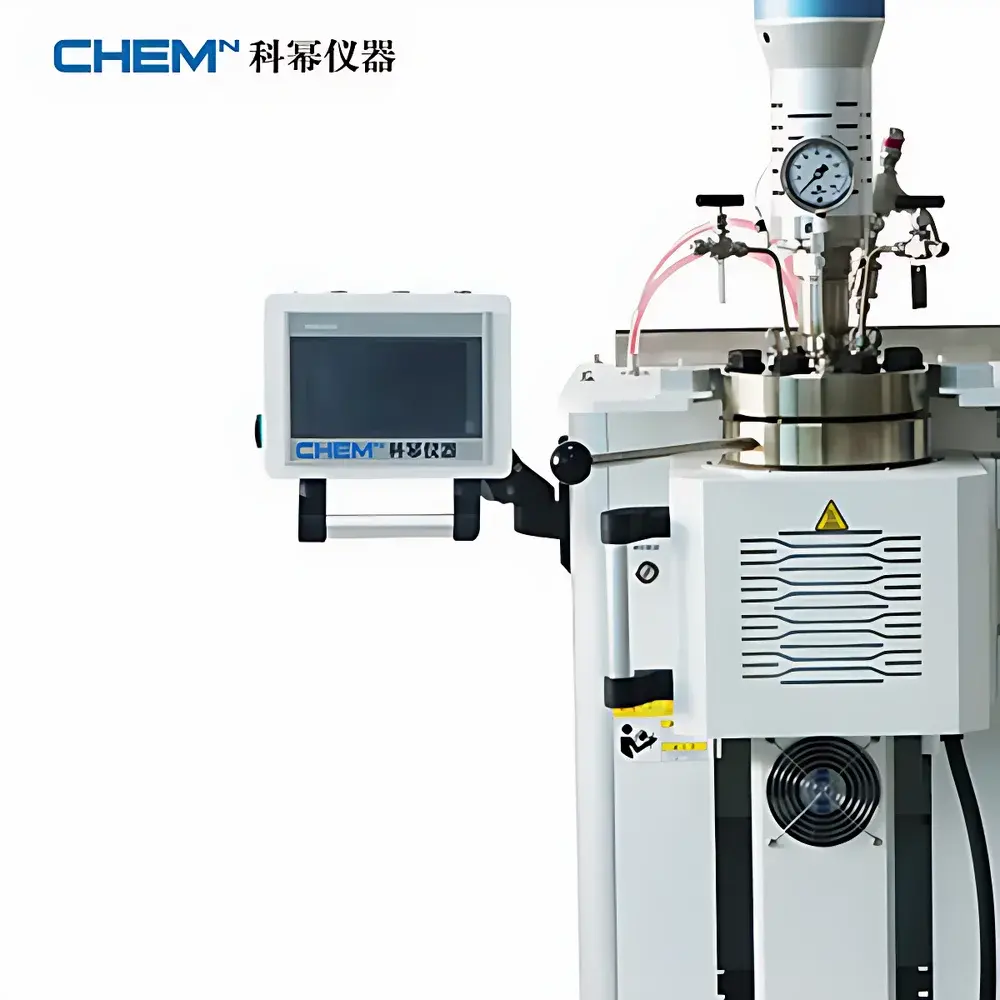
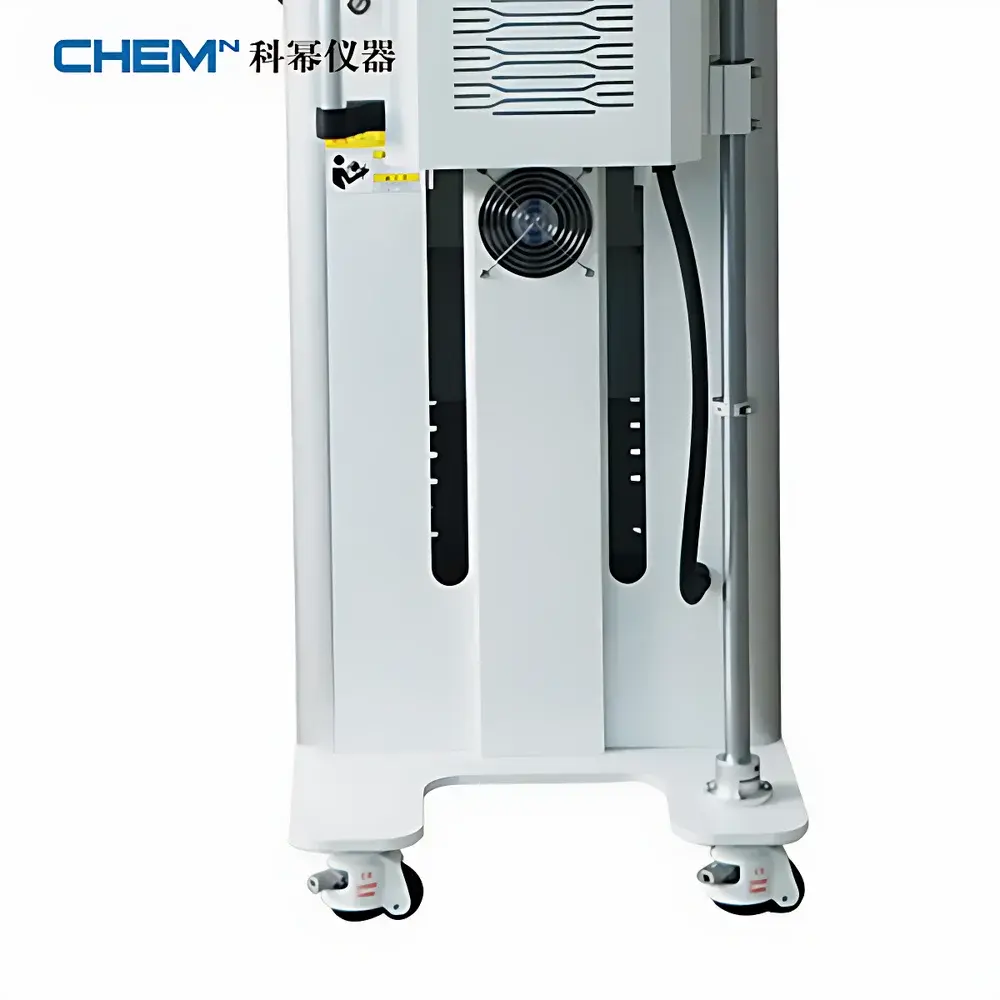
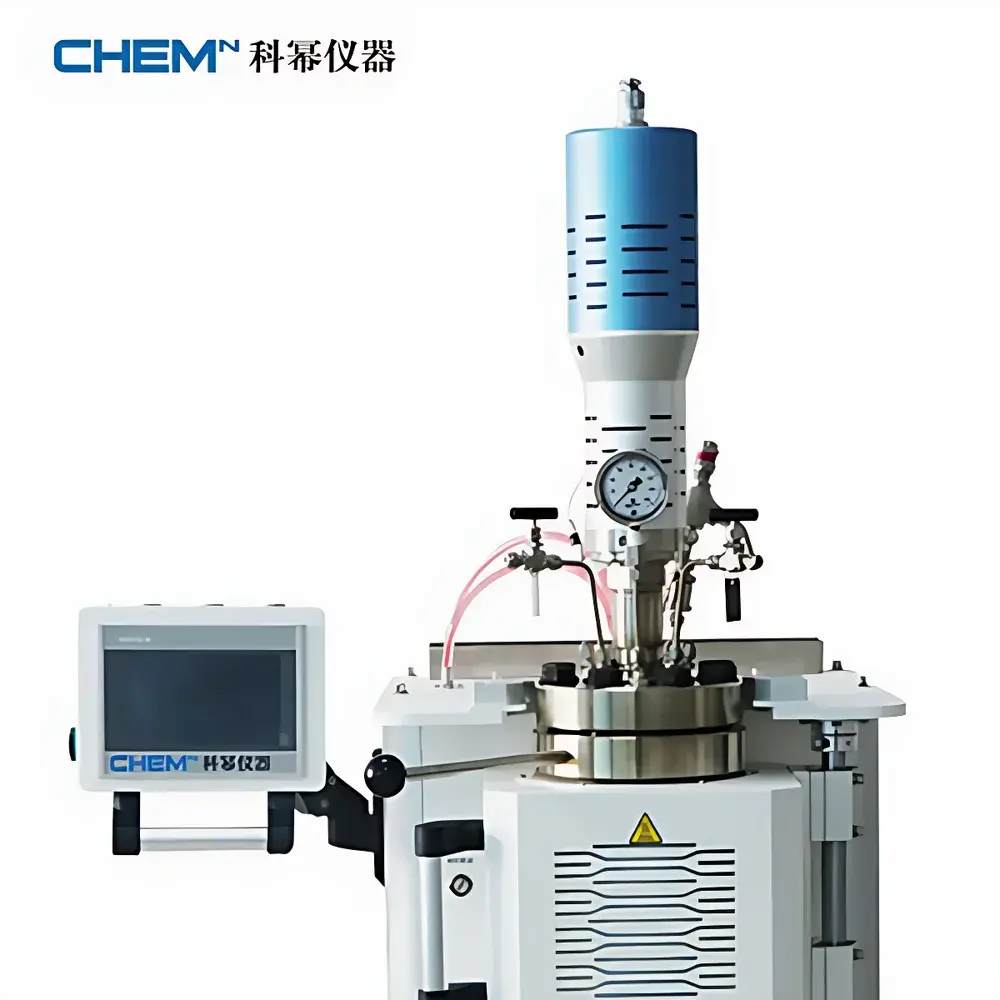
Ahkemi MA Series Automated High-Pressure Reaction Vessel
| Brand | Ahkemi |
|---|---|
| Origin | Anhui, China |
| Manufacturer Type | Authorized Distributor |
| Country of Origin | China |
| Model | MA1L-P4-T3-SS1-SV |
| Vessel Capacity | 1–29 L (customizable) |
| Maximum Operating Pressure | 10 MPa |
| Maximum Operating Temperature | 300 °C |
| Construction Material | ASTM A240 UNS S31603 (316L stainless steel) or Hastelloy C-276 |
| Stirring Mechanism | High-torque magnetic coupling drive |
| Heating Method | Integrated electric heating module (for 1–10 L) or closed-loop oil bath (for ≥5 L) |
| Vacuum Capability | ≤10⁻³ mbar (typical base vacuum, not pressure rating) |
| Control Interface | Industrial-grade 10.1″ capacitive touch HMI with real-time data logging |
| Remote Access | Web-based monitoring & control via Android app and desktop software |
| Compliance | Designed per ASME BPVC Section VIII Div. 1 (design basis), EN 13445 (structural integrity reference), and ISO 14001/ISO 9001 manufacturing processes |
Overview
The Ahkemi MA Series Automated High-Pressure Reaction Vessel is an engineered laboratory-scale reactor system designed for controlled synthesis, catalytic screening, hydrogenation, polymerization, and hydrothermal reaction studies under elevated temperature and pressure conditions. Built on a modular platform, the MA series employs Couette-type fluid dynamics principles within a sealed, magnetically coupled stirred vessel to ensure precise thermal and mechanical homogeneity during exothermic or endothermic processes. Its core architecture integrates industrial-grade pressure containment (up to 10 MPa), programmable thermal management (−20 °C to 300 °C with optional cooling), and real-time multiparameter acquisition—enabling reproducible kinetic profiling and process intensification in R&D and pilot-scale development environments.
Key Features
- Robust pressure-rated vessel construction using ASTM A240 UNS S31603 stainless steel or Hastelloy C-276 for corrosion resistance in aggressive media (e.g., HCl, HF, sulfidic streams)
- High-torque magnetic coupling drive (up to 1200 rpm for 1 L, 500 rpm for 10 L) eliminating dynamic seal leakage and ensuring maintenance-free operation under inert or hazardous atmospheres
- Dual-mode thermal management: embedded electric heating modules (2–8 kW, depending on volume) for rapid ramping; optional closed-loop oil bath with integrated cooling coil (IC) for precise isothermal control
- Full-spectrum sensor suite: MEAS piezoresistive pressure transducer (0–10 MPa, ±0.25% FS), PT100 Class A temperature probe (−20–300 °C, ±0.15 °C), and torque-responsive stirrer feedback
- Industrial HMI with 10.1″ touchscreen running deterministic real-time OS; supports configurable alarm thresholds (pressure/temperature/stir speed), event-triggered data capture, and audit-trail-enabled logging compliant with GLP requirements
- Modular interface design: standard Fitok/ Swagelok-compatible gas inlets/outlets, rupture disc (ASME-certified), safety valve (TÜV-approved), sampling port (SV), and reflux condenser mounting flange (BS)
Sample Compatibility & Compliance
The MA series accommodates heterogeneous, homogeneous, and slurry-phase reactions involving organic solvents, aqueous electrolytes, supercritical CO₂, and gaseous reagents (H₂, O₂, NH₃, Cl₂). Vessels are rated for continuous operation at 10 MPa and 300 °C, validated per ASME BPVC Section VIII Div. 1 design-by-rule methodology. All wetted components meet FDA 21 CFR 177.2400 (food-contact polymers, where applicable) and REACH SVHC screening criteria. Pressure relief systems conform to ISO 4126-1:2013; electrical enclosures comply with IP54 ingress protection and IEC 61000-6-4 EMC standards. Documentation includes FAT/SAT reports, material test certificates (MTCs), and traceable calibration records for all primary sensors.
Software & Data Management
The integrated control software (Ahkemi ReactorSuite™ v3.2) provides local HMI operation and remote web access via secure HTTPS/TLS 1.2. It supports dual-mode data handling: real-time streaming to local SQLite database (with automatic backup) and optional cloud synchronization (AWS IoT Core). All logged parameters—temperature, pressure, stir speed, power consumption, and valve status—are time-stamped with microsecond resolution and exportable in CSV, Excel, or ASTM E2500-compliant PDF formats. Audit trail functionality meets FDA 21 CFR Part 11 requirements, including electronic signatures, user role-based permissions, and immutable log history. Historical trend analysis tools enable comparative batch evaluation, deviation detection, and PAT (Process Analytical Technology) integration readiness.
Applications
- Catalytic reaction screening (e.g., Fischer–Tropsch, hydrodesulfurization, asymmetric hydrogenation) under industrially relevant P–T conditions
- Materials synthesis: MOFs, perovskites, quantum dots, and nanocellulose via solvothermal routes
- Pharmaceutical process development: high-pressure API crystallization, nitration, and diazotization under controlled exotherm management
- Energy research: electrocatalyst testing in PEMFC-relevant acidic media, battery electrolyte stability assessment at elevated pressure
- Academic kinetics studies: Arrhenius parameter extraction, residence time distribution modeling, and mechanistic validation via in situ Raman/FTIR coupling ports
FAQ
What pressure and temperature ratings apply to the MA1L-P4-T3-SS1-SV model?
This configuration is rated for continuous operation at 10 MPa and 300 °C, with burst pressure exceeding 15 MPa per ASME-certified hydrostatic test protocol.
Is the system compatible with GMP/GLP-regulated laboratories?
Yes—the software includes 21 CFR Part 11 compliance features (electronic signatures, audit trails, role-based access), and hardware documentation supports IQ/OQ/PQ validation protocols.
Can the reactor be integrated with external analytical instruments?
Standard 4–20 mA and Modbus RTU interfaces allow direct connection to FTIR, GC, or pH analyzers; optional fiber-optic feedthroughs support in situ spectroscopy.
What maintenance intervals are recommended for the magnetic coupling and pressure sensors?
Magnetic drive requires no scheduled maintenance; pressure transducers are calibrated annually per ISO/IEC 17025-accredited procedures, with drift verification every 6 months.
Does Ahkemi provide validation documentation for installation and operational qualification?
Yes—each unit ships with FAT report, material certifications, calibration certificates, and customizable IQ/OQ templates aligned with ISO 13485 and ASTM E2500 guidelines.



