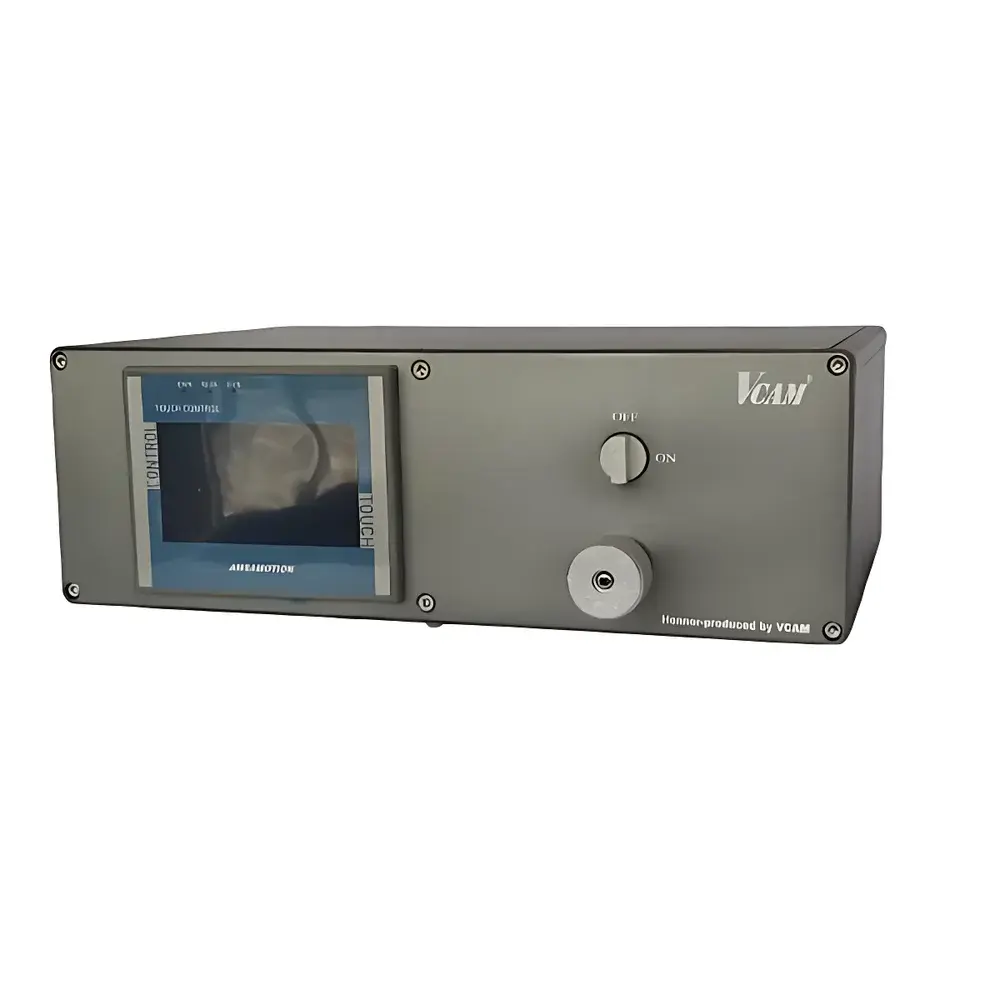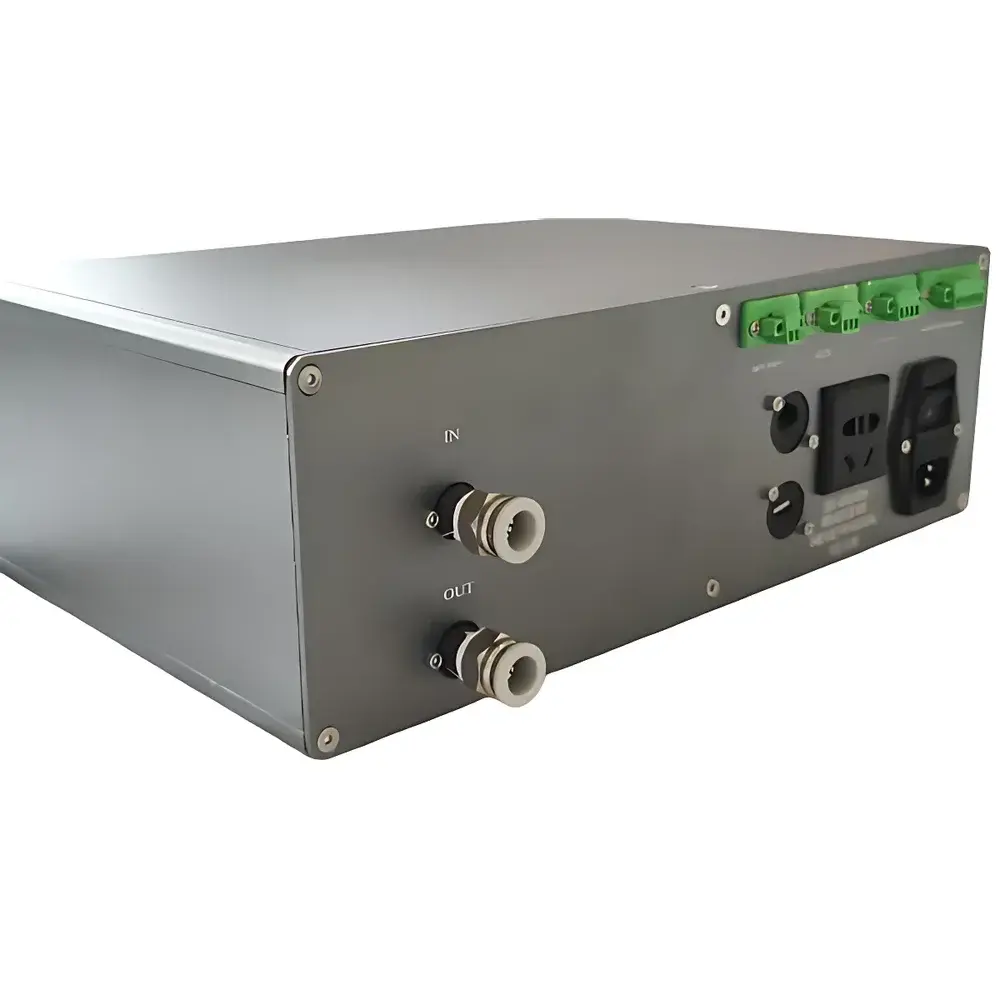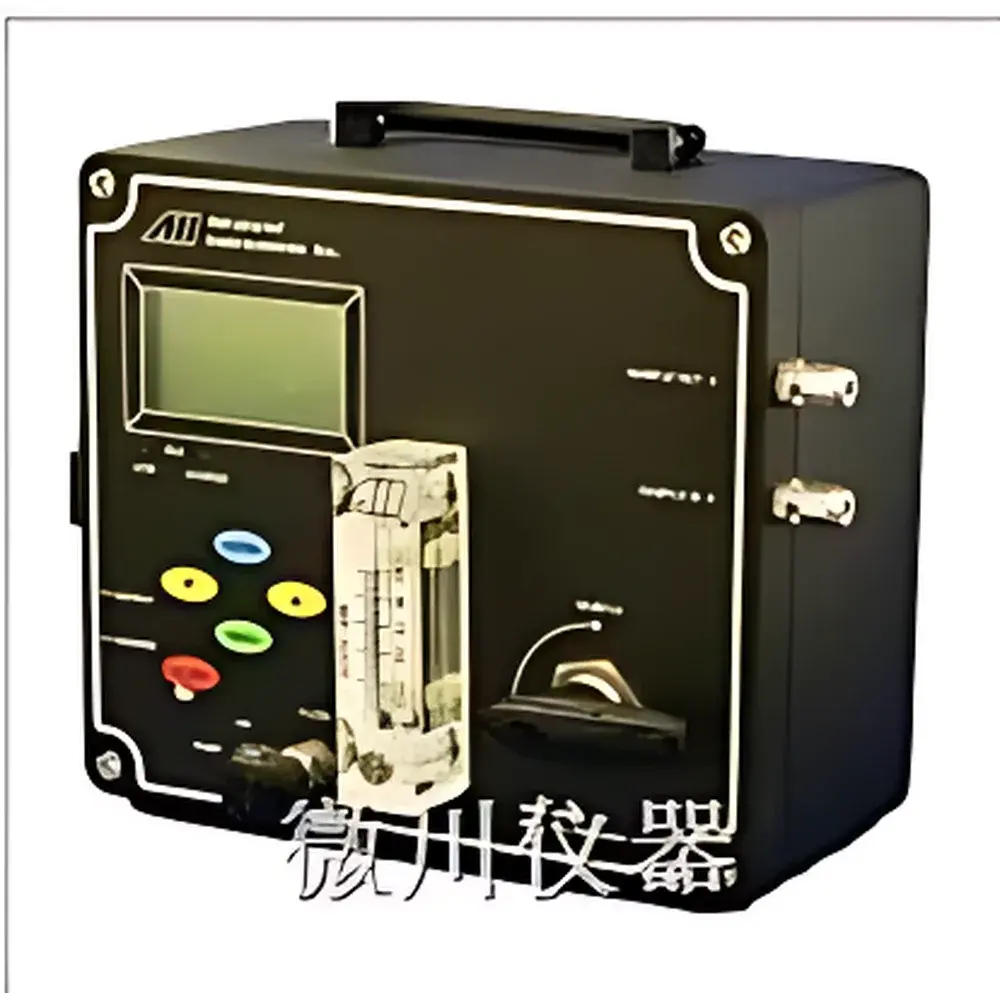
AII GPR-1200 Trace Oxygen Analyzer
| Brand | AII |
|---|---|
| Origin | USA |
| Model | GPR-1200 |
| Detection Principle | Electrochemical (Galvanic) |
| Sensor Type | GPR-12-333 (standard), XLT-12-333 (optional) |
| Measurement Range | 0–10 / 0–100 / 0–1000 ppm, 0–1% / 0–25% FS |
| Accuracy | <1% FS (at 25°C, 1 atm) |
| Sensitivity | <0.5% FS |
| Linearity | R² > 0.995 |
| Response Time (T₉₀) | 10 s |
| Recovery Time (to <10 ppm) | ≤60 s |
| Operating Temperature | 5–45°C (GPR sensor), –20–45°C (XLT sensor) |
| Sample Flow Rate | 0.5–5 SCFH (recommended: 2 SCFH) |
| Inlet Pressure | 5–30 psig |
| Outlet | Vent to atmosphere |
| Gas Compatibility | H₂, He, N₂, Ar, CO₂ (with XLT), acidic gases, mixed industrial gases |
| Enclosure Rating | IP65 (waterproof housing) |
| Safety Certification | ATEX/IECEx-compliant intrinsic safety — Class I, Division 1, Groups A–D |
| Power | Rechargeable Li-ion battery (60-day standby life per charge) |
| Output Signal | 0–1 V analog |
| Display | Backlit LCD |
| Sampling System | Stainless steel bypass manifold |
| Calibration | Two-point (zero/span) with 80% FS span gas recommended |
| Compliance | CE-marked, ISO 9001:2000 certified |
Overview
The AII GPR-1200 Trace Oxygen Analyzer is a field-deployable, electrochemical-based analyzer engineered for continuous, high-stability measurement of oxygen concentrations down to sub-ppm levels in inert, reducing, and mildly corrosive process gas streams. Utilizing AII’s proprietary galvanic fuel cell sensor technology—specifically the GPR-12-333 sensor—the instrument delivers drift-free performance without external power to the sensing element, eliminating zero drift and minimizing calibration frequency. The analyzer operates on the principle of spontaneous electrochemical reduction of O₂ at a noble metal cathode, generating a current linearly proportional to partial pressure. This passive, self-powered architecture ensures long-term reliability in remote or hazardous locations where maintenance access is limited. Designed for integration into quality-critical workflows—including semiconductor purge monitoring, hydrogen purity verification, and inert blanketing validation—the GPR-1200 meets the functional safety and metrological rigor expected in regulated industrial environments.
Key Features
- Galvanic sensor architecture (GPR-12-333 standard; XLT-12-333 optional for CO₂-rich streams >0.5%) with 24-month nominal service life and zero routine maintenance
- Five factory-configured measurement ranges: 0–10 ppm, 0–100 ppm, 0–1000 ppm, 0–1% FS, and 0–25% FS—switchable via front-panel interface or remote command
- Stainless steel bypass sampling manifold with 1/8″ Swagelok®-compatible fittings, rated for continuous exposure to H₂, He, N₂, Ar, and low-concentration acidic gases
- IP65-rated waterproof enclosure with ruggedized LCD display, suitable for outdoor or washdown-prone installations
- Intrinsically safe design certified to Class I, Division 1, Groups A–D per UL 913 and IEC 60079-11, enabling deployment in Zone 0/1 classified areas
- Extended battery operation: rechargeable lithium-ion pack supports up to 60 days of intermittent use or 12 hours of continuous logging on a single charge
- Integrated temperature compensation and linearization algorithms ensuring <1% FS accuracy across full operating temperature range (5–45°C)
Sample Compatibility & Compliance
The GPR-1200 is validated for use with non-condensing, dry-to-moderately humid gas matrices including hydrogen, helium, nitrogen, argon, and synthetic air mixtures. For applications involving elevated CO₂ (e.g., biogas scrubbing off-gas or beverage carbonation lines), the optional XLT-12-333 sensor provides stable response with minimal cross-sensitivity. All wetted materials—including sensor body, diffusion barrier, and bypass tubing—are electropolished 316 stainless steel or PTFE-lined, resisting chloride-induced pitting and sulfur compound adsorption. The analyzer complies with CE Directive 2014/30/EU (EMC) and 2014/34/EU (ATEX), and its manufacturing quality system is certified to ISO 9001:2000. While not FDA 21 CFR Part 11–validated out-of-the-box, audit-ready calibration logs and user-accessible firmware versioning support GLP/GMP-aligned documentation practices.
Software & Data Management
The GPR-1200 operates autonomously without host software but supports analog data capture via its isolated 0–1 V output (12-bit effective resolution). When paired with third-party SCADA or DCS systems, the unit transmits real-time concentration values, sensor health status, and temperature-compensated raw signal. Internal non-volatile memory stores up to 1,000 timestamped readings (date/time, O₂ value, temperature, pressure flag) accessible via USB-C interface using AII’s free ConfigTool utility. Calibration events—including date, span gas ID, and pre-/post-calibration deviation—are logged with immutable timestamps. Firmware updates preserve configuration integrity and include cryptographic signature verification to ensure traceability during requalification.
Applications
- Hydrogen fuel production & distribution: monitoring O₂ impurity in PEM electrolyzer outlet gas (<2 ppm specification)
- Semiconductor fab nitrogen/helium purge lines: verifying <1 ppm O₂ prior to chamber evacuation
- Pharmaceutical inerting: validating residual oxygen in lyophilizer chambers and API drying vessels
- Food packaging headspace analysis: quantifying O₂ ingress in modified-atmosphere packaging (MAP) lines
- Power transformer oil gas monitoring: detecting dissolved O₂ as an early indicator of cellulose degradation
- Research-grade glovebox atmosphere control: closed-loop feedback for ultra-low-O₂ (<50 ppb) environments when used with external pump modules
FAQ
What is the recommended calibration interval?
AII recommends initial two-point calibration (zero + 80% FS span gas) at installation, followed by quarterly verification under stable operating conditions. More frequent calibration may be required if exposed to rapid thermal cycling or condensable vapors.
Can the GPR-1200 measure oxygen in 100% CO₂?
No—the standard GPR-12-333 sensor exhibits significant signal suppression in high-CO₂ environments. For such applications, the XLT-12-333 sensor variant must be specified at time of order.
Is the analog output isolated and scalable?
Yes—the 0–1 V output is optically isolated and maps linearly to the active measurement range (e.g., 0–100 ppm = 0–1 V); no external scaling resistors are required.
Does the unit support Modbus RTU or HART communication?
No—only analog voltage output is provided natively. Digital protocols require external signal converters compatible with 0–1 V input.
What flow rate is required for optimal response time?
A steady sample flow of 2 SCFH (standard cubic feet per hour) through the stainless steel bypass manifold yields the published T₉₀ of 10 seconds and ensures laminar diffusion across the sensor membrane.