
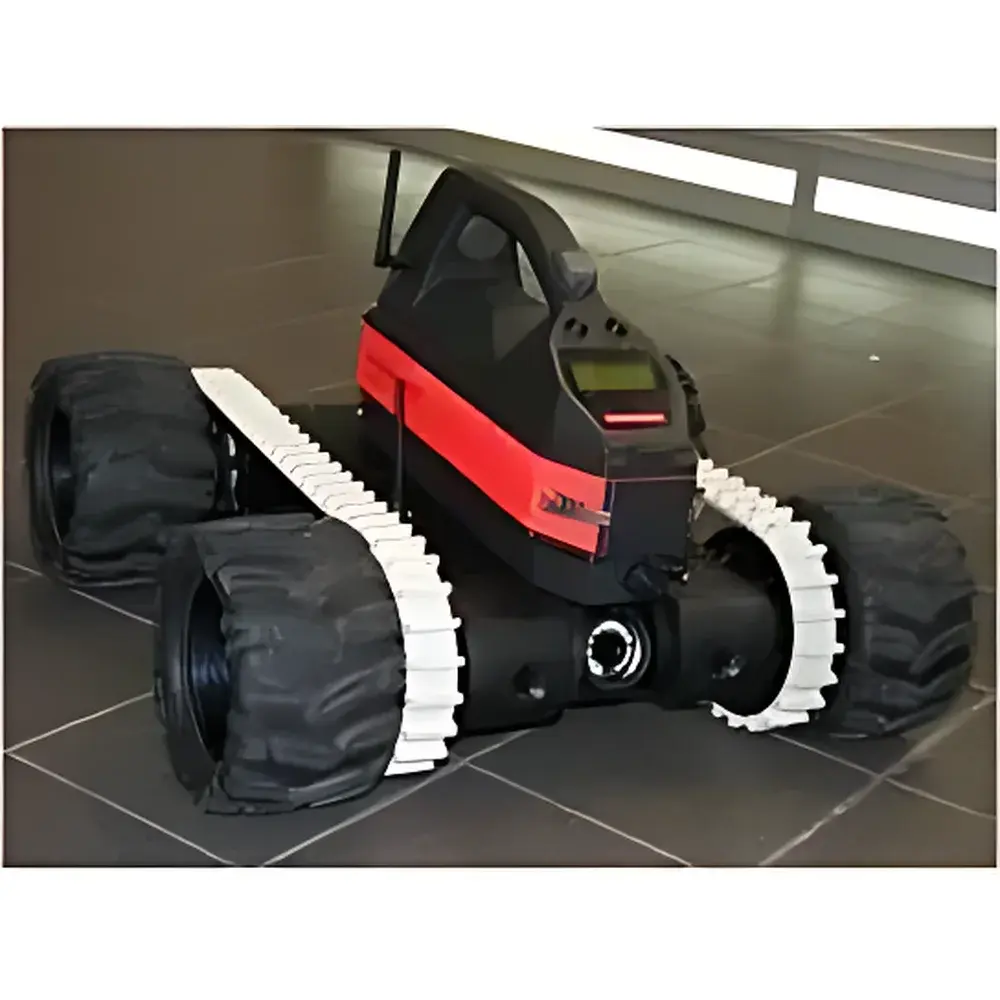
AIRSENSE GDA-FR Portable Multi-Gas Detection System
| Brand | AIRSENSE |
|---|---|
| Origin | Germany |
| Model | GDA-FR |
| Detection Technologies | IMS, PID, MOS, EC |
| Sensor Channels | 8 independent parallel channels |
| Library Size | >300 calibrated chemical signatures |
| Response Time | <2 s (typical), ≤60 s (full quantification) |
| Detection Range | Sub-ppb to ppm level depending on analyte |
| Power | Rechargeable Li-ion battery, >8 h continuous operation |
| Compliance | CE, RoHS, ATEX Zone 2/22 (optional), IEC 61508 SIL2-ready architecture |
| Operating Temperature | −10 °C to +50 °C |
| Ingress Protection | IP65 |
Overview
The AIRSENSE GDA-FR Portable Multi-Gas Detection System is an engineered field-deployable analytical platform designed for real-time, multi-modal identification and quantification of toxic industrial chemicals (TICs), volatile organic compounds (VOCs), inorganic gases, and specialty electronic gases. Unlike single-technology detectors, the GDA-FR integrates four complementary gas-sensing principles—Ion Mobility Spectrometry (IMS), Photoionization Detection (PID), Metal Oxide Semiconductor (MOS) sensing, and Electrochemical (EC) cell measurement—within a unified, thermally stabilized sampling manifold. Each technology operates simultaneously across eight independent signal acquisition channels, generating a multidimensional response vector per sample. This vector serves as a chemometric fingerprint, matched against an expandable reference library using supervised pattern recognition algorithms trained on laboratory-validated calibration data. The system is purpose-built for mission-critical applications where false positives compromise operational integrity—such as hazmat response, border security screening, industrial leak verification, and emergency environmental assessment.
Key Features
- Multi-Technology Sensor Fusion: Eight parallel detection channels derived from IMS (for polarizable low-mass organics and nitrogen-containing compounds), PID (for aromatic and unsaturated VOCs with ionization potentials <10.6 eV), MOS (for broad-spectrum reducing/oxidizing gases), and EC (for targeted electroactive species including CO, H2S, Cl2, NO2).
- Adaptive Chemical Library: Factory-calibrated library containing >300 chemical signatures, covering TICs (e.g., phosgene, ammonia, hydrogen cyanide), regulated VOCs (e.g., benzene, formaldehyde, chloroform), semiconductor process gases (e.g., NF3, SiH4, BCl3), and common interferents. Library expansion is supported via AIRSENSE-certified calibration protocols and spectral retraining workflows.
- Rapid Deployment Architecture: Cold-start operation enabled by low-thermal-mass sensor modules; full functional readiness achieved in <15 seconds. No warm-up delay required for preliminary screening—critical during time-sensitive incident response.
- Low-Maintenance Modular Design: All sensor cartridges, filters, and pump assemblies utilize standardized quick-release interfaces. Field-replaceable units require no soldering, alignment, or firmware reconfiguration. Integrated self-diagnostics continuously monitor flow rate, baseline drift, and channel coherence.
- Robust Environmental Operation: Rated IP65 for dust and water resistance; validated performance across −10 °C to +50 °C ambient range and 15–95% RH (non-condensing). Optional ATEX-certified housing available for Zone 2/22 classified areas.
Sample Compatibility & Compliance
The GDA-FR is validated for direct analysis of ambient air, headspace vapors, and diluted stack emissions without preconcentration or derivatization. It complies with ISO 16000-23 (indoor air VOC monitoring), ASTM D6196 (selection of sorbents for VOC sampling), and EN 15467 (portable gas detectors for emergency use). For regulated environments—including GLP-compliant laboratories, EPA Region 10 field operations, and EU REACH substance screening—the instrument supports audit-trail logging, user-access control tiers, and electronic signature capability aligned with FDA 21 CFR Part 11 requirements when paired with AIRSENSE SecureLink™ software.
Software & Data Management
Data acquisition, library management, and reporting are handled through AIRSENSE AnalytiX™ v4.2—a Windows-based application supporting offline spectral library curation, batch processing of time-series datasets, and export to CSV, XML, or LIMS-compatible formats (ASTM E1382, ASTM E2500). Instrument firmware updates, sensor health logs, and alarm event histories are timestamped and cryptographically signed. Remote configuration and over-the-air firmware patching are available via optional cellular or Wi-Fi telemetry modules, enabling centralized fleet management for multi-unit deployments.
Applications
- Hazmat & Emergency Response: Rapid delineation of exposure zones during chemical spills, railcar breaches, or clandestine lab investigations; generation of real-time plume maps integrated with GPS-tagged readings.
- Industrial Hygiene & Process Safety: Confined space entry verification, LDAR (leak detection and repair) surveys, and continuous monitoring near flange points, valves, and storage tanks in petrochemical, pharmaceutical, and semiconductor manufacturing facilities.
- Border Security & Critical Infrastructure Protection: Non-intrusive screening of cargo containers, postal parcels, and ventilation ducts for explosives precursors, illicit narcotics volatiles, and chemical warfare agent simulants.
- Environmental Field Monitoring: Source apportionment at landfill sites, fugitive emission quantification from wastewater treatment plants, and post-incident validation following industrial fires or solvent releases.
- Public Health Surveillance: Occupational exposure assessment in spray painting booths, pesticide application zones, and confined agricultural silos; correlation of real-time VOC profiles with respiratory symptom logs in epidemiological studies.
FAQ
Does the GDA-FR require daily calibration?
No. The system performs automatic zero-point correction during idle periods and retains calibration stability for up to 7 days under typical field conditions. Full span calibration is recommended every 30 days or after exposure to saturation-level concentrations.
Can the instrument detect gases not included in the default library?
Yes. AIRSENSE provides certified library expansion services, including custom calibration gas preparation, spectral acquisition under controlled conditions, and algorithmic validation per ISO/IEC 17025 guidelines.
Is remote data transmission supported out-of-the-box?
Standard configurations include USB and Bluetooth 5.0 connectivity. Cellular (LTE-M/NB-IoT) and Wi-Fi 6 modules are available as factory-installed options with embedded TLS 1.3 encryption.
What maintenance intervals are specified for sensor modules?
IMS and PID lamps are rated for ≥2,000 hours of operation; MOS and EC sensors typically require replacement every 12–18 months depending on cumulative exposure profile. All modules feature EEPROM-stored lifetime counters accessible via diagnostic menu.
How does the GDA-FR handle cross-sensitivity in mixed-gas environments?
The eight-channel response matrix enables multivariate deconvolution using partial least squares discriminant analysis (PLS-DA). Interference rejection is further enhanced by dynamic background subtraction and adaptive thresholding based on real-time signal-to-noise ratio estimation.
Related Products







