
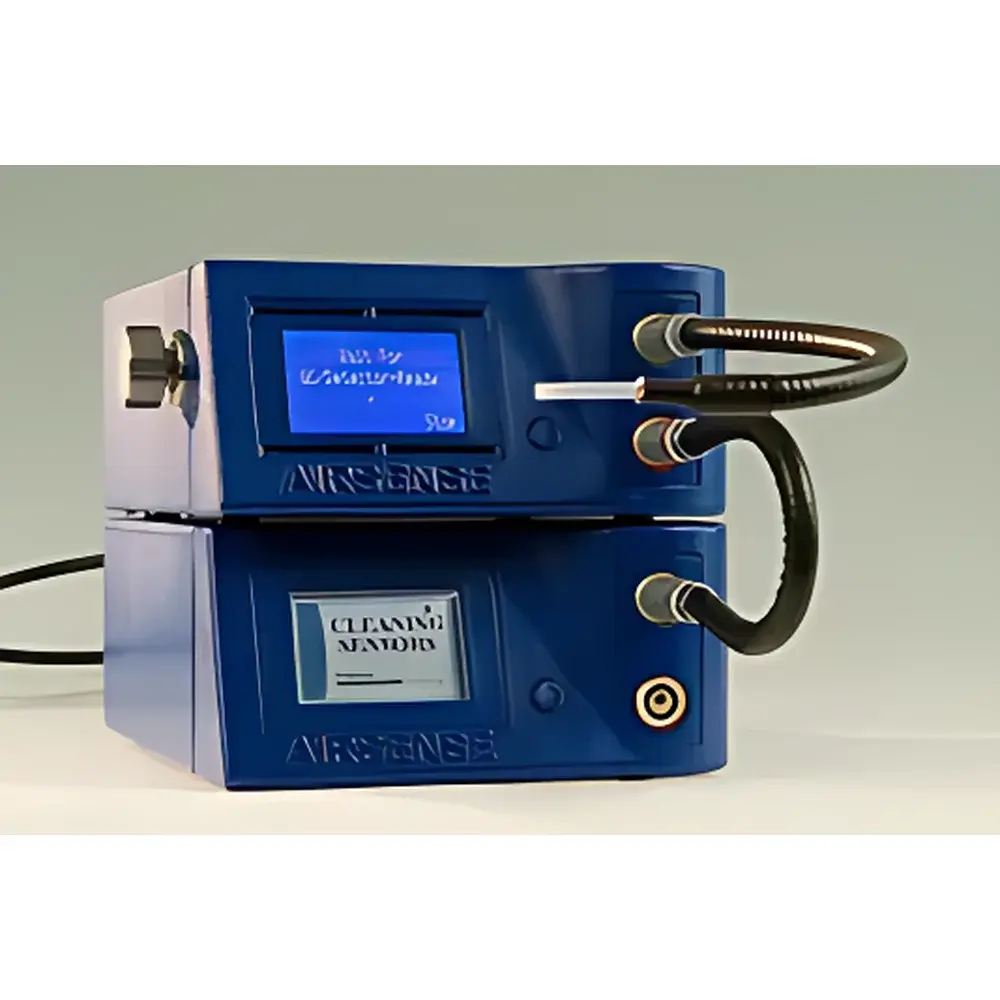
AIRSENSE PEN3.5 Portable Electronic Nose for Odor Analysis
| Brand | AIRSENSE |
|---|---|
| Origin | Germany |
| Model | PEN3.5 |
| Instrument Type | Portable |
| Detection Principle | Multi-sensor array (Metal Oxide Semiconductor, Electrochemical, PID) |
| Sensor Array | 10 distinct MOS sensors |
| Software Platform | WinMuster v5.x |
| Data Analysis Algorithms | PCA, LDA, DFA, K-NN (Euclidean & Mahalanobis), PLS |
| Compliance | Designed for ISO 18562-3 (biocompatibility of gas pathways), ASTM E2147-22 (odor intensity measurement), GLP-compliant audit trail support |
| Operating Environment | 5–40 °C, 20–90% RH (non-condensing) |
| Sample Introduction | Integrated auto-sampling pump with mass-flow-controlled inlet (0.1–1.0 L/min adjustable) |
| Connectivity | USB 2.0, RS-232, optional Ethernet module for remote station integration |
Overview
The AIRSENSE PEN3.5 Portable Electronic Nose is a field-deployable, multi-sensor analytical platform engineered for objective odor characterization and semi-quantitative profiling of complex volatile organic compound (VOC) mixtures in ambient air and emission sources. Unlike single-analyte gas detectors, the PEN3.5 operates on biomimetic pattern recognition principles—mimicking mammalian olfaction through parallel transduction of odorant molecules across a chemically diverse sensor array. Its core measurement architecture relies on dynamic headspace sampling coupled with real-time resistance modulation detection in ten proprietary metal oxide semiconductor (MOS) elements, each exhibiting unique cross-sensitivity profiles to functional groups (e.g., sulfur-containing compounds, aldehydes, amines, short-chain fatty acids). This enables discrimination of odor quality (e.g., “rotten egg” vs. “fishy” vs. “sweet-fermented”) rather than quantification of individual compounds—a critical distinction for regulatory odor assessment where human perception remains the benchmark. The system is validated for use in environmental odor monitoring per ISO 18562-3 (gas pathway biocompatibility), ASTM E2147-22 (standard practice for determining odor intensity via instrumental correlation), and supports traceability requirements aligned with GLP and EU Directive 2008/50/EC ambient air quality frameworks.
Key Features
- Field-rugged portable design (weight: 2.8 kg; dimensions: 280 × 220 × 120 mm) with integrated rechargeable Li-ion battery (≥6 h continuous operation)
- 10-element MOS sensor array calibrated against certified odor reference standards (n-butanol, hydrogen sulfide, trimethylamine)
- Mass-flow-controlled sampling system featuring programmable flow rate (0.1–1.0 L/min), automatic zeroing with ambient air baseline, and pressure-compensated inlet
- Onboard signal conditioning: 24-bit ADC, real-time drift compensation, temperature/humidity co-sensing for environmental correction
- Auto-dilution capability (1:2 to 1:100 dilution ratios) enabling analysis of high-concentration plumes without saturation
- Modular interface supporting direct coupling to thermal desorption units, GC-MS systems, or online enrichment traps for hybrid method development
- Pre-configured odor classification libraries for wastewater treatment plants, landfill leachate zones, compost facilities, and chemical industrial perimeters
Sample Compatibility & Compliance
The PEN3.5 accepts gaseous samples directly from ambient air, stack effluents (via heated probe optional), or headspace vials (10–100 mL volume). It is compatible with both static and dynamic sampling modes—including continuous 24/7 unattended operation when mounted in weatherproof enclosures or vehicle-mounted mobile labs. All wetted parts (pump diaphragm, flow cell, sensor chamber) are constructed from FDA-compliant, low-outgassing polymers (PEEK, FEP) and passivated stainless steel to prevent catalytic interference or memory effects. Regulatory alignment includes adherence to EN 13725:2022 (odor concentration determination by dynamic olfactometry—used for instrument calibration correlation), ISO 16000-28:2012 (indoor air VOC screening), and data integrity provisions compliant with FDA 21 CFR Part 11 (electronic records/signatures) when used with WinMuster’s audit-trail-enabled configuration.
Software & Data Management
WinMuster v5.x serves as the unified acquisition, processing, and reporting engine. It provides full control over sampling sequence, sensor activation timing, and baseline normalization routines. Advanced multivariate analysis modules include PCA for dimensionality reduction, LDA for supervised class separation (e.g., “compost vs. sewage vs. industrial”), DFA for robust group discrimination under variable humidity, and PLS regression for correlating sensor responses with olfactometric panel data (e.g., odor concentration OUE/m³). All raw sensor time-series data, metadata (GPS-tagged location, temperature, RH, operator ID), and processed outputs are stored in encrypted SQLite databases with SHA-256 checksums. Export formats include CSV, PDF reports (with embedded chromatogram-like response plots), and XML for LIMS integration.
Applications
- Rapid source identification and boundary mapping during odor complaint investigations at municipal wastewater treatment plants and sanitary landfills
- Long-term trend analysis of odor emissions from aerobic digestion units, anaerobic lagoons, and sludge dewatering halls
- Validation of biofilter and activated carbon scrubber performance through pre-/post-treatment odor fingerprint comparison
- Process optimization in composting facilities via real-time monitoring of volatile fatty acid and ammonia evolution patterns
- Regulatory compliance screening at chemical manufacturing sites under national odor ordinances (e.g., German TA Luft, Dutch Besluit lucht)
- Research applications in atmospheric chemistry, including VOC speciation in urban plumes and biogenic emission studies
FAQ
Can the PEN3.5 quantify individual VOCs like H2S or NH3?
No—it provides odor fingerprint profiles and relative intensity scores. Quantitative speciation requires coupling with GC-MS or FTIR.
Is sensor recalibration required between field deployments?
Yes; a 15-minute ambient air zero and 30-second n-butanol reference challenge are recommended before each sampling session.
Does the system support remote data transmission?
With optional Ethernet or 4G LTE module, real-time telemetry and cloud-based dashboard visualization are available via AIRSENSE CloudLink.
What is the typical sensor lifetime under routine field use?
Minimum 18 months at 8 h/day usage; MOS sensors are field-replaceable as modular cartridges with factory calibration certificates.
Can WinMuster export data to third-party statistical packages?
Yes—CSV exports retain full time-stamped sensor response matrices suitable for R, Python (scikit-learn), or MATLAB analysis.







