
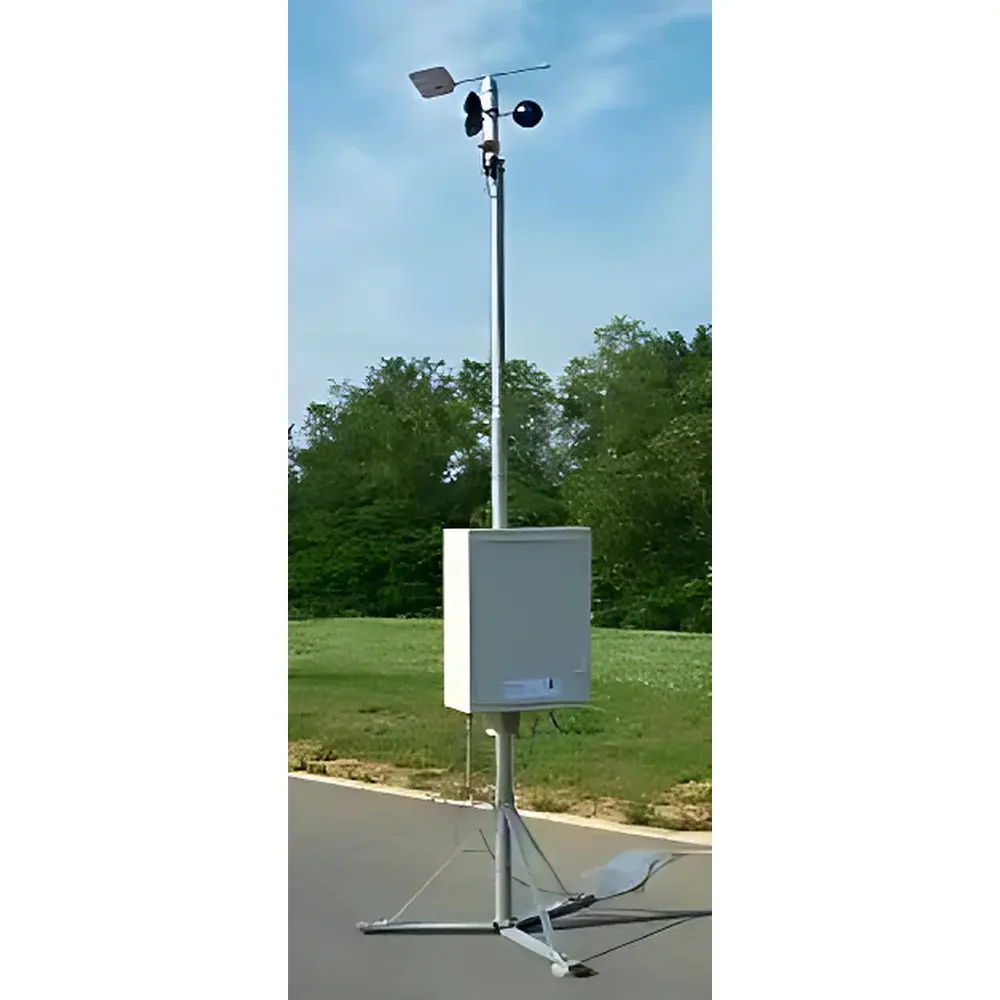
AIRSENSE PEN3-meteo Odor Monitoring Station
| Brand | AIRSENSE |
|---|---|
| Origin | Germany |
| Model | PEN3-meteo |
| Compliance | EN 13725:2003 |
| Detection Principle | Metal Oxide Semiconductor (MOS) Sensor Array with Multivariate Pattern Recognition |
| Output Unit | Odor Units per cubic meter (OU/m³) |
| Data Transmission | Wi-Fi + Optional GSM/GPRS |
| Meteorological Integration | Integrated anemometer and wind vane |
| Operating Mode | Fully Automated, Unattended 24/7 Monitoring |
| Software Algorithms | PCA, PLS, Mahalanobis Distance, Euclidean Distance |
| Sensor Configuration | 10-channel MOS sensor array |
Overview
The AIRSENSE PEN3-meteo Odor Monitoring Station is a fully automated, field-deployable environmental monitoring system engineered for continuous, real-time quantification of odor intensity in ambient air. Unlike conventional analytical methods relying on human panelists or single-compound gas chromatography, the PEN3-meteo applies bio-inspired electronic nose technology grounded in multivariate pattern recognition. Its core measurement principle is based on the collective response profile—termed an “odor fingerprint”—generated by a 10-channel metal oxide semiconductor (MOS) sensor array upon exposure to complex volatile organic compound (VOC) mixtures. These dynamic response patterns are processed using chemometric algorithms (including Principal Component Analysis and Partial Least Squares regression) calibrated against reference odor standards defined in EN 13725:2003. The system outputs quantitative odor concentration values expressed in odor units per cubic meter (OU/m³), enabling direct comparison with regulatory thresholds and facilitating source attribution when integrated with meteorological data.
Key Features
- Fully autonomous operation: Pre-programmed data acquisition, storage, computation, and alarm triggering without manual intervention.
- EN 13725-compliant odor quantification: Delivers legally defensible OU/m³ values traceable to European standard methodology.
- Integrated meteorological module: Co-located ultrasonic anemometer and wind vane provide real-time wind speed and direction data—essential for plume dispersion modeling and odor source triangulation.
- Wireless communication architecture: Native Wi-Fi connectivity enables secure remote data retrieval and system configuration; optional GSM/GPRS module supports SMS-based threshold alerts to designated mobile devices.
- Robust embedded computing platform: DCR unit features Mini-ITX industrial motherboard, 40 GB HDD, 512 MB RAM, and Windows XP Embedded OS—optimized for long-term unattended deployment in outdoor enclosures.
- Expandable sensor library: Users may build and store custom odor fingerprint databases for site-specific odor profiles (e.g., wastewater treatment plant effluent, livestock facility emissions, landfill leachate vents).
Sample Compatibility & Compliance
The PEN3-meteo is designed for ambient air sampling under variable environmental conditions (−10 °C to +50 °C, 20–95% RH non-condensing). It detects odor-active compounds at sub-ppb to low-ppm concentrations—including sulfur-containing volatiles (e.g., H₂S, mercaptans), short-chain fatty acids (e.g., butyric acid), aldehydes, and nitrogenous bases—without requiring pre-concentration or derivatization. While not a replacement for laboratory-grade GC-MS in compound identification, its strength lies in rapid, repeatable assessment of overall odor impact—a critical requirement for compliance monitoring under EU Directive 2008/50/EC and national implementations such as Germany’s TA Luft and the UK’s Environmental Permitting Regulations. The system supports audit-ready data logging aligned with GLP principles, including time-stamped raw sensor outputs, processed OU/m³ results, and metadata (temperature, humidity, wind vector). All firmware and software adhere to IEC 61508 functional safety guidelines for environmental instrumentation.
Software & Data Management
The PEN3-meteo operates with AIRSENSE’s proprietary eNose Studio software suite, which provides full control over measurement cycles, calibration routines, and multivariate model management. Data files are stored locally in standardized CSV and XML formats, with optional cloud synchronization via secure HTTPS endpoints. Each dataset includes full traceability: sensor response matrices, PCA score plots, classification confidence intervals, and timestamped meteorological vectors. The software supports FDA 21 CFR Part 11-compliant user access controls, electronic signatures, and immutable audit trails—making it suitable for regulated QA/QC environments. Raw data export enables third-party validation using MATLAB, R, or Python-based chemometrics libraries. Firmware updates are delivered over-the-air via encrypted OTA protocols.
Applications
- Regulatory compliance monitoring at wastewater treatment plants, composting facilities, rendering plants, and municipal landfills.
- Odor impact assessment during environmental impact statements (EIS) and permitting processes.
- Real-time nuisance odor investigation for municipalities responding to citizen complaints.
- Process optimization support in food processing, pharmaceutical manufacturing, and chemical synthesis where off-gas odor control is critical.
- Long-term trend analysis of ambient odor burden correlated with seasonal VOC emission patterns and atmospheric boundary layer dynamics.
- Validation of abatement system performance (e.g., biofilters, activated carbon beds, thermal oxidizers) through pre- and post-treatment odor intensity profiling.
FAQ
How does the PEN3-meteo differ from traditional olfactometry?
It replaces human panelists with a reproducible, instrument-based method that eliminates inter-panelist variability, fatigue effects, and logistical constraints inherent in dynamic dilution olfactometry.
Is calibration traceable to certified odor standards?
Yes—calibration is performed using certified n-butanol reference gas mixtures and validated against EN 13725-defined reference panels; full calibration certificates are issued per ISO/IEC 17025-accredited procedures.
Can the system operate reliably in high-humidity or dusty outdoor environments?
The sensor head and meteorological sensors are IP65-rated and housed in thermostatically controlled, filtered enclosures designed for continuous field deployment across temperate and subtropical climates.
Does the system meet requirements for regulatory reporting in the EU or North America?
While regulatory acceptance varies by jurisdiction, the PEN3-meteo complies with EN 13725—the de facto benchmark for odor measurement in EU member states—and is increasingly referenced in U.S. EPA Region 5 and California Air Resources Board (CARB) odor investigation protocols as a screening-level tool.
What maintenance is required for long-term operation?
Scheduled maintenance includes quarterly sensor array verification using n-butanol challenge gas, annual replacement of particulate inlet filters, and biannual firmware/software integrity checks—all documented in the onboard maintenance log.
Related Products







